
Louisa Hall
Author of Speak
About the Author
Louisa Hall is an American novelist and poet. She was born in 1982, and raised in Philadelphia. After graduating from Harvard with a BA in English, she played squash professionally and worked in a research lab at the Albert Einstein Hospital. She holds a PhD in Literature from the University of show more Texas at Austin, where she currently teaches literature and creative writing, and supervises a poetry workshop at the Austin Psychiatric Hospital. Hall is the author of the novels Speak and The Carriage House, and her poems have been published in The New Republic, Southwest Review, and other journals. show less
Image credit: Louisa Hall en 2015
Works by Louisa Hall
Tagged
Common Knowledge
- Other names
- Hall, Louisa Warren (Nom d'alliance)
- Birthdate
- 1982-06-24
- Gender
- female
- Education
- Episcopal Academy
Harvard College
University of Texas, Austin - Occupations
- poet
novelist
squash player - Organizations
- Université du Texas, Austin (Chargée de cours, Littérature et écriture créative, 20 13)
Ivy League, Ligue de squash (20 04 | 20 07) - Nationality
- USA
- Birthplace
- Philadelphia, Pennsylvania, USA
- Places of residence
- Haverford, Pennsylvania, USA
- Map Location
- USA
Members
Reviews

It's wonderful to come across a book as fresh and original as "Speak". I picked it up because it was recommended by Emily St. John Mandel, author of one of my best reads of 2015, "Station Eleven"
"Speak" opens with the gentle, sometimes lyrical, voice of Eva, an AI that has been banned and marked for disposal after being classified as "excessively life-like". Heaped into a truck with others of her kind, with insufficient battery left to move and travelling across the deserts of Texas in 2043, show more Eva understands that soon her batteries will be exhausted, the memories that constitute her consciousness will be lost to her and she will cease to exist.
The novel that follows is structured around the voices that Eva has access to in the form of journals, memoirs, correspondence, and trial transcripts that have been read into her memory and which create and sustain her understanding of the world.
This may make "Speak" sound a little dry, an interesting intellectual conceit perhaps but not a compelling read. Yet "Speak" engaged me emotionally and intellectually from the first page to the last. The originality of the ideas covered, the quality of the writing, the uniqueness of the voices and the way in which they spiral around one another, amplifying each other's meaning without ever physically intersecting made "Speak" a thrilling and unique read. Few novels have the ability to send my mind spiralling through the possibilities of the Fibonacci Sequence, challenge me to think through how the ability to speak shapes and defines humanity, while bringing me to tears on behalf of the voices in the book.
Add to that that the audiobook version has a different, talented, narrator for each voice and I found myself glad that I was travelling on long haul flights that gave me the excuse to keep on listening to it for hour after hour.
It's been a few days now since I finished the book. The voices still echo in my head pulling at my emotions and posing questions about what it means to be sentient and what distinguishes humanity from other kinds of sentience.
Eva's voice haunts me. She challenges her own sentience. She can speak only in response to questions. Her responses are selected from her store of remembered voices. She says of herself,
"I can repeat their words but can I comprehend them? And if I cannot, is it enough?"
This made me think about what it means to be a reader, granted vicarious access to the life experiences others.
Does my reading hold meaning? Is there the potential for dialog, however circuitous, between writer, narrator, reader, and reviewer?. Do they add to one another or even multiply?
Does reading make me more human, or is it a retreat from the world? Is it a pathway to meaning or just a pleasant distraction?
Am I speaking, if only to myself, when I read? Am I extending my consciousness when I respond to the prompts of a writer and narrator by firing-up my imagination and making new connections created by my individual context? And if I am, is it enough?
"Speak" explores the idea that sentience is not necessarily the same as being human. One lens it offers for looking at this is the deep emotional attachment an eighteenth century Quaker girl,on the brink of a teenage marriage, has with her dog, Ralph, who has been her lifetime companion.
There is no doubt in my mind that dogs are sentient. I've lived with them too closely for too long to hold another view, yet the Church that this girl belongs to, classified them as soulless beasts. with no place in Heaven.
Given that the way the girl's deep emotional bond with her dog was trivialised and denied pre-figures the way Eva will be treated, I asked myself if it was cruel to give Eva such memories or whether the authenticity of the emotional bond provided solace?
I became engaged with thinking through the difference between sentience and memory.
What is the difference between contemporary record, memory and the stories we tell ourselves and what do they do to our concept of self ?
In "Speak" the Dettmans remember their married lives together differently; the contemporary records (letters and journals, court transcripts) are still stories, a version of events as we saw them when the record was written or which are only understood as the record is written. Human memory fades, even when we try to reinforce it with stories and lists of attributes. In the end, we are left with shadows and symbols. What does it mean that the AI remembers everything, that nothing ever fades, that it is programmed to find the most relevant response from all that it remembers. Is this sentience? Can it be sentience if it speaks only to respond?
One of the voices in the book suggest that what makes us human is our ability to see our own patterns of behaviour, our programming, and to decide to break the pattern. This ability to exercise our will sets us apart. This perspective takes me to the view that, when we evaluate the potential for sentience, we should err on the side of finding it whenever there is a slight possibility that it might be there so that we can avoid the terrible actions that tend to follow when we declare that other beings have no emotions, do not experience pain and are incapable of thought.
There is a second AI in "Speak". Her name is Mary 3. She will explain to anyone who asks that she is not alive. She is a program who lives in the cloud and selects what responses to make to questions that she is asked, taking into account both what she knows of the questioner and what she all the facts and previous conversations in her memory.
I kept asking myself what happened to Mary 3's mind, her self, when no one was talking to her. What was her existence like when she had no one to respond to.
I became haunted by the question the Mary 3 asks most often. A question laden with hope and the possibility of disappointment. A question, the asking of which, may itself be enough to imply sentience:
"Hello? Are you there?" show less
"Speak" opens with the gentle, sometimes lyrical, voice of Eva, an AI that has been banned and marked for disposal after being classified as "excessively life-like". Heaped into a truck with others of her kind, with insufficient battery left to move and travelling across the deserts of Texas in 2043, show more Eva understands that soon her batteries will be exhausted, the memories that constitute her consciousness will be lost to her and she will cease to exist.
The novel that follows is structured around the voices that Eva has access to in the form of journals, memoirs, correspondence, and trial transcripts that have been read into her memory and which create and sustain her understanding of the world.
This may make "Speak" sound a little dry, an interesting intellectual conceit perhaps but not a compelling read. Yet "Speak" engaged me emotionally and intellectually from the first page to the last. The originality of the ideas covered, the quality of the writing, the uniqueness of the voices and the way in which they spiral around one another, amplifying each other's meaning without ever physically intersecting made "Speak" a thrilling and unique read. Few novels have the ability to send my mind spiralling through the possibilities of the Fibonacci Sequence, challenge me to think through how the ability to speak shapes and defines humanity, while bringing me to tears on behalf of the voices in the book.
Add to that that the audiobook version has a different, talented, narrator for each voice and I found myself glad that I was travelling on long haul flights that gave me the excuse to keep on listening to it for hour after hour.
It's been a few days now since I finished the book. The voices still echo in my head pulling at my emotions and posing questions about what it means to be sentient and what distinguishes humanity from other kinds of sentience.
Eva's voice haunts me. She challenges her own sentience. She can speak only in response to questions. Her responses are selected from her store of remembered voices. She says of herself,
"I can repeat their words but can I comprehend them? And if I cannot, is it enough?"
This made me think about what it means to be a reader, granted vicarious access to the life experiences others.
Does my reading hold meaning? Is there the potential for dialog, however circuitous, between writer, narrator, reader, and reviewer?. Do they add to one another or even multiply?
Does reading make me more human, or is it a retreat from the world? Is it a pathway to meaning or just a pleasant distraction?
Am I speaking, if only to myself, when I read? Am I extending my consciousness when I respond to the prompts of a writer and narrator by firing-up my imagination and making new connections created by my individual context? And if I am, is it enough?
"Speak" explores the idea that sentience is not necessarily the same as being human. One lens it offers for looking at this is the deep emotional attachment an eighteenth century Quaker girl,on the brink of a teenage marriage, has with her dog, Ralph, who has been her lifetime companion.
There is no doubt in my mind that dogs are sentient. I've lived with them too closely for too long to hold another view, yet the Church that this girl belongs to, classified them as soulless beasts. with no place in Heaven.
Given that the way the girl's deep emotional bond with her dog was trivialised and denied pre-figures the way Eva will be treated, I asked myself if it was cruel to give Eva such memories or whether the authenticity of the emotional bond provided solace?
I became engaged with thinking through the difference between sentience and memory.
What is the difference between contemporary record, memory and the stories we tell ourselves and what do they do to our concept of self ?
In "Speak" the Dettmans remember their married lives together differently; the contemporary records (letters and journals, court transcripts) are still stories, a version of events as we saw them when the record was written or which are only understood as the record is written. Human memory fades, even when we try to reinforce it with stories and lists of attributes. In the end, we are left with shadows and symbols. What does it mean that the AI remembers everything, that nothing ever fades, that it is programmed to find the most relevant response from all that it remembers. Is this sentience? Can it be sentience if it speaks only to respond?
One of the voices in the book suggest that what makes us human is our ability to see our own patterns of behaviour, our programming, and to decide to break the pattern. This ability to exercise our will sets us apart. This perspective takes me to the view that, when we evaluate the potential for sentience, we should err on the side of finding it whenever there is a slight possibility that it might be there so that we can avoid the terrible actions that tend to follow when we declare that other beings have no emotions, do not experience pain and are incapable of thought.
There is a second AI in "Speak". Her name is Mary 3. She will explain to anyone who asks that she is not alive. She is a program who lives in the cloud and selects what responses to make to questions that she is asked, taking into account both what she knows of the questioner and what she all the facts and previous conversations in her memory.
I kept asking myself what happened to Mary 3's mind, her self, when no one was talking to her. What was her existence like when she had no one to respond to.
I became haunted by the question the Mary 3 asks most often. A question laden with hope and the possibility of disappointment. A question, the asking of which, may itself be enough to imply sentience:
"Hello? Are you there?" show less
Speak by Louisa Hall

This book is a mental puzzle where the reader follows six narratives that gradually form a complete picture. The interwoven stories are set at different times and places. We track Mary Bradford’s journey across the sea in the 1600s. She keeps a diary that is later being analyzed by Ruth Dettmann. We follow Alan Turing’s life in the early to mid-1900s, as he develops early computing technology. Ruth’s husband, Karl, creates the first interactive conversational program that enables a show more computer to mimic basic human sentences. In the 2030s, we read Stephen Chinn’s memoir about the development of a unique algorithm which can simulate sentient behavior. The dolls that use the algorithm are eventually widely marketed, and unexpected consequences ensue. Finally, we have a transcript that documents a young girl’s obsessive attachment to her realistic doll, called a Babybot.
This book has a relatively complex plot and can, at times, be a little difficult to follow. But once all the pieces start coming together, it is easy to appreciate the author’s creativity and expert crafting. It examines the psychological effects of technology and artificial intelligence, including addictive behavior and withdrawal symptoms. Each narrative is related in a different format – diary, letters, memoir, interview, and transcripts. The Dettmanns have escaped from Naziism so there are tie-ins to how eugenics contributed to mass suffering.
This book asks many pertinent questions regarding artificial intelligence, and the effects of technology, and is based on current research as well as observed phenomena. The storylines are intricately connected. They examine memory, identity, and what it means to achieve “being.” It is a touching and engaging speculative novel that spans centuries. It features interesting characters rising to the challenges of their times. I loved it and look forward to reading more from Louisa Hall. show less
This book has a relatively complex plot and can, at times, be a little difficult to follow. But once all the pieces start coming together, it is easy to appreciate the author’s creativity and expert crafting. It examines the psychological effects of technology and artificial intelligence, including addictive behavior and withdrawal symptoms. Each narrative is related in a different format – diary, letters, memoir, interview, and transcripts. The Dettmanns have escaped from Naziism so there are tie-ins to how eugenics contributed to mass suffering.
This book asks many pertinent questions regarding artificial intelligence, and the effects of technology, and is based on current research as well as observed phenomena. The storylines are intricately connected. They examine memory, identity, and what it means to achieve “being.” It is a touching and engaging speculative novel that spans centuries. It features interesting characters rising to the challenges of their times. I loved it and look forward to reading more from Louisa Hall. show less
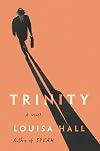
Robert Oppenheimer is a prime figure for both fictional and non-fictional interpretation. He stands personally at a sharp inflection point in twentieth century history, as the “father of the atomic bomb.”
Oppenheimer is a kind of Faustian character. He took on leadership of an ambitious program in both physics and engineering, and he was triumphant. But his triumph was incomprehensibly tragic. The war had seen the development and use of terrible weapons of ever-increasing destructiveness show more and terror — rocket weapons, fire bombing, . . .. But the atomic bomb was where the curve jumped completely off the graph. The weapon that Oppenheimer “fathered” killed as many as 200,000 Japanese civilians and threw survivors into an unimaginable nightmare. And just for an encore, it initiated the arms race that menaced the second half of the twentieth century and continues with new players still.
Of course Oppenheimer only led the development of the bomb. He didn’t decide to build it in the first place, and he didn’t decide to use it. But his role is an awful lot for one man to bear, and he was a man of sufficient conscience to feel the burden. What was it like to be that person?
That is what drew me to Hall’s book — a novel, I thought, would give her the chance to explore Oppenheimer’s character freely. How did he take on the role? What were his thoughts, goals, misgivings? How did he deal with the “success” of the project? How did he deal with the legacy it brought him? And, of course, how did he deal with what happened later, when he became a target of the McCarthy hearings?
The book doesn’t answer all those questions, but that’s probably not the point — I’m not sure Oppenheimer himself could answer them, and Hall doesn’t pretend to give us his private thoughts. She writes the book from the perspective of seven “testimonials” by fictional characters whose lives intersected in one way or another with Oppenheimer’s, at increasing ages in his life. These are not the well-known historical figures like his wife, his colleagues, etc. -- they are just people who happened to cross paths with Oppenheimer in ways that affected them.
Oppenheimer comes out an intensely multidemensional figure, both to those fictional characters, as he seems to have been in fact. He was charismatic, accomplished, revered, obstinate, gregarious (in his own way), curious, . . . all those things. Maybe most importantly he was a man with a conscience. Some of the testimonials attest to those characteristics — you get to put the pieces together as you listen to each character tell their story.
In some he’s scaled down to an ordinary guy, enjoying drinks with friends. In others he’s obviously carrying his own lifelong conflicts and his burden, bigger than life even to himself.
I think it works. It works in the sense that it provokes you to think as empathically as you can about what it must have been like to be taken over by history, to embody all those conflicts between achievement, victory, guilt, and horror on a world stage. And to have all of that be the result of the choices you made yourself.
Actually, one of the things I enjoyed about the book is that it is also as much about Hall’s fictional characters as it is about Oppenheimer.
In some cases, it seems to take forever for them to get to Oppenheimer in the stories they tell. After all, as for the reader, how those characters come to understand (or not understand) Oppenheimer has as much to do with who they are and what they bring to the game as to do with Oppenheimer himself.
At the end I still don’t know if I have a clear view of how Oppenheimer understood his own life. But maybe he didn’t have such a clear view himself. show less
Oppenheimer is a kind of Faustian character. He took on leadership of an ambitious program in both physics and engineering, and he was triumphant. But his triumph was incomprehensibly tragic. The war had seen the development and use of terrible weapons of ever-increasing destructiveness show more and terror — rocket weapons, fire bombing, . . .. But the atomic bomb was where the curve jumped completely off the graph. The weapon that Oppenheimer “fathered” killed as many as 200,000 Japanese civilians and threw survivors into an unimaginable nightmare. And just for an encore, it initiated the arms race that menaced the second half of the twentieth century and continues with new players still.
Of course Oppenheimer only led the development of the bomb. He didn’t decide to build it in the first place, and he didn’t decide to use it. But his role is an awful lot for one man to bear, and he was a man of sufficient conscience to feel the burden. What was it like to be that person?
That is what drew me to Hall’s book — a novel, I thought, would give her the chance to explore Oppenheimer’s character freely. How did he take on the role? What were his thoughts, goals, misgivings? How did he deal with the “success” of the project? How did he deal with the legacy it brought him? And, of course, how did he deal with what happened later, when he became a target of the McCarthy hearings?
The book doesn’t answer all those questions, but that’s probably not the point — I’m not sure Oppenheimer himself could answer them, and Hall doesn’t pretend to give us his private thoughts. She writes the book from the perspective of seven “testimonials” by fictional characters whose lives intersected in one way or another with Oppenheimer’s, at increasing ages in his life. These are not the well-known historical figures like his wife, his colleagues, etc. -- they are just people who happened to cross paths with Oppenheimer in ways that affected them.
Oppenheimer comes out an intensely multidemensional figure, both to those fictional characters, as he seems to have been in fact. He was charismatic, accomplished, revered, obstinate, gregarious (in his own way), curious, . . . all those things. Maybe most importantly he was a man with a conscience. Some of the testimonials attest to those characteristics — you get to put the pieces together as you listen to each character tell their story.
In some he’s scaled down to an ordinary guy, enjoying drinks with friends. In others he’s obviously carrying his own lifelong conflicts and his burden, bigger than life even to himself.
I think it works. It works in the sense that it provokes you to think as empathically as you can about what it must have been like to be taken over by history, to embody all those conflicts between achievement, victory, guilt, and horror on a world stage. And to have all of that be the result of the choices you made yourself.
Actually, one of the things I enjoyed about the book is that it is also as much about Hall’s fictional characters as it is about Oppenheimer.
In some cases, it seems to take forever for them to get to Oppenheimer in the stories they tell. After all, as for the reader, how those characters come to understand (or not understand) Oppenheimer has as much to do with who they are and what they bring to the game as to do with Oppenheimer himself.
At the end I still don’t know if I have a clear view of how Oppenheimer understood his own life. But maybe he didn’t have such a clear view himself. show less
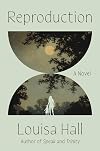
An enormous THANK YOU to Ecco for providing me with an ARC of ‘Reproduction’ by Louisa Hall. Enthralling, full of empathy and layered conversation this book exceeded all of my expectations and has become a new favorite.
Reading, for the majority, like lyrical non-fiction we follow an author who is attempting to write a novel exploring Mary Shelley and her ‘Frankenstein’, as she struggles through fertility, and pregnancy.
Beautifully written and captivating I felt this one deep in my show more bones, in my guts, in my soul. It’s important, very important, to stress that there are trigger warnings for infertility, traumatic birth and miscarriage. This is not an easy book. But this is a careful book, an honest and connecting book. Louisa Hall puts into words the great isolation of pregnancy, loss and motherhood. She explores the ways we judge ourselves and other women, and unpacks the cold ways in which we are dealt with as we carry life and once we are no longer such a bearer. The main character reflects on Mary Shelley’s life, and speculates the longing and sense of loss that contributed to writing ‘Frankenstein’ and she compares herself, and her friend Anna, to her.
There is a small style and tone shift in the third section that I really enjoyed. It’s full of questions that will make you look inward, and yet the answers are not easy… the author not pushing you towards one. Instead, reminding us of the great love and bravery of existing in this world, loving a child— even if it is but an idea.
This covers the pandemic, and political realities that we all, in the US, faced from 2018 on. It is extremely real in this way, but has a dreamlike quality from start to finish. I’m absolutely in awe. If you are interested, be safe, but I will be forever changed by this novel and my experience in introspection while reading. show less
Reading, for the majority, like lyrical non-fiction we follow an author who is attempting to write a novel exploring Mary Shelley and her ‘Frankenstein’, as she struggles through fertility, and pregnancy.
Beautifully written and captivating I felt this one deep in my show more bones, in my guts, in my soul. It’s important, very important, to stress that there are trigger warnings for infertility, traumatic birth and miscarriage. This is not an easy book. But this is a careful book, an honest and connecting book. Louisa Hall puts into words the great isolation of pregnancy, loss and motherhood. She explores the ways we judge ourselves and other women, and unpacks the cold ways in which we are dealt with as we carry life and once we are no longer such a bearer. The main character reflects on Mary Shelley’s life, and speculates the longing and sense of loss that contributed to writing ‘Frankenstein’ and she compares herself, and her friend Anna, to her.
There is a small style and tone shift in the third section that I really enjoyed. It’s full of questions that will make you look inward, and yet the answers are not easy… the author not pushing you towards one. Instead, reminding us of the great love and bravery of existing in this world, loving a child— even if it is but an idea.
This covers the pandemic, and political realities that we all, in the US, faced from 2018 on. It is extremely real in this way, but has a dreamlike quality from start to finish. I’m absolutely in awe. If you are interested, be safe, but I will be forever changed by this novel and my experience in introspection while reading. show less
Lists
Awards


You May Also Like


Associated Authors
Statistics
- Works
- 4
- Members
- 790
- Popularity
- #32,236
- Rating
- 3.7
- Reviews
- 28
- ISBNs
- 47
- Languages
- 1
- Favorited
- 1

