
About the Author
Dawn Raffel is a journalist, memoirist, and short-story writer whose work has been widely anthologized. She has taught creative writing in the MFA program at Columbia University; at summer literary seminars in St. Petersburg, Russia; Montreal; and Vilnius, Lithuania; and at the Center for Fiction show more in New York. show less
Works by Dawn Raffel
The Strange Case of Dr. Couney: How A Mysterious European Showman Saved Thousands of American Babies (2018) 161 copies, 6 reviews
Associated Works
Tagged
Common Knowledge
- Birthdate
- unknown
- Gender
- female
- Occupations
- journalist
editor
writer - Agent
- Melanie Jackson
Members
Reviews
The Strange Case of Dr. Couney: How a Mysterious European Showman Saved Thousands of American Babies by Dawn Raffel
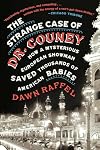
The story itself is quite interesting - an early innovator in the incubation of infants who surprisingly was not a licensed physician. Likely Dr. Couney's success was due both to his ability to afford innovative infant care and also to his skills as a showman. While some might question his decision to display infants at World Fairs, few can argue with the fact that he afforded care without charge.
Nonetheless, the book dragged at times. I suspect it was a combination of lack of primary show more sources and that there was simply not much drama in the story itself.
An interesting but hardly compelling read. show less
Nonetheless, the book dragged at times. I suspect it was a combination of lack of primary show more sources and that there was simply not much drama in the story itself.
An interesting but hardly compelling read. show less
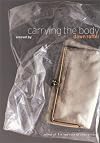
Prose Too Carefully Tended
On the dustjacket Patricia Volk is quoted as saying Raffel is "one of America's freshest voices since Faulkner," and setting aside what it might mean to say that America has needed something as "fresh" as Faulkner, the identification is accurate. Raffel's prose also has echoes of McCarthy and Proulx, but it is carefully tended more in a modernist than a postmodernist sense. The sometimes very short chapters have been published in a range of small literary magazines, show more and also bear the imprint of North American MFA programs. Every line wants to show evidence that it has been pondered. Cliches have been avoided, and the line has been condensed to some irreducible imagist point. (The first of many acknowledgments at the beginning is to Gordon Lish.) This is from the opening page:
"The sight of her, the aunt thought: wan unironed sister in the light. The hand a fleshy visor. Useless. To have traveled like this, with the heat and with the child, in the festering light, no bags but bags, the aunt observed..." (p. 5)
The book continues with this density for a hundred pages, which seem, at the speed of reading, to be 300 or more. Some drawbacks of this sort of writing:
1. Inevitably, if every line is interrogated, there will be moments of excessive, and therefore distracting invention. For me the first was on the second page, where the unnamed aunt's sister is said to have "a bra strap dingy as unrinsed teeth." That qualifier must have been Raffel's eighth or ninth try at an adjective, and it's good. Bras are rinsed, and can have the color of dirty teeth, but the simile is so wrought that it's mainly distracting.
2. Inevitably, there will be moments of over-writing. On the same page there's this (the aunt is trying to get her sister and child on their way home):
"'Shall we?' she said. 'Shall we hasten?' she said, and her sister--a touch, a breast, a way of moving, Mama to the child, Elise her name--said yes." (p. 4)
"Elise her name" reminds me of the intentionally awkward grandiosity of the less successful stories by Proulx, McCarthy, and others. It's supposed to sound at once modernist (in its inventiveness) and pioneering or rural, or perhaps even mythic and faux-Homeric. But who talked like that, exactly?
3. This sort of abbreviated qualifying phrase, together with the aspiration to conjure some indefinite past or timeless present (with echoes, here, of Steinbeck as well as Hemingway) lends itself to poetic repetitions. These can be obtrusive. For instance "That it was not kept up is not open to question," or "The child appeared to be looking at the aunt with what appeared to the aunt to be a fever in the eyes." (p. 6) These repetitions aren't from ancient tragedy or epic: they are knowing, hyper-eloquent, MFA-quality decisions, and therefore mannerisms.
The problems might not be visible, or at least not bothersome, if the writing relaxed into other modes. But it doesn't. It seems that for Raffel--maybe as she understands Lish, Volk, Gary Lutz, Ben Marcus, and a dozen others she thanks--really good prose needs to survive a ferocious interrogation. That is certainly often true, but it should not appear to be true in every paragraph on every page. It feels as if Raffel is fighting a doubly losing battle: to avoid every cliche (while unhappily creating new ones all along the way), and to rise to Faulkner's level of craft by sharpening it to 21st century razorwire precision (but can a practice now almost a hundred years old be answered or even honored by late academic prose?). I think of Raffel as a disease of the contemporary literary magazine and MFA culture: this is daunting, if your purpose is to write an entire novel without nodding or even blinking. It's unfortunate the prose has no other speeds, no other levels of awareness and care. And for me, it's unfortunate that all that labor has been expended on old-fashioned scenes and ideas. show less
On the dustjacket Patricia Volk is quoted as saying Raffel is "one of America's freshest voices since Faulkner," and setting aside what it might mean to say that America has needed something as "fresh" as Faulkner, the identification is accurate. Raffel's prose also has echoes of McCarthy and Proulx, but it is carefully tended more in a modernist than a postmodernist sense. The sometimes very short chapters have been published in a range of small literary magazines, show more and also bear the imprint of North American MFA programs. Every line wants to show evidence that it has been pondered. Cliches have been avoided, and the line has been condensed to some irreducible imagist point. (The first of many acknowledgments at the beginning is to Gordon Lish.) This is from the opening page:
"The sight of her, the aunt thought: wan unironed sister in the light. The hand a fleshy visor. Useless. To have traveled like this, with the heat and with the child, in the festering light, no bags but bags, the aunt observed..." (p. 5)
The book continues with this density for a hundred pages, which seem, at the speed of reading, to be 300 or more. Some drawbacks of this sort of writing:
1. Inevitably, if every line is interrogated, there will be moments of excessive, and therefore distracting invention. For me the first was on the second page, where the unnamed aunt's sister is said to have "a bra strap dingy as unrinsed teeth." That qualifier must have been Raffel's eighth or ninth try at an adjective, and it's good. Bras are rinsed, and can have the color of dirty teeth, but the simile is so wrought that it's mainly distracting.
2. Inevitably, there will be moments of over-writing. On the same page there's this (the aunt is trying to get her sister and child on their way home):
"'Shall we?' she said. 'Shall we hasten?' she said, and her sister--a touch, a breast, a way of moving, Mama to the child, Elise her name--said yes." (p. 4)
"Elise her name" reminds me of the intentionally awkward grandiosity of the less successful stories by Proulx, McCarthy, and others. It's supposed to sound at once modernist (in its inventiveness) and pioneering or rural, or perhaps even mythic and faux-Homeric. But who talked like that, exactly?
3. This sort of abbreviated qualifying phrase, together with the aspiration to conjure some indefinite past or timeless present (with echoes, here, of Steinbeck as well as Hemingway) lends itself to poetic repetitions. These can be obtrusive. For instance "That it was not kept up is not open to question," or "The child appeared to be looking at the aunt with what appeared to the aunt to be a fever in the eyes." (p. 6) These repetitions aren't from ancient tragedy or epic: they are knowing, hyper-eloquent, MFA-quality decisions, and therefore mannerisms.
The problems might not be visible, or at least not bothersome, if the writing relaxed into other modes. But it doesn't. It seems that for Raffel--maybe as she understands Lish, Volk, Gary Lutz, Ben Marcus, and a dozen others she thanks--really good prose needs to survive a ferocious interrogation. That is certainly often true, but it should not appear to be true in every paragraph on every page. It feels as if Raffel is fighting a doubly losing battle: to avoid every cliche (while unhappily creating new ones all along the way), and to rise to Faulkner's level of craft by sharpening it to 21st century razorwire precision (but can a practice now almost a hundred years old be answered or even honored by late academic prose?). I think of Raffel as a disease of the contemporary literary magazine and MFA culture: this is daunting, if your purpose is to write an entire novel without nodding or even blinking. It's unfortunate the prose has no other speeds, no other levels of awareness and care. And for me, it's unfortunate that all that labor has been expended on old-fashioned scenes and ideas. show less

I DNFed this at 58 percent and stopped reading after "The Teacup." At that point I didn't care anymore about the secret life of objects.
One good thing about cleaning out my virtual TBR pile is for me to look back and wonder what the hell was I thinking when I bought some of the books I did. This book was definitely one of those moments for me. I still don't get what the author was trying in this collection of vignettes that are about the "object" in the title of the chapter you read.
This show more collection is boring. There's no other word for it. We just move from object to object and there's no sense of anything holding this together. If you don't realize it the author, Dawn Raffel is telling the reader about objects that she has.
I only really enjoyed one story and that was "The Mug." It whetted my appetite for the rest of the stories because I stupidly assumed the rest of them would be as moving as that one. Not so much. Instead of the secret life of objects, we were actually reading more about the secret life of the people using the objects.
I read "The Secret Life of Dresses" a few years ago and loved how the author actually had the dresses have a personality and tell a story about the women that wore them. I wish that the author had done that here, it would have been interesting to have the story told from the object's point of view. Instead we get nameless narrators who at times sound cold/indifferent or just bland. I didn't get any emotional response for the most part while reading this.
The flow was awful too. Some of these stories are just five sentences, some are several pages. The illustrations at the beginning of each object's story were cute and added visual interest, but not enough for me to keep reading this.
I wish that the author had just written a memoir about her life and her family since she kept zig-zagging all over the place and going back to certain people that are mentioned earlier (such as her mother, stepfather, and grandparents) it just adds to the overall confusion that I had while reading this. show less
One good thing about cleaning out my virtual TBR pile is for me to look back and wonder what the hell was I thinking when I bought some of the books I did. This book was definitely one of those moments for me. I still don't get what the author was trying in this collection of vignettes that are about the "object" in the title of the chapter you read.
This show more collection is boring. There's no other word for it. We just move from object to object and there's no sense of anything holding this together. If you don't realize it the author, Dawn Raffel is telling the reader about objects that she has.
I only really enjoyed one story and that was "The Mug." It whetted my appetite for the rest of the stories because I stupidly assumed the rest of them would be as moving as that one. Not so much. Instead of the secret life of objects, we were actually reading more about the secret life of the people using the objects.
I read "The Secret Life of Dresses" a few years ago and loved how the author actually had the dresses have a personality and tell a story about the women that wore them. I wish that the author had done that here, it would have been interesting to have the story told from the object's point of view. Instead we get nameless narrators who at times sound cold/indifferent or just bland. I didn't get any emotional response for the most part while reading this.
The flow was awful too. Some of these stories are just five sentences, some are several pages. The illustrations at the beginning of each object's story were cute and added visual interest, but not enough for me to keep reading this.
I wish that the author had just written a memoir about her life and her family since she kept zig-zagging all over the place and going back to certain people that are mentioned earlier (such as her mother, stepfather, and grandparents) it just adds to the overall confusion that I had while reading this. show less
The Strange Case of Dr. Couney: How a Mysterious European Showman Saved Thousands of American Babies by Dawn Raffel
I came across mention of this book in Bookpage, a publication that I pick up at the library. Whoever wrote about it there made it sound intriguing so I put it on my TBR list.
Given our modern day success stories with preemies and low-birthweight babies and those who have trouble thriving, it might be hard to remember that there was a time when this wasn't known. There were a few people, Martin Couney among them, who saw the value of trying to save infants who most doctors of the time wrote show more off. It seems he had a pretty good success rate with the ones brought to him who survived the first 2-3 days. I'm not sure why doctors seemed so little inclined to adopt or at least adapt his methods. But, as they say, hindsight is 20-20.
The author became interested in this story after finding her late father's "autobiography" that he wrote at age 16 which mentioned him attending the "Century of Progress" in 1933 in Chicago. In researching that, she found mention of the attraction featuring live babies in incubators.
The book jumps between Couney's history and others's attempts (including the authors) to find the history. That can be a little confusing at times. The story was told in an engaging way and for the most part, it was a fast read. There are still some unanswered questions--and who knows if those will ever be answered. show less
Given our modern day success stories with preemies and low-birthweight babies and those who have trouble thriving, it might be hard to remember that there was a time when this wasn't known. There were a few people, Martin Couney among them, who saw the value of trying to save infants who most doctors of the time wrote show more off. It seems he had a pretty good success rate with the ones brought to him who survived the first 2-3 days. I'm not sure why doctors seemed so little inclined to adopt or at least adapt his methods. But, as they say, hindsight is 20-20.
The author became interested in this story after finding her late father's "autobiography" that he wrote at age 16 which mentioned him attending the "Century of Progress" in 1933 in Chicago. In researching that, she found mention of the attraction featuring live babies in incubators.
The book jumps between Couney's history and others's attempts (including the authors) to find the history. That can be a little confusing at times. The story was told in an engaging way and for the most part, it was a fast read. There are still some unanswered questions--and who knows if those will ever be answered. show less
Awards


You May Also Like


Associated Authors
Statistics
- Works
- 7
- Also by
- 8
- Members
- 286
- Popularity
- #81,617
- Rating
- 3.6
- Reviews
- 12
- ISBNs
- 18