

Mark Henshaw (1) (1951–)
Author of The Snow Kimono
For other authors named Mark Henshaw, see the disambiguation page.
About the Author
Mark Henshaw is a decorated CIA analyst with fifteen years of service. He is the recipient of eighteen (18) Exceptional Performance Awards and the Director of National Intelligence's 2007 Galileo Award for innovation in intelligence analysis. Mark holds a bachelor's degree in Political Science (BYU show more '95) and master's degrees in Business Administration (BYU Marriott School of Management) and International Relations (BYU Kennedy Center for International and Area Studies '99). He is a graduate of the Sherman Kent School's Advanced Analyst Program. Having grown up surrounded by Jamestown, Colonial Williamsburg, Monticello, Mount Vernon, and an astonishing number of Civil War battlefields, Mark has an abiding passion for 18th and 19th century US history and gives the occasional tour of the Antietam and Gettysburg battlefields. (Bowker Author Biography) show less
Works by Mark Henshaw
War : the prints of Otto Dix 1 copy
Tagged
Common Knowledge
- Birthdate
- 1951
- Gender
- male
- Occupations
- novelist
curator - Organizations
- National Gallery of Australia
- Nationality
- Australia
- Birthplace
- Canberra, Australian Capital Territory, Australia
- Places of residence
- Canberra, Australian Capital Territory, Australia
Germany
France
Yugoslavia
Members
Reviews
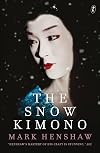
I love stories about Japan, Asia, and everything that includes. So, when I saw this book, I immediately requested to do a review for it. i must confess that I didn’t know what to expect though because it’s written by a western author, and I’ve had bad luck lately with book about Asia or Asian characters. Even after that, this novel was a surprise, and a pleasant surprise at that. I fell in love with it from the first few pages, and I can confidently say it’s one of my favorite novels show more of 2015. I’m shocked I haven’t heard more people talking about this release. Everyone needs to read it–it’s amazing.
What pulled me into this story immediately was the way Henshaw writes. His prose possesses a fluidity and lyricism that is infectious, sweeping, and it will wrap you up like a warm hug. Though this novel isn’t exclusively about Japan, the atmosphere Henshaw invokes specifically recalls the modern masters of Japanese literature–Kawabata, Mishima, Dazai–and this is a feat few have been able to perform. I wanted to reach for my Yasunari Kawabata collection and reread those gems of the modern Floating World. Henshaw does it effortlessly. The simplicity, the focus on the small things, the things not said–characteristics of Japanese fiction, add to the sheer beauty of this novel where everything matters.
Henshaw’s skill with description, world-building, and characterization brings Paris and Japan to life in a completely immersive world and story. The characters are believable, sympathetic, and real. They reach from the page and pull you into the mystery and magic of the story. Feelings of loss, nostalgia, regret, all emanate from the page with prose that illustrates the fact that each word is chosen with care. Each character, as he tells his story, reveals an authentic voice that further reflects the completely rounded and fully developed world within this story and the people that populate it. That is especially rare when writing Asian characters, and Henshaw again does what most cannot. Omura particularly doesn’t fall into habitual stereotypes of Japanese or Asian male figures that seem to populate a lot of Western fiction. Omura is real, accessible, a worthy protagonist. Likewise, the scenes that whisk us away to Paris or Algiers offer a real glimpse at these locales with an acute attention to detail.
Most noticeably, this novel is about memory, the nature of reality, and the nature of the little “realities” we create for ourselves throughout our lives. The notion that “When he thought about it later, it seemed to Jouvert that he had spent most of his life listening to people, sifting through what they said, weighing, assessing. Trying to fit things together. But life, unlike crime, was not something you could solve. What people told you was not always the truth; the truth was what was to be found out, eventually, by putting all the pieces together. And sometimes not even then” reflects the very postmodern nature of this novel. Jovert and Omura try put put the pieces of their lives in place to solve the mysteries of their past that plagues their present. Life is about putting together the pieces in hope that we find enough pieces to not just make sense of our lives, but ourselves as well, that we may hope to learn and find peace.
After all, that’s literature; it helps us learn, to understand, to know who we are and who others are. That’s what makes this novel so beautiful–the prose, yes–but watching and learning from these characters as they attempt to grapple with the notion of truth, and as they come to learn about themselves and their world. As they come to understand what went wrong in their lives. This novel will make the reader question, and questions are beautiful too.
Really, I don’t even know how to review this book except to repeat the fact that the writing is gorgeous, the world and characters within engrossing, and the immediate mirror to Japanese classics is a mark of Henshaw’s skill. I recommend everyone read this book. It sucked me in and I need more. It’s left me utterly speechless. show less
What pulled me into this story immediately was the way Henshaw writes. His prose possesses a fluidity and lyricism that is infectious, sweeping, and it will wrap you up like a warm hug. Though this novel isn’t exclusively about Japan, the atmosphere Henshaw invokes specifically recalls the modern masters of Japanese literature–Kawabata, Mishima, Dazai–and this is a feat few have been able to perform. I wanted to reach for my Yasunari Kawabata collection and reread those gems of the modern Floating World. Henshaw does it effortlessly. The simplicity, the focus on the small things, the things not said–characteristics of Japanese fiction, add to the sheer beauty of this novel where everything matters.
Henshaw’s skill with description, world-building, and characterization brings Paris and Japan to life in a completely immersive world and story. The characters are believable, sympathetic, and real. They reach from the page and pull you into the mystery and magic of the story. Feelings of loss, nostalgia, regret, all emanate from the page with prose that illustrates the fact that each word is chosen with care. Each character, as he tells his story, reveals an authentic voice that further reflects the completely rounded and fully developed world within this story and the people that populate it. That is especially rare when writing Asian characters, and Henshaw again does what most cannot. Omura particularly doesn’t fall into habitual stereotypes of Japanese or Asian male figures that seem to populate a lot of Western fiction. Omura is real, accessible, a worthy protagonist. Likewise, the scenes that whisk us away to Paris or Algiers offer a real glimpse at these locales with an acute attention to detail.
Most noticeably, this novel is about memory, the nature of reality, and the nature of the little “realities” we create for ourselves throughout our lives. The notion that “When he thought about it later, it seemed to Jouvert that he had spent most of his life listening to people, sifting through what they said, weighing, assessing. Trying to fit things together. But life, unlike crime, was not something you could solve. What people told you was not always the truth; the truth was what was to be found out, eventually, by putting all the pieces together. And sometimes not even then” reflects the very postmodern nature of this novel. Jovert and Omura try put put the pieces of their lives in place to solve the mysteries of their past that plagues their present. Life is about putting together the pieces in hope that we find enough pieces to not just make sense of our lives, but ourselves as well, that we may hope to learn and find peace.
After all, that’s literature; it helps us learn, to understand, to know who we are and who others are. That’s what makes this novel so beautiful–the prose, yes–but watching and learning from these characters as they attempt to grapple with the notion of truth, and as they come to learn about themselves and their world. As they come to understand what went wrong in their lives. This novel will make the reader question, and questions are beautiful too.
Really, I don’t even know how to review this book except to repeat the fact that the writing is gorgeous, the world and characters within engrossing, and the immediate mirror to Japanese classics is a mark of Henshaw’s skill. I recommend everyone read this book. It sucked me in and I need more. It’s left me utterly speechless. show less
Ah, back when you could write a perfectly realistic story and surround it with a meta-narrative framework and felt fresh! I don't remember the days, but I'm sure they existed, and Henshaw writes so cleanly and amusingly that I can even forgive him the genuinely precious moments. I have no idea how this novel would sit with someone even less familiar than I am with Henshaw's discussion group (Musil, Calvino, Kant, etc...) But if you have some idea what those fellows were up to, you might show more enjoy this book.
I enjoyed it, I think, because its *positive* about literature's unreliability etc., rater than bemoaning the inability of words to adequately represent reality. Also, it has a gleefully scurrilous 'plot' and very funny set-pieces. I've been reading a lot of Sebald lately, in an attempt to work out why people like him, and I see a lot of Henshaw and Sebald in each other, with the important caveat that Henshaw seems smart, is funny, and, implausibly enough given the sections on German idealism and how it developed or was challenged by phenomenology and Heideggerian thought, *less* pretentious.
So if you like Sebald, or don't like him that much but do like the whole "is it him or isn't it? how much of this is real, and how much is not?" thing, try Henshaw. show less
I enjoyed it, I think, because its *positive* about literature's unreliability etc., rater than bemoaning the inability of words to adequately represent reality. Also, it has a gleefully scurrilous 'plot' and very funny set-pieces. I've been reading a lot of Sebald lately, in an attempt to work out why people like him, and I see a lot of Henshaw and Sebald in each other, with the important caveat that Henshaw seems smart, is funny, and, implausibly enough given the sections on German idealism and how it developed or was challenged by phenomenology and Heideggerian thought, *less* pretentious.
So if you like Sebald, or don't like him that much but do like the whole "is it him or isn't it? how much of this is real, and how much is not?" thing, try Henshaw. show less
Mark Henshaw published his first novel in 1988; it was willfully metafictional (it was the '80s, and he is Australian), but beautifully written and great fun.
Then, nothing.
And here we have his second novel (not counting two crime novels), a mere twenty-seven years later.
And he's learned a lot from those two crime novels. The metafiction here is buried, but all the more fun for that: we have Inspector Jovert (whom I like to imagine as a particularly grizzled Russell Crowe). We have a novel show more of love and Japanese university life, involving trips to and from the provinces, and a character called Natsumi (cf: Natsume Soseki, and his Sanshiro). We have echoes of everything you've ever read about the French and the war in Algeria.
He's also learned that readers enjoy suspense, but the suspense here is astonishingly strange, and requires a lot of trust in the author. What we can't wait to find out, in short, is why we're hearing the stories we hear at all. What looks like it will be a policier or noir suddenly turns into one of those "then so and so sat down and told me this story" tales, but with no indication whatsoever why we, or Inspector Jovert, is listening to what he's hearing. Rest assured, dear reader, it is made clear (pace some other reviewers), though it's not at all easy to piece everything together.
The form is by far the best thing about this wonderful book, but there are also some harrowing moments, particularly if, like me, you have a brand new child.
Anyway, despite the rather cheesy opening sentence, you should all go and read this book. show less
Then, nothing.
And here we have his second novel (not counting two crime novels), a mere twenty-seven years later.
And he's learned a lot from those two crime novels. The metafiction here is buried, but all the more fun for that: we have Inspector Jovert (whom I like to imagine as a particularly grizzled Russell Crowe). We have a novel show more of love and Japanese university life, involving trips to and from the provinces, and a character called Natsumi (cf: Natsume Soseki, and his Sanshiro). We have echoes of everything you've ever read about the French and the war in Algeria.
He's also learned that readers enjoy suspense, but the suspense here is astonishingly strange, and requires a lot of trust in the author. What we can't wait to find out, in short, is why we're hearing the stories we hear at all. What looks like it will be a policier or noir suddenly turns into one of those "then so and so sat down and told me this story" tales, but with no indication whatsoever why we, or Inspector Jovert, is listening to what he's hearing. Rest assured, dear reader, it is made clear (pace some other reviewers), though it's not at all easy to piece everything together.
The form is by far the best thing about this wonderful book, but there are also some harrowing moments, particularly if, like me, you have a brand new child.
Anyway, despite the rather cheesy opening sentence, you should all go and read this book. show less
It is 1989 and retired police inspector, Auguste Jovert, has received a letter from a woman in Algiers claiming to be his daughter. He throws the letter in the trash but then stumbles into the path of a car, breaking his leg and keeping him home bound. Two days later, a new neighbour appears at his door - Tadashi Omura, a former professor of law in Japan who relates to him the story of Katsuo Ikeda, a brilliant but arrogant writer who was once his best friend and the women in his life. show more Entwined in his tale is Jovert’s own story of the Algerian woman he loved and lost.
The Snow Kimono by author Mark Henshaw is a hard book to categorize or describe. This is a complex tale that seems to unfold in layers – sometimes seemingly unrelated but always bringing the reader closer to the heart of the story. It is, as the narrator describes it, like a Japanese puzzle:
‘Each piece is considered individually. No shape is repeated, unless for some special purpose. Some pieces are small, others large, but all are calculated to deceive, to lead one astray, in order to make the solution of the puzzle as difficult, as challenging, as possible… how a puzzle is made, and how it is solved, reveals some greater truth about the world.’
Suffice it to say that its hauntingly beautiful prose captivates the reader as the various aspects of these different lives unfold. There is a lyrical rhythm to the story that kept me enthralled throughout. It is a book rich with beautifully crafted imagery and sentences that demand to be read out loud. It is also, for me, that rare book that I know I will read and read again and it will never fail to draw me in each and every time. show less
The Snow Kimono by author Mark Henshaw is a hard book to categorize or describe. This is a complex tale that seems to unfold in layers – sometimes seemingly unrelated but always bringing the reader closer to the heart of the story. It is, as the narrator describes it, like a Japanese puzzle:
‘Each piece is considered individually. No shape is repeated, unless for some special purpose. Some pieces are small, others large, but all are calculated to deceive, to lead one astray, in order to make the solution of the puzzle as difficult, as challenging, as possible… how a puzzle is made, and how it is solved, reveals some greater truth about the world.’
Suffice it to say that its hauntingly beautiful prose captivates the reader as the various aspects of these different lives unfold. There is a lyrical rhythm to the story that kept me enthralled throughout. It is a book rich with beautifully crafted imagery and sentences that demand to be read out loud. It is also, for me, that rare book that I know I will read and read again and it will never fail to draw me in each and every time. show less
Awards


You May Also Like


Associated Authors
Statistics
- Works
- 5
- Members
- 213
- Popularity
- #104,443
- Rating
- 3.5
- Reviews
- 14
- ISBNs
- 65
- Languages
- 5