
Justin E. H. Smith
Author of The Internet Is Not What You Think It Is: A History, a Philosophy, a Warning
About the Author
Works by Justin E. H. Smith
The Internet Is Not What You Think It Is: A History, a Philosophy, a Warning (2022) 160 copies, 1 review
In Search of The Third Bird: Exemplary Essays from The Proceedings of ESTAR(SER), 2001-2021 (2021) — Editor — 27 copies, 1 review
Machines of Nature and Corporeal Substances in Leibniz (The New Synthese Historical Library) (2011) — Editor — 12 copies
EMBODIMENT: A History (OXFORD PHILOSOPHICAL CONCEPTS) — Editor — 1 copy
Associated Works
Tagged
Common Knowledge
- Legal name
- Smith, Justin Erik Halldór
- Birthdate
- 1972-07-30
- Gender
- male
- Occupations
- Professor of Philosophy, University of Paris
- Nationality
- USA
Canada
Members
Reviews

This book written in 2020 reads more like a set of closely-linked essays than an integrated monograph. It is a pleasurable and stimulating read from start to finish, though. Author Justin E. H. Smith approaches the phenomenon of the Internet from a historical and philosophical perspective, emphasizing the human qualities and aspirations that it manifests, alongside the many ideas and achievements that anticipated it. Smith demonstrates its emergence from other inventions and enterprises show more within a larger sphere of technology, in a manner somewhat evocative of Heidegger, but Smith (rightly, in my view) slights Heidegger as "authenticity-mongering" (6-7). He expresses more sympathy with Foucault but criticizes and inverts that thinker's emphasis on historical discontinuities of thought (12).
Current dilemmas of Internet experience are addressed in the chapter "A Sudden Acceleration," which discusses the ways in which social media and other functions of the 'net are hostile to the quality of attention, as well as subject to arbitrary dynamics of power and exploitation.
In "The Ecology of the Internet," Smith not only questions boundaries between the Internet and other human inventions, but between human invention and the expressions of nature more generally. The mood here is both iconoclastic and heartening.
I found a little fault with Smith's antagonism in "The Reckoning Engine" for what he called the "simulation argument," in that he did not effectively distinguish between the simulation of consciousness and the simulation of its objects, sometimes falsely accusing expositors of the latter to be claimants for the former. I'm all for denigration of the "You might be an NPC" views of Elon Musk (who might be a boss monster), but I don't think that's the position reluctantly conceded by Neil deGrasse Tyson (90). This chapter also entails some discussion of "artificial intelligence" that alternated between useful insights and a few remarks that made me wonder whether Smith really understood why and how contemporary technologists distinguish "AI" from earlier forms of automation.
The final two chapters "The Internet as Loom" and "A Window on the World" are a return to strength, taking the angles of philosophically-informed cultural history and informal phenomenology respectively. The curiously upbeat ending reminded me a little of the Talking Heads song "Television Man" while addressing givens similar to those of Bo Burnham's Inside. show less
Current dilemmas of Internet experience are addressed in the chapter "A Sudden Acceleration," which discusses the ways in which social media and other functions of the 'net are hostile to the quality of attention, as well as subject to arbitrary dynamics of power and exploitation.
In "The Ecology of the Internet," Smith not only questions boundaries between the Internet and other human inventions, but between human invention and the expressions of nature more generally. The mood here is both iconoclastic and heartening.
I found a little fault with Smith's antagonism in "The Reckoning Engine" for what he called the "simulation argument," in that he did not effectively distinguish between the simulation of consciousness and the simulation of its objects, sometimes falsely accusing expositors of the latter to be claimants for the former. I'm all for denigration of the "You might be an NPC" views of Elon Musk (who might be a boss monster), but I don't think that's the position reluctantly conceded by Neil deGrasse Tyson (90). This chapter also entails some discussion of "artificial intelligence" that alternated between useful insights and a few remarks that made me wonder whether Smith really understood why and how contemporary technologists distinguish "AI" from earlier forms of automation.
The final two chapters "The Internet as Loom" and "A Window on the World" are a return to strength, taking the angles of philosophically-informed cultural history and informal phenomenology respectively. The curiously upbeat ending reminded me a little of the Talking Heads song "Television Man" while addressing givens similar to those of Bo Burnham's Inside. show less
In Search Of The Third Bird: Exemplary Essays from The Proceedings of ESTAR(SER), 2001-2021 by D. Graham Burnett
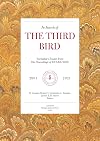
Delightfully weird and weirdly delightful.
Awards


You May Also Like


Associated Authors
Statistics
- Works
- 17
- Also by
- 1
- Members
- 580
- Popularity
- #43,222
- Rating
- 3.6
- Reviews
- 2
- ISBNs
- 53
- Languages
- 3