
Wolfram Eilenberger
Author of Time of the Magicians: Wittgenstein, Benjamin, Cassirer, Heidegger, and the Decade That Reinvented Philosophy
About the Author
Image credit: Wikipedia
Works by Wolfram Eilenberger
Time of the Magicians: Wittgenstein, Benjamin, Cassirer, Heidegger, and the Decade That Reinvented Philosophy (1659) 618 copies, 20 reviews
The Visionaries: Arendt, Beauvoir, Rand, Weil, and the Power of Philosophy in Dark Times (2019) 266 copies, 8 reviews
Finnen von Sinnen: Von einem, der auszog, eine finnische Frau zu heiraten (2010) 38 copies, 1 review
Geister der Gegenwart: Die letzten Jahre der Philosophie und der Beginn einer neuen Aufklärung 1948 – 1984 (2016) 22 copies
Frihetens lågor : filosofins räddning i en mörk tid 19331943 : Simone de Beauvoir, Simone Weil, Hannah Arendt, Ayn Rand (2023) 4 copies
Trollkarlarnas tid : filosofins stora årtionde 1919-1929 : Walter Benjamin, Ernst Cassirer, Martin Heidegger, Ludwig Wittgenstein (2024) 2 copies
I fantasmi del presente: 1948-1984: Adorno, Sontag, Foucault, Feyerabend, la fine della filosofia e un nuovo illuminismo (2025) — Author — 1 copy
Das Werden des Menschen im Wort: Eine Studie zur Kulturphilosophie Michail M. Bachtins (Legierungen) (2009) 1 copy
Tagged
Common Knowledge
- Canonical name
- Eilenberger, Wolfram
- Birthdate
- 1972-08-07
- Gender
- male
- Education
- University of Zurich (Ph.D|2008)
- Occupations
- Publizist
Philosoph - Awards and honors
- Bayerischer Buchpreis (2018)
Prix du Meilleur Livre Étranger (2019)
Mindelheim Philosophy Prize (2011) - Relationships
- Päiviö, Pia-Maria (spouse)
- Nationality
- Germany
- Birthplace
- Freiburg im Breisgau, Baden-Württemberg, Germany
- Places of residence
- Berlin, Germany
- Associated Place (for map)
- Germany
Members
Reviews
Time of the Magicians: Wittgenstein, Benjamin, Cassirer, Heidegger, and the Decade that Reinvented Philosophy by Wolfram Eilenberger

In this excellent work of Intellectual History, Eilenberger weaves together the experiences and thought of four German-speaking philosophers during that most consequential period between the wars, when some of the perennial themes in the field (the limits of language, idealism v. realism, metaphysics and ontology) were refashioned by a confrontation with the destabilizing effects of modernism. The narrative treat is seeing how Eilenberger pairs off or pits against each other Cassirer, show more Benjamin, Heidegger and Wittenstein in various ways—intellectually, domestically, emotionally—and how friends, lovers, job prospects, and physical setting influenced their ideas. show less
Time of the Magicians: Wittgenstein, Benjamin, Cassirer, Heidegger, and the Decade That Reinvented Philosophy by Wolfram Eilenberger
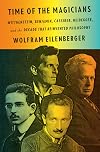
More a book of intellectual history than philosophy itself, Eilenberger tracks the lives and thinking of four German and Austrian figures — Walter Benjamin, Ernst Cassirer, Martin Heidegger, and Ludwig Wittgenstein.
The time in which he takes up the stories of the four is definitely one of the most interesting, at least in twentieth century philosophy — the 1920s. We are between the wars. In philosophy, it’s the decline of neo-Kantianism (at least in the Germanic world) and the rise of show more diverging branches of revolution in philosophy.
There are really three branches, and that’s telling since Eilenberger builds his story around four figures. The three are represented by Benjamin (the Frankfurt School), Wittgenstein (I’ll call it the “linguistic turn” although I think Wittgenstein himself may transcend that movement), and Heidegger (who, although he takes a place in the history of phenomenology and existentialism, is stubbornly unique). And then there is Ernst Cassirer.
Cassirer, of the four, might be argued a kind of ending rather than a beginning. Cassirer is a neo-Kantian, although, as comes through in Eilenberger’s account, his Philosophy of Symbolic Forms is a very creative work.
All four though, without a great stretch, can be said to pioneer thought in non-traditional ways of knowing, by contrast with the logical positivists of the same time, who extolled factual knowledge on the model of the natural sciences to the exclusion of all else. Cassirer wraps mythical experience into a story of the evolution of symbolic thought, Benjamin finds knowledge in art, Heidegger in immersed engagement, and Wittgenstein famously distinguishes between saying and showing as ways in which we manifest understanding.
Eilenberger’s plan calls for weaving the stories of the four into a single narrative. He presents their development and their lives side by side, arranged by themes he finds common to the four. Those are the chapters of the book, that I could loosely paraphrase, as language, culture, the self and the other, freedom, symbol, and time. It works, although it’s more an organizing principle than a definable common thread.
I have to admit a bias in my reading, since I’m very familiar with two of the figures (Wittgenstein and Heidegger) and far, far less with the other two. But Eilenberger’s treatment makes them all interesting in some new ways, both for the lives they led and for the dynamics of their thinking.
Ironically, Benjamin of all of them, even with his tortuous style, ties philosophy to the ground by way of actual objects, e.g., the Paris arcades. This was something new to me — a kind of monadic treatment of the everyday object as revealing the world as a whole via its web of conceptual (and pragmatic) relationships. Everything is meaningful, in its concrete presence.
Cassirer and Heidegger, for all Heidegger’s penchant for the pragmatic and the everyday, move and live in abstractions. Wittgenstein conjures a simplicity, e.g., in his examples of “primitive language games”, but they are conjures after all.
Eilenberger’s anecdotes and quotes about Wittgenstein’s experiences among the everyday speakers of language, during his time teaching children in Austria, are kind of tragicomic. He found the people in one of the villages in which he taught “three quarters human” and those in another not human at all. It was never a great idea, in a practical sense, although, as Eilenberger hints, those experiences may have inspired Wittgenstein’s later thinking on language and meaning. The Wittgenstein of the Tractatus seems caught in an academic straightjacket by comparison.
Philosophers, contrary to popular belief, rarely write about “the meaning of life.” But they do have lives. And they are like anyone — they would like their lives to be meaningful. And given that they live their lives so submerged in philosophical thought, they would like their philosophical lives to be meaningful.
That’s something that I think Eilenberger catches in his approach. The styles of life of the four attest to their styles of thinking. Benjamin, the intellectual fly that never actual lights anywhere. Heidegger, the ambitious would-be leader of a grand revolution in the German university as well as in philosophy per se. Wittgenstein, the seeker after simplicity and clarity. And Cassirer — the establishment’s representative.
The story has a climax at the Davos conference in 1929, and the debate there between Heidegger and Cassirer. Although the debate itself can breathe a technical air, it’s a debate between continuity with the past and a break toward a newly conceived future.
Heidegger wins. Cassirer continues, but as Eilenberger’s epilogue tells us, his career in Germany became a casualty of the Third Reich, and he lived out the remainder in exile in Switzerland and the United States. Heidegger meanwhile wins the dubious honor of representing university philosophy on into Hitler’s Germany. It’s a different question whether any of the substance of the debate could be tied conceptually to their respective fates. After all, Cassirer was Jewish, and nothing in the debate was going to change the constraints that would fall over him and other Jewish intellectuals soon afterwards.
Eilenberger writes a very readable (in translation from the original German), engrossing story. Although I think it’s a little bit of a stretch to weave the four figures into a single fabric, this is intellectual history, and the four did co-exist in a single, not always coherent, intellectual world. He can’t be blamed for all the frayed threads. show less
The time in which he takes up the stories of the four is definitely one of the most interesting, at least in twentieth century philosophy — the 1920s. We are between the wars. In philosophy, it’s the decline of neo-Kantianism (at least in the Germanic world) and the rise of show more diverging branches of revolution in philosophy.
There are really three branches, and that’s telling since Eilenberger builds his story around four figures. The three are represented by Benjamin (the Frankfurt School), Wittgenstein (I’ll call it the “linguistic turn” although I think Wittgenstein himself may transcend that movement), and Heidegger (who, although he takes a place in the history of phenomenology and existentialism, is stubbornly unique). And then there is Ernst Cassirer.
Cassirer, of the four, might be argued a kind of ending rather than a beginning. Cassirer is a neo-Kantian, although, as comes through in Eilenberger’s account, his Philosophy of Symbolic Forms is a very creative work.
All four though, without a great stretch, can be said to pioneer thought in non-traditional ways of knowing, by contrast with the logical positivists of the same time, who extolled factual knowledge on the model of the natural sciences to the exclusion of all else. Cassirer wraps mythical experience into a story of the evolution of symbolic thought, Benjamin finds knowledge in art, Heidegger in immersed engagement, and Wittgenstein famously distinguishes between saying and showing as ways in which we manifest understanding.
Eilenberger’s plan calls for weaving the stories of the four into a single narrative. He presents their development and their lives side by side, arranged by themes he finds common to the four. Those are the chapters of the book, that I could loosely paraphrase, as language, culture, the self and the other, freedom, symbol, and time. It works, although it’s more an organizing principle than a definable common thread.
I have to admit a bias in my reading, since I’m very familiar with two of the figures (Wittgenstein and Heidegger) and far, far less with the other two. But Eilenberger’s treatment makes them all interesting in some new ways, both for the lives they led and for the dynamics of their thinking.
Ironically, Benjamin of all of them, even with his tortuous style, ties philosophy to the ground by way of actual objects, e.g., the Paris arcades. This was something new to me — a kind of monadic treatment of the everyday object as revealing the world as a whole via its web of conceptual (and pragmatic) relationships. Everything is meaningful, in its concrete presence.
Cassirer and Heidegger, for all Heidegger’s penchant for the pragmatic and the everyday, move and live in abstractions. Wittgenstein conjures a simplicity, e.g., in his examples of “primitive language games”, but they are conjures after all.
Eilenberger’s anecdotes and quotes about Wittgenstein’s experiences among the everyday speakers of language, during his time teaching children in Austria, are kind of tragicomic. He found the people in one of the villages in which he taught “three quarters human” and those in another not human at all. It was never a great idea, in a practical sense, although, as Eilenberger hints, those experiences may have inspired Wittgenstein’s later thinking on language and meaning. The Wittgenstein of the Tractatus seems caught in an academic straightjacket by comparison.
Philosophers, contrary to popular belief, rarely write about “the meaning of life.” But they do have lives. And they are like anyone — they would like their lives to be meaningful. And given that they live their lives so submerged in philosophical thought, they would like their philosophical lives to be meaningful.
That’s something that I think Eilenberger catches in his approach. The styles of life of the four attest to their styles of thinking. Benjamin, the intellectual fly that never actual lights anywhere. Heidegger, the ambitious would-be leader of a grand revolution in the German university as well as in philosophy per se. Wittgenstein, the seeker after simplicity and clarity. And Cassirer — the establishment’s representative.
The story has a climax at the Davos conference in 1929, and the debate there between Heidegger and Cassirer. Although the debate itself can breathe a technical air, it’s a debate between continuity with the past and a break toward a newly conceived future.
Heidegger wins. Cassirer continues, but as Eilenberger’s epilogue tells us, his career in Germany became a casualty of the Third Reich, and he lived out the remainder in exile in Switzerland and the United States. Heidegger meanwhile wins the dubious honor of representing university philosophy on into Hitler’s Germany. It’s a different question whether any of the substance of the debate could be tied conceptually to their respective fates. After all, Cassirer was Jewish, and nothing in the debate was going to change the constraints that would fall over him and other Jewish intellectuals soon afterwards.
Eilenberger writes a very readable (in translation from the original German), engrossing story. Although I think it’s a little bit of a stretch to weave the four figures into a single fabric, this is intellectual history, and the four did co-exist in a single, not always coherent, intellectual world. He can’t be blamed for all the frayed threads. show less

This book must be reviewed on two different dimensions: the text itself, which was first published in 2018, and this new edition, from 2024.
The text is dazzling. The author conveys a great deal of often very convoluted philosophical argument in a manner that is surprisingly effective and accessible. I've read most of these thinkers before (particularly Heidegger and Wittgenstein), and his overview made points that puzzled me in grad school suddenly clearer. Combined with the new material show more describing their personal lives, and how the four philosophers intertwine on the same projects, there was a great deal here I know I'll have to go back and mine for later use. As it is, I've already included a cite in a book chapter concerning Eilenberger's description of the classification system of the Warburg Library. I hadn't heard of it before, and now it is at the top of my list for the next visit to London.
The fact that there was so much of interest in the book is why this lovely edition presented such a challenge for me. From the manner in which it arrived in a carefully wrapped package, to the author's signature in the back, I wanted to keep the copy in as good a condition as possible. Normally I regard my collection as a working library, rather than one full of unread and lovely editions which are unread to preserve their mint condition. So I refrained from my usual practice of highlighting and marking passages of particular interest for later consideration. But eventually I had to break down, and mark two passages. Despite my best efforts at self restraint, the copy is no longer pristine. The struggle to hold myself back was a distraction as I worked myself through this book. In short, this was probably too nice a copy for me (even with my OCD, I could find only two editorial gaffes). Maybe when I read it again, as I eventually must, I may get a cheap paperback that I won't feel guilty about writing in. show less
The text is dazzling. The author conveys a great deal of often very convoluted philosophical argument in a manner that is surprisingly effective and accessible. I've read most of these thinkers before (particularly Heidegger and Wittgenstein), and his overview made points that puzzled me in grad school suddenly clearer. Combined with the new material show more describing their personal lives, and how the four philosophers intertwine on the same projects, there was a great deal here I know I'll have to go back and mine for later use. As it is, I've already included a cite in a book chapter concerning Eilenberger's description of the classification system of the Warburg Library. I hadn't heard of it before, and now it is at the top of my list for the next visit to London.
The fact that there was so much of interest in the book is why this lovely edition presented such a challenge for me. From the manner in which it arrived in a carefully wrapped package, to the author's signature in the back, I wanted to keep the copy in as good a condition as possible. Normally I regard my collection as a working library, rather than one full of unread and lovely editions which are unread to preserve their mint condition. So I refrained from my usual practice of highlighting and marking passages of particular interest for later consideration. But eventually I had to break down, and mark two passages. Despite my best efforts at self restraint, the copy is no longer pristine. The struggle to hold myself back was a distraction as I worked myself through this book. In short, this was probably too nice a copy for me (even with my OCD, I could find only two editorial gaffes). Maybe when I read it again, as I eventually must, I may get a cheap paperback that I won't feel guilty about writing in. show less
 This review was written for LibraryThing Early Reviewers.
The Visionaries: Arendt, Beauvoir, Rand, Weil, and the Power of Philosophy in Dark Times by Wolfram Eilenberger

It can rightfully be said that philosophy begins where religion ends, for as soon as one outgrows the comforting fairy tales of religion, the question of life’s ultimate purpose is left wide open. And it’s only then that life’s central philosophical tension fully reveals itself: that of the individual versus the collective.
All human beings are pulled in opposite directions towards both collectivism—recognizing that we all develop within particular traditions, languages, and show more cultures, and that we owe something in return to this collective that is, in large part, responsible for our very existence—and individualism, or the urge to break free of the constraints imposed on us by others and society at large. How we navigate the needs of others versus ourselves, and how our own opinions and actions are influenced by the political and social realities we inhabit, are the themes explored in Wolfram Eilenberger’s latest book, The Visionaries: Arendt, Beauvoir, Rand, Weil, and the Power of Philosophy in Dark Times.
The totalitarian oppressions of the twentieth century exemplified for all time the dangers of collectivism, or at least the variety of it that asks us to commit atrocities and human rights violations in the name of some future political, racial, or economic utopia that will never actually materialize. But since humanity is very bad at learning from history, we need constant reminders that the individual should never be subordinated to the needs of the collective, or, to use Immanuel Kant’s phrasing, that humanity should be treated “never merely as a means to an end, but always at the same time as an end.”
These crucial reminders—taking the form of intellectual defense mechanisms against political tyranny—were developed by four extraordinary philosophers (well, three, if you don’t count Rand)—Ayn Rand, Simone Beauvoir, Simone Weil, and Hannah Arendt—who all, in their own unique ways, provided compelling counter-arguments to the political and social oppressions of the times.
But they all did so in different ways, as Eilenberger masterfully presents in this fast-paced intellectual group biography. Beauvoir, for her part, turned inward to prioritize individual authenticity in the face of societal constraints and the urge to conform (especially for women); Weil argued that the highest human ideal is total devotion to the well-being of others; Rand thought that one’s moral imperative is, essentially, to be as selfish as possible (following Nietzsche, in many ways); and Arendt sought to explain the psychology of totalitarianism to identify and prevent its future manifestations.
Rand is an especially interesting case. Even if we disagree with her rather ill-advised, egotistic philosophy (as most professional philosophers do), we should at least be able to understand her. Rand’s philosophy is a uncompromising rejection of the brutal Soviet-style communism she directly experienced, so it should not be surprising that she drifted towards the other extreme: hyper-individualism and a total disregard for everything we traditionally consider to be important when we talk about ethics—namely, cooperation and the well-being of others. In Rand, we get the perfect recipe for morphing into just the kind of asshole we all despise.
Unfortunately for us, Rand helped to replace one evil with another: cultural narcissism and egocentricity (the inevitable products of libertarianism) replacing totalitarian collectivism. Perhaps this is the lesser of two evils, but is it necessary to combat the worst aspects of collectivism with the worst aspects of uncompromising individualism?
Weil wouldn’t think so, as she took altruism and self-sacrifice to its absolute limits (which, unrealistic as her philosophy was, may explain why she is largely forgotten). But as a “useful extremist,” Weil reminds us that there is a brighter side to the idea of the common good, one that broadly shares economic output and looks out for the needs of others, not in some distant utopia, but rather in the present. But we can still ask: Is this exactly the kind of communitarian urge that results in the eventual totalitarian subjugation of the individual? (Probably not, but it’s worth thinking about.)
Beauvoir might be obliged to think so, as individual authenticity in the face of conformity was the high ideal of her existential ethics. In this regard, she may be a more constrained version of Rand, as she does not totally disregard the existence of others but does maintain that one’s own authentic existence should be one’s primary ethical concern (contra Weil and her emphasis on self-actualization through service to others).
And finally, we have Arendt, the star of the group (in my mind), who did the most to explain the theoretical and psychological underpinnings of totalitarianism, so that they can be recognized by future generations. Noting how the content of totalitarian ideology is less important than its structure—in that every totalitarian doctrine, including Stalin’s and Hitler’s, interpreted all human events and history as the unfolding of some inevitable universal process—Arendt provided us with the most robust toolkit for the identification of all manifestations of oppressive and dangerous political movements. And for this reason she is probably the most important philosopher to read today.
All said, what’s missing from the book—and it’s quite the omission—is any mention of the dangers of gravitating too far in the direction of individualism. Whereas we are all rightfully sensitized to the dangers of totalitarian collectivism, our collective Randian egocentricity has made us all lose sight of the common good. Terrified as we all are of governmental tyranny, we run with open arms into the tyranny of the market. The result is, unsurprisingly, growing inequality, polarization, and lonely, purposeless, soul-crushing consumerism, all courtesy of the libertarian drive. It’s as if humanity is stuck on a giant pendulum whereby it alternates according to the worst extremes of collectivism and individualism—prioritizing, on the one hand, equality at the expense of freedom, and then, on the other, freedom at the expense of equality. Will we ever find the golden mean? show less
All human beings are pulled in opposite directions towards both collectivism—recognizing that we all develop within particular traditions, languages, and show more cultures, and that we owe something in return to this collective that is, in large part, responsible for our very existence—and individualism, or the urge to break free of the constraints imposed on us by others and society at large. How we navigate the needs of others versus ourselves, and how our own opinions and actions are influenced by the political and social realities we inhabit, are the themes explored in Wolfram Eilenberger’s latest book, The Visionaries: Arendt, Beauvoir, Rand, Weil, and the Power of Philosophy in Dark Times.
The totalitarian oppressions of the twentieth century exemplified for all time the dangers of collectivism, or at least the variety of it that asks us to commit atrocities and human rights violations in the name of some future political, racial, or economic utopia that will never actually materialize. But since humanity is very bad at learning from history, we need constant reminders that the individual should never be subordinated to the needs of the collective, or, to use Immanuel Kant’s phrasing, that humanity should be treated “never merely as a means to an end, but always at the same time as an end.”
These crucial reminders—taking the form of intellectual defense mechanisms against political tyranny—were developed by four extraordinary philosophers (well, three, if you don’t count Rand)—Ayn Rand, Simone Beauvoir, Simone Weil, and Hannah Arendt—who all, in their own unique ways, provided compelling counter-arguments to the political and social oppressions of the times.
But they all did so in different ways, as Eilenberger masterfully presents in this fast-paced intellectual group biography. Beauvoir, for her part, turned inward to prioritize individual authenticity in the face of societal constraints and the urge to conform (especially for women); Weil argued that the highest human ideal is total devotion to the well-being of others; Rand thought that one’s moral imperative is, essentially, to be as selfish as possible (following Nietzsche, in many ways); and Arendt sought to explain the psychology of totalitarianism to identify and prevent its future manifestations.
Rand is an especially interesting case. Even if we disagree with her rather ill-advised, egotistic philosophy (as most professional philosophers do), we should at least be able to understand her. Rand’s philosophy is a uncompromising rejection of the brutal Soviet-style communism she directly experienced, so it should not be surprising that she drifted towards the other extreme: hyper-individualism and a total disregard for everything we traditionally consider to be important when we talk about ethics—namely, cooperation and the well-being of others. In Rand, we get the perfect recipe for morphing into just the kind of asshole we all despise.
Unfortunately for us, Rand helped to replace one evil with another: cultural narcissism and egocentricity (the inevitable products of libertarianism) replacing totalitarian collectivism. Perhaps this is the lesser of two evils, but is it necessary to combat the worst aspects of collectivism with the worst aspects of uncompromising individualism?
Weil wouldn’t think so, as she took altruism and self-sacrifice to its absolute limits (which, unrealistic as her philosophy was, may explain why she is largely forgotten). But as a “useful extremist,” Weil reminds us that there is a brighter side to the idea of the common good, one that broadly shares economic output and looks out for the needs of others, not in some distant utopia, but rather in the present. But we can still ask: Is this exactly the kind of communitarian urge that results in the eventual totalitarian subjugation of the individual? (Probably not, but it’s worth thinking about.)
Beauvoir might be obliged to think so, as individual authenticity in the face of conformity was the high ideal of her existential ethics. In this regard, she may be a more constrained version of Rand, as she does not totally disregard the existence of others but does maintain that one’s own authentic existence should be one’s primary ethical concern (contra Weil and her emphasis on self-actualization through service to others).
And finally, we have Arendt, the star of the group (in my mind), who did the most to explain the theoretical and psychological underpinnings of totalitarianism, so that they can be recognized by future generations. Noting how the content of totalitarian ideology is less important than its structure—in that every totalitarian doctrine, including Stalin’s and Hitler’s, interpreted all human events and history as the unfolding of some inevitable universal process—Arendt provided us with the most robust toolkit for the identification of all manifestations of oppressive and dangerous political movements. And for this reason she is probably the most important philosopher to read today.
All said, what’s missing from the book—and it’s quite the omission—is any mention of the dangers of gravitating too far in the direction of individualism. Whereas we are all rightfully sensitized to the dangers of totalitarian collectivism, our collective Randian egocentricity has made us all lose sight of the common good. Terrified as we all are of governmental tyranny, we run with open arms into the tyranny of the market. The result is, unsurprisingly, growing inequality, polarization, and lonely, purposeless, soul-crushing consumerism, all courtesy of the libertarian drive. It’s as if humanity is stuck on a giant pendulum whereby it alternates according to the worst extremes of collectivism and individualism—prioritizing, on the one hand, equality at the expense of freedom, and then, on the other, freedom at the expense of equality. Will we ever find the golden mean? show less
Lists
Awards


You May Also Like


Associated Authors
Statistics
- Works
- 28
- Members
- 1,021
- Popularity
- #25,225
- Rating
- 3.8
- Reviews
- 29
- ISBNs
- 87
- Languages
- 11
