
Jean Zimmerman
Author of The Orphanmaster
Works by Jean Zimmerman
The Women of the House: How a Colonial She-Merchant Built a Mansion, a Fortune, and a Dynasty (2006) 138 copies, 5 reviews
Tagged
Common Knowledge
- Birthdate
- 1957
- Gender
- female
- Birthplace
- New York, USA
- Map Location
- USA
Members
Reviews
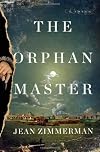
Warning: if you start reading this book, you may not be able to leave off until you've turned the last page. Jean Zimmerman has written an attention-holding tale of early 1660s New Amsterdam, though I should note that the book is perhaps not for the most squeamish of readers, as there is a fair amount of nastiness afoot in the bustling Dutch settlement.
This reminded me a bit of Caleb Carr's books, or Imogen Robertson's Crowther-Westerman series (unlikely partners setting out to solve a show more series of vicious crimes, in this case the sudden disappearance of orphaned children). Zimmerman shakes things up a bit by offering brief snippets from different perspectives, so the reader occasionally sees things from unexpected angles. The book runs somewhat long at 400+ pages, but I found that it fairly flew by for me ... even though you know what's going on, it's still something of a rush to figure out how it's all going to end up.
New Amsterdam makes for quite an interesting setting for the story, and it allows Zimmerman to explore some themes that don't often get much treatment in historical fiction set in early America: the role and status of women role in Dutch colonial society, American Indian superstitions and traditions, and the search for the regicides who fled to New England at the time of the Restoration. show less
This reminded me a bit of Caleb Carr's books, or Imogen Robertson's Crowther-Westerman series (unlikely partners setting out to solve a show more series of vicious crimes, in this case the sudden disappearance of orphaned children). Zimmerman shakes things up a bit by offering brief snippets from different perspectives, so the reader occasionally sees things from unexpected angles. The book runs somewhat long at 400+ pages, but I found that it fairly flew by for me ... even though you know what's going on, it's still something of a rush to figure out how it's all going to end up.
New Amsterdam makes for quite an interesting setting for the story, and it allows Zimmerman to explore some themes that don't often get much treatment in historical fiction set in early America: the role and status of women role in Dutch colonial society, American Indian superstitions and traditions, and the search for the regicides who fled to New England at the time of the Restoration. show less
"...beauty and terror often bump up against each other."
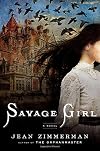
From Manhattan's Gilded Age society Hugo Delegate finds himself confronted with a murder. Left alone in the room with the body of his dead friend, Hugo surmises that it is possible that he committed the crime and has no recollection, he also knows that it is possible that his family's ward and the girl he loves has committed the murder. Hugo recounts his entire story of the murders and the Savage Girl as he sits in the Tombs with his show more lawyers, desperately trying to convince them that it was he who murdered this man - and others- and not his beloved Savage Girl.
While on a trip to Virginia City to visit the family silver mining operation, the Delegate family comes across a side show featuring a feral child. Anna Maria Delegate, Hugo's mother and Freddy Delegate, Hugo's father each become enamored with the feral girl featured in the show. They decide that they would like to take this Savage Girl back to New York with them and attempt to 'civilize' her and prepare her for a debut into New York society. Is the person the Delegate's brought home the girl that they want her to be, or is she still a savage girl at heart?
The mystery in this story is very intriguing. There are a lot of different layers and it unfolds continuously until the very end. The entire story is told from Hugo's point of view while contained within a prison cell. So, we only know what he knows about Bronwyn (the Savage Girl) which was really frustrating to me, but kept up the mystery. I really wanted to know her character and her motivations better. We find some of this out slowly throughout the story and a little bit in the epilogue. The setting Manhattan's Gilded Age was beautifully described, we are taken on a beautiful personal train that traveled across the country, into a Manhattan mansion and behind the scenes at a debutante ball. All of this glittering and rich society was well contrasted with the darkness of the brutal murders.
Savage Girl was received for free from the publisher in exchange for an honest review. show less
From Manhattan's Gilded Age society Hugo Delegate finds himself confronted with a murder. Left alone in the room with the body of his dead friend, Hugo surmises that it is possible that he committed the crime and has no recollection, he also knows that it is possible that his family's ward and the girl he loves has committed the murder. Hugo recounts his entire story of the murders and the Savage Girl as he sits in the Tombs with his show more lawyers, desperately trying to convince them that it was he who murdered this man - and others- and not his beloved Savage Girl.
While on a trip to Virginia City to visit the family silver mining operation, the Delegate family comes across a side show featuring a feral child. Anna Maria Delegate, Hugo's mother and Freddy Delegate, Hugo's father each become enamored with the feral girl featured in the show. They decide that they would like to take this Savage Girl back to New York with them and attempt to 'civilize' her and prepare her for a debut into New York society. Is the person the Delegate's brought home the girl that they want her to be, or is she still a savage girl at heart?
The mystery in this story is very intriguing. There are a lot of different layers and it unfolds continuously until the very end. The entire story is told from Hugo's point of view while contained within a prison cell. So, we only know what he knows about Bronwyn (the Savage Girl) which was really frustrating to me, but kept up the mystery. I really wanted to know her character and her motivations better. We find some of this out slowly throughout the story and a little bit in the epilogue. The setting Manhattan's Gilded Age was beautifully described, we are taken on a beautiful personal train that traveled across the country, into a Manhattan mansion and behind the scenes at a debutante ball. All of this glittering and rich society was well contrasted with the darkness of the brutal murders.
Savage Girl was received for free from the publisher in exchange for an honest review. show less
The women of the house : how a colonial she-merchant built a mansion, a fortune, and a dynasty by Jean Zimmerman
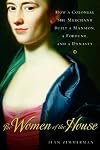
This biography of four Colonial women of the Philipse dynasty spans more than a century between Margaret Hardenbroeck’s 1659 arrival in New Amsterdam to the loss of her great-granddaughter Mary Philipse Morris’s estates following the Revolutionary War. I have mixed feelings about this book. I hate it when biographers tell us what their subjects thought if there isn’t documentation to back it up like a diary or letters. This author does this repeatedly throughout the book. She tells show more readers what Margaret thought about as she sat on her stoop, and what Mary and her husband talked about as they rode together in their carriage. There are no diaries or letters in the source list. The source list reveals another weakness in the book, as it does not include archival or primary sources. The author relied almost exclusively on secondary sources. Finally, while it’s presented as women’s history, it’s really more of a history of the Philipse family, as there is as much emphasis on the men of the family as on the women.
Despite its flaws, I am glad that I read the book since I have New Amsterdam and New Netherlands ancestry. The book’s main strength is the social history of Colonial New York and families like the Philipses who built fortunes during that era. My ancestors weren’t in the same social circles as the Philipse family, but it’s likely that they would have done business with them at some point. At the very least, they would have used the Philipse family’s toll bridge that linked Manhattan to Westchester County and the outlying farmland. show less
Despite its flaws, I am glad that I read the book since I have New Amsterdam and New Netherlands ancestry. The book’s main strength is the social history of Colonial New York and families like the Philipses who built fortunes during that era. My ancestors weren’t in the same social circles as the Philipse family, but it’s likely that they would have done business with them at some point. At the very least, they would have used the Philipse family’s toll bridge that linked Manhattan to Westchester County and the outlying farmland. show less
I was intrigued from the very first exposure I had to The Orphanmaster by Jean Zimmerman, primarily because I am a New Yorker and totally enamored with the history of my state. That, combined with all the elements I love in a story – mystery, murder, romance – how could I not read this?
I was not disappointed. At all.
The Orphanmaster didn’t grab me right away, however. The first chapter detailing the activities of spies and assassins dispatched across the globe to hunt and murder the show more men who authorized the execution of Charles I of England, kind of left me cold, but as I read further, it became clear why Zimmerman began the story in this way. Edward Drummond, our hero, is one of those spies and his activities in New Amsterdam and New England are driven by his mission to hunt three regicides who have taken refuge in the New World. It also didn’t hurt that the second chapter contained one of the most frightening scenes I’ve read in a book since Peter Straub’s Ghost Story.
What did immediately capture my attention was the character of Blandine van Couvering, a she-merchant (don’t you love that term?) trader and an orphan who moved easily and confidently through the hard scrabble world of early New York. It is through Blandine that the story gets it red thread – the thing that holds it all together. And what a character! Strong, independent, kind, beautiful (of course), a superb housekeeper, a skilled negotiator – a woman making her way in a man’s world. What I appreciated the most about Zimmerman’s treatment of Blandine were the references to the role of women in early Dutch culture. Blandine was not an anomaly. Under Dutch rule, women were allowed to work, to own property, and to choose their own husbands.
Blandine and Edward find themselves smack in the middle of a rash of child killings and disappearances – all of orphans. Blandine’s mentor, Aet Visser, the Orphanmaster of New Amsterdam, is involved, but we don’t know how deeply until well into the story. Zimmerman draws a vivid picture of a man conflicted as we watch Visser tumble into despair. Add to that several other well-drawn characters – Martyn Hendrickson, the handsome, dashing patroon who cannot be tamed, Kitane, a Lenape trapper afflicted with a horrifying mental illness, and Lightning, a terrifying half-breed – and you have all the elements of a thriller.
There are a number of gruesome scenes in this story that could and should repulse the reader. This is, in an odd way, a 17th century Silence of the Lambs, but Zimmerman uses the horrifying actions of the killers to create a suspenseful, nail-biting story that had me guessing to the end. There are a lot of elements at work here besides the child killings, but all the loose ends are tied up in a frenzied ending that left me wanting more from this author. I was also pleasantly surprised to find Blandine and Edward ending their days in Honeoye, a lovely area quite near where I live.
It’s been awhile since I had trouble putting a book down, so I appreciated the combination of riveting story and skillful telling. Highly recommended. show less
I was not disappointed. At all.
The Orphanmaster didn’t grab me right away, however. The first chapter detailing the activities of spies and assassins dispatched across the globe to hunt and murder the show more men who authorized the execution of Charles I of England, kind of left me cold, but as I read further, it became clear why Zimmerman began the story in this way. Edward Drummond, our hero, is one of those spies and his activities in New Amsterdam and New England are driven by his mission to hunt three regicides who have taken refuge in the New World. It also didn’t hurt that the second chapter contained one of the most frightening scenes I’ve read in a book since Peter Straub’s Ghost Story.
What did immediately capture my attention was the character of Blandine van Couvering, a she-merchant (don’t you love that term?) trader and an orphan who moved easily and confidently through the hard scrabble world of early New York. It is through Blandine that the story gets it red thread – the thing that holds it all together. And what a character! Strong, independent, kind, beautiful (of course), a superb housekeeper, a skilled negotiator – a woman making her way in a man’s world. What I appreciated the most about Zimmerman’s treatment of Blandine were the references to the role of women in early Dutch culture. Blandine was not an anomaly. Under Dutch rule, women were allowed to work, to own property, and to choose their own husbands.
Blandine and Edward find themselves smack in the middle of a rash of child killings and disappearances – all of orphans. Blandine’s mentor, Aet Visser, the Orphanmaster of New Amsterdam, is involved, but we don’t know how deeply until well into the story. Zimmerman draws a vivid picture of a man conflicted as we watch Visser tumble into despair. Add to that several other well-drawn characters – Martyn Hendrickson, the handsome, dashing patroon who cannot be tamed, Kitane, a Lenape trapper afflicted with a horrifying mental illness, and Lightning, a terrifying half-breed – and you have all the elements of a thriller.
There are a number of gruesome scenes in this story that could and should repulse the reader. This is, in an odd way, a 17th century Silence of the Lambs, but Zimmerman uses the horrifying actions of the killers to create a suspenseful, nail-biting story that had me guessing to the end. There are a lot of elements at work here besides the child killings, but all the loose ends are tied up in a frenzied ending that left me wanting more from this author. I was also pleasantly surprised to find Blandine and Edward ending their days in Honeoye, a lovely area quite near where I live.
It’s been awhile since I had trouble putting a book down, so I appreciated the combination of riveting story and skillful telling. Highly recommended. show less
Lists
Awards

You May Also Like


Associated Authors
Statistics
- Works
- 10
- Members
- 936
- Popularity
- #27,446
- Rating
- 3.6
- Reviews
- 54
- ISBNs
- 43
- Languages
- 3