
Margaret Wander Bonanno (1950–2021)
Author of Strangers from the Sky
About the Author
Series
Works by Margaret Wander Bonanno
Associated Works
Tagged
Common Knowledge
- Canonical name
- Bonanno, Margaret Wander
- Other names
- North, Rick (pseudonym)
- Birthdate
- 1950-02-07
- Date of death
- 2021-04-08
- Gender
- female
- Occupations
- science fiction writer
- Nationality
- USA
- Birthplace
- New York, New York, USA
- Place of death
- Los Angeles, California, USA
- Associated Place (for map)
- USA
Members
Reviews
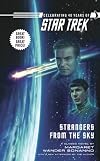
Thank you, Margaret Wander Bonanno! When one Star Trek novel lets you down, another restores your faith in published fan fiction. Apparently, this novel belongs to the same series as Vonda McIntyre's First Adventure, but I actually loved this 'gap filler', which alternates between a young Kirk and crew from 'Where No Man Has Gone Before' in the first series to the older and wiser characters of the films. I even enjoyed the establishing chapters, drawing together irascible first officer show more Melody Sawyer and her captain with kelp farmers Tatya and Yoshi over the crash-landing of a Vulcan craft, and original characters usually bore me silly.
Bonanno's love of Kirk, Spock and McCoy, however, was all that was needed to completely win me over. Here is a woman who understands the magic of the characters and the show! The bond - the 'silver link' - between Kirk and Spock is beautifully drawn upon, hinting at 'the story of this human and a certain Vulcan' without getting too slashy. And the complexity of Kirk's personality is respected, not dumbed down to the level of popular stereotype. I loved the creative 'missing mission' chapters with Gary Mitchell, Elizabeth Dehner and Lee Kelso, too, showing Kirk in transition from edgy young captain to confident, trusted leader. I could have lived without the meddling wizard, but Spock's time with his ancestor was touching, and the multiple threads of the story tied neatly together in the end. show less
Bonanno's love of Kirk, Spock and McCoy, however, was all that was needed to completely win me over. Here is a woman who understands the magic of the characters and the show! The bond - the 'silver link' - between Kirk and Spock is beautifully drawn upon, hinting at 'the story of this human and a certain Vulcan' without getting too slashy. And the complexity of Kirk's personality is respected, not dumbed down to the level of popular stereotype. I loved the creative 'missing mission' chapters with Gary Mitchell, Elizabeth Dehner and Lee Kelso, too, showing Kirk in transition from edgy young captain to confident, trusted leader. I could have lived without the meddling wizard, but Spock's time with his ancestor was touching, and the multiple threads of the story tied neatly together in the end. show less

One of the first three Star Trek novels I read, this one's a heavy hitter in terms of how reasoning behind a variety of ethical sets go. Coming from this, I found the later fluff showing up in Star Trek to be very strange.
This book does an outstanding job of addressing, "What would someone from this background and mindset do?" Which is pretty much the primary thing I ask of any book. Probably the most serious addressing of consent breach I've seen in Star Trek.
This book does an outstanding job of addressing, "What would someone from this background and mindset do?" Which is pretty much the primary thing I ask of any book. Probably the most serious addressing of consent breach I've seen in Star Trek.

Considering the insults the original author had to endure, the quality here is actually pretty good. Any review of this book is liable to get side-tracked by the stories behind the story. Like, how the author is not actually the author because of editor machinations and rewrite duties handed elsewhere multiple times for no discernable good reason. How you can read the original manuscript for free online, titled 'Music of the Spheres' (see Member Recommendations.) Or, on another topic, how show more this was the obvious premise to have written a script for the movie Star Trek V around, naturally continuing the story that had developed since Wrath of Khan, until Shatner came up with his televangelist-inspired "searching for God" idea and pursued that instead.
My kids are of an age to re-trigger my Star Trek fandom as they try to parse its complexities. One of them tried to read this first and wasn't pulled in. Still, I decided I wanted to try it myself for a glimpse of the ST5 movie that might have been. It reassures me quickly that the Federation doesn't simply let the probe drift away like the movies suggest, they actually track its subsequent movement. Its wandering carries it toward the Neutral Zone, which coincides with a kind of Romulan perestroika that invites new diplomacy between Romulans and the Federation. Happily the probe plays a significant role throughout the novel, and several of the guest characters are interesting. The Enterprise crew is the only bland element, at least until the climax nears when it finally becomes their show. A movie script would beef up their roles throughout, especially for Chekov and Scotty, and remove some of the other people. Would it have led to a better Star Trek V than we got? Not much wouldn't, so yes. There's a massive coincidence involving crystals that kind of guts the whole plot, but that sort of thing usually plays better on screen anyway. show less
My kids are of an age to re-trigger my Star Trek fandom as they try to parse its complexities. One of them tried to read this first and wasn't pulled in. Still, I decided I wanted to try it myself for a glimpse of the ST5 movie that might have been. It reassures me quickly that the Federation doesn't simply let the probe drift away like the movies suggest, they actually track its subsequent movement. Its wandering carries it toward the Neutral Zone, which coincides with a kind of Romulan perestroika that invites new diplomacy between Romulans and the Federation. Happily the probe plays a significant role throughout the novel, and several of the guest characters are interesting. The Enterprise crew is the only bland element, at least until the climax nears when it finally becomes their show. A movie script would beef up their roles throughout, especially for Chekov and Scotty, and remove some of the other people. Would it have led to a better Star Trek V than we got? Not much wouldn't, so yes. There's a massive coincidence involving crystals that kind of guts the whole plot, but that sort of thing usually plays better on screen anyway. show less

Here we have a first novel published in 1979. I am left to guess that it didn't set the sales charts afire by the fact that it's all but disappeared from Ms. Bonanno's CV ( see her website and be persistent!), but that sure hasn't stopped Ms. Bonanno from being a very successful writer (back to the CV, helluva career).
Many first novels feature a protagonist that is the author in a fright wig, so to speak. I suspect that this novel features a supporting character that's the author in a fright show more wig, the character of Vicki, the judgmental friend of a young mother getting a divorce. The fact that Vicki gets the space and sympathy she does, when she's not central to the plot, makes me suspect this...I ccould be wrong, of course.
The novel itself is about Sarah, the distinguished and successful professor at a small Catholic school, whose devastating stroke leaves her changed forever, and in need of round-the-clock help. Joan, a young college-educated divorcing mother, needs a job to support herself and her son. Pietro, a priest and Sarah's teaching colleague, is utterly in love with Sarah and, we suspect, she with him...but Sarah never encourages him to break his vows as she did by leaving a nunnery to marry a famous sculptor so long ago.
These three people, quite convincingly drawn, are in orbit around each other held by the metaphysical gravity of love...and by the different force that is lovingkindness. Each character has strong bonds of affection to Sarah and to each other, but each is also acting out of the need to express a sort of agape for the others, that disinterested spirit of goodwill that is such a Catholic staple in Good Works.
But Bonanno's long career in fiction can be explained in one short sentence about this, her first novel: She makes you believe that goodness, lovingkindness, is real.
I believe Sarah helps Joan, who helps her, and Pietro helps them both, for the mixed and very human motives that power each of us in our actions. But the impressive skill of a first-time novelist in delineating characters who can believably act selflessly should not go unremarked.
This is a period piece in many ways. I recommend it to aficionados of character-driven stories, to people over 45, and to Catholics who would like to remember what it was like to read something about a *good* priest. show less
Many first novels feature a protagonist that is the author in a fright wig, so to speak. I suspect that this novel features a supporting character that's the author in a fright show more wig, the character of Vicki, the judgmental friend of a young mother getting a divorce. The fact that Vicki gets the space and sympathy she does, when she's not central to the plot, makes me suspect this...I ccould be wrong, of course.
The novel itself is about Sarah, the distinguished and successful professor at a small Catholic school, whose devastating stroke leaves her changed forever, and in need of round-the-clock help. Joan, a young college-educated divorcing mother, needs a job to support herself and her son. Pietro, a priest and Sarah's teaching colleague, is utterly in love with Sarah and, we suspect, she with him...but Sarah never encourages him to break his vows as she did by leaving a nunnery to marry a famous sculptor so long ago.
These three people, quite convincingly drawn, are in orbit around each other held by the metaphysical gravity of love...and by the different force that is lovingkindness. Each character has strong bonds of affection to Sarah and to each other, but each is also acting out of the need to express a sort of agape for the others, that disinterested spirit of goodwill that is such a Catholic staple in Good Works.
But Bonanno's long career in fiction can be explained in one short sentence about this, her first novel: She makes you believe that goodness, lovingkindness, is real.
I believe Sarah helps Joan, who helps her, and Pietro helps them both, for the mixed and very human motives that power each of us in our actions. But the impressive skill of a first-time novelist in delineating characters who can believably act selflessly should not go unremarked.
This is a period piece in many ways. I recommend it to aficionados of character-driven stories, to people over 45, and to Catholics who would like to remember what it was like to read something about a *good* priest. show less
Lists
Awards


You May Also Like


Associated Authors
Statistics
- Works
- 23
- Also by
- 2
- Members
- 3,530
- Popularity
- #7,195
- Rating
- 3.6
- Reviews
- 35
- ISBNs
- 74
- Languages
- 4
- Favorited
- 3