

Karen Haber
Author of Meditations on Middle Earth
About the Author
Series
Works by Karen Haber
Masters of Science Fiction and Fantasy Art: A Collection of the Most Inspiring Science Fiction, Fantasy, and Gaming Illustrators in the World (2011) 26 copies
Kong Unbound: The Cultural Impact, Pop Mythos, and Scientific Plausibility of a Cinematic Legend (2005) — Editor — 21 copies
Up The Side Of The Air 2 copies
A Web for Christmas [Short Story] 2 copies
The Soul Of Truth 2 copies
3 RMS Good View 2 copies
Batman in Nighttown 2 copies
A Bone Dry Place 2 copies
Home Security [Short Story] 1 copy
Doing The Angry Centipede 1 copy
Collected Short Fiction 1 copy
First Nighter 1 copy
The Shores of Morning 1 copy
Dateline: Metropolis 1 copy
The Joker's Christmas 1 copy
Dog Is My Copilot 1 copy
Associated Works
J. Michael Straczynski's Rising Stars, Book 1: Born in Fire (2002) — Editor, some editions — 72 copies, 1 review
This Way to the End Times: Classic Tales of the Apocalypse (2016) — Contributor — 51 copies, 2 reviews
J. Michael Straczynski's Rising Stars, Book 2: Ten Years After (2002) — Editor, some editions — 47 copies, 1 review
The Unauthorized X-Men: SF and Comic Writers on Mutants, Prejudice, and Adamantium (Smart Pop series) (2006) — Contributor — 34 copies, 1 review
Locus Nr.492 2002.01 — Contributor — 1 copy
Tagged
Common Knowledge
- Legal name
- Silverberg, Karen Lee Haber
- Other names
- Haber, Karen
- Birthdate
- 1955-01-07
- Gender
- female
- Education
- Cedar Crest College (B.A.)
- Occupations
- novelist
editor
art critic
non-fiction writer - Relationships
- Silverberg, Robert (spouse)
- Nationality
- USA
- Birthplace
- Bronxville, New York, USA
- Places of residence
- New York, USA
- Associated Place (for map)
- New York, USA
Members
Discussions
Embossed Lies! in Good Show Sir! — bad science fiction and fantasy covers (March 2)
Reviews
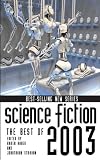
I keep picking up various old "best of" SF anthologies at library sales and such, so this is me trying to actually read at least one of them, rather than letting them all sit aging forever on my shelves. Although part of my mind instinctively balks at referring to a book from 2003 as "old," anyway. I mean, that was only a few years ago, right? Right?
Anyway. This is a moderately chunky paperback at about 440 pages, although for that length there might be fewer stories than you'd expect, as show more many of them are fairly long, with I think at least a couple at or approaching novella length. As is common for this sort of thing, the editors are not particularly precious or pedantic about genre distinctions, with a number of stories here that could be perhaps more properly categorized as horror or fantasy than science fiction. (I find the inclusion of Neil Gaiman's Sherlock Holmes/Lovecraft mashup, "A Study in Emerald," particularly amusing on this front, as I think you could argue that it ticks off almost every genre except science fiction. Not that that's a complaint! I'd read that one before, but it'd been a while and I'd honestly forgotten just how clever it was, so it was nice to encounter it again.)
As usual, of course, notions of what constitutes the "best" of anything can vary enormously, and for me the contents here ranged from very good indeed to stuff that just left me cold. (Unfortunately, one of the latter, Vernor Vinge's "The Cookie Monster," which had a decent idea but an execution I found dull and unconvincing, was by far the longest one in the collection.)
It is, by the way, always kind of interesting to look for themes in these sorts of anthologies, and this one absolutely does have one, as the vast majority of these stories deal with the idea of exploitation in some way, from Paolo Bacigalupi's impressively disturbing story of young girls whose bodies are altered in horrific ways to amuse the rich to Susan Mosser's very pointed piece of social commentary about corporations who force people into indentured servitude for not being able to afford air. All of which, rather depressingly, makes the volume feel not at all dated and still very, very relevant.
It's probably also worth noting that some of the stories here have typos or weird formatting issues that make me wonder if they were poorly scanned in or possibly printed directly from emails. Then again, maybe that's about what one should expect from a book whose back cover blurb touts its main selling point as being "affordable"? show less
Anyway. This is a moderately chunky paperback at about 440 pages, although for that length there might be fewer stories than you'd expect, as show more many of them are fairly long, with I think at least a couple at or approaching novella length. As is common for this sort of thing, the editors are not particularly precious or pedantic about genre distinctions, with a number of stories here that could be perhaps more properly categorized as horror or fantasy than science fiction. (I find the inclusion of Neil Gaiman's Sherlock Holmes/Lovecraft mashup, "A Study in Emerald," particularly amusing on this front, as I think you could argue that it ticks off almost every genre except science fiction. Not that that's a complaint! I'd read that one before, but it'd been a while and I'd honestly forgotten just how clever it was, so it was nice to encounter it again.)
As usual, of course, notions of what constitutes the "best" of anything can vary enormously, and for me the contents here ranged from very good indeed to stuff that just left me cold. (Unfortunately, one of the latter, Vernor Vinge's "The Cookie Monster," which had a decent idea but an execution I found dull and unconvincing, was by far the longest one in the collection.)
It is, by the way, always kind of interesting to look for themes in these sorts of anthologies, and this one absolutely does have one, as the vast majority of these stories deal with the idea of exploitation in some way, from Paolo Bacigalupi's impressively disturbing story of young girls whose bodies are altered in horrific ways to amuse the rich to Susan Mosser's very pointed piece of social commentary about corporations who force people into indentured servitude for not being able to afford air. All of which, rather depressingly, makes the volume feel not at all dated and still very, very relevant.
It's probably also worth noting that some of the stories here have typos or weird formatting issues that make me wonder if they were poorly scanned in or possibly printed directly from emails. Then again, maybe that's about what one should expect from a book whose back cover blurb touts its main selling point as being "affordable"? show less

This book feels like it was written by someone who doesn't actually watch Star Trek. With a publishing date of December 1996, I expect the author wrote it with only first first season of Star Trek Voyager as reference material. Even if you consider that though, the characters aren't written in a consistent manner, with the show or within the book itself.
The author's use of the Prime Directive as an excuse to slow down the story progression is lazy writing and shows she doesn't seem to show more understand what the Prime Directive is. So this is a pre-warp civilization. Okay. Prime Directive applies. Then they call the ship and say they've been visited before and know about other species out there. Okay. Does Prime Directive still apply? A little bit, maybe. I mean, that doesn't mean just give them warp tech, phasers, etc. But when they ask for medical help with a disease that is threatening their entire planet, Janeway's only concern seems to be acquiring materials to repair the ship.
That's right. We can send down shore leave parties. We can take materials and supplies from them. But we can't give them medical technology or even help them save their people. Janeway is content to let these Pre-warp aliens help her and the ship, but not help them in return.
I realize the Prime Directive is an odd thing that even in the various TV series seemed to be used and paid attention to only when convenient, but that's no excuse to continue the trend.
Also, Voyager's sensors, which are super advanced, are good enough to detect scarred tissue on Tom Paris, from orbit, but not pick out two human biosigns on a boat on the ocean? Wha?
On a ship strapped for energy, B'Elanna is going to waste transporter power beaming around the ship instead of walking? In a non-emergency. Wha?
As the planet turns towards Civil War, Janeway's like "Not our problem. Once we have fixed the ship, lets leave." That's not very Starfleet. In more than one case, the spirit of the law, with regards to the Prime Directive, was more important than the letter of the law - on the show. That was ignored here. Quoting Riker from TNG: Justice, "When has justice ever been as simple as a rule book?". No one in the book says "Hey, I understand the Prime Directive, but this isn't a scenario they foresaw and leaving an entire planet of people to die after they helped us isn't consistent with Starfleet or the Federation's ideals."
It's a shame really, because the planet, the aliens and the darra seemed like interesting ideas. It was just terribly executed. I don't think I've given a book 1 out of 5 stars before. I almost feel bad, but I really think it's a bad book. There's better out there, skip this one. show less
The author's use of the Prime Directive as an excuse to slow down the story progression is lazy writing and shows she doesn't seem to show more understand what the Prime Directive is. So this is a pre-warp civilization. Okay. Prime Directive applies. Then they call the ship and say they've been visited before and know about other species out there. Okay. Does Prime Directive still apply? A little bit, maybe. I mean, that doesn't mean just give them warp tech, phasers, etc. But when they ask for medical help with a disease that is threatening their entire planet, Janeway's only concern seems to be acquiring materials to repair the ship.
That's right. We can send down shore leave parties. We can take materials and supplies from them. But we can't give them medical technology or even help them save their people. Janeway is content to let these Pre-warp aliens help her and the ship, but not help them in return.
I realize the Prime Directive is an odd thing that even in the various TV series seemed to be used and paid attention to only when convenient, but that's no excuse to continue the trend.
Also, Voyager's sensors, which are super advanced, are good enough to detect scarred tissue on Tom Paris, from orbit, but not pick out two human biosigns on a boat on the ocean? Wha?
On a ship strapped for energy, B'Elanna is going to waste transporter power beaming around the ship instead of walking? In a non-emergency. Wha?
As the planet turns towards Civil War, Janeway's like "Not our problem. Once we have fixed the ship, lets leave." That's not very Starfleet. In more than one case, the spirit of the law, with regards to the Prime Directive, was more important than the letter of the law - on the show. That was ignored here. Quoting Riker from TNG: Justice, "When has justice ever been as simple as a rule book?". No one in the book says "Hey, I understand the Prime Directive, but this isn't a scenario they foresaw and leaving an entire planet of people to die after they helped us isn't consistent with Starfleet or the Federation's ideals."
It's a shame really, because the planet, the aliens and the darra seemed like interesting ideas. It was just terribly executed. I don't think I've given a book 1 out of 5 stars before. I almost feel bad, but I really think it's a bad book. There's better out there, skip this one. show less
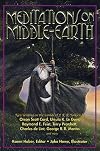
At the beginning of the 21st century, someone had the idea to cash in on the forthcoming Peter Jackson movies by inviting a bunch of popular fantasy authors to contribute essays on What Tolkien Means to Me. Almost all the respondents tell us how old they were when they first got hold of a copy of The Hobbit or The Lord of the Rings, how they stayed up all night reading it, and how it led them to write their own books when they grew up. All the authors seem like nice intelligent people show more (except for Orson Scott Card who is evidently a big jerk), but this gets old quickly. There are many many thousands of us who have similar stories, except that we never got to the writing books part.
Only two contributors offer anything like analysis, which is what I was looking for. One is a fellow named Michael Swanwick, whom I had frankly never heard of, but who has some useful things to say; I need to find his stuff and read it. The other is the late Ursula K. Le Guin. Her piece on How I Discovered Tolkien ("The Staring Eye") was published decades ago, in the collection The Language of the Night, so her essay here is an analysis of the narrative patterns of a single chapter, "Fog on the Barrow-downs," and it is the best piece of Tolkien criticism I have ever read, even better than T.A. Shippey at his peak. Evidently being a literary artist of genius is a great help in understanding the work of another such. show less
Only two contributors offer anything like analysis, which is what I was looking for. One is a fellow named Michael Swanwick, whom I had frankly never heard of, but who has some useful things to say; I need to find his stuff and read it. The other is the late Ursula K. Le Guin. Her piece on How I Discovered Tolkien ("The Staring Eye") was published decades ago, in the collection The Language of the Night, so her essay here is an analysis of the narrative patterns of a single chapter, "Fog on the Barrow-downs," and it is the best piece of Tolkien criticism I have ever read, even better than T.A. Shippey at his peak. Evidently being a literary artist of genius is a great help in understanding the work of another such. show less
(3.5)
This collection of essays has two types of reflections on the Lord of the Rings Trilogy: actual talk about its effect on sci fi and fantasy as genres and its impact on the publishing industry - and the authors swooning over the first time they read the trilogy. Obviously, the latter is less interesting.
Of course, like most compilations, it is a grab bag of excellent and so-so writings, though Orson Scott Card proves yet to be an ass. it reflects quite clearly through his piece, which show more seems to talk more about defending his own homophobia/racist/intolerances than anything about J. R. R. Tolkien or his writings.
But as a writer and as someone with an interest in both Lord of the Rings and the publishing industry, this was a very interesting read. show less
This collection of essays has two types of reflections on the Lord of the Rings Trilogy: actual talk about its effect on sci fi and fantasy as genres and its impact on the publishing industry - and the authors swooning over the first time they read the trilogy. Obviously, the latter is less interesting.
Of course, like most compilations, it is a grab bag of excellent and so-so writings, though Orson Scott Card proves yet to be an ass. it reflects quite clearly through his piece, which show more seems to talk more about defending his own homophobia/racist/intolerances than anything about J. R. R. Tolkien or his writings.
But as a writer and as someone with an interest in both Lord of the Rings and the publishing industry, this was a very interesting read. show less
Lists
Awards


You May Also Like


Associated Authors
Statistics
- Works
- 40
- Also by
- 59
- Members
- 2,683
- Popularity
- #9,572
- Rating
- 3.5
- Reviews
- 23
- ISBNs
- 77
- Languages
- 5
- Favorited
- 1