
Eleanor Clark (1) (1913–1996)
Author of Rome and a Villa
For other authors named Eleanor Clark, see the disambiguation page.
About the Author
Image credit: Courtesy of the NYPL Digital Gallery (image use requires permission from the New York Public Library)
Works by Eleanor Clark
Associated Works
Choice Cuts: A Savory Selection of Food Writing from Around the World and Throughout History (2002) — Contributor — 367 copies, 2 reviews
The Smiles of Rome: A Literary Companion for Readers and Travelers (2005) — Contributor — 68 copies, 2 reviews
Tagged
Common Knowledge
- Birthdate
- 1913-07-06
- Date of death
- 1996-02-16
- Gender
- female
- Education
- Vassar College
- Occupations
- travel writer
memoirist
novelist
essayist
reviewer
children's book author (show all 9)
playwright
short story writer
poet - Organizations
- American Academy of Arts and Letters (Literature ∙ 1968)
- Awards and honors
- American Academy of Arts and Letters Academy Award ( [1947])
National Book Award (poetry ∙ 1958) - Relationships
- Warren, Robert Penn (husband)
Warren, Rosanna (daughter) - Short biography
- The New York Times said in her obituary: Eleanor Clark, an author best known for the evocative range of her accounts of oystering in Brittany and of the streets of Rome. . . was a master stylist whose works won critical acclaim and inspired a devoted private following. Her writings included reviews, essays, children's books and novels.
In a review in The New York Times, Anatole Broyard called a 1975 reissue of her 1952 book "Rome and the Villa" "perhaps the finest book ever to be written about a city."
But the most telling tributes came from the generations of American and other tourists who followed her steps -- page by dog-eared page -- through the city, marveling at each architectural feature that triggered her soaring ruminations on everything from ancient history and early Roman poetry to modern social conditions.
Although she was sometimes described as a travel writer, "Rome and a Villa" is not a traditional travel book. Nor is "The Oysters of Locmariaquer," a somewhat similar book that used oystering in Brittany as a springboard to an excursion through history and culture, and won the 1964 National Book Award for arts and letters. Each reflected deep scholarship and a lively intuition. - Nationality
- USA
- Birthplace
- Los Angeles, California, USA
- Places of residence
- Fairfield, Connecticut, USA
Roxbury, Connecticut, USA - Place of death
- Boston, Massachusetts, USA
- Associated Place (for map)
- USA
Members
Reviews
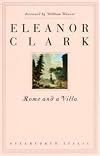
Even though the last time Clark visited Rome the year was 1974, you cannot help but daydream of traveling to Rome when you read Rome and a Villa. I started a mental checklist of everything I hoped to see, should I get there myself: the 124 steps of Santa Mana Aracoeli beside the Campidoglio, feral cats scattering in the rain, the Piazza Vittorio, the famous Trevi Fountain which was funded with a second tax on wine, and capable of moving 80,000 cubic meters of water per day.
Clark even opened show more my eyes to the Roman influences here in the United States: Penn Station in New York City; how it was designed with the Baths of Caracalle in mind.
Beyond architecture and tourist draws, Clark paints pictures of influential individuals like Julius Caesar and Hadrian. She meanders with her narrative and is sometimes difficult to follow, but worth it if you can stick with her. show less
Clark even opened show more my eyes to the Roman influences here in the United States: Penn Station in New York City; how it was designed with the Baths of Caracalle in mind.
Beyond architecture and tourist draws, Clark paints pictures of influential individuals like Julius Caesar and Hadrian. She meanders with her narrative and is sometimes difficult to follow, but worth it if you can stick with her. show less
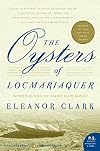
Brilliantly written -- wit, charm, grace, woven stories into observation -- into the mysteries of the zoological and historical depths of the oyster industry in Brittany.

This is a famous book, well-reviewed when it came out, still highly recommended back when I was in college. It has marinated on my shelves for quite a while. And now, a great disappointment. Clark writes in a random, stream-of-consciousness, frequently run-on sentence style that I find quite off-putting. She often tends toward the epigrammatic (think Martial, but all of the epigram, none of the humanity). Sometimes she devolves into mere catalogs, e.g., for the fountains and palaces of Rome. show more These can grow quite tedious. She can be a judgmental Yankee. Sometimes she is lacking in aesthetics of language: Cesare Borgia is called Caesar Borgia; just doesn't sound right. Sometimes the problem is as simple as wordy descriptions of buildings or works of art where a picture would be better. I mostly just skimmed the last part of the book.
Clark covers Rome of all periods. "Roman Journal I" covers mostly ancient remains, II mostly Renaissance with a nod to the early Christian. One whole chapter, "Salvatore Giuliano," is devoted to a Sicilian bandit who had nothing to do with Rome or the Villa. The long chapter on Hadrian's Villa has its moments (a few), but is mostly a nastygram on Hadrian himself. "Beside the Pyramid," an addition to later editions, is largely about the English in Rome, particularly Keats and Shelley. The final chapter, is devoted to the Roman poet G.G. Belli. At least that brought back fond memories of a college Latin professor, the late and wonderful Carl Trahman, who would quote stretches of Belli in his course on Roman satire.
I gave this three stars more because of its reputation than my enjoyment. It may be the sort of thing you like, if you like that sort of thing. show less
Clark covers Rome of all periods. "Roman Journal I" covers mostly ancient remains, II mostly Renaissance with a nod to the early Christian. One whole chapter, "Salvatore Giuliano," is devoted to a Sicilian bandit who had nothing to do with Rome or the Villa. The long chapter on Hadrian's Villa has its moments (a few), but is mostly a nastygram on Hadrian himself. "Beside the Pyramid," an addition to later editions, is largely about the English in Rome, particularly Keats and Shelley. The final chapter, is devoted to the Roman poet G.G. Belli. At least that brought back fond memories of a college Latin professor, the late and wonderful Carl Trahman, who would quote stretches of Belli in his course on Roman satire.
I gave this three stars more because of its reputation than my enjoyment. It may be the sort of thing you like, if you like that sort of thing. show less
A beautiful book about the bivalves of Brittany and the people who cultivate them.
Lists
Awards


You May Also Like


Associated Authors
Statistics
- Works
- 10
- Also by
- 9
- Members
- 442
- Popularity
- #55,391
- Rating
- 3.7
- Reviews
- 8
- ISBNs
- 46
- Favorited
- 1