

Najat El Hachmi
Author of The Last Patriarch
About the Author
Works by Najat El Hachmi
El lunes nos querrán: Premio Nadal de Novela 2021 (Áncora & Delfín) (Spanish Edition) (2021) 56 copies, 5 reviews
Associated Works
Tots els contes (volum III): Caires vius, Ombrívoles, Drames rurals (2019) — Afterword, some editions — 9 copies
Tagged
Common Knowledge
- Canonical name
- El Hachmi, Najat
- Legal name
- El Hachmi, Najat
- Birthdate
- 1979-07-02
- Gender
- female
- Education
- Universitat de Barcelona (Facultat de Filologia)
- Nationality
- Spain
Morocco - Birthplace
- Beni Sidel, Nador, Marroc
- Places of residence
- Barcelona, Barcelonès, Catalunya
Members
Reviews
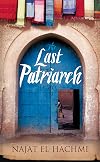
This book is brilliant, but not as compelling as I thought it might be when it started. The reason for this might be the structure – it's divided into two parts, each with around three dozen extremely short chapters, each of which tells a story that is, for the most part, self-contained. So, it's great for burning through a few chapters while on the bus or train to somewhere, but it's also too easy to get distracted from if you're trying to actually read a solid chunk.
As for the plot, the show more blurb summarises it pretty well, except that I don't think the family ever made it to Barcelona. It's hard to know though, because the book makes reference to so many "local capitals" and "regional capitals" and such that are never given names. Given Peter Bush's idiosyncratic translation of La plaça del diamant, I'm not sure if this vagueness was in the original text or if it was his idea of being "helpful". Either way, the city where the family lives sounds smaller and more rural than Barcelona.
The story follows Mimoun, possibly the most contemptuous man alive, and the "patriarch" of the title. Honestly, he's a caricature, the personification of the patriarchy. It's also interesting to note that the narrator, Mimoun's daughter, never reveals her name (at least that I can recall!), which I would think is to make her the personification of the patriarchy's counterweight – a woman, and a migrant woman of colour at that, in Europe. But rather than trying to tell the story of just one person, this novel tries to tell a story common to many people, and so the narrator goes nameless so as to represent all of them.
Representing the patriarchy, Mimoun is a terrible human being in pretty much every way. He has sex with every woman he can get his hands on, then denounces them all as "whores". He's incredibly controlling of his wife and daughter, telling them how they may dress, who they may meet, whether or not they may even leave the house in the first place, etc., with the slightest refusal clearly indicating she's a "whore". He's violent and abusive, with his (female-dominated) family making excuses for him, lying for him, covering up for him constantly, and he refuses to do any housework except in very unusual circumstances, which prove he's capable of it, he just won't. At one point, the novel explicitly states that Mimoun would fall apart if women weren't constantly looking after him.
And yet, while their labour is exploited for Mimoun's gain and still they get treated like shit, most of the women in this story just accept that this is their lot. His wife polices their daughter's behaviour almost as thoroughly as Mimoun himself. The narrator, however, is rebellious. In part, this is because her parents become so oppressive that trying to live a normal life becomes an act of rebellion. It also means that her rebellions aren't always good ideas. But it is satisfying to see a young woman determined to live her life the way she wants, and not be dominated by anyone.
The novel is very frank about sexuality – about men's womanising, of course, but also about young women's sexuality. The narrator describes her first orgasm; she describes how she enjoys 'touching' her female friends; she expresses all the insecurity and self-doubt that led her to persist with her disastrous first relationship. She talks about sex that's really bad because her partner can't be bothered turning her on or getting her off. It's the kind of openness about women's sexuality that I think Western culture needs more of.
The ending of the book is pretty fucking weird though, even though every Goodreads reviewer who commented on it loves it (?!).Basically, I cannot get over the fact that her big "fuck-you" to the patriarchy was FUCKING HER UNCLE. The fact that her rebellion leads to some powerful orgasms was symbolic and fine, but HER UNCLE?!? That just crossed a line of squick for me.
Anyway… I have thus far only commented on the women's-oppression-related aspects of this book, but I find that easier to talk about than the cultural side. One of the Catalan-language reviews of this book here on Goodreads commented that, if this novel had been written by someone of another race, it would be condemned as racist (as it seems to contrast the oppression women face in Morocco to the liberty of Spain), and while this is something to consider, it's also a counterfactual. It wasn't written by a white person, but by Najat El Hachmi, based in part on her own experiences. And at any rate, it's not intrinsically racist for white people to discuss the way women experience oppression in other cultures, but it is racist to use this to demonstrate how Western culture is "superior" or justify imperialism. While the novel is light on criticisms of Catalan society, I don't think it justifies imperialism, as it makes this young Moroccan woman agent of her own destiny. No one "saves" her, much less any Westerner. And she doesn't abandon her roots, although she fuses her cultures in her own way.
And that's it, I think! All in all, this was a great book, and particularly well-structured for anyone who only has a little time to read at a time. Recommended. show less
As for the plot, the show more blurb summarises it pretty well, except that I don't think the family ever made it to Barcelona. It's hard to know though, because the book makes reference to so many "local capitals" and "regional capitals" and such that are never given names. Given Peter Bush's idiosyncratic translation of La plaça del diamant, I'm not sure if this vagueness was in the original text or if it was his idea of being "helpful". Either way, the city where the family lives sounds smaller and more rural than Barcelona.
The story follows Mimoun, possibly the most contemptuous man alive, and the "patriarch" of the title. Honestly, he's a caricature, the personification of the patriarchy. It's also interesting to note that the narrator, Mimoun's daughter, never reveals her name (at least that I can recall!), which I would think is to make her the personification of the patriarchy's counterweight – a woman, and a migrant woman of colour at that, in Europe. But rather than trying to tell the story of just one person, this novel tries to tell a story common to many people, and so the narrator goes nameless so as to represent all of them.
Representing the patriarchy, Mimoun is a terrible human being in pretty much every way. He has sex with every woman he can get his hands on, then denounces them all as "whores". He's incredibly controlling of his wife and daughter, telling them how they may dress, who they may meet, whether or not they may even leave the house in the first place, etc., with the slightest refusal clearly indicating she's a "whore". He's violent and abusive, with his (female-dominated) family making excuses for him, lying for him, covering up for him constantly, and he refuses to do any housework except in very unusual circumstances, which prove he's capable of it, he just won't. At one point, the novel explicitly states that Mimoun would fall apart if women weren't constantly looking after him.
And yet, while their labour is exploited for Mimoun's gain and still they get treated like shit, most of the women in this story just accept that this is their lot. His wife polices their daughter's behaviour almost as thoroughly as Mimoun himself. The narrator, however, is rebellious. In part, this is because her parents become so oppressive that trying to live a normal life becomes an act of rebellion. It also means that her rebellions aren't always good ideas. But it is satisfying to see a young woman determined to live her life the way she wants, and not be dominated by anyone.
The novel is very frank about sexuality – about men's womanising, of course, but also about young women's sexuality. The narrator describes her first orgasm; she describes how she enjoys 'touching' her female friends; she expresses all the insecurity and self-doubt that led her to persist with her disastrous first relationship. She talks about sex that's really bad because her partner can't be bothered turning her on or getting her off. It's the kind of openness about women's sexuality that I think Western culture needs more of.
The ending of the book is pretty fucking weird though, even though every Goodreads reviewer who commented on it loves it (?!).
Anyway… I have thus far only commented on the women's-oppression-related aspects of this book, but I find that easier to talk about than the cultural side. One of the Catalan-language reviews of this book here on Goodreads commented that, if this novel had been written by someone of another race, it would be condemned as racist (as it seems to contrast the oppression women face in Morocco to the liberty of Spain), and while this is something to consider, it's also a counterfactual. It wasn't written by a white person, but by Najat El Hachmi, based in part on her own experiences. And at any rate, it's not intrinsically racist for white people to discuss the way women experience oppression in other cultures, but it is racist to use this to demonstrate how Western culture is "superior" or justify imperialism. While the novel is light on criticisms of Catalan society, I don't think it justifies imperialism, as it makes this young Moroccan woman agent of her own destiny. No one "saves" her, much less any Westerner. And she doesn't abandon her roots, although she fuses her cultures in her own way.
And that's it, I think! All in all, this was a great book, and particularly well-structured for anyone who only has a little time to read at a time. Recommended. show less
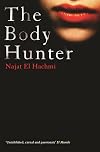
It's easy to feel like this book is a guilty pleasure, especially in the first third where the narrator, Isabel, simply describes half a dozen or so times she had sex with complete strangers. Still, I don't think a book is necessarily frivolous just because it's all about sex, and so with this. Najat El Hachmi isn't afraid to describe sex that's really bad, just as she criticises the dominant Western sexual culture and discusses alienation quite powerfully.
The book does have a somewhat weird show more format; most of the book takes the form of Isabel talking to the middle-aged, male writer for whom she cleans. He advises her about what he thinks she should do, but that actual advice – anything he says to her between these monologues – isn't in the book. However, the second part is a bit different because there are sections in the third-person describing the writer's daily routines alongside Isabel's monologue, which are italicised for this part. It comes across a bit experimental and I'm not sure what the reasoning is behind it, but I didn't exactly mind, either.
Mostly, though, I love the audacity of, having already written the requisite "migrant experience story", deciding that the haters can go fuck themselves because you want to write about sex in Catalonia now. I mean, why not? But you still can't say it's that common! I'm excited for any further books El Hachmi puts out.
PS: here's The Independent's review of The Body Hunter. It's not bad, and for the most part I agree with it, but I do disagree with the idea that in the end it's a "conventional morality tale" (even if only "to some degree"), because in it "promiscuous sex does not bring happiness". It's not moralising to admit that for the majority of people it does not, and especially for the majority of heterosexual women, who have to deal with men who don't bother to make sex enjoyable for them and don't have much respect for them, either. I just found it realistic and logical that meaningless sex with strangers just didn't have much effect on Isabel's loneliness or alienation. But hey… show less
The book does have a somewhat weird show more format; most of the book takes the form of Isabel talking to the middle-aged, male writer for whom she cleans. He advises her about what he thinks she should do, but that actual advice – anything he says to her between these monologues – isn't in the book. However, the second part is a bit different because there are sections in the third-person describing the writer's daily routines alongside Isabel's monologue, which are italicised for this part. It comes across a bit experimental and I'm not sure what the reasoning is behind it, but I didn't exactly mind, either.
Mostly, though, I love the audacity of, having already written the requisite "migrant experience story", deciding that the haters can go fuck themselves because you want to write about sex in Catalonia now. I mean, why not? But you still can't say it's that common! I'm excited for any further books El Hachmi puts out.
PS: here's The Independent's review of The Body Hunter. It's not bad, and for the most part I agree with it, but I do disagree with the idea that in the end it's a "conventional morality tale" (even if only "to some degree"), because in it "promiscuous sex does not bring happiness". It's not moralising to admit that for the majority of people it does not, and especially for the majority of heterosexual women, who have to deal with men who don't bother to make sex enjoyable for them and don't have much respect for them, either. I just found it realistic and logical that meaningless sex with strangers just didn't have much effect on Isabel's loneliness or alienation. But hey… show less
The Last Patriarch is the story of two people: Mimoun, son of a long line of Driouch patriarchs (and the "last patriarch" of the book's title) and his daughter, who ended his reign of authority.
Narrated by the grown daughter, the story begins in Morocco with the birth of Mimoun. As he grows up, it is clear that he is different, that something is wrong with him. Whether it has an organic cause or the result of abuses by some of the men in his family, Mimoun has great rages, intense show more jealousies, and uncontrolled passions. While the root of his instability is not clear, it is clear through the narration that Mimoun's behavior is enabled by the women of his family who coddle him, and a culture in which patriarchal authority is supreme.
Mimoun will eventually marry, and then leave his family to go to Spain to work, coming home perhaps once a year. He lives roughly, becomes reasonably successful at business, and certainly lives more comfortably in a modern state with his mistress than his family, who he has left behind at his father's house, all of whom struggle to survive. Until, that is, his family decides the situation is not tolerable and go to Spain to join him.
There isn't anything to like in Mimoun; he's a tyrant, an abuser and often mentally unstable - but he does have a sense of responsibility that makes him settle his family and rejoin them (and keeps the mistress, one of a long line of mistresses). His reign over the family is terrifying at times, but life goes on for them. Once the family comes to Spain, the story becomes the daughter's. Nameless throughout the book, she is bright girl with much promise, who is subject to her father's authority and abuses. He claims to adore his first born daughter, so perhaps she witnesses a bit more than she experiences directly, but his stranglehold on her person in complete. She seeks refuge and comfort in the Catalan dictionary, and later when she is older, in literature. These things help her to assimilate into the Catalan/Spanish culture around her, and will be a foundation in her eventual escape from her father through one final, desperate act.
This book is difficult to read, it is full of relentless abuse of various kinds: violence, attempted suicide, attempted murder...etc.. and yet, and yet... the storytelling is exquisite, and it is the narrative voice of the daughter, who clearly is telling this story from some safe, good place in the future (and thus provides a sense of hope), and who can find humor in the most horrible of circumstances, which mesmerizes the reader, and carries one through the book to the end. It is a wonderfully detailed and vivid picture of family life, both back in rural Morocco, and then later caught between two cultures in Spain. I found that once I had closed the pages, the horror faded and it was the triumph of the daughter, the essence of that desperate act, that really stuck with me. show less
Narrated by the grown daughter, the story begins in Morocco with the birth of Mimoun. As he grows up, it is clear that he is different, that something is wrong with him. Whether it has an organic cause or the result of abuses by some of the men in his family, Mimoun has great rages, intense show more jealousies, and uncontrolled passions. While the root of his instability is not clear, it is clear through the narration that Mimoun's behavior is enabled by the women of his family who coddle him, and a culture in which patriarchal authority is supreme.
Mimoun will eventually marry, and then leave his family to go to Spain to work, coming home perhaps once a year. He lives roughly, becomes reasonably successful at business, and certainly lives more comfortably in a modern state with his mistress than his family, who he has left behind at his father's house, all of whom struggle to survive. Until, that is, his family decides the situation is not tolerable and go to Spain to join him.
There isn't anything to like in Mimoun; he's a tyrant, an abuser and often mentally unstable - but he does have a sense of responsibility that makes him settle his family and rejoin them (and keeps the mistress, one of a long line of mistresses). His reign over the family is terrifying at times, but life goes on for them. Once the family comes to Spain, the story becomes the daughter's. Nameless throughout the book, she is bright girl with much promise, who is subject to her father's authority and abuses. He claims to adore his first born daughter, so perhaps she witnesses a bit more than she experiences directly, but his stranglehold on her person in complete. She seeks refuge and comfort in the Catalan dictionary, and later when she is older, in literature. These things help her to assimilate into the Catalan/Spanish culture around her, and will be a foundation in her eventual escape from her father through one final, desperate act.
This book is difficult to read, it is full of relentless abuse of various kinds: violence, attempted suicide, attempted murder...etc.. and yet, and yet... the storytelling is exquisite, and it is the narrative voice of the daughter, who clearly is telling this story from some safe, good place in the future (and thus provides a sense of hope), and who can find humor in the most horrible of circumstances, which mesmerizes the reader, and carries one through the book to the end. It is a wonderfully detailed and vivid picture of family life, both back in rural Morocco, and then later caught between two cultures in Spain. I found that once I had closed the pages, the horror faded and it was the triumph of the daughter, the essence of that desperate act, that really stuck with me. show less
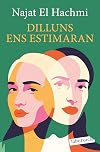
Una novel·la emotiva i reveladora sobre la importància que les dones siguin les protagonistes de les seves vides.
Dilluns ens estimaran explica la història d’una jove que vol ser lliure i feliç. Les circumstàncies en què viu, però, són complicades. Un entorn opressiu, del qual no li serà fàcil sortir sense haver de pagar un preu molt alt, marca el seu present i potser el seu destí.
Tot comença el dia que coneix una noia que l’enlluerna. Forma part de la seva mateixa comunitat, show more però la seva família viu la condició cultural sense els llasts ancestrals de la resta. La nova amiga tot just està afrontant els primers reptes que com a dona li presenta la vida. I ho fa amb una vitalitat, una determinació i una il·lusió tan fascinants que empenyen la jove a seguir les seves passes.
Una història emotiva i reveladora sobre la importància que les dones siguin les protagonistes de les seves vides, per més que hagin d’afrontar condicionants d’origen, de classe social o de gènere. El relat del dur camí cap a la llibertat.
«Hi ha raons de fons que em porten a escriure sobre nosaltres: aleshores no ho sabíem però estàvem conquerint territoris nous—impensables per a les nostres mares—, estàvem esquinçant tots els vels, esquerdàvem muralles impenetrables amb una cullereta esquifida i no ens n’adonàvem.» Najat El Hachmi show less
Dilluns ens estimaran explica la història d’una jove que vol ser lliure i feliç. Les circumstàncies en què viu, però, són complicades. Un entorn opressiu, del qual no li serà fàcil sortir sense haver de pagar un preu molt alt, marca el seu present i potser el seu destí.
Tot comença el dia que coneix una noia que l’enlluerna. Forma part de la seva mateixa comunitat, show more però la seva família viu la condició cultural sense els llasts ancestrals de la resta. La nova amiga tot just està afrontant els primers reptes que com a dona li presenta la vida. I ho fa amb una vitalitat, una determinació i una il·lusió tan fascinants que empenyen la jove a seguir les seves passes.
Una història emotiva i reveladora sobre la importància que les dones siguin les protagonistes de les seves vides, per més que hagin d’afrontar condicionants d’origen, de classe social o de gènere. El relat del dur camí cap a la llibertat.
«Hi ha raons de fons que em porten a escriure sobre nosaltres: aleshores no ho sabíem però estàvem conquerint territoris nous—impensables per a les nostres mares—, estàvem esquinçant tots els vels, esquerdàvem muralles impenetrables amb una cullereta esquifida i no ens n’adonàvem.» Najat El Hachmi show less
Awards


You May Also Like


Associated Authors
Statistics
- Works
- 10
- Also by
- 2
- Members
- 409
- Popularity
- #59,483
- Rating
- 3.7
- Reviews
- 26
- ISBNs
- 46
- Languages
- 6