
Albert Sánchez Piñol
Author of Cold Skin
About the Author
Works by Albert Sánchez Piñol
Després del naufragi 7 copies
Invictus 1 copy
Associated Works
Tagged
Common Knowledge
- Canonical name
- Sánchez Piñol, Albert
- Legal name
- Sánchez Piñol, Albert
- Birthdate
- 1965-07-11
- Gender
- male
- Education
- University of Barcelona
- Occupations
- anthropologist
- Nationality
- Spain
- Birthplace
- Barcelona, Spain
- Associated Place (for map)
- Barcelona, Spain
Members
Reviews
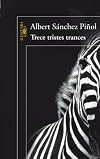
Todo lo que dice y escribe Albert Sánchez Piñol es interesante. Hace unos años vi una entrevista en la que explicaba que él escribía buscando divertir al lector, que esa debería ser la misión de todo escritor, entretener. Más recientemente, en otro entrevista, hablaba de estos cuentos, de estos 'Trece tristes trances', diciendo que todo cuento debe guardar un giro inesperado, una sorpresa final que atrape al lector. Y a fe mía que lo ha conseguido.
Este es un libro de cuentos, o más show more bien de fábulas, y como toda buena fábula, tienen su moraleja. Los que más me han gustado han sido, y los títulos casi lo dicen todo, 'Cuando caían hombres de la Luna' (fantástico cuento con mensaje anti-racismo), 'Todo lo que necesita saber una cebra para sobrevivir en la sabana' (simplemente genial), 'La ley de la selva' (que tiemblen los maltratadores de mujeres), 'Ya no puedo más' (excelente cuento de humor), 'El espantapájaros que amaba a los pájaros' y 'Nunca compres churros en domingo'.
Albert Sánchez Piñol tiene una bibliografía corta en longitud, pero larga en calidad. La Trilogía de los Monstruos es de lo mejor que se ha publicado en los últimos años. En 'La piel fría', la amenaza venía del mar, y en 'Pandora en el Congo', provenía del interior de la tierra. Parece ser, como suele ser habitual en muchos escritores, que entre novelas ha optado por escribir un libro de cuentos. Sólo puedo decir que estoy deseando que termine el tercer libro de la mencionada trilogía, donde la amenaza viene del aire. show less
Este es un libro de cuentos, o más show more bien de fábulas, y como toda buena fábula, tienen su moraleja. Los que más me han gustado han sido, y los títulos casi lo dicen todo, 'Cuando caían hombres de la Luna' (fantástico cuento con mensaje anti-racismo), 'Todo lo que necesita saber una cebra para sobrevivir en la sabana' (simplemente genial), 'La ley de la selva' (que tiemblen los maltratadores de mujeres), 'Ya no puedo más' (excelente cuento de humor), 'El espantapájaros que amaba a los pájaros' y 'Nunca compres churros en domingo'.
Albert Sánchez Piñol tiene una bibliografía corta en longitud, pero larga en calidad. La Trilogía de los Monstruos es de lo mejor que se ha publicado en los últimos años. En 'La piel fría', la amenaza venía del mar, y en 'Pandora en el Congo', provenía del interior de la tierra. Parece ser, como suele ser habitual en muchos escritores, que entre novelas ha optado por escribir un libro de cuentos. Sólo puedo decir que estoy deseando que termine el tercer libro de la mencionada trilogía, donde la amenaza viene del aire. show less
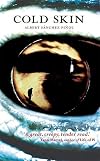
It’s difficult not to be reminded of H.P. Lovecraft, the father of the modern horror genre, when you read Cold Skin, by Albert Sanchez Pinol – that is, if you have read Lovecraft before. For myself, I first experienced the true inner terror Lovecraft provokes when I was an adolescent, staying up late with wide eyes reading about Cthulu and the Old Gods and the nameless horror they inspired as protagonists who were grown men collapsed in a helpless paroxysm because these creatures were show more even too awful to look upon. Other reviewers have noted the congruence to the “Lovecraftian” and even applied the term “phantasmagorical,” which perhaps sums both up quite nicely.
For his part, Pinol is a much better than writer than Lovecraft, whose over-the-top style, over-the-top hyperbole, over-the-top use of ten dollar words – for Lovecraft, like Faulkner (also a much better writer) it can never be twilight, it must be crepuscular – is well . . . simply just over-the-top, so even the nameless terror lingers on the edge of the absurd as you wind down another collection of Lovecraft short stories. But the inspiration gifted to others from Lovecraft’s pen – from Rod Serling to Stephen King – was the true legacy he bestowed for generations after you crawled down on hands and knees panting from both the terror and the writing style from the craggy cliffs of the “mountains of madness.” I’m sure Pinol and his novel, whom other reviewers compare to Stephen King, H.G. Wells, Robinson Crusoe and Lord of the Flies, descends from Lovecraft, and in the very best tradition.
Cold Skin is that rare horror novel that transcends horror to explore the great themes of modern fiction and the human condition -- and perhaps horror is simply the convenient genre Pinol employs as its framework, just as Ursula K. Le Guin utilizes science fiction to the same end – such as Mary Shelley’s Frankenstein, Oscar Wilde’s The Picture of Dorian Gray, and Hawthorne’s House of the Seven Gables. He succeeds masterfully. Not only is Cold Skin a powerful horror novel in its own right without the greater themes, these greater themes are abundant and explored with deft artistic hands: loneliness, isolation, xenophobia, camaraderie, betrayal, violence, tenderness, the construction of “the other” as nemesis as justification for its obliteration, war, armistice, tumult, pain, anguish, triumphalism, cynical abandonment and the intoxication of love, hate and … gin. Outstanding.
This is Pinol’s first novel, although he has a long resume of non-fiction. I can’t wait for the next release. In the meantime, I think I will read this one again. show less
For his part, Pinol is a much better than writer than Lovecraft, whose over-the-top style, over-the-top hyperbole, over-the-top use of ten dollar words – for Lovecraft, like Faulkner (also a much better writer) it can never be twilight, it must be crepuscular – is well . . . simply just over-the-top, so even the nameless terror lingers on the edge of the absurd as you wind down another collection of Lovecraft short stories. But the inspiration gifted to others from Lovecraft’s pen – from Rod Serling to Stephen King – was the true legacy he bestowed for generations after you crawled down on hands and knees panting from both the terror and the writing style from the craggy cliffs of the “mountains of madness.” I’m sure Pinol and his novel, whom other reviewers compare to Stephen King, H.G. Wells, Robinson Crusoe and Lord of the Flies, descends from Lovecraft, and in the very best tradition.
Cold Skin is that rare horror novel that transcends horror to explore the great themes of modern fiction and the human condition -- and perhaps horror is simply the convenient genre Pinol employs as its framework, just as Ursula K. Le Guin utilizes science fiction to the same end – such as Mary Shelley’s Frankenstein, Oscar Wilde’s The Picture of Dorian Gray, and Hawthorne’s House of the Seven Gables. He succeeds masterfully. Not only is Cold Skin a powerful horror novel in its own right without the greater themes, these greater themes are abundant and explored with deft artistic hands: loneliness, isolation, xenophobia, camaraderie, betrayal, violence, tenderness, the construction of “the other” as nemesis as justification for its obliteration, war, armistice, tumult, pain, anguish, triumphalism, cynical abandonment and the intoxication of love, hate and … gin. Outstanding.
This is Pinol’s first novel, although he has a long resume of non-fiction. I can’t wait for the next release. In the meantime, I think I will read this one again. show less
An interesting, claustrophobic meditation on the cyclic nature of violence and madness. The book was meant to be an uncomfortable read, and yet I was put off by one part in particular -- the fact that the only female character was a sub-human creature, incapable of speech, who existed pretty much as a purely physical sexual object for the two male characters, and was in fact complicit in (and apparently mostly indifferent to) her own physical abuse and rape.
That being said, the whole point show more was watching a man descend into his own sort of de-personalized inhumanity, so maybe it's all one.
An interesting read, but probably nothing I'll ever read again. show less
That being said, the whole point show more was watching a man descend into his own sort of de-personalized inhumanity, so maybe it's all one.
An interesting read, but probably nothing I'll ever read again. show less
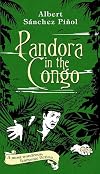
This, as Tommy Thompson notes part way through the book, is a story of a story. Specifically, the story of Tommy Thompson's writing of Marcus Garvey's experiences in the Congo. He is recruited by Marcus's lawyer to write the story of his experiences in the Congo as an "extralegal" part of his defence: Marcus is on trial for murder. Tommy's and Marcus's narratives are woven together through the book, forming a novel that's as clever as it is gripping.
It started well - the first chapter had me show more laughing out loud and reading excerpts to my husband of a plot outline for an outlandish pulp novel that Tommy is ghost-writing. Then the deaths start and the tone gets darker as he is employed to write Marcus's story. Both stories are exciting and well-paced. Occasionally I would find myself getting frustrated with things that looked distinctly like plot holes, or the way one plot appeared to have turned into a strange homage to Journey to the Centre of the Earth. Nonetheless, the quality both of the story and Lethem's excellent translation meant I wasn't about to stop reading. And it definitely paid off - this is a far cleverer book than it initially seems, which manages to mix in meditations on race, truth and love while still telling a ludicrously compelling story.
I loved this, although I do have one complaint - it needs to come with a warning about how late you're going to stay up thinking to yourself "just one more chapter...." show less
It started well - the first chapter had me show more laughing out loud and reading excerpts to my husband of a plot outline for an outlandish pulp novel that Tommy is ghost-writing. Then the deaths start and the tone gets darker as he is employed to write Marcus's story. Both stories are exciting and well-paced. Occasionally I would find myself getting frustrated with things that looked distinctly like plot holes, or the way one plot appeared to have turned into a strange homage to Journey to the Centre of the Earth. Nonetheless, the quality both of the story and Lethem's excellent translation meant I wasn't about to stop reading. And it definitely paid off - this is a far cleverer book than it initially seems, which manages to mix in meditations on race, truth and love while still telling a ludicrously compelling story.
I loved this, although I do have one complaint - it needs to come with a warning about how late you're going to stay up thinking to yourself "just one more chapter...." show less
 This review was written for LibraryThing Early Reviewers.
Lists
Awards


You May Also Like


Associated Authors
Statistics
- Works
- 19
- Also by
- 3
- Members
- 2,328
- Popularity
- #11,017
- Rating
- 3.7
- Reviews
- 97
- ISBNs
- 155
- Languages
- 23
- Favorited
- 2
