
Marvin L. Kalb
Author of Kissinger
About the Author
Marvin Kalb has enjoyed an illustrious forty-year career as a journalist and professor. His numerous awards and honors include two Peabody Prizes, six Overseas Press Club awards, and the Edward R. Murrow Award. He is currently the executive director of the Washington office of Harvard's Shorenstein show more Center on the Press, Politics, and Public Policy. He lives with his wife in Chevy Chase, Maryland show less
Works by Marvin L. Kalb
One Scandalous Story: Clinton, Lewinsky, and Thirteen Days That Tarnished American Journalism (2001) 42 copies, 1 review
The Year I Was Peter the Great: 1956: Khrushchev, Stalin's Ghost, and a Young American in Russia (2017) 29 copies, 1 review
Enemy of the People: Trump's War on the Press, the New McCarthyism, and the Threat to American Democracy (2018) 26 copies
Assignment Russia: Becoming a Foreign Correspondent in the Crucible of the Cold War (2021) 16 copies, 1 review
Associated Works
One Day in the Life of Ivan Denisovich (1962) — Introduction, some editions — 14,564 copies, 233 reviews
Tagged
Common Knowledge
- Other names
- KALB, Marvin
- Birthdate
- 1930-06-09
- Gender
- male
- Occupations
- journalist
professor - Organizations
- CBS
NBC
Harvard University
United States Institute of Peace - Relationships
- Kalb, Bernard (sibling)
Kalb, Judith E (offspring)
Kalb, Deborah (offspring)
Kalb, Claudia (nibling)
O'Reilly, Bill (student) - Nationality
- USA
- Associated Place (for map)
- USA
Members
Reviews
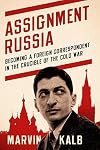
A trip down memory lane for those of us who have served in Moscow. UpDK, Intourist, MFA -- these are all acronyms that are met with dread and humor by Americans who have served in the Soviet capital. Marvin Kalb writes with honesty and self-deprecating wit. He tells the fascinating story of his first years as a CBS reporter, ending up with the assignment of his dreams (or nightmares, if one considers Madame Borisovna and the cramped rooms at the Metropol). His administrative travails aside, show more I'm a bit jealous that he was able to have so much personal contact with the Soviet leadership, and was in on so many big stories (the blown Paris Summit, U-2, Khrushchev's eroding position, the Sino-Soviet split, etc.). By the time I got there in the late 1970s, it was the Brezhnev era, and Soviet leaders did not deign to meet with foreigners unless it was absolutely necessary.
I'm now looking forward to reading Kalb's earlier books (Eastern Exposure, The Year I was Peter the Great). What a fascinating career. show less
I'm now looking forward to reading Kalb's earlier books (Eastern Exposure, The Year I was Peter the Great). What a fascinating career. show less
The Year I Was Peter the Great: 1956―Khrushchev, Stalin’s Ghost, and a Young American in Russia by Marvin Kalb
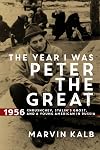
Delightful. As a young man, Kalb spent a year in Russia during the tumultuous transition from Stalin to Khrushchev. He found ways to engage with regular citizens as well as officials and leaders. His own fascinating career flowed from this experience, and it's a story entertainingly told. The first of a projected 3 volume memoir, it closes back in the US in a meeting with Edward R Murrow. Fun!
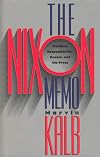
Marvin Kalb had his phone lines tapped by the Nixon White House. Several years later he was intrigued by a story in The New York Times that reported the contents of a memo written by Richard Nixon castigating the Bush administration for failing to provide a higher level of support for Russian democratic endeavors. And this in the middle of the 1992 campaign.
His search to discover the reason Nixon should pick this particular time to release the document is revealed in The Nixon Memo. His show more research revealed much about the symbiotic relationship the press has with politicians and how politicians manipulate the media for their own purposes — in this case, the continued rehabilitation of a disgraced former president. Reporters need news and conflict to survive. Nixon, a man who had resurrected himself more times than Rasputin, had become an expert in using this basic truth to his benefit. He had always hated the press, blaming them for his defeats, but the press could provide his path back to eminence.
Nixon began planning his rehabilitation shortly after leaving office. Within six years, after traveling to Europe and China, and writing several books, he was back, successfully advising the new Republican president, Ronald Reagan. John Lehman, Secretary of the Navy, reported that Nixon was, in fact, the guiding hand of Reagan’s foreign policy. Nixon was concerned with more than just his personal rehabilitation. He was genuinely dismayed by the Bush administration’s lackadaisical attitude toward events in Russia. Bush, flush from his Persian Gulf victory, and aware of Buchanan’s anti-internationalist challenge on the right, was reluctant to take on any foreign policy initiative that might possibly backfire and ruin his chances for a second term. Nixon was aghast. He had never thought much of Bush’s foreign policy ability, and he resolved to steer the administration to support Yeltsin, whom he saw as the only alternative to a new Russian authoritarianism. Economic news from the former Soviet capital was dismal, echoing the period in Germany before WW II when Hitler discovered it was so easy to seize power.
The result was Nixon’s now famous memo that was to redefine the foreign policy debate in the middle of an election year. Its theme was “Who lost Russia?” Nixon knew he was throwing a live hand grenade at the White House. The memo would surely leak — indeed he did everything possible to make sure it leaked — and explode on the front pages and on the evening news. That was his intention.
At a conference organized by Nixon and his staff, Nixon continued his peroration though without overt condemnation of Bush. Despite the enormous reaction to the memo and his conference speech, the substance of it was not terribly radical or new. Yet his presentation, done without TelePrompTer or notes, had such an appearance of genuineness, that a public grown weary of immediate clarifications by staff following a Reagan speech and by Bush’s hunched myopic attention to TelePrompTers, were taken in by what appeared to be a total command performance, even as they were being unwittingly manipulated. show less
His search to discover the reason Nixon should pick this particular time to release the document is revealed in The Nixon Memo. His show more research revealed much about the symbiotic relationship the press has with politicians and how politicians manipulate the media for their own purposes — in this case, the continued rehabilitation of a disgraced former president. Reporters need news and conflict to survive. Nixon, a man who had resurrected himself more times than Rasputin, had become an expert in using this basic truth to his benefit. He had always hated the press, blaming them for his defeats, but the press could provide his path back to eminence.
Nixon began planning his rehabilitation shortly after leaving office. Within six years, after traveling to Europe and China, and writing several books, he was back, successfully advising the new Republican president, Ronald Reagan. John Lehman, Secretary of the Navy, reported that Nixon was, in fact, the guiding hand of Reagan’s foreign policy. Nixon was concerned with more than just his personal rehabilitation. He was genuinely dismayed by the Bush administration’s lackadaisical attitude toward events in Russia. Bush, flush from his Persian Gulf victory, and aware of Buchanan’s anti-internationalist challenge on the right, was reluctant to take on any foreign policy initiative that might possibly backfire and ruin his chances for a second term. Nixon was aghast. He had never thought much of Bush’s foreign policy ability, and he resolved to steer the administration to support Yeltsin, whom he saw as the only alternative to a new Russian authoritarianism. Economic news from the former Soviet capital was dismal, echoing the period in Germany before WW II when Hitler discovered it was so easy to seize power.
The result was Nixon’s now famous memo that was to redefine the foreign policy debate in the middle of an election year. Its theme was “Who lost Russia?” Nixon knew he was throwing a live hand grenade at the White House. The memo would surely leak — indeed he did everything possible to make sure it leaked — and explode on the front pages and on the evening news. That was his intention.
At a conference organized by Nixon and his staff, Nixon continued his peroration though without overt condemnation of Bush. Despite the enormous reaction to the memo and his conference speech, the substance of it was not terribly radical or new. Yet his presentation, done without TelePrompTer or notes, had such an appearance of genuineness, that a public grown weary of immediate clarifications by staff following a Reagan speech and by Bush’s hunched myopic attention to TelePrompTers, were taken in by what appeared to be a total command performance, even as they were being unwittingly manipulated. show less
At the World Economic Forum, former U.S. Secretary of State Henry Kissinger suggested Ukraine cede territory to make peace with Russia. Well, I disagree with and beside the fact that I was surprised to learn he was still making appearances and pronouncements, I realized I didn't know if that was expected he would say that, unexpected or what. Well, I had this book on my shelf, so I though it a good time to read it and see if it could help me form an opinion on that.
This book fairly lauds show more Kissinger throughout, so it is not a deep analysis. Also it ends with the Nixon presidency and has not much to say about Watergate. It does convince me Kissinger was pro-NATO, tolerant of considering limited nuclear conflicts and also very successful while, at least at the onset, being a Rockefeller man with little respect for Nixon. Kissinger's meteoric rise from seizing opportunities in post-WW II Europe reconstruction led his to be a pivotal, mobile diplomat during very active years on the global stage. Seeking an end of the Vietnam War, Nixon and his National Security Adviser Kissinger, moved toward détente with Russia. Kissinger was instrumental in making inroads with Mao's China also as an outgrowth of disentangling from Hanoi. There is much personal and interesting details of negotiations and clandestine meetings. Toward the end of this time Kissinger was also in the thick of the Yom Kippur War diplomacy made worse by the embargo imposed by oil-producing Arab countries in October 1973 in retaliation for support of Israel during the Yom Kippur War.
During this time, Kissinger made bluntly clear to Soviet representative that under no circumstances would the U.S. allow a military contest using U.S. arms to be seen as a defeat by Soviet arms. Maybe he does not feel that way on Putin's Russia? show less
This book fairly lauds show more Kissinger throughout, so it is not a deep analysis. Also it ends with the Nixon presidency and has not much to say about Watergate. It does convince me Kissinger was pro-NATO, tolerant of considering limited nuclear conflicts and also very successful while, at least at the onset, being a Rockefeller man with little respect for Nixon. Kissinger's meteoric rise from seizing opportunities in post-WW II Europe reconstruction led his to be a pivotal, mobile diplomat during very active years on the global stage. Seeking an end of the Vietnam War, Nixon and his National Security Adviser Kissinger, moved toward détente with Russia. Kissinger was instrumental in making inroads with Mao's China also as an outgrowth of disentangling from Hanoi. There is much personal and interesting details of negotiations and clandestine meetings. Toward the end of this time Kissinger was also in the thick of the Yom Kippur War diplomacy made worse by the embargo imposed by oil-producing Arab countries in October 1973 in retaliation for support of Israel during the Yom Kippur War.
During this time, Kissinger made bluntly clear to Soviet representative that under no circumstances would the U.S. allow a military contest using U.S. arms to be seen as a defeat by Soviet arms. Maybe he does not feel that way on Putin's Russia? show less
Awards


You May Also Like


Associated Authors
Statistics
- Works
- 17
- Also by
- 1
- Members
- 549
- Popularity
- #45,446
- Rating
- 4.0
- Reviews
- 7
- ISBNs
- 46
- Languages
- 5
- Favorited
- 2