
Piero Chiara (1913–1986)
Author of La stanza del vescovo
About the Author
Works by Piero Chiara
Sale e tabacchi: Appunti di varia umanita e di fortuite amenita scritti nottetempo (Collezione Varia di letteratura) (Italian Edition) (1989) 7 copies
Uccelli di rovo : condensato di : "The thorn birds" di Colleen Mccullogh ; I giovedì della signora giulia : condensato di : "I giovedì della signora Giulia" di Piero Chiara — Author — 3 copies
Sotto la sua mano 2 copies
Vita di Gabriele D'annunzio 1 copy
L'uovo al cianuro 1 copy
O Balordo 1 copy
Le corna del diavolo 1 copy
" Ital'ianskii detektiv". 1 copy
I luoghi amati 1 copy
Ti sento, Giuditta: racconto 1 copy
Vedrò Singapore? : romanzo 1 copy
Ora ti racconto un fatto 1 copy
O quarto do bispo 1 copy
Il Trigamo o La Spartizione 1 copy
Pretore di Cuvio 1 copy
Piatto piange 1 copy
Spartizione 1 copy
Balordo 1 copy
Chiara Piero 1 copy
Associated Works
Tagged
Common Knowledge
- Canonical name
- Chiara, Piero
- Legal name
- Chiara, Pierino
- Birthdate
- 1913-03-13
- Date of death
- 1986-12-31
- Gender
- male
- Education
- Collegio San Luigi di Intra
Collegio De Filippi di Arona - Occupations
- aiutante di cancelleria al tribunale di Pontebba, Cividale e Varese
insegnante di storia e filosofia al liceo italiano dello Zugerberg, Svizzera
scrittore, saggista e curatore
writer - Organizations
- Affiliato alla Massoneria
- Relationships
- Chiara, Eugenio (father)
Maffei, Virginia (mother)
Scherb, Jula (wife)
Chiara, Marco (son) - Nationality
- Italy
- Birthplace
- Luino, Italy
- Places of residence
- Varese, Italy
Switzerland - Place of death
- Varese, Italy
- Burial location
- Cimitero di Luino, Italy
- Associated Place (for map)
- Italy
Members
Reviews
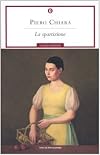
Un libro divertente e pettegolo. Tutto appare come una commedia, ma questo romanzo fa riflettere su diversi punti. Innanzitutto ci mostra come le persone possano cambiare attitudine da un momento all'altro. Poi il tema della bruttezza estetica: per il padre delle tre sorelle la bruttezza non era qualcosa di ripugnante bensí qualcosa di raro e ricercato, che bisogna saper apprazzare. Infine la ribellione: mi é piaciuto come Tarsilla Tettamanzi prenda posizione e sicurezza di sé davanti show more alla societá e non ci pensa nemmeno un secondo a vergognarsi delle sue passioni perché sa che non c'é nulla di sbagliato in loro.
Non posso dimenticare il terrore di Fortunata Tettamanzi a cui si fa poco cenno nel libro: l'unica a non voler le attenzioni del Paronzini e a cui lui peró continua a far visite notturne. Mi é spiaciuto molto leggere ció...forse l'ho interpretato male io, ma il terrore di Fortunata ha messo un velo triste e scuro per me su questo libro. show less
Non posso dimenticare il terrore di Fortunata Tettamanzi a cui si fa poco cenno nel libro: l'unica a non voler le attenzioni del Paronzini e a cui lui peró continua a far visite notturne. Mi é spiaciuto molto leggere ció...forse l'ho interpretato male io, ma il terrore di Fortunata ha messo un velo triste e scuro per me su questo libro. show less
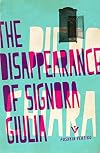
When the sad, beautiful Signora Giulia goes missing without a trace from her Lake Como villa home, it is her husband who reports her disappearance to the detective Sciancalepre, and so the search begins - one that takes Sciancalepre beneath the tranquil surface of local bourgeois society, a world of snobbery and secrets, while mysterious shadows lurk in the grounds of the family villa . . . As his investigation gathers pace this atmospheric classic detective story becomes a thrilling game of show more legal cat and mouse.
Piero Chiara was an award winning Italian writer who is little known outside his native country. I am not sure how representative The Disappearance Of Signora Giulia is for the rest of his work, but judged by its merits as a mystery novel alone this is not a very satisfying work.
A very short novel of about 122 pages, it starts out intriguingly enough. It seems like your typical missing persons case: Signore Giulia is the wife of a prominent criminal lawyer, one day she disappears from home. Has she walked out on her husband? Did she leave to start a new life with a lover? Her husband was much older than her which makes the probability of an affair likely, but the investigating detective does not believe that she would have just left her only daughter behind. With every passing day it becomes more likely that Signora Giulia became the victim of a violent crime.
I found it shocking to read that adultery was still considered a serious offence in 1950’s Italy and people engaging in extra-marital affairs could be prosecuted by the law. There is one scene where the detective Sciancalepre pays a visit to one of Signora Guilia’s potential love interests finding him in bed with another married woman and assuring her that at least for now she has nothing to fear from him since he is investigating a different case. However this social criticism is very slight and barely goes any deeper in unmasking the bigotry of a society living by outdated laws. It is just one of several disappointments in a novel that has neither enough depth nor narrative ingenuity to really satisfy.
The summary makes the tale sound like a multi-layered, complex investigation, but the plot is actually quite simple. Barely has the police investigation begun as it already comes to an end. The small number of suspects means that there is no real surprise once the culprit is unmasked.
Unfortunately the book seems like a typical example of a “serious” writer dabbling in genre fiction while missing the point of what mysteries are really about. The characters remain too distant and shallow for the story to work as a psychological drama and the puzzle plot annoyingly culminates in an open ending. The author’s intention might have been to say something about the slippery nature of truth and the lack of satisfying endings in real life, with the consequence that the denouement is anticlimactic and dull.
So, ultimately I did not care much for The Disappearance Of Signora Giulia. It works neither as gripping genre fiction nor as a complex examination of crime and its consequences. show less
Piero Chiara was an award winning Italian writer who is little known outside his native country. I am not sure how representative The Disappearance Of Signora Giulia is for the rest of his work, but judged by its merits as a mystery novel alone this is not a very satisfying work.
A very short novel of about 122 pages, it starts out intriguingly enough. It seems like your typical missing persons case: Signore Giulia is the wife of a prominent criminal lawyer, one day she disappears from home. Has she walked out on her husband? Did she leave to start a new life with a lover? Her husband was much older than her which makes the probability of an affair likely, but the investigating detective does not believe that she would have just left her only daughter behind. With every passing day it becomes more likely that Signora Giulia became the victim of a violent crime.
I found it shocking to read that adultery was still considered a serious offence in 1950’s Italy and people engaging in extra-marital affairs could be prosecuted by the law. There is one scene where the detective Sciancalepre pays a visit to one of Signora Guilia’s potential love interests finding him in bed with another married woman and assuring her that at least for now she has nothing to fear from him since he is investigating a different case. However this social criticism is very slight and barely goes any deeper in unmasking the bigotry of a society living by outdated laws. It is just one of several disappointments in a novel that has neither enough depth nor narrative ingenuity to really satisfy.
The summary makes the tale sound like a multi-layered, complex investigation, but the plot is actually quite simple. Barely has the police investigation begun as it already comes to an end. The small number of suspects means that there is no real surprise once the culprit is unmasked.
Unfortunately the book seems like a typical example of a “serious” writer dabbling in genre fiction while missing the point of what mysteries are really about. The characters remain too distant and shallow for the story to work as a psychological drama and the puzzle plot annoyingly culminates in an open ending. The author’s intention might have been to say something about the slippery nature of truth and the lack of satisfying endings in real life, with the consequence that the denouement is anticlimactic and dull.
So, ultimately I did not care much for The Disappearance Of Signora Giulia. It works neither as gripping genre fiction nor as a complex examination of crime and its consequences. show less
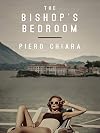
2.5 Still conflicted on this one. Loved the retro cover and the era it evokes, but the reality of post-war Europe, specifically romantic Italy, was less endearing. Whoever thought morals became loose in recent years needs to look at Europe in the 40s, according to this tale. First published in 1976, the book definitely presents challenges to a woke feminist sensibility. The writing is reminiscent of Hemingway in its outlook and sparse, unemotional prose and definitely has a chauvinistic view show more of women, who are referred to more than once as "prey." The premise is the itinerant sailing lifestyle of the narrator (unnamed), a 30 year old war refugee, who is spending a summer sailing around the ports of a beautiful resort-y Lake Maggiore in northern Italy. He seems to have a "girl" in every port who is willing to sail with him for a short time without serious romantic entanglements. It's like a nautical series of one-night stands. Until he docks in Oggebbio and makes the acquaintance of Mario Orimbelli, a 40-year old war veteran and essentially a dirty old man. Orimbelli invites him to be a guest at his villa (hence, the Bishop's Bedroom - a dead relative on his wife's side), where he meets the cold, shrewish Signora and her voluptuous niece Mathilde who is a war widow. Orimbelli invites himself along on the sailing conquests, adding his own affairs to the mix, and often seducing the narrator's women as well. This rankles after awhile (for the reader too) and the friendship is a bit strained, although the narrator is easy-going to a fault. Mathilde gets involved in the mix when she accompanies the two men and Orimbelli's true character is thoroughly exposed. When a tragedy calls them all back to the villa, enough doubt has been sown to tarnish all the relationships, and things take a strange triangular turn. The writing is masterful and no doubt a product of the time, but it didn't necessarily make it easier (or enjoyable) to read. On the plus side, it is a short read, so wasn't a huge investment of time or energy. show less
Set in 1955, The Disappearance of Signora Giulia is one of the most truly baffling mysteries I've read in quite some time. By the time I finished this book, I was totally perplexed. And trust me -- after having read what amounts to thousands of mystery novels in my time, "baffling" is not a term I throw about willy nilly, but I'm certainly not going to spill my guts as to why I found it so.
Despite some minor lulls here and there in the telling, The Disappearance of Signora Giulia is beyond show more compelling and it's certainly one of the most unconventional crime stories I've ever read. It is a true whodunit in every sense of the term, with a big, no make that huge, twist I never saw coming. When I finished it, the first words coming out of my mouth were "that's just brilliant," and if anyone reading this post decides to read it, you'll see why. I pondered over that ending for some time and when a book makes me do that, well, I call it a good one.
Very much recommended, especially for readers of older crime novels, for readers of international crime, and for readers of crime fiction who enjoy something completely different.
For a bit more plotwise (not a lot -- to tell is to spoil), click here. show less
Despite some minor lulls here and there in the telling, The Disappearance of Signora Giulia is beyond show more compelling and it's certainly one of the most unconventional crime stories I've ever read. It is a true whodunit in every sense of the term, with a big, no make that huge, twist I never saw coming. When I finished it, the first words coming out of my mouth were "that's just brilliant," and if anyone reading this post decides to read it, you'll see why. I pondered over that ending for some time and when a book makes me do that, well, I call it a good one.
Very much recommended, especially for readers of older crime novels, for readers of international crime, and for readers of crime fiction who enjoy something completely different.
For a bit more plotwise (not a lot -- to tell is to spoil), click here. show less
Lists
Awards


You May Also Like


Associated Authors
Statistics
- Works
- 116
- Also by
- 1
- Members
- 1,047
- Popularity
- #24,609
- Rating
- 3.5
- Reviews
- 31
- ISBNs
- 126
- Languages
- 6
- Favorited
- 2