
Madeleine George
Author of The Difference Between You and Me
About the Author
Works by Madeleine George
13P: The Complete Plays 1 copy
Associated Works
Tagged
Common Knowledge
- Birthdate
- c. 1976 or 1977
- Gender
- female
- Occupations
- playwright
teacher - Relationships
- Kron, Lisa (wife)
- Nationality
- USA
- Places of residence
- New York, New York, USA
Massachusetts, USA - Associated Place (for map)
- USA
Members
Reviews
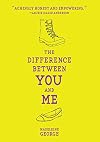
Last night, I finished reading The Difference Between You and Me by Madeleine George. I really enjoyed the book and the diverse perspective that George brought to YA, but there is one thing in particular that has had my mind spinning nonstop ever since I put the book down.
From almost page one, I knew that Jesse was a transgender woman. Now, if you haven't read the book, this is not a spoiler, because it was never confirmed as true or untrue. I know in my heart of hearts that this is show more absolutely true. I believe this so hard that I searched through pages and pages of reviews on Goodreads and google and went to the author's website and could find no confirmation that this is true OR that anyone else read this the same way.
There were three factors that made it 100% clear to me that Jesse is trans.
1. Her name. Jesse is traditional a name given to boys. Girls often go by Jessie (note the i), which is typically short for Jessica. Because this sounds so much like the female nickname, I was under the impression that she chose to keep the spelling of her name. This is not a overtly masculine sounding name so it would not raise any red flags.
2. The bathroom. In the opening scene of the book, Jesse is hiding in the girls' bathroom in an attempt to avoid attending the pep rally. When she is confronted by some stereotypical mean girls when she is trying to escape, they point out to her that this is the girls' bathroom. Jesse's internal monologue explains that this is something that happens to her a lot and she has to explain that she is a girl. Yes, this could potentially be the case based on Jesse's butch appearance, but I read deeper into this. On top of that, bathrooms play a huge role in the novel. Whether on the third floor of the library or getting busted by the vice principal, most major events in the book happen in a bathroom. Of course this is a place this is so, so significant to the trans community given the political climate right now.
3. When confronted by the mean girls in the opening scene, one of the repeatedly uses masculine pronouns to insult Jesse. It is clear that these are meant to hurt her.
I read the whole book, waiting for some kind of reveal to the reader that Jesse is trans, but it never came. I'm kind of okay with that. It didn't matter at all to the story, and the fact that it just wasn't an issue is almost better. show less
From almost page one, I knew that Jesse was a transgender woman. Now, if you haven't read the book, this is not a spoiler, because it was never confirmed as true or untrue. I know in my heart of hearts that this is show more absolutely true. I believe this so hard that I searched through pages and pages of reviews on Goodreads and google and went to the author's website and could find no confirmation that this is true OR that anyone else read this the same way.
There were three factors that made it 100% clear to me that Jesse is trans.
1. Her name. Jesse is traditional a name given to boys. Girls often go by Jessie (note the i), which is typically short for Jessica. Because this sounds so much like the female nickname, I was under the impression that she chose to keep the spelling of her name. This is not a overtly masculine sounding name so it would not raise any red flags.
2. The bathroom. In the opening scene of the book, Jesse is hiding in the girls' bathroom in an attempt to avoid attending the pep rally. When she is confronted by some stereotypical mean girls when she is trying to escape, they point out to her that this is the girls' bathroom. Jesse's internal monologue explains that this is something that happens to her a lot and she has to explain that she is a girl. Yes, this could potentially be the case based on Jesse's butch appearance, but I read deeper into this. On top of that, bathrooms play a huge role in the novel. Whether on the third floor of the library or getting busted by the vice principal, most major events in the book happen in a bathroom. Of course this is a place this is so, so significant to the trans community given the political climate right now.
3. When confronted by the mean girls in the opening scene, one of the repeatedly uses masculine pronouns to insult Jesse. It is clear that these are meant to hurt her.
I read the whole book, waiting for some kind of reveal to the reader that Jesse is trans, but it never came. I'm kind of okay with that. It didn't matter at all to the story, and the fact that it just wasn't an issue is almost better. show less

World Premiere: Playwrights Horizons, New York City, 15 November 2013
Length: Full Length Play. Approximate time: 120 minutes; 80 pages
Awards: Nominated for Pulitzer Prize for Drama (2014), Winner of John Gassner Award (2014)
There are 5 Watsons in this play - 4 are active participants and 1 is just mentioned; 3 are ones everyone had heard of, 2 exist only in this play.
The ones we all know are Bell's assistant, Sherlock Holmes' chronicler and the IBM AI which won Jeopardy (this is the one we show more do not meet); the two we meet here are Watson 2.0 (the next generation of the IBM AI, now in human(-ish) body and Joshua Watson, a boy/man that seem less real that the other one (although he is - or so you should believe, won't you?). But for all these characters, it is not a play about AI or about Watson really.
And alongside the Watsons, there is a multitude of Elizas and Merricks - the rest of the characters in the play. In Victorian England, Merrick is an inventor who is looking for a way to create the best companion, having the characteristics of his own wife while Eliza goes to Sherlock Holmes, worried about her life (and finds Watson instead). In our time, Eliza and Merrick are divorced and she is working on an android who can be the perfect companion and Merrick ends up sending Watson to spy on her. There is a wonderful symmetry between the two story-lines and Madeleine George weaves them together with constant switches between the two times, showing that even of the story is reversed, a lot of it is the same.
Then there is the problematic part - the one too many Watsons -- Bell's assistant. He seems to be there to try to add more to the story of interconnection but something just did not click for me - every time the play went to him, it felt as if we stepped into another story, despite having the same character names. It feels like an addition that is there to help strengthen the story but feels like an ornament which just is too much. I understand why it was added, it moves the play from a love story across the centuries to a more general connection through time and it does not weaken the story but it does not feel part of it either.
The Victorian/21st century double story explores what reality is and what companionship is - and what matters in it. While Eliza and Merrick try to find their way to (or away from) each other, with Watson as the faithful helper (in some weird times sometimes), it all comes down to figuring out what you want in life (and love). And when one Watson knows things he should not (while another Watson should), you are left wondering if there is something more in some names.
An enjoyable play (even with the surplus Watson) and an interesting way to explore what companionship really is. And the fact that the same play can have Holmes's Watson and an android and not feel weird is a testament to the well-done weaving of stories by the author. show less
Length: Full Length Play. Approximate time: 120 minutes; 80 pages
Awards: Nominated for Pulitzer Prize for Drama (2014), Winner of John Gassner Award (2014)
There are 5 Watsons in this play - 4 are active participants and 1 is just mentioned; 3 are ones everyone had heard of, 2 exist only in this play.
The ones we all know are Bell's assistant, Sherlock Holmes' chronicler and the IBM AI which won Jeopardy (this is the one we show more do not meet); the two we meet here are Watson 2.0 (the next generation of the IBM AI, now in human(-ish) body and Joshua Watson, a boy/man that seem less real that the other one (although he is - or so you should believe, won't you?). But for all these characters, it is not a play about AI or about Watson really.
And alongside the Watsons, there is a multitude of Elizas and Merricks - the rest of the characters in the play. In Victorian England, Merrick is an inventor who is looking for a way to create the best companion, having the characteristics of his own wife while Eliza goes to Sherlock Holmes, worried about her life (and finds Watson instead). In our time, Eliza and Merrick are divorced and she is working on an android who can be the perfect companion and Merrick ends up sending Watson to spy on her. There is a wonderful symmetry between the two story-lines and Madeleine George weaves them together with constant switches between the two times, showing that even of the story is reversed, a lot of it is the same.
Then there is the problematic part - the one too many Watsons -- Bell's assistant. He seems to be there to try to add more to the story of interconnection but something just did not click for me - every time the play went to him, it felt as if we stepped into another story, despite having the same character names. It feels like an addition that is there to help strengthen the story but feels like an ornament which just is too much. I understand why it was added, it moves the play from a love story across the centuries to a more general connection through time and it does not weaken the story but it does not feel part of it either.
The Victorian/21st century double story explores what reality is and what companionship is - and what matters in it. While Eliza and Merrick try to find their way to (or away from) each other, with Watson as the faithful helper (in some weird times sometimes), it all comes down to figuring out what you want in life (and love). And when one Watson knows things he should not (while another Watson should), you are left wondering if there is something more in some names.
An enjoyable play (even with the surplus Watson) and an interesting way to explore what companionship really is. And the fact that the same play can have Holmes's Watson and an android and not feel weird is a testament to the well-done weaving of stories by the author. show less
This is a fantastic little book about politics and convictions and high school and making a difference. The characters are all recognizable "types" but also feel very real and are easy to get emotionally involved with, and their foibles are on full display but not mocked.
Gotta be honest, though: my absolute favorite part is that an honest-to-god butch girl who gets mistaken for a boy sometimes and has feelings about her hair and whose idea of formal wear is a sky-blue polyester bell-bottomed show more suit with a ruffled shirt is the main character. Thank you thank you thank you thank you thank you!! show less
Gotta be honest, though: my absolute favorite part is that an honest-to-god butch girl who gets mistaken for a boy sometimes and has feelings about her hair and whose idea of formal wear is a sky-blue polyester bell-bottomed show more suit with a ruffled shirt is the main character. Thank you thank you thank you thank you thank you!! show less
Jesse lives for Tuesday afternoons, slipping into the third-floor accessible bathroom at the library and meeting Emily on her break from work. Emily lives for Tuesday afternoons, the one time she can be with Jesse, not worrying about what student council or her friends or her boyfriend would think about her if they knew. Jesse and Emily come from different worlds - Jesse is out and proud, Emily is a closeted girly girl - but when they're together, none of that seems to matter. But when Emily show more approaches a Big Bad Corporation about sponsoring their school dance and Jesse meets Esther, a politically minded individualist who's not afraid to be herself, it turns out that the differences between Jesse and Emily just might be enough to drive them apart.
I wouldn't call this a romance, although love plays a bit part in the plot. The book's more about not only taking a stand for what you believe in, but taking the necessary action to make it happen. Dual narratives show the story from both Jesse's and Emily's points of view, with a few chapters from Esther thrown in for good measure. I loved that even though Jesse's story is told in third person and Emily's story is told in first person, I still felt more distance from Emily because she's in such cotton-headed denial about her own life. show less
I wouldn't call this a romance, although love plays a bit part in the plot. The book's more about not only taking a stand for what you believe in, but taking the necessary action to make it happen. Dual narratives show the story from both Jesse's and Emily's points of view, with a few chapters from Esther thrown in for good measure. I loved that even though Jesse's story is told in third person and Emily's story is told in first person, I still felt more distance from Emily because she's in such cotton-headed denial about her own life. show less
Lists
Awards


You May Also Like


Associated Authors
Statistics
- Works
- 10
- Also by
- 1
- Members
- 584
- Popularity
- #42,937
- Rating
- 3.6
- Reviews
- 34
- ISBNs
- 15