
C. J. Sansom (1952–2024)
Author of Dissolution
About the Author
Christopher John "C.J." Sansom is a British writer of crime novels. He was born in 1952 in Edinburgh, Scotland, and was educated at the University of Birmingham, where he earned a B. A. and a PhD in History. He practiced law, before quitting to work full-time as a writer. He currently lives in show more Sussex, England. (Bowker Author Biography) show less
Disambiguation Notice:
Also wrote as the Medieval Murderers with Ian Morson, Michael Jecks, Karen Maitland, Susanna Gregory, Philip Gooden and Bernard Knight
Series
Works by C. J. Sansom
Shardlake: The Complete BBC Radio Collection: Six BBC Radio 4 Full-Cast Dramatisations (2022) 3 copies
"Coincidence" 2 copies
Dissolution / Dark Fire 2 copies
Associated Works
Reader's Digest Select Editions: Blue Heaven • Revelation • Nothing to Lose • Lottery (2008) — Author — 14 copies
Reader's Digest Condensed Books: Dark Fire • Black Wind • Gweilo • The Blood-Dimmed Tide (2004) — Author — 9 copies
Tagged
Common Knowledge
- Canonical name
- Sansom, C. J.
- Legal name
- Sansom, Christopher John
- Birthdate
- 1952-12-09
- Date of death
- 2024-04-27
- Gender
- male
- Education
- University of Birmingham (BA, PhD|History)
- Occupations
- solicitor
crime novelist
historian - Organizations
- Crime Writers' Association
- Awards and honors
- Ellis Peters Historical Dagger (2005)
Waterstones 25 Authors for the Future (2007)
Sidewise Award for Alternate History (2012)
Cartier Diamond Dagger (2022) - Agent
- Antony Topping (Greene & Heaton)
- Cause of death
- multiple myeloma
- Nationality
- UK
- Birthplace
- Edinburgh, Midlothian, Scotland, UK
- Places of residence
- Edinburgh, Midlothian, Scotland, UK
Brighton, Sussex, England, UK - Place of death
- Brighton, Sussex, England, UK
- Map Location
- Scotland, UK
- Disambiguation notice
- Also wrote as the Medieval Murderers with Ian Morson, Michael Jecks, Karen Maitland, Susanna Gregory, Philip Gooden and Bernard Knight
Members
Reviews
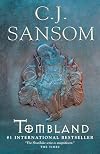
Sansom has covered a little-known chapter in the history of Tudor England in this book. In the author's note he says "The seismic events of the 1549 English rebellions are surprisingly little known, but Tombland is based on the known evidence, and the huge camp on Mousehold Heath actually existed." So it's not just because I wasn't paying attention in Grade 9 History that I knew nothing about the rebellions that took place during Edward VII's reign.
Shardlake has been acting on behalf of Lady show more Elizabeth (Anne Boleyn's daughter) since the death of Henry VIII. Henry left both his daughters substantial legacies and they have been buying up property around the country to invest the inheritance. As a lawyer Shardlake has been obtaining conveyances of land on Elizabeth's behalf. However when he is called to her country house it is for a different reason; a relative of Anne Boleyn's in Norfolk has been charged with murdering his wife and Elizabeth wants Shardlake to investigate. This means a long journey to Norwich before the summer assizes to determine if John Boleyn was guilty of murder. However the laws at the time meant that Shardlake could not appear in court on Boleyn's behalf. It was up to Boleyn to present any evidence Shardlake might turn up. Elizabeth also gave Shardlake a request for a pardon which she requested Shardlake present if Boleyn was convicted. Thus Shardlake, his assistant Nicholas and a Norfolk native of Boleyn's original lawyer nose around Norwich and the surrounding area. Shardlake does find some evidence which seems to cast doubt on Boleyn's guilt but he is found guilty at trial and is sentenced to die by hanging the next day. Shardlake lodges Elizabeth's pardon request (it was not uncommon apparently for people found guilty to be pardoned if they had enough money; another character in the book, Sir Richard Southwell, had killed a man years earlier and received a pardon enabling him to rise to a prominent position at court) and is astonished the next day when he sees Boleyn being taken to the gallows. He and Nicholas manage to prevent the hanging and Boleyn was returned to jail. Shardlake was injured in this attempt and had to stay in bed for some days after. Meanwhile rebellions among the lower classes had started to spring up in other parts of England and Shardlake overhears a conversation at a pub that makes him think one will take place in Norfolk. Before he is fully recovered the rebellions start. The prime reason for the uprising is the landlords taking over common lands to graze their sheep, a system called enclosures, which deprived the lower classes from pasture for their few cattle and sheep. Shardlake and his companions, including Barak who is now working for the assize judges, have the bad luck to be caught up in one enclosure rebellion led by the Ketts from Wymondham. The Ketts are loyal subjects but want the King (or his Protector Lord Somerset) to follow through on promises to send commissions to investigate the enclosures. They establish a camp just outside of Norwich on Mousehold Heath to make their demands known. William Kett asks Shardlake to assist him at trials of landlords that will be conducted at Mousehold until the commissions appear. Shardlake agrees in the first place because he thinks he may be able to ensure the rules of justice are followed. Later he becomes convinced that the group's grievances are valid and the King's response unsatisfactory.
Sansom devotes much of the book to describing conditions in the camp and the stories of the people who lived there. The class system at the time treated anyone who was not a "gentleman" with inequity and contempt. This treatment was exacerbated in the year of 1549 by galloping inflation due to the Tudors mismanagement of the monetary system to finance their wars and by a poor harvest year. Small wonder the lower classes thought they had nothing to lose by rebelling. In a way it reminds me of the conditions in Winnipeg 100 years ago when the working class staged the Winnipeg General Strike. Both actions were put down and leaders punished but they had a long-lasting effect of improving rights later on. I think this is one of Sansom's best books and that is saying something because I have loved all of them. show less
Shardlake has been acting on behalf of Lady show more Elizabeth (Anne Boleyn's daughter) since the death of Henry VIII. Henry left both his daughters substantial legacies and they have been buying up property around the country to invest the inheritance. As a lawyer Shardlake has been obtaining conveyances of land on Elizabeth's behalf. However when he is called to her country house it is for a different reason; a relative of Anne Boleyn's in Norfolk has been charged with murdering his wife and Elizabeth wants Shardlake to investigate. This means a long journey to Norwich before the summer assizes to determine if John Boleyn was guilty of murder. However the laws at the time meant that Shardlake could not appear in court on Boleyn's behalf. It was up to Boleyn to present any evidence Shardlake might turn up. Elizabeth also gave Shardlake a request for a pardon which she requested Shardlake present if Boleyn was convicted. Thus Shardlake, his assistant Nicholas and a Norfolk native of Boleyn's original lawyer nose around Norwich and the surrounding area. Shardlake does find some evidence which seems to cast doubt on Boleyn's guilt but he is found guilty at trial and is sentenced to die by hanging the next day. Shardlake lodges Elizabeth's pardon request (it was not uncommon apparently for people found guilty to be pardoned if they had enough money; another character in the book, Sir Richard Southwell, had killed a man years earlier and received a pardon enabling him to rise to a prominent position at court) and is astonished the next day when he sees Boleyn being taken to the gallows. He and Nicholas manage to prevent the hanging and Boleyn was returned to jail. Shardlake was injured in this attempt and had to stay in bed for some days after. Meanwhile rebellions among the lower classes had started to spring up in other parts of England and Shardlake overhears a conversation at a pub that makes him think one will take place in Norfolk. Before he is fully recovered the rebellions start. The prime reason for the uprising is the landlords taking over common lands to graze their sheep, a system called enclosures, which deprived the lower classes from pasture for their few cattle and sheep. Shardlake and his companions, including Barak who is now working for the assize judges, have the bad luck to be caught up in one enclosure rebellion led by the Ketts from Wymondham. The Ketts are loyal subjects but want the King (or his Protector Lord Somerset) to follow through on promises to send commissions to investigate the enclosures. They establish a camp just outside of Norwich on Mousehold Heath to make their demands known. William Kett asks Shardlake to assist him at trials of landlords that will be conducted at Mousehold until the commissions appear. Shardlake agrees in the first place because he thinks he may be able to ensure the rules of justice are followed. Later he becomes convinced that the group's grievances are valid and the King's response unsatisfactory.
Sansom devotes much of the book to describing conditions in the camp and the stories of the people who lived there. The class system at the time treated anyone who was not a "gentleman" with inequity and contempt. This treatment was exacerbated in the year of 1549 by galloping inflation due to the Tudors mismanagement of the monetary system to finance their wars and by a poor harvest year. Small wonder the lower classes thought they had nothing to lose by rebelling. In a way it reminds me of the conditions in Winnipeg 100 years ago when the working class staged the Winnipeg General Strike. Both actions were put down and leaders punished but they had a long-lasting effect of improving rights later on. I think this is one of Sansom's best books and that is saying something because I have loved all of them. show less
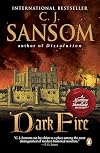
Count another person hooked on this series. This is quite different from Dissolution but equally as good. I could feel the mugginess and smell the nauseating odours of London in the summer of 1540 which was quite a contrast from the cold and snow of Dissolution. And Shardlake's mission for Oliver Cromwell is certainly different as he is pursuing the formula for Greek Fire, a highly flammable substance which could change the course of warfare. Also, this time Shardlake has a sidekick, Jack show more Barak, an adherent of Cromwell's whose favourite descriptor for someone he doesn't like is "arsehole". Shardlake and Barak have only 10 days to find the formula and also to find out what really happened in the Wentworth household the day the young son, Ralph, died. Ralph's cousin, Elizabeth, has been charged with his murder and unless she pleads she will be pressed by heavy stones until she dies. The judge has ordered a stay (at the behest of Cromwell) but only for 10 days. Shardlake and Barak cover London in searching for clues to both mysteries and face at least two adversaries who are bent on killing them.
I would not have wanted to live in Tudor England but it is fascinating to read about it. show less
I would not have wanted to live in Tudor England but it is fascinating to read about it. show less
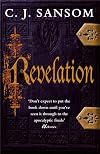
I'm a huge fan of the Tudor detective novels (if that's the right term) involving the hunch-backed lawyer Matthew Shardlake, and its large cast of characters, imagined and real - Cranmer and Henry VIII for starters.
Apart from the cast, the plot is complex, terrifying and thoroughly enthralling, involving multiple murders and a study of passages in the Book of Revelations. Tudor London is conjured up so that I can smell the streets and see the urban scenes that Sansom brings to life. I sense show more the religious turmoil, the unease and fear in this period of upheaval and change. I enjoy the company of Shardlake, of his assistant Jack Barak; of the doctor and former monk Guy who is Shardlake's friend; of Barak's wife Tamasin; of the widowed Dorothy, whose husband's death begins this bloody, complex and horrifying murder hunt; and so many others.
Sansom wears his considerable learning lightly and uses it to great effect in weaving his complex and fast-moving tale. Above everything though, this book's a great page-turner. It was hard to put it down until I'd read every single one of its almost 550 pages. show less
Apart from the cast, the plot is complex, terrifying and thoroughly enthralling, involving multiple murders and a study of passages in the Book of Revelations. Tudor London is conjured up so that I can smell the streets and see the urban scenes that Sansom brings to life. I sense show more the religious turmoil, the unease and fear in this period of upheaval and change. I enjoy the company of Shardlake, of his assistant Jack Barak; of the doctor and former monk Guy who is Shardlake's friend; of Barak's wife Tamasin; of the widowed Dorothy, whose husband's death begins this bloody, complex and horrifying murder hunt; and so many others.
Sansom wears his considerable learning lightly and uses it to great effect in weaving his complex and fast-moving tale. Above everything though, this book's a great page-turner. It was hard to put it down until I'd read every single one of its almost 550 pages. show less

One of the most engrossing novels I have read this year, and a darkly fascinating insight into a twentieth century revolution, the Civil War in Spain.
Harry, Bernie and Sandy are childhood friends at an exclusive public school: the golden boy, the scholarship student from a working class background, and the rebel. Bernie and Harry travel to Spain in the early 1930s and witness the upheaval of a country in political turmoil, Bernie siding with the communist faction and Harry desperate to show more remain neutral. Only when Bernie is reported missing presumed dead after the Battle of Jarama in 1937 is Harry drawn deeper into a tangled web of espionage and deception, betraying old friends and risking his own life to do what he feels is right.
The plot is fast-paced and intricate, carrying the reader along with the same fragile hopes as experienced by the characters, all the while aware that nobody can be trusted. Harry, Bernie, Barbara, Sandy and Sofia are strong, enterprising and brave, living in Franco's Spain, but they are far from heroic. Scarred by the war, either directly like Bernie or through the lives of others, these are people acting out of desperation and humanity. In fact, one of the most intriguing characters is Sandy, who admits to being 'bad', but whose personality is shaded grey by how others view and remember him. I also took to Barbara and Sofia, ordinary women who have to be strong for those they love; in such extreme situations, it is easy to believe that we would all have the courage to do whatever is necessary.
The only letdown for me is the ending, which is far too pat after the layered narrative and steadily building tension of the bulk of the novel. Such a story requires a dramatic conclusion, but after such lengthy planning, the final stage was rushed and almost read like a Hollywood script. I object to epilogues for much the same reason - wondering 'Did everything work out for the best?' is sometimes better,and more fitting, than learning the fate of the characters in a chapter of forced dialogue.
All in all, though, a thoroughly gripping read. show less
Harry, Bernie and Sandy are childhood friends at an exclusive public school: the golden boy, the scholarship student from a working class background, and the rebel. Bernie and Harry travel to Spain in the early 1930s and witness the upheaval of a country in political turmoil, Bernie siding with the communist faction and Harry desperate to show more remain neutral. Only when Bernie is reported missing presumed dead after the Battle of Jarama in 1937 is Harry drawn deeper into a tangled web of espionage and deception, betraying old friends and risking his own life to do what he feels is right.
The plot is fast-paced and intricate, carrying the reader along with the same fragile hopes as experienced by the characters, all the while aware that nobody can be trusted. Harry, Bernie, Barbara, Sandy and Sofia are strong, enterprising and brave, living in Franco's Spain, but they are far from heroic. Scarred by the war, either directly like Bernie or through the lives of others, these are people acting out of desperation and humanity. In fact, one of the most intriguing characters is Sandy, who admits to being 'bad', but whose personality is shaded grey by how others view and remember him. I also took to Barbara and Sofia, ordinary women who have to be strong for those they love; in such extreme situations, it is easy to believe that we would all have the courage to do whatever is necessary.
The only letdown for me is the ending, which is far too pat after the layered narrative and steadily building tension of the bulk of the novel. Such a story requires a dramatic conclusion, but after such lengthy planning, the final stage was rushed and almost read like a Hollywood script. I object to epilogues for much the same reason - wondering 'Did everything work out for the best?' is sometimes better,and more fitting, than learning the fate of the characters in a chapter of forced dialogue.
All in all, though, a thoroughly gripping read. show less
Lists
Favourite Books (1)
Favorite Series (1)
Unread books (1)
Revolutions (1)
Awards


You May Also Like


Associated Authors
Statistics
- Works
- 22
- Also by
- 7
- Members
- 19,924
- Popularity
- #1,086
- Rating
- 4.0
- Reviews
- 789
- ISBNs
- 466
- Languages
- 21
- Favorited
- 85
