
Jonathan Schell (1943–2014)
Author of The Fate of the Earth
About the Author
Jonathan Schell was born in Manhattan, New York on August 21, 1943. He received a bachelor's degree in Far Eastern history from Harvard University and spent a year studying Japanese at the International Christian University in Tokyo. In 1967, while heading home from his year abroad in Japan, he show more stopped in Vietnam, where he witnessed Operation Cedar Falls, an aerial campaign designed to level Ben Suc, which was known as a Vietcong stronghold. This experience led to his first book The Village of Ben Suc. His other non-fiction works include The Fate of the Earth, The Gift of Time: The Case for Abolishing Nuclear Weapons Now, The Unfinished Twentieth Century, The Unconquerable World, and The Seventh Decade: The New Shape of Nuclear Danger. He was a staff writer for The New Yorker from 1967 to 1987. He also worked as a columnist for Newsday and New York Newsday and as a correspondent for The Nation. He taught at numerous universities including Yale, Princeton, Wesleyan, and N.Y.U. He died of cancer on March 25, 2014 at the age of 70. (Bowker Author Biography) show less
Image credit: Credit: David Shankbone, 2007
Works by Jonathan Schell
The Jonathan Schell Reader: On the United States at War, the Long Crisis of the American Republic, and the Fate of the Earth (Nation Books) (2004) 20 copies
A Hole in the World: An Unfolding Story of War, Protest, and the New American Order (2004) 17 copies
Prawdziwa wojna 2 copies
Τό πεπρωμένο τῆς γῆς 1 copy
Associated Works
Reporting Vietnam: American Journalism 1959-1969, Volume 1 (1998) — Contributor — 347 copies, 3 reviews
War No More: Three Centuries of American Antiwar and Peace Writing (2016) — Contributor — 110 copies, 2 reviews
A Just Response: The Nation on Terrorism, Democracy, and September 11, 2001 (Nation Books) (2002) — Introduction — 42 copies
The World According to Tomdispatch: America In The New Age of Empire (2008) — Contributor — 30 copies
Tagged
Common Knowledge
- Canonical name
- Schell, Jonathan
- Legal name
- Schell, Jonathan Edward
- Birthdate
- 1943-08-21
- Date of death
- 2014-03-25
- Gender
- male
- Education
- International Christian University (Japanese)
Harvard University (BA - Far Eastern History) - Organizations
- The New Yorker
Newsday
The Nation Institute
The Nation
Harper's Magazine - Awards and honors
- Lannan Literary Award (Nonfiction, 1999)
American Academy of Arts and Letters Academy Award (Literature, 1973) - Relationships
- Schell, Orville (brother)
- Nationality
- USA
- Birthplace
- Manhattan, New York, USA
- Place of death
- Brooklyn, New York, USA
- Associated Place (for map)
- New York, USA
Members
Reviews

This book examines the "unthinkable" consequences of nuclear war, contending that it poses a fundamentally different threat than conventional warfare. In A Republic of Insects and Grass, Schell describes the complete collapse of the ecosystem, claiming that only "lower orders" such as insects would survive a full-scale exchange. The Second Death is a metaphysical investigation into extinction. Schell contends that nuclear war kills twice: once by annihilating the living and once by show more "canceling" all subsequent generations. In The Choice, he identifies the nation-state system and the concept of national sovereignty as the primary causes of the threat, contending that humanity must choose between sovereignty and survival.
In response to critics who deemed The Fate of the Earth overly idealistic, Schell proposed more concrete paths to disarmament. Schell proposes that even after all warheads are physically destroyed, "deterrence" will remain because the knowledge of how to build them exists. He believes that this technological know-how serves as a permanent, non-lethal deterrent, allowing nations to maintain security without the immediate threat of a global catastrophe. He advocates for a strict international system to deter "cheaters," effectively decoupling disarmament from the urgent need for a global government.
Overall, this is an outstanding commentary on the growth and development of the "Nuclear Age," complete with analyses that raise concerns about the "fate of the earth." One wonders about the conclusions reached, but the reader is unwilling to dismiss the gravity of the issues raised in this weighty tome. show less
In response to critics who deemed The Fate of the Earth overly idealistic, Schell proposed more concrete paths to disarmament. Schell proposes that even after all warheads are physically destroyed, "deterrence" will remain because the knowledge of how to build them exists. He believes that this technological know-how serves as a permanent, non-lethal deterrent, allowing nations to maintain security without the immediate threat of a global catastrophe. He advocates for a strict international system to deter "cheaters," effectively decoupling disarmament from the urgent need for a global government.
Overall, this is an outstanding commentary on the growth and development of the "Nuclear Age," complete with analyses that raise concerns about the "fate of the earth." One wonders about the conclusions reached, but the reader is unwilling to dismiss the gravity of the issues raised in this weighty tome. show less

Written in 1967 when America was still advising and just starting to send more troops to do more of the fighting herself, this book is a manual on how not to fight a war and win the hearts & minds of the people you supposedly wish to assist. The racism and ignorance the American soldier brought to Vietnam made sure they would screw things up.
When they surrounded and attacked Ben Suc, their plan was to move the 3500 people, level the village and make the area useless to the Viet Cong. What show more they did, was kill a few probably innocent people, destroyed a village and thereby the lives and income of the people ensuring they would be sympathetic to the Viet Cong in the future.
Have we learned from this? Well we only have to look at Iraq and Afghanistan to see we made the same mistakes there. show less
When they surrounded and attacked Ben Suc, their plan was to move the 3500 people, level the village and make the area useless to the Viet Cong. What show more they did, was kill a few probably innocent people, destroyed a village and thereby the lives and income of the people ensuring they would be sympathetic to the Viet Cong in the future.
Have we learned from this? Well we only have to look at Iraq and Afghanistan to see we made the same mistakes there. show less
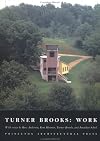
Perhaps the most important thing I can recommend is that you read the architect’s introduction and Kent Bloomer’s essay before looking at the various projects. Without this primer, you might come to the conclusion that the work is something like an unrefined fusion of Venturi and Mockbee Coker tropes. (I acknowledge that Mockbee didn’t do his first ad-hoc rural assemblage until 1985 or so – after many of Brooks projects were completed. Sambo’s first bricolage of scraps burned down show more within two years, btw.) When you understand the architect’s intent with these works, the design sophistication quotient increases dramatically.
Yes, his fetish about mobile houses and deep, circuitous and mysterious pathways might seem like typical one-liners to justify his quirky formal approaches but, at least the former really goes a long way in justifying the idiosyncratic nature of the work. The mysterious aspect doesn’t necessarily come through in pics, plans, and, I’m sure, the low budget realizations. Per his ghostly renderings, the mobility thing is not so much in regards to ubiquitous “manufactured homes” but literally pitched-roof, archetypal houses driving down dark roads with their own headlights!
There is a seeming conflict in a design ideal rooted in a particular place, yet one that is also inspired by and formally redolent of mobile things (roving machines, insects, Airstream trailers, or whatever). This dilemma seems best evidenced by his physical models. Bloomer writes about how, as a student, Brooks made a gargantuan plaster site model to relate his studio project to a much larger contextual sphere than the mere property boundaries – and this approach is obviously standard fare for any architect(s) who claims a rooted interconnectedness to a particular context. Yet the models Brooks created for these projects are placeless. Much like John Hejduk’s miniature study models that he supposedly carried around in his pocket, Brooks’ constructs have no site whatsoever and are occasionally photographed in piles. This seems to relate to the nomadic theme, infusing the projects with the placeless universality of an automobile. But the other, and I think more important, aspect is how a home occupies a particular landscape. He speaks about axial connections to wood bridges two miles away for Chrissakes! What happened to the model bases?
As this is another fine Princeton Architectural Press offering, I find it unbelievable that there don’t seem to be any major spelling or grammatical errors! The monograph has some typical problems though. Rather incomplete documentation disables any kind of holistic reading of many projects; for instance, the “Alley Stair” proposal includes one sentence and two model pics not showing the alley nor the building that the stair is supposed to occupy and serve! Many works are missing key floor plans (and a few are no better than smudges on the page) and there are plenty of pointless, postage stamp-sized photos of the houses positioned way off yonder in a field. Despite a purportedly comprehensive oeuvre up to 1995, when you see the list of houses previously published elsewhere – such as in Architectural Record “Houses” issues - and even some of the references in Kent Bloomer’s essay, there are some inexplicable project omissions.
This is strong work generally. Brooks approaches these projects in a peculiar but compelling way in relation to specific sites – if less so on the basis of rusting classic automobile metaphors. Importantly, the written narratives enable one to smile genuinely at (or “with”) the work – the odd formal/spatial contortions and “diabolical inflection of elevations” as Bloomer has it – as opposed to the troubled, head-scratching process I went through upon a quick visual survey a few years ago. show less
Yes, his fetish about mobile houses and deep, circuitous and mysterious pathways might seem like typical one-liners to justify his quirky formal approaches but, at least the former really goes a long way in justifying the idiosyncratic nature of the work. The mysterious aspect doesn’t necessarily come through in pics, plans, and, I’m sure, the low budget realizations. Per his ghostly renderings, the mobility thing is not so much in regards to ubiquitous “manufactured homes” but literally pitched-roof, archetypal houses driving down dark roads with their own headlights!
There is a seeming conflict in a design ideal rooted in a particular place, yet one that is also inspired by and formally redolent of mobile things (roving machines, insects, Airstream trailers, or whatever). This dilemma seems best evidenced by his physical models. Bloomer writes about how, as a student, Brooks made a gargantuan plaster site model to relate his studio project to a much larger contextual sphere than the mere property boundaries – and this approach is obviously standard fare for any architect(s) who claims a rooted interconnectedness to a particular context. Yet the models Brooks created for these projects are placeless. Much like John Hejduk’s miniature study models that he supposedly carried around in his pocket, Brooks’ constructs have no site whatsoever and are occasionally photographed in piles. This seems to relate to the nomadic theme, infusing the projects with the placeless universality of an automobile. But the other, and I think more important, aspect is how a home occupies a particular landscape. He speaks about axial connections to wood bridges two miles away for Chrissakes! What happened to the model bases?
As this is another fine Princeton Architectural Press offering, I find it unbelievable that there don’t seem to be any major spelling or grammatical errors! The monograph has some typical problems though. Rather incomplete documentation disables any kind of holistic reading of many projects; for instance, the “Alley Stair” proposal includes one sentence and two model pics not showing the alley nor the building that the stair is supposed to occupy and serve! Many works are missing key floor plans (and a few are no better than smudges on the page) and there are plenty of pointless, postage stamp-sized photos of the houses positioned way off yonder in a field. Despite a purportedly comprehensive oeuvre up to 1995, when you see the list of houses previously published elsewhere – such as in Architectural Record “Houses” issues - and even some of the references in Kent Bloomer’s essay, there are some inexplicable project omissions.
This is strong work generally. Brooks approaches these projects in a peculiar but compelling way in relation to specific sites – if less so on the basis of rusting classic automobile metaphors. Importantly, the written narratives enable one to smile genuinely at (or “with”) the work – the odd formal/spatial contortions and “diabolical inflection of elevations” as Bloomer has it – as opposed to the troubled, head-scratching process I went through upon a quick visual survey a few years ago. show less

Jonathan Schell's most recent book should be read along with Richard Rhodes' "Arsenals of Folly." Where Rhodes takes a "hard news" approach to the history of nuclear weapons, with a focus in his latest book on the history of disarmament efforts, Schell's agenda is broader, examining the psychology as well as the history of nuclear weapons, and he offers a conceptual road map to abolition of nuclear weapons. In the absence of an abolition movement such as the one that gained so much attention show more in the late 1970s and 1980s, Schell's book should inspire those who never knew or have forgotten how close we were to abolition twenty-some years ago. show less
Lists
Awards


You May Also Like


Associated Authors
Statistics
- Works
- 25
- Also by
- 9
- Members
- 1,619
- Popularity
- #15,905
- Rating
- 3.8
- Reviews
- 11
- ISBNs
- 69
- Languages
- 9
- Favorited
- 5