Darin Strauss
Author of Chang and Eng
About the Author
Graduate of the New York University Creative Writing Program. Strauss is now a teacher in the program and lives in New York City.
Image credit: Photographed at BookPeople in Austin, Texas
Works by Darin Strauss
Metade da vida 1 copy
Associated Works
Ballad of the Whiskey Robber: A True Story of Bank Heists, Ice Hockey, Transylvanian Pelt Smuggling, Moonlighting Detectives and Broken Hearts (2004) — Narrator, some editions — 796 copies, 31 reviews
McSweeney's 12: Unpublished, Unknown, and/or Unbelievable (2003) — Contributor — 290 copies, 4 reviews
Eat Joy: Stories and Comfort Food from 31 Celebrated Writers (2019) — Contributor — 83 copies, 3 reviews
A Fictional History of the United States with Huge Chunks Missing (2006) — Contributor — 77 copies, 2 reviews
The Bombay Liaison (is Grateful) (Working Titles Book 1) (2015) — Introduction, some editions — 2 copies, 1 review
Tagged
Common Knowledge
- Canonical name
- Strauss, Darin
- Birthdate
- 1970-03-01
- Gender
- male
- Education
- Tufts University
- Occupations
- writer
teacher - Awards and honors
- Guggenheim Fellowship
- Relationships
- Meadows, Susannah (wife)
- Nationality
- USA
- Birthplace
- Rosyln Harbor, Long Island, New York, USA
- Places of residence
- Park Slope, New York, USA
- Associated Place (for map)
- New York, USA
Members
Reviews
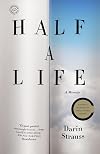
When I turned to the last page of this profound little book, I simply sat quietly and thought about how awful it must be to carry guilt with you, like a shadow, for most of your life, for something you probably had little or no control of and are completely without blame.
This poignant, honest appraisal of a tragic accident, that took place half a life away, grips you in its claws. You are compelled to empathize with the driver of the car and the bicyclist that was killed. The simplicity of show more the author’s prose, coupled with the raw emotion expressed, conspire to make you an unwilling witness to this tragic event.
You morph into friend and foe, all wrapped into one, watching the author, whose life changed the night of the terrible accident, as he spends his days unaware sometimes, of how consumed he is with the memory of someone he never really knew.
His life changed irrevocably that night, but the cyclist’s ended totally. He goes through his life searching for meaning and justice and comprehension for that moment in time that changed his future and hers. He asks himself often, is he feeling the right emotions, will he ever be able to forget that night or will it haunt him forever as it has been doing for so many years. Every waking moment seems to be a judgment about him, based on that fateful night.
Although he is not always fully aware of it, his mind has not coped well with the grief he carries from the tragedy. He cannot move on beyond it because the guilt will not release itself. He remembers the words of the victim’s parents and tries to satisfy their needs and lessen their horror, by living for her as well. He is consumed with the question, if their horror will never end, why should his? How he copes with this sadness and need to explain the unexplainable, is the crux of this memoir and it is very compelling. show less
This poignant, honest appraisal of a tragic accident, that took place half a life away, grips you in its claws. You are compelled to empathize with the driver of the car and the bicyclist that was killed. The simplicity of show more the author’s prose, coupled with the raw emotion expressed, conspire to make you an unwilling witness to this tragic event.
You morph into friend and foe, all wrapped into one, watching the author, whose life changed the night of the terrible accident, as he spends his days unaware sometimes, of how consumed he is with the memory of someone he never really knew.
His life changed irrevocably that night, but the cyclist’s ended totally. He goes through his life searching for meaning and justice and comprehension for that moment in time that changed his future and hers. He asks himself often, is he feeling the right emotions, will he ever be able to forget that night or will it haunt him forever as it has been doing for so many years. Every waking moment seems to be a judgment about him, based on that fateful night.
Although he is not always fully aware of it, his mind has not coped well with the grief he carries from the tragedy. He cannot move on beyond it because the guilt will not release itself. He remembers the words of the victim’s parents and tries to satisfy their needs and lessen their horror, by living for her as well. He is consumed with the question, if their horror will never end, why should his? How he copes with this sadness and need to explain the unexplainable, is the crux of this memoir and it is very compelling. show less
In 1988, when author Darin Strauss was barely 18, he struck a fellow student, Celine Zilke, with his car. She died.
Now 40, Strauss examines the past 20-plus years with as clear an eye as he can muster. As might be expected in this sort of memoir, he agonizes over the guilt, over whether he has the right to be happy or even to enjoy something as innocuous as a movie at the local cinema. It isn't easy: Celine's mother laid a tremendous burden on his back at the funeral by telling him that from show more this point on, he had to be twice as good as anyone else at everything, because now he had to live for two people. For the rest of his life. Strauss promised her he would.
As Strauss takes us through his life after the accident, he unsparingly points out the perceived flaws in his own behavior: how he prepared speeches, rehearsed facial expressions, tried to give the public what he thought it wanted to see -- guilt, despair, sorrow -- but he was only a boy. And he was in shock, a shock that remained with him for years, even decades. Strauss went through the critical years of college and into adulthood with a glass between him and the rest of the world, the glass of Celine's death, through which he filtered all emotion, all relationships, even whether or not he could allow himself to enjoy a fine wine or a beautiful day. Because Celine couldn't.
I came away from this book feeling more than a little angry with the adults in young Darin's life. It seems no one who mattered -- a parent, a friend, a teacher-- ever really sat down and talked with him, tried to see what was going on inside, to help him process such a catastrophic blow to a young life. Oh, they sent him to a therapist, which lasted all of one session. Otherwise, nothing. Eventually, after many years, Strauss returned to therapy. This book is part of the result of that therapy.
Darin Strauss has my admiration, not only for his courage in sharing this story, but for the story itself. He's written a bewildering and hurtful tale in clear beautiful language. There are no easy answers here. No pat responses, no pithy platitudes. Just a powerful story, powerfully told. show less
Now 40, Strauss examines the past 20-plus years with as clear an eye as he can muster. As might be expected in this sort of memoir, he agonizes over the guilt, over whether he has the right to be happy or even to enjoy something as innocuous as a movie at the local cinema. It isn't easy: Celine's mother laid a tremendous burden on his back at the funeral by telling him that from show more this point on, he had to be twice as good as anyone else at everything, because now he had to live for two people. For the rest of his life. Strauss promised her he would.
As Strauss takes us through his life after the accident, he unsparingly points out the perceived flaws in his own behavior: how he prepared speeches, rehearsed facial expressions, tried to give the public what he thought it wanted to see -- guilt, despair, sorrow -- but he was only a boy. And he was in shock, a shock that remained with him for years, even decades. Strauss went through the critical years of college and into adulthood with a glass between him and the rest of the world, the glass of Celine's death, through which he filtered all emotion, all relationships, even whether or not he could allow himself to enjoy a fine wine or a beautiful day. Because Celine couldn't.
I came away from this book feeling more than a little angry with the adults in young Darin's life. It seems no one who mattered -- a parent, a friend, a teacher-- ever really sat down and talked with him, tried to see what was going on inside, to help him process such a catastrophic blow to a young life. Oh, they sent him to a therapist, which lasted all of one session. Otherwise, nothing. Eventually, after many years, Strauss returned to therapy. This book is part of the result of that therapy.
Darin Strauss has my admiration, not only for his courage in sharing this story, but for the story itself. He's written a bewildering and hurtful tale in clear beautiful language. There are no easy answers here. No pat responses, no pithy platitudes. Just a powerful story, powerfully told. show less
This review was written for LibraryThing Early Reviewers.This book is being marketed as a romance, a love story. I say, really? There are elements of that in it, to be sure, but in some ways this book is quite the opposite. The story is two-fold. One part is a part-fictional, small-part memoir of the author's grandfather, who may or may not have had an affair with Lucille Ball. They met at a party in New York, before she was nearly as famous as she would later become. He was established in his real estate career, married, with children. She too show more was already married, and focused on making herself (and Desi) a rising star in the acting world. But they caught each other's attention and a slight obsession followed. The book jumps through the years, following both, and interspersed with the author's own story of talking to his dying grandfather (the one who, as a younger man, is a character in the larger story - don't worry, it's not as confusing as it sounds).
Do Lucille and the author's grandfather ever get together? Well, such is the stuff that stories are made of. Did any of this really happen? That's a more complicated question. What is the responsibility of the author of historical fiction to historical fact? Strauss is completely clear that he doesn't know the truth of the matter, but he also acknowledges fudging such fundamental facts as the day of the week on which I Love Lucy aired. And why? That particular detail is absolutely not relevant to the plot, so why bother to change a fact of history. To me, that calls the entire enterprise of this book into doubt. Maybe he did that on purpose, since he himself doesn't know the truth of the possible relationship between his grandfather and Lucille Ball.
Setting the absolute truth aside, this is a very readable story. It follows Lucille Ball through her early struggles with Desi and her career, into her stardom, and through the collapse of her marriage, even as she continues to grow more powerful in Hollywood. It follows Isidore Strauss, mostly through a family lens, as his children grow and his wife becomes an alcoholic. Either of these stories separately might have made good reading. Tying them together is something of a conceit on the author's part, and it doesn't quite work. show less
Do Lucille and the author's grandfather ever get together? Well, such is the stuff that stories are made of. Did any of this really happen? That's a more complicated question. What is the responsibility of the author of historical fiction to historical fact? Strauss is completely clear that he doesn't know the truth of the matter, but he also acknowledges fudging such fundamental facts as the day of the week on which I Love Lucy aired. And why? That particular detail is absolutely not relevant to the plot, so why bother to change a fact of history. To me, that calls the entire enterprise of this book into doubt. Maybe he did that on purpose, since he himself doesn't know the truth of the possible relationship between his grandfather and Lucille Ball.
Setting the absolute truth aside, this is a very readable story. It follows Lucille Ball through her early struggles with Desi and her career, into her stardom, and through the collapse of her marriage, even as she continues to grow more powerful in Hollywood. It follows Isidore Strauss, mostly through a family lens, as his children grow and his wife becomes an alcoholic. Either of these stories separately might have made good reading. Tying them together is something of a conceit on the author's part, and it doesn't quite work. show less
Darin Strauss never met a metaphor he didn’t like.
Picture those poor shivering words Like and As standing barefoot out there in the cold black void of imagination. They knock on his door and Mr. Strauss welcomes them inside, pulling them by the vowels straight over to the fire where they can warm their frostbit syllables while he prepares a nice warm cup of steaming simile for them to drink.
Strauss’ latest novel, The Real McCoy is home for the wayward figure of speech. Each page teems show more with metaphor—so much so that it takes us just to the edge of exasperation (and sometimes beyond); but Strauss is a skilled juggler and to his credit The Real McCoy doesn’t collapse under the weight of its individual sentences.
It helps that the book’s central character, Kid McCoy, is a larger-than-life figure who is built mostly of speech—the flimflam, thank-you-ma’am patter of snake-oil salesmen, charlatans and folk heroes whose fame depended on rumor and tabloid headlines. Very loosely based on the life of early-1900s boxing champ Charles McCoy, Strauss’ novel invents a character who is himself an invention—a re-invention, that is, of a boxer named McCoy who is discovered by 16-year-old Virgil Selby in his dying moments after a brutal fistfight in Selby’s small Indiana town. The kid drags the battered fighter out of town and watches him die in the woods. “Yes, sir, this is the beginning of things,â€? he thinks as he buries the real McCoy’s corpse in a shallow grave.
With the words of his mythological hero Gilgamesh ringing in his ears—“There is nothing we should fear and even if we fail we will have made a name for ourselvesâ€?—the new McCoy sets off on a series of adventures which include con games, boxing championships, multiple marriages to the same woman and a brief career as a poet. McCoy is a blowhard, a slippery-tongued snake-oil salesman whose main product for sale is himself. He’s also a self-doubting insecure kid from “pissant Indianaâ€? who never completely shakes off the guilt of allowing his namesake to die.
In addition to Gilgamesh, McCoy likes to quote Hegel (“I have no knowledge of myself as I am, but just as I appear to beâ€?) and Nietzsche (“Ceaseless Becoming weighs on Man like a heavy illnessâ€?). In turn-of-the-century America—a place, Strauss describes as “blemished wild places, a hissing brier patch where dark fruit grows, serpents underfootâ€?—McCoy ceaselessly becomes the nation’s newest folk hero:
People needed someone. The 1900s were a moment of unprecedented artificiality, of simulation and back-and-front dishonesty. Thirty-five years earlier, say, day-to-day life had been more or less as it’d been for generations. But now horses were being replaced by cars, candles by electric light, mailboxes by telephone, “liveâ€? theater by pictures that moved, serious journalism by scurrilous “rumor rags,â€? painting by photography, stairs by escalators…America had become a land of noisy forgery and wondrous pretense.
Swap a few words and Strauss could very well be writing about our own recent turn of the century. And that’s what makes The Real McCoy so relevant. Turn on the TV or snap open the newspaper and you’ll run across any number of stories of half-talented celebrities kept alive by a life-support system of sycophantic groupies, lemming-like fans and spin-doctoring press agents. With his trademark corkscrew punch and brash nature, McCoy could easily grab as many headlines as the average mono-monikered singer. In Strauss’ hands, McCoy becomes as much metaphor as he is flesh-and-blood character.
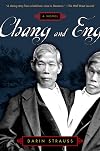
It’s too bad, then, that the novel doesn’t create a deeper, more lasting impression. If The Real McCoy isn’t as memorable as his debut, Chang and Eng, it’s simply that Strauss seems to be holding the plot in check, keeping it from the wild, unrestrained carnival side-show tale it longs to be. Plots are hatched, cons are conceived, but they’re written at an arm’s length and are so zig-zagged with flashbacks that the air is let out of the plot’s tires. Despite the appeal of Kid McCoy and his cast of supporting characters, we never get fully involved in the events of the book.
This reined-in story, however, only slightly dampens the joyous effect of the writing. The Real McCoy thrives on that ingredient which made Chang and Eng such a dazzler: Strauss’ eye (and ear) for vivid detail.
Here, for instance is a description of Susan Fields, the tempestuous, theatrical beauty McCoy was destined to marry several times over:
Her hair—you might have thought any nickname would’ve described the fury of that hair—her hair was an adorable red tumble all over. She was sturdy (who could miss the fierce cords where her shoulders flowed into her neck?), with humid eyes that shone through their gray like lighthouse beacons through cloud cover. Hers was a face fantastic in its flaws—such as her small, uneven forehead; on pale days it resembled the underbelly of a crab, especially when her curlicues like red crawler legs arched in on both sides. But sidelong-glancing, with lovely lamping cheeks and those lips that always swelled out like pink bubbles overblown—this was the make of face that men who slept late on Sundays saw when they heard talk of angels.
Or, how about these sentences, taken from a boxing match filled with the kind of poetry and realism that I haven’t seen since Martin Scorsese’s Raging Bull:
During the fight’s worst carnage McCoy missed a corkscrew and caught a reflection of himself in the hall’s big mirror as he took a punch to his head. The image froze in his mind. What he saw was a man crumpled, as in death, blood jetting from his brow in an overhead curve like a ram’s horn. The gobbets of sweat that flew from his wheeling face trapped the light and looked yellowish, like embers flying from a bonfire, or bees leaving a hive. He’d see that image for the rest of his McCoy days: the horn of his blood, the bees in mid-flight, and his long rodlike body, crumpled.
This is the kind of writing that exhilarates the reader and proves Strauss’ talent, so firmly established in Chang and Eng. He writes with such energy that the words spill off the page. It’s as if Strauss took a cue from the philosophy of his main character:
In the big flimflam, the bolder the fiction, the better. Preposterousness makes a lie more believable. The trick to the most extravagant canard is imagination, having the imagination to build your canard into something like a beautiful cathedral. Or, to put it one more way: Ask for the moon and stars, and you have a better chance than if you’d asked only for the moon.
With its flatfooted plot, The Real McCoy is not quite the brightest star of this literary season, but it does twinkle and glitter and dazzle with a writer’s love for the written word. And that, ladies and gentlemen, is the God’s honest truth—the real McCoy. show less
Picture those poor shivering words Like and As standing barefoot out there in the cold black void of imagination. They knock on his door and Mr. Strauss welcomes them inside, pulling them by the vowels straight over to the fire where they can warm their frostbit syllables while he prepares a nice warm cup of steaming simile for them to drink.
Strauss’ latest novel, The Real McCoy is home for the wayward figure of speech. Each page teems show more with metaphor—so much so that it takes us just to the edge of exasperation (and sometimes beyond); but Strauss is a skilled juggler and to his credit The Real McCoy doesn’t collapse under the weight of its individual sentences.
It helps that the book’s central character, Kid McCoy, is a larger-than-life figure who is built mostly of speech—the flimflam, thank-you-ma’am patter of snake-oil salesmen, charlatans and folk heroes whose fame depended on rumor and tabloid headlines. Very loosely based on the life of early-1900s boxing champ Charles McCoy, Strauss’ novel invents a character who is himself an invention—a re-invention, that is, of a boxer named McCoy who is discovered by 16-year-old Virgil Selby in his dying moments after a brutal fistfight in Selby’s small Indiana town. The kid drags the battered fighter out of town and watches him die in the woods. “Yes, sir, this is the beginning of things,â€? he thinks as he buries the real McCoy’s corpse in a shallow grave.
With the words of his mythological hero Gilgamesh ringing in his ears—“There is nothing we should fear and even if we fail we will have made a name for ourselvesâ€?—the new McCoy sets off on a series of adventures which include con games, boxing championships, multiple marriages to the same woman and a brief career as a poet. McCoy is a blowhard, a slippery-tongued snake-oil salesman whose main product for sale is himself. He’s also a self-doubting insecure kid from “pissant Indianaâ€? who never completely shakes off the guilt of allowing his namesake to die.
In addition to Gilgamesh, McCoy likes to quote Hegel (“I have no knowledge of myself as I am, but just as I appear to beâ€?) and Nietzsche (“Ceaseless Becoming weighs on Man like a heavy illnessâ€?). In turn-of-the-century America—a place, Strauss describes as “blemished wild places, a hissing brier patch where dark fruit grows, serpents underfootâ€?—McCoy ceaselessly becomes the nation’s newest folk hero:
People needed someone. The 1900s were a moment of unprecedented artificiality, of simulation and back-and-front dishonesty. Thirty-five years earlier, say, day-to-day life had been more or less as it’d been for generations. But now horses were being replaced by cars, candles by electric light, mailboxes by telephone, “liveâ€? theater by pictures that moved, serious journalism by scurrilous “rumor rags,â€? painting by photography, stairs by escalators…America had become a land of noisy forgery and wondrous pretense.
Swap a few words and Strauss could very well be writing about our own recent turn of the century. And that’s what makes The Real McCoy so relevant. Turn on the TV or snap open the newspaper and you’ll run across any number of stories of half-talented celebrities kept alive by a life-support system of sycophantic groupies, lemming-like fans and spin-doctoring press agents. With his trademark corkscrew punch and brash nature, McCoy could easily grab as many headlines as the average mono-monikered singer. In Strauss’ hands, McCoy becomes as much metaphor as he is flesh-and-blood character.
It’s too bad, then, that the novel doesn’t create a deeper, more lasting impression. If The Real McCoy isn’t as memorable as his debut, Chang and Eng, it’s simply that Strauss seems to be holding the plot in check, keeping it from the wild, unrestrained carnival side-show tale it longs to be. Plots are hatched, cons are conceived, but they’re written at an arm’s length and are so zig-zagged with flashbacks that the air is let out of the plot’s tires. Despite the appeal of Kid McCoy and his cast of supporting characters, we never get fully involved in the events of the book.
This reined-in story, however, only slightly dampens the joyous effect of the writing. The Real McCoy thrives on that ingredient which made Chang and Eng such a dazzler: Strauss’ eye (and ear) for vivid detail.
Here, for instance is a description of Susan Fields, the tempestuous, theatrical beauty McCoy was destined to marry several times over:
Her hair—you might have thought any nickname would’ve described the fury of that hair—her hair was an adorable red tumble all over. She was sturdy (who could miss the fierce cords where her shoulders flowed into her neck?), with humid eyes that shone through their gray like lighthouse beacons through cloud cover. Hers was a face fantastic in its flaws—such as her small, uneven forehead; on pale days it resembled the underbelly of a crab, especially when her curlicues like red crawler legs arched in on both sides. But sidelong-glancing, with lovely lamping cheeks and those lips that always swelled out like pink bubbles overblown—this was the make of face that men who slept late on Sundays saw when they heard talk of angels.
Or, how about these sentences, taken from a boxing match filled with the kind of poetry and realism that I haven’t seen since Martin Scorsese’s Raging Bull:
During the fight’s worst carnage McCoy missed a corkscrew and caught a reflection of himself in the hall’s big mirror as he took a punch to his head. The image froze in his mind. What he saw was a man crumpled, as in death, blood jetting from his brow in an overhead curve like a ram’s horn. The gobbets of sweat that flew from his wheeling face trapped the light and looked yellowish, like embers flying from a bonfire, or bees leaving a hive. He’d see that image for the rest of his McCoy days: the horn of his blood, the bees in mid-flight, and his long rodlike body, crumpled.
This is the kind of writing that exhilarates the reader and proves Strauss’ talent, so firmly established in Chang and Eng. He writes with such energy that the words spill off the page. It’s as if Strauss took a cue from the philosophy of his main character:
In the big flimflam, the bolder the fiction, the better. Preposterousness makes a lie more believable. The trick to the most extravagant canard is imagination, having the imagination to build your canard into something like a beautiful cathedral. Or, to put it one more way: Ask for the moon and stars, and you have a better chance than if you’d asked only for the moon.
With its flatfooted plot, The Real McCoy is not quite the brightest star of this literary season, but it does twinkle and glitter and dazzle with a writer’s love for the written word. And that, ladies and gentlemen, is the God’s honest truth—the real McCoy. show less
Lists
Awards
You May Also Like
Associated Authors
Statistics
- Works
- 13
- Also by
- 9
- Members
- 1,799
- Popularity
- #14,302
- Rating
- 3.5
- Reviews
- 131
- ISBNs
- 60
- Languages
- 7


