
Carolina Maria de Jesus (1915–1977)
Author of Child of the Dark: The Diary of Carolina Maria de Jesus
About the Author
Image credit: Caarolina Maria de Jesus
Works by Carolina Maria de Jesus
Bitita's Diary: The Childhood Memoirs of Carolina Maria de Jesus (Latin American Realities) (1984) 49 copies, 1 review
I'm Going to Have a Little House: The Second Diary of Carolina Maria De Jesus (Engendering Latin America Series) (1997) 7 copies
Meu sonho é escrever 1 copy
Çöplük 1 copy
La Favela 1 copy
XI Concurso de Contos Petros 1 copy
COPLUK 1 copy
Associated Works
Daughters of Africa: An International Anthology of Words and Writings by Women of African Descent from the Ancient Egyptian to the Present (1992) — Contributor — 186 copies
Daughters of Latin America: An International Anthology of Writing by Latine Women (2023) — Contributor — 40 copies, 1 review
Tagged
Common Knowledge
- Birthdate
- 1915
- Date of death
- 1977
- Gender
- female
- Nationality
- Brazil
- Places of residence
- São Paulo, Brazil
- Associated Place (for map)
- São Paulo, Brazil
Members
Reviews
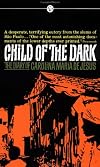
It is accounts like these that show how useful ordinary people's diaries are to history. Reading Carolina de Jesus's diary, you can see exactly what it was like to live in the grim, apocalyptic world that was slums of Sao Paulo. It was a place where women fought with their partners all the time and were often chased naked into the street, where people combed through the garbage for food that was not too rotten, where tiny babies died as a matter of course and older children scavenged for show more whatever they could sell and thus fill their stomachs for awhile. There was plenty of food available, but not the money to buy it, and shopkeepers' stock would go rotten and they would toss it into the favela for the poor to pick over.
During the time she was writing this diary, Carolina was making a living selling scrap paper at a penny for four pounds. She would make about thirty cents on the good days. On the bad days (such as whenever it rained and all the scrap paper got wet) she made nothing. A large part of the diary is preoccupied with her constant, Sisyphean struggle to provide for herself and her three young children. But Carolina writes without self-pity and even with a kind of wry humor. (Once, she likened the city of Sao Paulo to a house and said the presidential palace was the living room, the mayor's home was the dining room, the city was the garden and the favela was the backyard garbage heap.) Her intelligence and wit are obvious in spite of her second-grade education, and I wonder just how far she could have gone if only she'd been born in different circumstances.
Favelas and their like still exist all over the world, and a significant proportion of the world's population still lives on less than two dollars a day. This diary is just as relevant today as it was fifty years ago when it was first written. show less
During the time she was writing this diary, Carolina was making a living selling scrap paper at a penny for four pounds. She would make about thirty cents on the good days. On the bad days (such as whenever it rained and all the scrap paper got wet) she made nothing. A large part of the diary is preoccupied with her constant, Sisyphean struggle to provide for herself and her three young children. But Carolina writes without self-pity and even with a kind of wry humor. (Once, she likened the city of Sao Paulo to a house and said the presidential palace was the living room, the mayor's home was the dining room, the city was the garden and the favela was the backyard garbage heap.) Her intelligence and wit are obvious in spite of her second-grade education, and I wonder just how far she could have gone if only she'd been born in different circumstances.
Favelas and their like still exist all over the world, and a significant proportion of the world's population still lives on less than two dollars a day. This diary is just as relevant today as it was fifty years ago when it was first written. show less
This was an honest, jarring, and compelling read overall. The unadulterated excerpts of Carolina - single mother, paper gatherer, impoverished Sao Paolo favelado - speaks authentically of desperationa and hope tightly bound in a life mired in a socioeconomic hell.
There are some unfortunate aspects of this edition, though. St. Clair's Translator's Note speaking of a woman nearly ridden out of slums on a rail when the book successfully comes out. However, photographs in the book show an show more orderly egree with nothing more threatening than standoffish spectators. The Note also says Carolina was pushing her novels and declairing here memoirs were a diary never meant for any eyes than her own. However, the memoir's own content repeats her assertion that the work is contrived for publication in order to help facilitate some sharing of the truth. At least part of this may be due to the fact that the content of the book, covering the late '50s, post-dates the Brazilian newspaper excerpt and book arrival. Part of this bookk actually records her book being published and the reaction to it.
Finally, a little more whitespace would have made reading easier. The short entries for a single day were typeset without even a line break between them, although they are such obvious chunks to present with some separation. show less
There are some unfortunate aspects of this edition, though. St. Clair's Translator's Note speaking of a woman nearly ridden out of slums on a rail when the book successfully comes out. However, photographs in the book show an show more orderly egree with nothing more threatening than standoffish spectators. The Note also says Carolina was pushing her novels and declairing here memoirs were a diary never meant for any eyes than her own. However, the memoir's own content repeats her assertion that the work is contrived for publication in order to help facilitate some sharing of the truth. At least part of this may be due to the fact that the content of the book, covering the late '50s, post-dates the Brazilian newspaper excerpt and book arrival. Part of this bookk actually records her book being published and the reaction to it.
Finally, a little more whitespace would have made reading easier. The short entries for a single day were typeset without even a line break between them, although they are such obvious chunks to present with some separation. show less
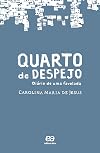
As a testimonial writing, “Dump room”, it reveals the cruel situation living by the author, a resident of the Canindé slum located in Sao Paulo, and her neighbors. Black woman and cardboard picker, Carolina Maria de Jesus writes in her diary the routine of what it is like to be poor and marginalized, at the same time, denounces the political sphere of the time. The writing is simple and easy to understand, with some spelling errors, a sign of the author's lack of education, but which show more does not interfere the understanding of the content.
In fact, Dump Room is not an easy read, the indignation, poverty, and corruption addressed in the book, while can awaken a feeling of empathy, also take the reader out of his comfort zone by being exposed to all sorts of social ills.
It is a necessary reading, the human and institutional criticisms are urgent, and despite 60 years from the date of its writing, social problems are still present today, often veiled in the most privileged eyes, but still present. show less
In fact, Dump Room is not an easy read, the indignation, poverty, and corruption addressed in the book, while can awaken a feeling of empathy, also take the reader out of his comfort zone by being exposed to all sorts of social ills.
It is a necessary reading, the human and institutional criticisms are urgent, and despite 60 years from the date of its writing, social problems are still present today, often veiled in the most privileged eyes, but still present. show less
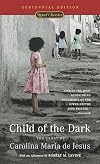
My copy of this book is a Signet Classics 50th Anniversary Edition and what's unusual about it, is that for a signet classic it's poorly written. What makes it a classic however is that it's written by an impoverished Brazilian woman who despite only having two years of formal education was still able to produce this harrowing account of horrible conditions that existed in the favelas of Sao Paulo Brazil. And while the writing itself might be sub par, the determination and courage displayed show more by Maria de Jesus is anything but. This book was a sensation in Brazil when it came out in 1960 but then sadly, soon faded into obscurity. The fact that favelas still exist more 50 years later shows just how hard it is end poverty. It is so easy to dismiss poverty and put it into the back of our minds, but thankfully books like this continue to circulate and hopefully, will one day, play at least, some small part in ending poverty not only inn Brazil, but worldwide. show less
Lists
Awards


You May Also Like


Associated Authors
Statistics
- Works
- 13
- Also by
- 3
- Members
- 830
- Popularity
- #30,756
- Rating
- 4.1
- Reviews
- 11
- ISBNs
- 38
- Languages
- 3