

J. F. Powers (1917–1999)
Author of Morte d'Urban
About the Author
James Farl Powers (July 8, 1917 - June 12, 1999) was a Roman Catholic American novelist and short-story writer who often drew his inspiration from developments in the Catholic Church, and was known for his studies of Catholic priests in the Midwest, although he was not a priest himself. He was born show more in Jacksonville, Illinois to a devout Catholic family, and graduated from Quincy College Academy, a Franciscan high school. He took English and philosophy courses at Wright Junior College and at Northwestern University in Chicago, but did not earn a degree. Powers was a conscientious objector during World War II, and went to prison for it. His book Prince of Darkness and Other Stories appeared in 1947. His story "The Valiant Woman" received the O. Henry Award in 1947. The Presence of Grace (1956) was also a collection of short stories. His first novel was Morte d'Urban (1962), which won the 1963 National Book Award for Fiction. Powers died on June 12, 1999. (Bowker Author Biography) show less
Works by J. F. Powers
Suitable Accommodations: An Autobiographical Story of Family Life: The Letters of J. F. Powers, 1942-1963 (2013) 30 copies, 1 review
A Losing Game 2 copies
Keystone 1 copy
One of Them [short story] 1 copy
Moonshot 1 copy
I vecchi frati. Racconto 1 copy
Priestly Fellowship 1 copy
Farewell 1 copy
Pharisees 1 copy
Tinkers 1 copy
Bill 1 copy
Folks 1 copy
Blue Island 1 copy
Zeal 1 copy
The Poor Thing 1 copy
Dawn 1 copy
The Eye 1 copy
Renner 1 copy
The Forks 1 copy
He Don't Plant Cotton 1 copy
Jamesie [short story] 1 copy
The Trouble 1 copy
The Lord's Day 1 copy
The Valiant Woman 1 copy
Morte D'Irbam 1 copy
Associated Works
The Sophisticated Cat: A Gathering of Stories, Poems, and Miscellaneous Writings About Cats (1992) — Contributor — 112 copies, 1 review
The Haves and Have Nots: 30 Stories About Money and Class in America (1999) — Contributor — 36 copies
Fifty Years of the American Short Story from the O. Henry Awards 1919-1970 (1970) — Contributor — 17 copies, 1 review
Fifty Years of the American Short Story from the O. Henry Awards 1919-1970, Volume 2 (1970) — Contributor — 5 copies
Tagged
Common Knowledge
- Legal name
- Powers, James Farl
- Birthdate
- 1917-07-08
- Date of death
- 1999-06-12
- Gender
- male
- Education
- Quincy College Academy
Wright Junior College
Northwestern University - Occupations
- novelist
short story writer
professor
editor
sales clerk
bookstore clerk (show all 7)
hospital orderly - Organizations
- St. John's University (Minnesota)
- Nationality
- USA
- Birthplace
- Jacksonville, Illinois, USA
- Places of residence
- Jacksonville, Illinois, USA
Collegeville, Minnesota, USA
Quincy, Illinois, USA
Chicago, Illinois, USA
Ireland - Place of death
- Collegeville, Minnesota, USA
- Burial location
- St. John's Abbey Church, Collegeville, Minnesota, USA
- Associated Place (for map)
- USA
Members
Reviews
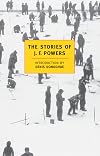
THE STORIES OF J.F. POWERS is a book to treasure. Powers died in 1999, but his reputation as perhaps the greatest comic chronicler of the 1950s Catholic Church endures. He published only five books in a career that spanned over five decades. Three of them were slim collections of short stories,all of which are included in this handsome volume. The other two were novels. The first, MORTE D'URBAN, a book I have read and reread at least four times, each time with much chuckling and great show more enjoyment, won the National Book Award in 1962. The second, WHEAT THAT SPRINGETH GREEN (1988), I read just a few years ago. Again,much chuckling, a pure pleasure to read.
Because he was a perfectionist, Powers worked slowly. His resulting stories were, to my mind, perfect. His subject? The Catholic Church, its clergy and religious, and its faithful members in the mid-twentieth century Midwest. In these stories his priests, nuns and parishioners are presented in thoroughly human terms, warts and all. Catholics from that era cannot help but relate. They will smirk, smile, chuckle, guffaw. The humor sneaks up on you, surprises you into laughter.
I can remember, as a child, seeing Powers' first book, PRINCE OF DARKNESS AND OTHER STORIES (1947), a slim paperback in a rack of religious books and pamphlets in the back of our church. My mother, always an avid reader, must have bought it, because I discovered it in our home bookcase my senior year of high school. One story and I was hooked. I probably didn't realize it then, but I had discovered buried treasure.
I am so pleased that NYRB has made all of Powers' stories finally available in a single volume. I had read his final collection, HOW THE FISHES LIVE (1975), but not the middle one. THE PRESENCE OF GRACE (1956). Now I have, and I will continue sampling these stories for a long time. It's the kind of book you can open anywhere, to any story. Every one is perfect, complete, a finely polished gem. My highest recommendation.
- Tim Bazzett, author of the memoir, BOOKLOVER show less
Because he was a perfectionist, Powers worked slowly. His resulting stories were, to my mind, perfect. His subject? The Catholic Church, its clergy and religious, and its faithful members in the mid-twentieth century Midwest. In these stories his priests, nuns and parishioners are presented in thoroughly human terms, warts and all. Catholics from that era cannot help but relate. They will smirk, smile, chuckle, guffaw. The humor sneaks up on you, surprises you into laughter.
I can remember, as a child, seeing Powers' first book, PRINCE OF DARKNESS AND OTHER STORIES (1947), a slim paperback in a rack of religious books and pamphlets in the back of our church. My mother, always an avid reader, must have bought it, because I discovered it in our home bookcase my senior year of high school. One story and I was hooked. I probably didn't realize it then, but I had discovered buried treasure.
I am so pleased that NYRB has made all of Powers' stories finally available in a single volume. I had read his final collection, HOW THE FISHES LIVE (1975), but not the middle one. THE PRESENCE OF GRACE (1956). Now I have, and I will continue sampling these stories for a long time. It's the kind of book you can open anywhere, to any story. Every one is perfect, complete, a finely polished gem. My highest recommendation.
- Tim Bazzett, author of the memoir, BOOKLOVER show less
Suitable Accommodations: An Autobiographical Story of Family Life: The Letters of J. F. Powers, 1942-1963 by J. F. Powers
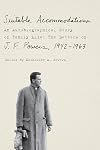
I have read both of JF Powers' novels and all (I think) of his short stories. In fact I remember seeing his first book of stories, PRINCE OF DARKNESS, in a paperback rack in the vestibule of our Catholic church when I was a boy back the 1950s. I read MORTE D'URBAN in college in the late sixties and have read it a few more times since then. I was very pleased to see all of his work back in print from NYRB Press a few years back, and even purchased those editions of WHEAT THAT SPRINGETH GREEN show more and COLLECTED STORIES - and read them again. So I think its safe to say I am a longtime fan.
Since Powers only published five books, I was really looking forward to finally reading SUITABLE ACCOMMODATIONS, AN AUTOBIOGRAPHICAL STORY OF FAMILY LIFE: THE LETTERS OF J.F. POWERS, 1942-1963 (2013), collected and edited by his daughter, Katherine A. Powers (named, incidentally, for author Katherine Ann Porter). Sadly, I found it to be a disappointment, and almost wish I hadn't read it. Some of the early letters were written from prison. Powers was incarcerated for more than a year during the war for ignoring his draft notice after his bid for conscientious objector status was refused. Upon his parole, he was forced to work as a hospital orderly for a time.
Powers' later letters do display his determination to earn a living by his writing, a goal he never quite properly achieved, living on the edge of poverty and taking loans and charity from his in-laws and friends throughout his life. I felt sorry for his long-suffering wife, Betty, who bore most of the burdens of their ever-expanding family (five children) and multiple moves into shoddy rentals around Minnesota as well as overseas to Ireland and back (at least twice). What I found most annoying in the letters was ample evidence of what seemed to be laziness, entitlement, and a lack of discipline about his writing as well as a steady stream of complaining, whining even, about his life. And even some begging, wheedling letters to his clergy friends, asking for "loans" he would never repay. And all this in spite of the fact that he was offered multiple decent-paying jobs at various colleges and universities, which he turned down.
I kept reading the letters because I assumed things would change for the better for Powers and his family when MORTE D'URBAN won the NBA in 1963. Nope. The thousand dollar prize didn't go far for the financially strapped family of seven, and Powers' lack of discipline in his craft failed to capitalize on his newfound "fame."
Powers lived until 1999, but only published two more books after that NBA.
So, despite all the 'cleverness' often on display in the letters, I found myself disliking the man behind the books and stories I have so long admired. He is too self-centered too lazy, too selfish. But his books remain. And they are priceless in their portrayals of Catholic parish life in the mid-twentieth century. These letters? Nope.
- Tim Bazzett, author of the memoir, BOOKLOVER show less
Since Powers only published five books, I was really looking forward to finally reading SUITABLE ACCOMMODATIONS, AN AUTOBIOGRAPHICAL STORY OF FAMILY LIFE: THE LETTERS OF J.F. POWERS, 1942-1963 (2013), collected and edited by his daughter, Katherine A. Powers (named, incidentally, for author Katherine Ann Porter). Sadly, I found it to be a disappointment, and almost wish I hadn't read it. Some of the early letters were written from prison. Powers was incarcerated for more than a year during the war for ignoring his draft notice after his bid for conscientious objector status was refused. Upon his parole, he was forced to work as a hospital orderly for a time.
Powers' later letters do display his determination to earn a living by his writing, a goal he never quite properly achieved, living on the edge of poverty and taking loans and charity from his in-laws and friends throughout his life. I felt sorry for his long-suffering wife, Betty, who bore most of the burdens of their ever-expanding family (five children) and multiple moves into shoddy rentals around Minnesota as well as overseas to Ireland and back (at least twice). What I found most annoying in the letters was ample evidence of what seemed to be laziness, entitlement, and a lack of discipline about his writing as well as a steady stream of complaining, whining even, about his life. And even some begging, wheedling letters to his clergy friends, asking for "loans" he would never repay. And all this in spite of the fact that he was offered multiple decent-paying jobs at various colleges and universities, which he turned down.
I kept reading the letters because I assumed things would change for the better for Powers and his family when MORTE D'URBAN won the NBA in 1963. Nope. The thousand dollar prize didn't go far for the financially strapped family of seven, and Powers' lack of discipline in his craft failed to capitalize on his newfound "fame."
Powers lived until 1999, but only published two more books after that NBA.
So, despite all the 'cleverness' often on display in the letters, I found myself disliking the man behind the books and stories I have so long admired. He is too self-centered too lazy, too selfish. But his books remain. And they are priceless in their portrayals of Catholic parish life in the mid-twentieth century. These letters? Nope.
- Tim Bazzett, author of the memoir, BOOKLOVER show less
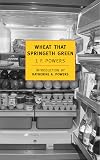
I've been a fan of the late J F Powers for probably thirty years. Have read his classic novel of the Church in the 1950s, MORTE D'URBAN, at least 2-3 times. And also read his three books of stories. Can't figure out how I missed this one, WHEAT THAT SPRINGETH GREEN, his only other novel, first published 25 years ago. In any case, I am most grateful to NYRB Classics imprint for reissuing all of Powers' work again. He was a writer much rspected by other writers, but often neglected and show more underappreciated by the general reading public, probably because of his never-changing, constant subjects: the priesthood and the Catholic Church. This novel is perhaps even better than Morte D'Urban, set in a midwest diocese at the height of the Vietnam war. Father Joe Hackett is a character that will stay with you for a long time, probably because of his very human faults, his utter 'humanity.' You will laugh and wince in recognition, not just at Hackett, but also at some of the other buffoonish priests and prelates depicted here, like Cooney, Mooney and Rooney. Or at the nicknames given: Shorty and Slug, Catfish, Arch (the Archbishop) and others. It is eye-opening and often a bit sad to watch Joe's gradual transformation as this tale of the modern Church spins out and winds down.
A favorite line, indicationg Joe's final loss of innocence - "... believing as he did that the separation of of Church and Dreck was a matter of life and death for the world, that the Church was the one force in the world with a chance to save it ..."
There is a kind of redemption for Joe, however, as, in the end, he takes up his "cross." I love this book and hope to find time to read it again some day. But then, "so many books ..." Highly recommended. show less
A favorite line, indicationg Joe's final loss of innocence - "... believing as he did that the separation of of Church and Dreck was a matter of life and death for the world, that the Church was the one force in the world with a chance to save it ..."
There is a kind of redemption for Joe, however, as, in the end, he takes up his "cross." I love this book and hope to find time to read it again some day. But then, "so many books ..." Highly recommended. show less
Powers' second and final novel, and much better than his pretty damn good Morte D'Durban. Wheat took forever to write, which is usually a very bad thing, but in this case Powers somehow makes it work, perhaps because the usual late style stuff (pessimism, grouchiness and so on) fits so well with the late stages of this book. Father Hackett watches his small world change with good humor and dismay; he might not admit it, but it's fairly clear that he himself is just as much to blame for those show more changes as anyone. The Walmart-style store takes over from the old mall, and takes over from the church as well. Everything centers more and more on money--which is precisely what Hackett's life has centered on. And his final pilgrimage is a beautiful end to the novel. As with all of Powers' work, it's exceptionally well written, funny and affecting. Is it innovative? No. Is it formally interesting? Not in the slightest. But it's exceptionally well done for all that. show less
Lists
Awards


You May Also Like


Associated Authors
Statistics
- Works
- 40
- Also by
- 25
- Members
- 1,565
- Popularity
- #16,484
- Rating
- 3.9
- Reviews
- 18
- ISBNs
- 30
- Languages
- 3
- Favorited
- 4