
Julia Cooke
Author of Come Fly The World: The Jet-Age Story of the Women of Pan Am
About the Author
Julia Cooke is a journalist and travel writer whose features and personal essays have been published in Time, Smithsonian, Cand Nast Traveler, and Saveur. She is the author of The Other Side of Paradise: Life in the New Cuba. The daughter of a former Pan Am executive, Cooke grew up in the Pan Am show more "family," a still-strong network across the globe. She lives in Vermont. show less
Works by Julia Cooke
Tagged
Common Knowledge
- Gender
- female
Members
Reviews
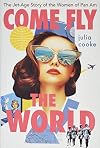
An interesting read, Come Fly the World follows the lives of a small group of women who worked as flight attendants (stewardesses, in the language at the time) for Pan Am in the '60s and '70s, at the height of that airline's glamour and profitability. Pop culture—and often their employers—framed these women as over-sexualized and subservient, a kind of geisha of the sky. As Julia Cooke points out, though, these women had to be intelligent and resilient, fluent in at least two languages, show more and able to cope both with demanding government officials and with airlifting traumatised child refugees out of Vietnam during the Fall of Saigon.
Cooke clearly conducted extensive interviews with a small group of former stewardesses, and tells a vivid and sometimes dramatic story from their perspective. Her journalism background stands her in good stead here. However, the sheer scope of the story Cooke's telling—about women's history, about U.S. imperialism, about the rise and decline of luxury air travel, about race (one of the women profiled was one of the few Black women who worked for Pan Am)—and the weight of some of its aspect needed more than the broad strokes narrative that Cooke often resorted to. As best as I can tell, she doesn't have any training in historical analysis, and that shows here in the lack of depth and in the important topics that are only glanced on (for example, she seems not to have interviewed any Asian American stewardesses, a glaring omission when so much time is spent on Pan Am's history in South East Asia in particular). Still a worthwhile read, but I doubt it will be the final word on the topic. show less
Cooke clearly conducted extensive interviews with a small group of former stewardesses, and tells a vivid and sometimes dramatic story from their perspective. Her journalism background stands her in good stead here. However, the sheer scope of the story Cooke's telling—about women's history, about U.S. imperialism, about the rise and decline of luxury air travel, about race (one of the women profiled was one of the few Black women who worked for Pan Am)—and the weight of some of its aspect needed more than the broad strokes narrative that Cooke often resorted to. As best as I can tell, she doesn't have any training in historical analysis, and that shows here in the lack of depth and in the important topics that are only glanced on (for example, she seems not to have interviewed any Asian American stewardesses, a glaring omission when so much time is spent on Pan Am's history in South East Asia in particular). Still a worthwhile read, but I doubt it will be the final word on the topic. show less
This book follows the lives of three stewardesses (as they were called at the time) with Pan Am at the height of that airline’s glamour and influence. Pan Am was an exclusively international airline and demanded much of its cabin crew, including college education, proficiency in a language other than English, and of course those ridiculous height and weight standards. We meet the first Black flight attendant, experience the thrill of visiting so many places (as well as the crushing fatigue show more of travelling through so many time zones at once), and witness soldier and refugee transport flights out of Vietnam in the 1960s and 1970s, up to the fall of Saigon and “Operation Babylift”.
This is a good mix of storytelling and factual non-fiction, balancing the stories of the main women highlighted with more straight-up recitations of facts. There’s a photo spread in the middle (I do like a non-fiction book with photos in the middle), and the book as a whole is well written. I would certainly recommend this if you’re interested in aviation history and women’s history, or this period in U.S. history. show less
This is a good mix of storytelling and factual non-fiction, balancing the stories of the main women highlighted with more straight-up recitations of facts. There’s a photo spread in the middle (I do like a non-fiction book with photos in the middle), and the book as a whole is well written. I would certainly recommend this if you’re interested in aviation history and women’s history, or this period in U.S. history. show less
"Get out of the country, get into this world," the Pan Am radio jingle"
This was such an interesting story. It goes into great detail the times, the position of Pan Am and the women who worked for Pan Am. I was surprised by how interesting it was, so many details but easily given so the story flowed well. I liked finding out more about the three main women the story covers and the reminder of what the US was going through at the same time.
I was also impressed by the huge amount of notations show more and information at the end. This author definitely did their homework. It was just a little hard to get in to to start but once I reached the 25% mark, I got a flow and it was a fun read!
A huge thank you to the author and publisher for providing an e-ARC via Netgalley. This does not affect my opinion regarding the book. show less
This was such an interesting story. It goes into great detail the times, the position of Pan Am and the women who worked for Pan Am. I was surprised by how interesting it was, so many details but easily given so the story flowed well. I liked finding out more about the three main women the story covers and the reminder of what the US was going through at the same time.
I was also impressed by the huge amount of notations show more and information at the end. This author definitely did their homework. It was just a little hard to get in to to start but once I reached the 25% mark, I got a flow and it was a fun read!
A huge thank you to the author and publisher for providing an e-ARC via Netgalley. This does not affect my opinion regarding the book. show less
These days headlines about disruptive, drunken passengers and fist fights at 30,000 feet are all too common. The glamour that once went along with international jet travel is long gone. Julia Cooke's book Come Fly the World recalls those glamour days through the lives of several stewardesses (even the word belongs to that postwar era) who flew for Pan Am Airlines.
In the early days of air travel cabin attendants, or stewards, had mostly been male. But after World War II competition among show more airlines focused on the service and quality they could provide for their mostly business travelers, the overwhelming majority of whom were male. Thus a move to female attendents, dubbed stewardesses.
Pan Am in particular felt a need to sell style and sophistication to go along with its already established reputation as the only American carrier to fly exclusively international routes. This meant that Pan Am recruited ambitious, educated women. In the 1960s ten percent of their stewardesses had advanced degrees at a time when only 6% of American women had any college degree at all. Good looks were also required, and Pan Am, along with other airlines, had age and weight requirements for its female staff.
Cooke's book follows the careers of several Pan Am stewardesses through the 1960s and 70s. Their stories are interwoven with the story of Pan Am itself as well as with broader events. Pan Am stewardesses were afforded an independent cosmopolitan lifestyle and a degree of female empowerment uncommon for their time. The need to maintain their weight and wear their hair a certain way was considered by many of them a good tradeoff. But, as time went on, restrictions against marriage and pregnancy became issues for many, eventually leading to grievances before the Equal Employment Opportunity Commission and in court.
At the same time, Pan Am was involved in supporting America's Vietnam war effort by ferrying soldiers to and from the war zone for week long R&R sessions. Later, as the war was ending and South Vietnam was falling, Pan Am and some of the women Cooke profiles were involved in Operation Babylift, a controversial effort to rescue orphaned babies from the country before it fell.
I really appreciated the way that Cooke wove these women's stories into the broader context of their time. It helps to give them their due and to understand how unique an experience being a stewardess for Pan Am in the 60s and 70s really was. I rate Come Fly the World Four Stars ⭐⭐⭐⭐, and recommend it for anyone interested in the history of aviation, American women, or the 1960s and 70s.
NOTES: I listened to the audiobook version, narrated by Andi Arndt in her clear and calm voice. The hard cover and audiobook versions are available now, and a paperback version is expected in April of 2022. show less
In the early days of air travel cabin attendants, or stewards, had mostly been male. But after World War II competition among show more airlines focused on the service and quality they could provide for their mostly business travelers, the overwhelming majority of whom were male. Thus a move to female attendents, dubbed stewardesses.
Pan Am in particular felt a need to sell style and sophistication to go along with its already established reputation as the only American carrier to fly exclusively international routes. This meant that Pan Am recruited ambitious, educated women. In the 1960s ten percent of their stewardesses had advanced degrees at a time when only 6% of American women had any college degree at all. Good looks were also required, and Pan Am, along with other airlines, had age and weight requirements for its female staff.
Cooke's book follows the careers of several Pan Am stewardesses through the 1960s and 70s. Their stories are interwoven with the story of Pan Am itself as well as with broader events. Pan Am stewardesses were afforded an independent cosmopolitan lifestyle and a degree of female empowerment uncommon for their time. The need to maintain their weight and wear their hair a certain way was considered by many of them a good tradeoff. But, as time went on, restrictions against marriage and pregnancy became issues for many, eventually leading to grievances before the Equal Employment Opportunity Commission and in court.
At the same time, Pan Am was involved in supporting America's Vietnam war effort by ferrying soldiers to and from the war zone for week long R&R sessions. Later, as the war was ending and South Vietnam was falling, Pan Am and some of the women Cooke profiles were involved in Operation Babylift, a controversial effort to rescue orphaned babies from the country before it fell.
I really appreciated the way that Cooke wove these women's stories into the broader context of their time. It helps to give them their due and to understand how unique an experience being a stewardess for Pan Am in the 60s and 70s really was. I rate Come Fly the World Four Stars ⭐⭐⭐⭐, and recommend it for anyone interested in the history of aviation, American women, or the 1960s and 70s.
NOTES: I listened to the audiobook version, narrated by Andi Arndt in her clear and calm voice. The hard cover and audiobook versions are available now, and a paperback version is expected in April of 2022. show less
Lists
Awards


You May Also Like


Statistics
- Works
- 5
- Members
- 479
- Popularity
- #51,491
- Rating
- 3.7
- Reviews
- 17
- ISBNs
- 26
- Languages
- 1