
Jane Bowles (1) (1917–1973)
Author of Two Serious Ladies
For other authors named Jane Bowles, see the disambiguation page.
Works by Jane Bowles
Ağırbaşlı İki Hanımefendi 2 copies
Associated Works
Wayward Girls and Wicked Women: An Anthology of Subversive Stories (1986) — Contributor — 576 copies, 9 reviews
Chloe Plus Olivia: An Anthology of Lesbian Literature from the 17th Century to the Present (1994) — Contributor — 482 copies, 1 review
You've Got to Read This: Contemporary American Writers Introduce Stories that Held Them in Awe (1994) — Contributor — 413 copies, 3 reviews
Object Lessons: The Paris Review Presents the Art of the Short Story (2012) — Contributor — 253 copies, 9 reviews
Queer: A Collection of LGBTQ Writing from Ancient Times to Yesterday (2021) — Contributor, some editions — 64 copies
De mooiste verhalen van James Baldwin, John Berger, Jorge Luis Borges, Jane Bowles, Joseph Brodsky, Charles Bukowski, Wi (1990) — Contributor — 6 copies
Tagged
Common Knowledge
- Other names
- Auer, Jane Sydney (birth name)
- Birthdate
- 1917-02-22
- Date of death
- 1973-05-04
- Gender
- female
- Education
- boarding school, Switzerland
- Occupations
- playwright
novelist
short story writer - Relationships
- Bowles, Paul (husband)
- Short biography
- Jane Bowles was born into an affluent Jewish family in New York City and grew up on Long Island. As a teenager, she developed tuberculosis of the knee, and was taken by her mother for treatment to a sanatorium in Leysin, Switzerland, where she attended school. She developed a passion for literature and on her return to New York, gravitated to the bohemians and artists in Greenwich Village in Manhattan. In 1938, she married Paul Bowles. Each had inherited some money, and they pooled their resources, allowing them to wander through South America, North Africa, Europe, and Asia while writing and composing music. In 1943, her novel Two Serious Ladies was published. They settled in Tangier, Morocco in 1948, where Jane wrote short stories and a play called In The Summer House, with music composed by her husband. It was performed on Broadway in 1953 to mixed reviews. Jane Bowles drank heavily and used drugs. She had a cerebral hemorrhage with serious loss of vision in 1957 at age 40. Despite various treatments in England and the USA, her mental and physical health declined over the next 16 years. She died at a psychiatric clinic in Málaga, Spain. Her collected works were published with an introduction by Truman Capote.
- Nationality
- USA (birth)
- Birthplace
- New York, New York, USA
- Places of residence
- Woodmere, New York, USA
Leysin, Switzerland
New York, New York, USA
Tangier, Morocco
Malaga, Spain - Place of death
- Malaga, Spain
- Burial location
- San Miguel Cemetery, Malaga, Spain
Members
Reviews

Two serious ladies by Jane Bowles reads eccentrically, as happens not infrequently when the characters are women not defined by wifehood and/or motherhood (what the hell are they here FOR, then, the world seems to demand). The two ladies of the title aren't any of the female couples in the book, but the two most scrutinised, a rich Miss Goering with a gift for religion (and a female companion), and the small and lost Mrs. Copperfield, a stand-in for Jane Bowles herself. At least, the show more Copperfield marriage seems based on that of Jane and Paul Bowles, a less than happy or fitting union, he having been quite gay. Why people do that--get married to people they have no business marrying--is beyond me, but then why does one do anything.
What happens in the book, for example, is that the ladies travel to exotic places, like Panama, meet whores and unhappy strangers, have drinks in seedy bars, start households and end up with strange housemates sleeping on their couch. There isn't much "story" but the telling is nevertheless gripping because there's lots between the lines, or so you can imagine.
Those who like Leonora Carrington (The hearing trumpet, say) have a good chance of liking this one too, although it's rather more subdued. show less
What happens in the book, for example, is that the ladies travel to exotic places, like Panama, meet whores and unhappy strangers, have drinks in seedy bars, start households and end up with strange housemates sleeping on their couch. There isn't much "story" but the telling is nevertheless gripping because there's lots between the lines, or so you can imagine.
Those who like Leonora Carrington (The hearing trumpet, say) have a good chance of liking this one too, although it's rather more subdued. show less
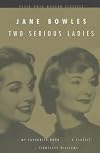
These [b:Two Serious Ladies|215262|Two Serious Ladies|Jane Bowles|https://i.gr-assets.com/images/S/compressed.photo.goodreads.com/books/1172774282l/215262._SY75_.jpg|208395], Miss Goering and Mrs. Copperfield pursue their serious goals of depredation and radical change in their lives. Both are wealthy and can afford the distractions they undertake, Mrs. Copperfield leaves her husband to live with a Panamanian prostitute named Pacifica and Christina Goering abandons the hangers-on who live show more with her (Arnold's only appeal to me was when he said "books are a great solace to me." ) to pursue several men she meets in a dive bar. Old men play a role, I think sympathetic, in the book and comedic. But, on the whole, the male characters are largely ineffective and without resources.
Emotional need is shameful, according to the novel, Goering is a chillier temperament and more calculating than Mrs. Copperfield. "I really have no sense of shame," said Miss Goering "and I think your own sense of shame is terribly exaggerated besides being a terrific sap on your energies," she says to Andy as she leaves him for Ben who isn't fond of talking.
There is a religious aspect to the novel in that it is bookended by baptisms, at first when Goering was a child and she baptizes her sister's friend and the other when Mrs. Copperfield is held in the ocean by Pacifica who is teaching her to swim. Both ladies are afraid of water. No shame says the novel. We know very little of Goering, where she got her money, what motivates her other than a need to overcome her fear. Nor do we have any background on Mrs. Copperfield or her marriage, but she points out "I hate religion in other people" and bellies up to the bar.
In the final pages, when the two ladies, old friends, reunite they no longer admire each other.
"Certainly, I am nearer to becoming a saint," reflected Miss Goering," but is it possible that a part of me hidden from my sight is piling sin upon sin as fast as Mrs. Copperfield?" The final line, "this latter possibility Miss Goering thought to be of considerable interest but of no great importance." She doesn't care because her interest is not sin, not shame, but overcoming her own fears. Otherwise, her actions are meaningless.
The writing is skilled, full of surprises, many of the conversations unexpected and the characters original and singular but always the story spurred me forward to find out what was next. Except for some short stories and a play, this is the only book Bowles, married to the composer/writer Paul Bowles, wrote before her early death from cancer at 56. show less
Emotional need is shameful, according to the novel, Goering is a chillier temperament and more calculating than Mrs. Copperfield. "I really have no sense of shame," said Miss Goering "and I think your own sense of shame is terribly exaggerated besides being a terrific sap on your energies," she says to Andy as she leaves him for Ben who isn't fond of talking.
There is a religious aspect to the novel in that it is bookended by baptisms, at first when Goering was a child and she baptizes her sister's friend and the other when Mrs. Copperfield is held in the ocean by Pacifica who is teaching her to swim. Both ladies are afraid of water. No shame says the novel. We know very little of Goering, where she got her money, what motivates her other than a need to overcome her fear. Nor do we have any background on Mrs. Copperfield or her marriage, but she points out "I hate religion in other people" and bellies up to the bar.
In the final pages, when the two ladies, old friends, reunite they no longer admire each other.
"Certainly, I am nearer to becoming a saint," reflected Miss Goering," but is it possible that a part of me hidden from my sight is piling sin upon sin as fast as Mrs. Copperfield?" The final line, "this latter possibility Miss Goering thought to be of considerable interest but of no great importance." She doesn't care because her interest is not sin, not shame, but overcoming her own fears. Otherwise, her actions are meaningless.
The writing is skilled, full of surprises, many of the conversations unexpected and the characters original and singular but always the story spurred me forward to find out what was next. Except for some short stories and a play, this is the only book Bowles, married to the composer/writer Paul Bowles, wrote before her early death from cancer at 56. show less
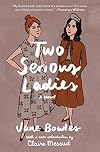
This novel is a delightfully deadpan examination of female friendships and how tedious it can be when men don’t listen. The protagonists are Miss Goering and Mrs Copperfield, both of whom are unsatisfied with their dull lives and therefore move to new places and consort with eccentric personages. I found both of them wonderfully honest, unaffected, and unconventional, which consistently confuses other characters, especially men. In my favourite scene, Miss Goering tries to start a show more conversation with a stranger on a train and is severely reprimanded. I can imagine that happening in the UK, where the implicit social contract on trains remains ‘no eye contact, no starting conversations’.
I found out about this novel when a friend linked me to this intriguing piece about Jane Bowles: http://www.newyorker.com/books/page-turner/the-madness-of-queen-jane I really enjoyed Bowles’ writing style, which has a fresh and elegant quality about it. This novel is also wonderfully funny, seeming to parody literary melodrama and puncture pomposity. For example:
I greatly enjoyed the characterisation of Miss Goering, Miss Gamelon, Mrs Copperfield, et al. The fact that women were referred to formally by their titles, whereas men generally only got a first name, also pleased me. After the misogyny of the last novel I read, this one made for a lovely change. The dialogue, which appears fraught with misunderstandings, is clever and would I think repay a re-read. What a pity that Bowles only completed this one novel. show less
I found out about this novel when a friend linked me to this intriguing piece about Jane Bowles: http://www.newyorker.com/books/page-turner/the-madness-of-queen-jane I really enjoyed Bowles’ writing style, which has a fresh and elegant quality about it. This novel is also wonderfully funny, seeming to parody literary melodrama and puncture pomposity. For example:
”I’ll get down on my knees,” said Andy, shaking his fist at her. No sooner had he said this than he was down on his knees near her feet. The waiter was terribly shocked and felt that he had better say something.
“Look, Andy,” he said in a very small voice, “Why don’t you get up off your knees and think things over?”
“Because,” said Andy, raising his own voice more and more, “because she daren’t refuse a man who is down on his knees. She daren’t! It would be sacrilege.”
“I don’t see why,” said Miss Goering.
“If you refuse,” said Andy, “I’ll disgrace you, I’ll crawl out into the street, I’ll put you to shame.”
“I really have no sense of shame,” said Miss Goering.
I greatly enjoyed the characterisation of Miss Goering, Miss Gamelon, Mrs Copperfield, et al. The fact that women were referred to formally by their titles, whereas men generally only got a first name, also pleased me. After the misogyny of the last novel I read, this one made for a lovely change. The dialogue, which appears fraught with misunderstandings, is clever and would I think repay a re-read. What a pity that Bowles only completed this one novel. show less
I must confess, I picked this novel up only because I’d recently read that the wife of Paul Bowles (a rather well-regarded twentieth-century itinerant writer and composer) was the author and was, herself, a woman of much talent but limited repute. I believe I actually saw her described as “a writer’s writer.”
If so, I guess I ain’t no writer – or, at the very least, I can’t support that particular view of Jane Bowles’s work.
Two Serious Ladies is, in a nutshell, bizarre – and show more I don’t mean because of its content. I mean that the writing is bizarre. On the one hand, I kept asking myself whether English was really Ms. Bowles’s native language. On the other hand, the descriptors ‘fey’ and ‘airy-fairy’ occurred to me over and over again. I was consequently not in the least surprised that Tennessee Williams should’ve proclaimed Two Serious Ladies “(m)y favorite book” – and added – “I can’t think of a modern novel that seems more likely to become a classic.”
I’m sorry. I really wanted to like it – and to be able to declare with Claire Messud, who wrote the Introduction, that “I (too) simply could not put it down.” My problem was the opposite: I kept having to poke myself to pick the book back up and read more of Ms. Bowles’s drivel.
Yet I plunged on, wanting to find out why: “John Ashbury called Jane Bowles ‘one of the finest modern writers of fiction in any language’; Alan Sillitoe anointed the novel ‘a landmark in twentieth-century American literature’; Truman Capote deemed her ‘one of the really original pure stylists’; James Purdy said she was ‘an unmatchable talent’; and Tennessee Williams (once again) announced that she was ‘the most important writer of prose fiction in modern American letters’” – all on p. vi of Claire Messud’s Introduction.
I had to wonder whether Ms. Bowles had been trading sexual favors for flattering reviews – or, more likely (given their separate but equal sexual proclivities), maybe this was payback time to Paul Bowles for a bit of past authorial kink.
To take just a random example (this one on p. 72): “‘All right,’ said Mr. Copperfield. He looked sad and lonely. He enjoyed so much showing other people the things he liked best. He started to walk away towards the edge of the water and stared out across the river at the opposite shore. He was very slight and his head was beautifully shaped.”
Why would a man who’d been married to the same woman for decades suddenly look “sad and lonely” because she opted not to accompany him on a little stroll through the Panamanian jungle? Disappointed, yes. Annoyed, yes. Possibly nonplused if he’s like most men whose wives change their minds at the last minute. But “sad and lonely?” Really? And would that same woman then suddenly observe that that same husband of ten thousand and one nights between the sheets now appeared to her to be “very slight(,) and his head was beautifully shaped?” If he’d been reaching up for a banana in that same instant (not out of place, given the setting of the incident), she might well have observed that he was ‘a simian delight to behold, my exuberant little tropical punch,’ but God knows not that “(h)e was slight(,) and his head was beautifully shaped.”
(Please forgive: I first learned the word ‘simian’ forty years ago chez Theodore Dreiser –who in fact used it three times in the same novel – and I’ve been dying to use it ever since!)
Or maybe this is the answer (on p. 76), ostensibly from the mouth (or thoughts – it’s always a little difficult to tell with Ms. Bowles’s idiosyncratic punctuation) of Mrs. Copperfield, although I think we can safely assume that that same Mrs. Copperfield serves as something of a mouthpiece for Ms. Bowles here and elsewhere: “‘Now,’ she said, jumping off the bed, ‘now for a little spot of gin to chase my troubles away. There just isn’t any other way that’s as good. At a certain point(,) gin takes everything off your hands(,) and you flop around like a little baby. Tonight(,) I want to be a little baby.’”
I like a snifterful (or “hookerful,” as she calls it in the sentence immediately following) as much as the next guy or chick, but I’m also ever-mindful of Hemingway’s dictum: “Write drunk; edit sober.” I have to wonder whether Ms. Bowles ever bothered to pull herself up from under the table long enough to heed the second part of Hemingway’s dictum.
I will give Ms. Bowles credit for one rather trenchant observation early on in the novel – viz., “(t)ourists, generally speaking,” Mrs. Copperfield had written in her journal, “are human beings so impressed with the importance and immutability of their own manner of living that they are capable of traveling through the most fantastic places without experiencing anything more than a visual reaction. The hardier tourists find that one place resembles another.”
As she and her husband were particularly well-traveled, I have to concede to her a well-earned authority in this quasi-aphorism. I just don’t understand how it could’ve been penned by the same hand that wrote so much tripe. Maybe – just maybe – she was actually sober when she wrote it.
But the long and short of it is that this book, in my opinion, is an amateur piece of work – AMATEUR writ large and bold. There is one anecdote or action after another that leads nowhere and hardly advances the plot of the book – if advancing the plot was ever even a thought in Jane Bowles’s head. Categorize it however you like – modern; post-modern; post-post-modern; irony; parody; buffoonery; critical social commentary – it just didn’t work, at least for this particular reader.
But as I never fail to add, de gustibus non est disputandum. If my fellow reviewers found the work enchanting, I’m certainly in no position to question their judgment or their choice of enchantment.
RRB
11/30/14
Brooklyn, NY show less
If so, I guess I ain’t no writer – or, at the very least, I can’t support that particular view of Jane Bowles’s work.
Two Serious Ladies is, in a nutshell, bizarre – and show more I don’t mean because of its content. I mean that the writing is bizarre. On the one hand, I kept asking myself whether English was really Ms. Bowles’s native language. On the other hand, the descriptors ‘fey’ and ‘airy-fairy’ occurred to me over and over again. I was consequently not in the least surprised that Tennessee Williams should’ve proclaimed Two Serious Ladies “(m)y favorite book” – and added – “I can’t think of a modern novel that seems more likely to become a classic.”
I’m sorry. I really wanted to like it – and to be able to declare with Claire Messud, who wrote the Introduction, that “I (too) simply could not put it down.” My problem was the opposite: I kept having to poke myself to pick the book back up and read more of Ms. Bowles’s drivel.
Yet I plunged on, wanting to find out why: “John Ashbury called Jane Bowles ‘one of the finest modern writers of fiction in any language’; Alan Sillitoe anointed the novel ‘a landmark in twentieth-century American literature’; Truman Capote deemed her ‘one of the really original pure stylists’; James Purdy said she was ‘an unmatchable talent’; and Tennessee Williams (once again) announced that she was ‘the most important writer of prose fiction in modern American letters’” – all on p. vi of Claire Messud’s Introduction.
I had to wonder whether Ms. Bowles had been trading sexual favors for flattering reviews – or, more likely (given their separate but equal sexual proclivities), maybe this was payback time to Paul Bowles for a bit of past authorial kink.
To take just a random example (this one on p. 72): “‘All right,’ said Mr. Copperfield. He looked sad and lonely. He enjoyed so much showing other people the things he liked best. He started to walk away towards the edge of the water and stared out across the river at the opposite shore. He was very slight and his head was beautifully shaped.”
Why would a man who’d been married to the same woman for decades suddenly look “sad and lonely” because she opted not to accompany him on a little stroll through the Panamanian jungle? Disappointed, yes. Annoyed, yes. Possibly nonplused if he’s like most men whose wives change their minds at the last minute. But “sad and lonely?” Really? And would that same woman then suddenly observe that that same husband of ten thousand and one nights between the sheets now appeared to her to be “very slight(,) and his head was beautifully shaped?” If he’d been reaching up for a banana in that same instant (not out of place, given the setting of the incident), she might well have observed that he was ‘a simian delight to behold, my exuberant little tropical punch,’ but God knows not that “(h)e was slight(,) and his head was beautifully shaped.”
(Please forgive: I first learned the word ‘simian’ forty years ago chez Theodore Dreiser –who in fact used it three times in the same novel – and I’ve been dying to use it ever since!)
Or maybe this is the answer (on p. 76), ostensibly from the mouth (or thoughts – it’s always a little difficult to tell with Ms. Bowles’s idiosyncratic punctuation) of Mrs. Copperfield, although I think we can safely assume that that same Mrs. Copperfield serves as something of a mouthpiece for Ms. Bowles here and elsewhere: “‘Now,’ she said, jumping off the bed, ‘now for a little spot of gin to chase my troubles away. There just isn’t any other way that’s as good. At a certain point(,) gin takes everything off your hands(,) and you flop around like a little baby. Tonight(,) I want to be a little baby.’”
I like a snifterful (or “hookerful,” as she calls it in the sentence immediately following) as much as the next guy or chick, but I’m also ever-mindful of Hemingway’s dictum: “Write drunk; edit sober.” I have to wonder whether Ms. Bowles ever bothered to pull herself up from under the table long enough to heed the second part of Hemingway’s dictum.
I will give Ms. Bowles credit for one rather trenchant observation early on in the novel – viz., “(t)ourists, generally speaking,” Mrs. Copperfield had written in her journal, “are human beings so impressed with the importance and immutability of their own manner of living that they are capable of traveling through the most fantastic places without experiencing anything more than a visual reaction. The hardier tourists find that one place resembles another.”
As she and her husband were particularly well-traveled, I have to concede to her a well-earned authority in this quasi-aphorism. I just don’t understand how it could’ve been penned by the same hand that wrote so much tripe. Maybe – just maybe – she was actually sober when she wrote it.
But the long and short of it is that this book, in my opinion, is an amateur piece of work – AMATEUR writ large and bold. There is one anecdote or action after another that leads nowhere and hardly advances the plot of the book – if advancing the plot was ever even a thought in Jane Bowles’s head. Categorize it however you like – modern; post-modern; post-post-modern; irony; parody; buffoonery; critical social commentary – it just didn’t work, at least for this particular reader.
But as I never fail to add, de gustibus non est disputandum. If my fellow reviewers found the work enchanting, I’m certainly in no position to question their judgment or their choice of enchantment.
RRB
11/30/14
Brooklyn, NY show less
Lists
Awards


You May Also Like


Associated Authors
Statistics
- Works
- 20
- Also by
- 10
- Members
- 1,804
- Popularity
- #14,271
- Rating
- 3.7
- Reviews
- 26
- ISBNs
- 86
- Languages
- 10
- Favorited
- 3
