
Robin Black (1)
Author of If I Loved You, I Would Tell You This: Stories
For other authors named Robin Black, see the disambiguation page.
About the Author
Robin Black¿s short story collection If I loved you, I would tell you this, was a finalist for the Frank O¿Connor International Short Story Prize and an O. Magazine Summer Reading Pick. Her debut novel Life Drawing has been called a magnificent literary achievement, by Karen Russell; and of show more Black¿s writing Claire Messud has said she is a writer of great wisdom, and illuminates, without undue emphasis, the flickering complexity of individual histories. Black¿s stories and essays have been widely published including in The New York Times Magazine, The Chicago Tribune, The Southern Review and One Story. Winner of the 2005 Pirates Alley Faulkner/Wisdom Prize for a Short Story, she was the 2012-13 Distinguished Visiting Writer at Bryn Mawr College and has taught most recently in the Brooklyn College MFA Program. Black, who holds an MFA from the Warren Wilson MFA Program for writers. In 2015 her title Life Drawing made the Australian Book Designers Association Award shortlist. (Bowker Author Biography) show less
Works by Robin Black
Associated Works
Tagged
Common Knowledge
- Gender
- female
- Education
- Sarah Lawrence College (BA)
Warren Wilson College (MFA) - Short biography
- Robin Black holds a BA from Sarah Lawrence College and an MFA from Warren Wilson College. Her first story collection If I Loved You, I Would Tell You This, is forthcoming from Random House in 2010. The book will also be brought out by six foreign publishers and translated into four languages.
Robin Black’s stories and essays have appeared in numerous publications including The Southern Review, One Story, The Georgia Review, Colorado Review, Alaska Quarterly Review, Indiana Review, and The Best Creative Nonfiction, Vol. I (Norton, 2007). She is the recipient of grants from the Leeway Foundation, the MacDowell Colony, the Sirenland Conference and is also the winner of the 2005 Pirate’s Alley Faulkner-Wisdom Writing Competition in the short story category. Her work has been noticed for Special Mention by the Pushcart Prizes on four occasions and also deemed Notable in The Best American Essays, 2008 and The Best Nonrequired Reading, 2009. She is currently at work on a novel, also to be published by Random House and overseas. Since receiving her MFA, she has taught Advanced Fiction Writing at Arcadia University and worked extensively with individual students. In 2010, she will be teaching at Bryn Mawr College. - Nationality
- USA
- Associated Place (for map)
- USA
Members
Reviews
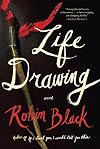
Some books have first lines that really draw you in. Even when the line tells you the outcome of the book, you read along curiously, wanting to know how the book will come full circle to the outcome already contained in its very first words. It gives you expectations and for those of us, like me, who can't help ourselves, it challenges us to figure out how the author is taking us on this ride, drawing attention to the underlying structure of the story, the craft of the writing itself. Robin show more Black's novel, Life Drawing, is a book that does just this. It is a careful, character driven novel that opens with the intriguing line, "In the days leading up to my husband Owen's death, he visited Alison's house every afternoon." As hooks go, it's a pretty big one.
Gus and her husband Owen live in the Pennsylvania countryside, remote and solitary by choice. Gus is a well received painter whose specialty is the quality of light on still lifes and landscapes and Owen is a critically acclaimed writer who has never quite found commercial success. They have retreated from their busy city life, to this house in the middle of nowhere to recover emotionally and professionally from Gus' affair with the father of one of her students. Owen has been unable to write in the handful of years since Gus' compulsive revelation of the affair, while Gus, by contrast, has lighted upon a new and energizing idea, wanting to capture the local WWI dead whose newspaper obituaries, with pictures, she has found crumpled up and used as insulation in the old farmhouse. But as the putative reason for Owen's writer's block, she cannot discuss her bubbling ideas with Owen, too aware that her productivity highlights afresh his own blank pages. When a teacher on sabbatical moves into the ramshackle place next door, Gus finds a confidante of sorts in Alison, herself a painter. Gus finds the emotional intimacy in her relationship with Alison that she is so unconsciously missing in her marriage so she confides perhaps more than she should to this virtual stranger. When Alison's daughter, Nora, comes to visit, the balance of everyone's relationships changes. Nora is a budding writer and she venerates Owen, spending hours in his company out in his converted barn, where he has done little writing thus far.
The novel is quietly intense and like many character driven novels, doesn't present much action to move the story, relying instead on the psychological drama of the main characters. Gus narrates the novel from her position as the guilty party, sharing with the reader her desire to finally exonerate herself, her need to appear magnanimous to Owen, and her quest to seek understanding and absolution even as her art reflects her unstated, and perhaps unconscious, thoughts on the difference between potential and consequences, not only in reference to the boys dead so young and long ago but also in her own life and choices. With the focus entirely from Gus' point of view, there is the looming question of just how well she actually knows her husband and what drives him but ultimately, she is the only one left to tell the story after his death. Although little happens in the way of plot, there is a rising claustrophobic feeling to the novel, a subtly increasing tension that pulls the reader inexorably along ever closer to the fact of Owen's death. Black has written a stunning tale of jealousy, betrayal, and the treacherous undercurrents of a marriage already bowed to the breaking point by stress. As for the challenge of the ending? It ended in the only way that it could, an explosive release to the pent up tension of this carefully constructed tale. (Yes, I figured it out before the end. Will you?) show less
Gus and her husband Owen live in the Pennsylvania countryside, remote and solitary by choice. Gus is a well received painter whose specialty is the quality of light on still lifes and landscapes and Owen is a critically acclaimed writer who has never quite found commercial success. They have retreated from their busy city life, to this house in the middle of nowhere to recover emotionally and professionally from Gus' affair with the father of one of her students. Owen has been unable to write in the handful of years since Gus' compulsive revelation of the affair, while Gus, by contrast, has lighted upon a new and energizing idea, wanting to capture the local WWI dead whose newspaper obituaries, with pictures, she has found crumpled up and used as insulation in the old farmhouse. But as the putative reason for Owen's writer's block, she cannot discuss her bubbling ideas with Owen, too aware that her productivity highlights afresh his own blank pages. When a teacher on sabbatical moves into the ramshackle place next door, Gus finds a confidante of sorts in Alison, herself a painter. Gus finds the emotional intimacy in her relationship with Alison that she is so unconsciously missing in her marriage so she confides perhaps more than she should to this virtual stranger. When Alison's daughter, Nora, comes to visit, the balance of everyone's relationships changes. Nora is a budding writer and she venerates Owen, spending hours in his company out in his converted barn, where he has done little writing thus far.
The novel is quietly intense and like many character driven novels, doesn't present much action to move the story, relying instead on the psychological drama of the main characters. Gus narrates the novel from her position as the guilty party, sharing with the reader her desire to finally exonerate herself, her need to appear magnanimous to Owen, and her quest to seek understanding and absolution even as her art reflects her unstated, and perhaps unconscious, thoughts on the difference between potential and consequences, not only in reference to the boys dead so young and long ago but also in her own life and choices. With the focus entirely from Gus' point of view, there is the looming question of just how well she actually knows her husband and what drives him but ultimately, she is the only one left to tell the story after his death. Although little happens in the way of plot, there is a rising claustrophobic feeling to the novel, a subtly increasing tension that pulls the reader inexorably along ever closer to the fact of Owen's death. Black has written a stunning tale of jealousy, betrayal, and the treacherous undercurrents of a marriage already bowed to the breaking point by stress. As for the challenge of the ending? It ended in the only way that it could, an explosive release to the pent up tension of this carefully constructed tale. (Yes, I figured it out before the end. Will you?) show less
Every once in awhile I read a book where I just want to get out a highlighter and mark every other line because the writing is simply that gorgeous, insightful, perceptive, and unique. That's how I felt about Life Drawing, everyone. It was so nice to be able to read a book and just sort of want to roll around in how absolutely gorgeous the words were. I feel like by saying that I make it sound like it was flowery or something, but that's not what I mean--I mean that it felt true.
And the show more story was interesting as well. The story is the kind where something happens but it's the intensity of the characters that really carry it. Maybe this is a story that could happen to anyone, but it's interesting to read because you find something true there. Because life it's in particular messiness and with its particular consequences and joys and pains and hurts that resonates so strongly.
I guess you could say it's a story about marriage, or a story about creating art, or a story about infidelity because it is most certainly about all of those things. A short plot summary is that it's the story about a middle aged couple, both artists, who live in seclusion until a new neighbor moves in and that changes everything as new relationships are formed and secrets shared. show less
And the show more story was interesting as well. The story is the kind where something happens but it's the intensity of the characters that really carry it. Maybe this is a story that could happen to anyone, but it's interesting to read because you find something true there. Because life it's in particular messiness and with its particular consequences and joys and pains and hurts that resonates so strongly.
I guess you could say it's a story about marriage, or a story about creating art, or a story about infidelity because it is most certainly about all of those things. A short plot summary is that it's the story about a middle aged couple, both artists, who live in seclusion until a new neighbor moves in and that changes everything as new relationships are formed and secrets shared. show less
 This review was written for LibraryThing Early Reviewers.
It's hard to say exactly what this book is about. Marriage? Middle age? Art? In any case, its complexities are what make it so compelling. I was immediately drawn into this story about two married artists, Gus and Owen, and the way that the arrival of a new neighbor disrupts the rhythm of the life that they have created. Black's writing is precise and lyrical--there is nothing on the page that is not absolutely essential to the story. The marriage that Black presents through the first person show more narrative, as well as the relationship of Gus to her father, are achingly real. I don't want to say more for fear of ruining the book for a reader, but I highly recommend this novel and this writer to anyone looking for an excellent novel. I'm always excited when I come across an author as talented as Robin Black. I can't wait to read more from her.
Thanks to the Early Reviewer giveaway for the opportunity to read and review this. show less
Thanks to the Early Reviewer giveaway for the opportunity to read and review this. show less
This review was written for LibraryThing Early Reviewers.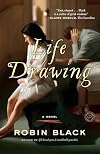
This gorgeously written deconstruction of a marriage drew me in with its deep analysis of marriage and of the creative process, its detail of the quotidian, and its wise reflection on the the outsize impact a single choice or act can have on the symbiosis (stasis?) of a long relationship. Many relationships are discussed, but the focus is on how events impact the marital relationship.
Gus (officially Augusta) made some bad choices years ago and her husband, Owen, cannot get over it. They show more never discuss this other than those times when Owen's lingering rage pops up and he reminds her of her "villainy"to trigger her self-loathing and fear of abandonment. Mostly though they maintain a fragile detente with the agreement to never speak of her actions or of Owen's feelings of guilt and useless due to his infertility and his writer's block.
The erosion of a committed relationship never comes down to one event or one partner but the choice to hold everything hurtful in some locked room where it is never spoken of is often the main catalyst in a relationship's demise. Black provides a chilling and true picture of how that works. In my own long deceased relationship my ex-husband was infertile. We could have worked through it, but he absolutely refused to discuss his infertility or adoption or artificial insemination. When you cannot discuss the most important thing in your lives you stop talking about anything important, and silence and politeness eventually asphyxiates the relationship. From my experience I think Black shows us exactly how this process feels.
Mostly I loved the book, but I did think some characters and events were poorly integrated into the central story. Gus's interactions with her father, who has Alzheimer's, were clunky, unrealistic, and unnecessary, I think Black was trying to tie the story of how some violent outbursts from her father that ended almost as quickly as they started, and his consequent forced and permanent move from regular assisted living to a locked ward, related to Gus's own misstep and consequent prison of polite solitude. I did not think that succeeded. I also wish Black had made the neighbors, Alison and Nora (who are, among other things, the catalysts for the book's climax) less stupid. All in all though I understood all of these people, I was interested in them, and I was blown away by Gus's observations and Black's writing prowess. Highly recommend this one. show less
Gus (officially Augusta) made some bad choices years ago and her husband, Owen, cannot get over it. They show more never discuss this other than those times when Owen's lingering rage pops up and he reminds her of her "villainy"to trigger her self-loathing and fear of abandonment. Mostly though they maintain a fragile detente with the agreement to never speak of her actions or of Owen's feelings of guilt and useless due to his infertility and his writer's block.
The erosion of a committed relationship never comes down to one event or one partner but the choice to hold everything hurtful in some locked room where it is never spoken of is often the main catalyst in a relationship's demise. Black provides a chilling and true picture of how that works. In my own long deceased relationship my ex-husband was infertile. We could have worked through it, but he absolutely refused to discuss his infertility or adoption or artificial insemination. When you cannot discuss the most important thing in your lives you stop talking about anything important, and silence and politeness eventually asphyxiates the relationship. From my experience I think Black shows us exactly how this process feels.
Mostly I loved the book, but I did think some characters and events were poorly integrated into the central story. Gus's interactions with her father, who has Alzheimer's, were clunky, unrealistic, and unnecessary, I think Black was trying to tie the story of how some violent outbursts from her father that ended almost as quickly as they started, and his consequent forced and permanent move from regular assisted living to a locked ward, related to Gus's own misstep and consequent prison of polite solitude. I did not think that succeeded. I also wish Black had made the neighbors, Alison and Nora (who are, among other things, the catalysts for the book's climax) less stupid. All in all though I understood all of these people, I was interested in them, and I was blown away by Gus's observations and Black's writing prowess. Highly recommend this one. show less
Lists
Awards


You May Also Like


Associated Authors
Statistics
- Works
- 3
- Also by
- 1
- Members
- 733
- Popularity
- #34,654
- Rating
- 3.7
- Reviews
- 99
- ISBNs
- 31
- Languages
- 4
- Favorited
- 2


