
M. Ruth Myers
Author of No Game for a Dame
About the Author
Series
Works by M. Ruth Myers
Associated Works
Tagged
Common Knowledge
- Other names
- Myers, Mary Ruth
- Gender
- female
- Education
- University of Missouri School of Journalism
- Occupations
- journalist
magician - Organizations
- Society of American Magicians
- Birthplace
- Warrensburg, Missouri, USA
- Places of residence
- Dayton, Ohio, USA
- Associated Place (for map)
- USA
Members
Reviews
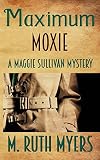
Maggie Sullivan was a rarity: a self-confident, female private investigator in the early 1940s. In her mid-20s, she lived in a rooming house and operated her own one-person business in Dayton, Ohio. She was bright, competent, sassy, and knew how to get into locked doors. Sometimes, she was pretty good at defending herself.
In maximum Moxie, Loren Collingswood, co-owner of a company that developed technology, came to her to try to locate one of their employees. They were days away from a show more major meeting about one of their discoveries. Gil Tremain, the engineer who developed it and had the necessary information to complete the project, hadn't shown up for work for couple days.
While Collingswood was speaking to her, Maggie spotted unusual motion from one of his jacket pockets. It was a snake which she promptly shot. Luckily Collingswood had his medication with him so he did not have a heart attack.
Neither Collingswood’s partner, Frank Scott, nor anyone else, seem to know where Tremain was. They didn't know if he had taken the information to sell to someone else but when she went to Tremain's apartment and discovered it had been ransacked, she suspected he had not disappeared willingly. As she left the building, she learned that a woman had just been killed on the first floor.
Later on she was followed and attacked, making her more certain that Tremain had not left willingly. Finding him became more important and figuring out the motive was a primary motivator.
Maggie suspected that Collingswood and Scott were withholding information.
Included in the mix of characters are Collingwood's daughter, who had been dating Tremain, much to her father's chagrin, Walter Benning, proprietor of the lamp shop near where Tremain had last been seen, whose shop suddenly closed (The new for rent sign in the window gave no way to contact a rental agent.),Tabby Warren, a previous owner of the building when it was a speakeasy, and some Police Department friends.
While she was solving the case, the Japanese attacked Pearl Harbor. Everyone realized that life was going to be very different as young men left their jobs to go into the military.
There are a couple inconsistencies and repetitions the story particularly as she kept reviewing the case. The book starts by saying it was three days into December 1941. A few pages later she refers to a weak November light in its way through an outside window.
M. Ruth Myers provides enough information to visualize the scenes without overdoing it. Ofttimes, the descriptions are biting. When describing the Collingwood's office and the receptionist she states, “A potted plant brightened one corner of her desk. Either she did terrified it into being lush and green or she watered it.”
She presents insight into employee relations:
“Women in offices talked about things they didn't pass on to bosses. One got a glimpse of a letter about someone being promoted, or fired, or the target of legal proceedings. That girl passed the information to others. Word spread.
“Some might call gossip. A more accurate term was survival. Women were the disposables, the last to be told officially when jobs or salaries might be cut. They depended on each other for that, and for hearing when one of the men who call the shots was better avoided because he was in a nasty mood.”
I have read all the Maggie Sullivan mysteries and have enjoyed reading about this feisty young woman. Her characters seem genuine and the situations might be plausible.
My main criticism of the book for which I reduced my rating was the use of unnecessarily short chapters. Too often a new chapter would continue immediately the same time and place the previous chapter. I would hope readers have longer attention span. show less
In maximum Moxie, Loren Collingswood, co-owner of a company that developed technology, came to her to try to locate one of their employees. They were days away from a show more major meeting about one of their discoveries. Gil Tremain, the engineer who developed it and had the necessary information to complete the project, hadn't shown up for work for couple days.
While Collingswood was speaking to her, Maggie spotted unusual motion from one of his jacket pockets. It was a snake which she promptly shot. Luckily Collingswood had his medication with him so he did not have a heart attack.
Neither Collingswood’s partner, Frank Scott, nor anyone else, seem to know where Tremain was. They didn't know if he had taken the information to sell to someone else but when she went to Tremain's apartment and discovered it had been ransacked, she suspected he had not disappeared willingly. As she left the building, she learned that a woman had just been killed on the first floor.
Later on she was followed and attacked, making her more certain that Tremain had not left willingly. Finding him became more important and figuring out the motive was a primary motivator.
Maggie suspected that Collingswood and Scott were withholding information.
Included in the mix of characters are Collingwood's daughter, who had been dating Tremain, much to her father's chagrin, Walter Benning, proprietor of the lamp shop near where Tremain had last been seen, whose shop suddenly closed (The new for rent sign in the window gave no way to contact a rental agent.),Tabby Warren, a previous owner of the building when it was a speakeasy, and some Police Department friends.
While she was solving the case, the Japanese attacked Pearl Harbor. Everyone realized that life was going to be very different as young men left their jobs to go into the military.
There are a couple inconsistencies and repetitions the story particularly as she kept reviewing the case. The book starts by saying it was three days into December 1941. A few pages later she refers to a weak November light in its way through an outside window.
M. Ruth Myers provides enough information to visualize the scenes without overdoing it. Ofttimes, the descriptions are biting. When describing the Collingwood's office and the receptionist she states, “A potted plant brightened one corner of her desk. Either she did terrified it into being lush and green or she watered it.”
She presents insight into employee relations:
“Women in offices talked about things they didn't pass on to bosses. One got a glimpse of a letter about someone being promoted, or fired, or the target of legal proceedings. That girl passed the information to others. Word spread.
“Some might call gossip. A more accurate term was survival. Women were the disposables, the last to be told officially when jobs or salaries might be cut. They depended on each other for that, and for hearing when one of the men who call the shots was better avoided because he was in a nasty mood.”
I have read all the Maggie Sullivan mysteries and have enjoyed reading about this feisty young woman. Her characters seem genuine and the situations might be plausible.
My main criticism of the book for which I reduced my rating was the use of unnecessarily short chapters. Too often a new chapter would continue immediately the same time and place the previous chapter. I would hope readers have longer attention span. show less
I am such a sucker for the 30s and 40s private eye books that I couldn't resist one written from a female point of view. Maggie is the daughter of a deceased Irish cop who is now a P. I. In this book she investigates a series of break-ins which lead to murders, kidnapping etc. Set against the backdrop of late 1930s post-depression USA ,this is a gem. The author has obviously researched the period very well , as some of the expressions and idioms were so unfamiliar that I had to look them up; show more but all were in context. Maggie is a wonderful, flawed P.I. who is constrained by the social conventions of the time for women but determined to try and help her clients. Myers' descriptions of shops, streets, cars, fashion and bars evokes a wonderful picture of the USA at that time. Will definitely read others in the series. show less
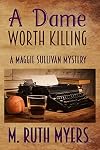
Who is Adrianne and why does it matter?
Maggie Sullivan never disappoints.
The series about this smart, independent, feisty private detective, takes the readers into life in the 1920s-40s in Dayton, Ohio. As one of the characters in A DAME WORTH KILLING said, “You’re smart and tough and don’t give up.” And that character, a high ranking criminal, had been on opposite sides in previous book but she was promised, “If you do what he wants, you got his goodwill now and in the show more future.”
A DAME WORTH KILLING takes place right after the end of World War II. A woman comes to Maggie’s office looking for help locating her daughter, Adrianne, who disappeared a week previously. There had been no messages or ransom notes. She hadn’t gone to the police because the daughter was an adult and Adrianne’s father was well-known to the police because of his criminal activities.
At first, Maggie did not want to take the case, but then remembered previous situations: “If someone without money or influence came to me for helps because they couldn’t get it anywhere else, I would most likely give it. I had on several occasions. Did the woman before me deserve less consideration because she had money and a husband whose name brought suspicion and mistrust?”
When Maggie met with the family–the parents, two sisters, two sons-in-law, and a prospective fiancé, she realized that everyone had different ideas of who Adrianne was. Much of the information they provided was not helpful.
Maggie was finally able to locate a friend who might have had knowledge of Adrianne’s whereabouts, but soon discovered that both she and the friend were being followed.
Followers of Maggie from previous books in the series will find that Heebs, a street kid who had latched on to Maggie and helped her in previous cases before he enlisted in WWII is back. But he is not the same. “It wasn’t just part of his arm he’d lost in the war. Something bright and eager was also missing.”
There are some sexist comments, mostly from incidental characters, which was common at that time.
A comment by Heebs caused me to take a deep breath and think more fully about life in that period (and today as well): “I’ve never been in a house before.”
Well-written, flowing plot, well-drawn characters, possible situations, and on target descriptions.
The next book in the series already seems to have a lot of promise.
This review is from an Advanced Ready Copy. show less
Maggie Sullivan never disappoints.
The series about this smart, independent, feisty private detective, takes the readers into life in the 1920s-40s in Dayton, Ohio. As one of the characters in A DAME WORTH KILLING said, “You’re smart and tough and don’t give up.” And that character, a high ranking criminal, had been on opposite sides in previous book but she was promised, “If you do what he wants, you got his goodwill now and in the show more future.”
A DAME WORTH KILLING takes place right after the end of World War II. A woman comes to Maggie’s office looking for help locating her daughter, Adrianne, who disappeared a week previously. There had been no messages or ransom notes. She hadn’t gone to the police because the daughter was an adult and Adrianne’s father was well-known to the police because of his criminal activities.
At first, Maggie did not want to take the case, but then remembered previous situations: “If someone without money or influence came to me for helps because they couldn’t get it anywhere else, I would most likely give it. I had on several occasions. Did the woman before me deserve less consideration because she had money and a husband whose name brought suspicion and mistrust?”
When Maggie met with the family–the parents, two sisters, two sons-in-law, and a prospective fiancé, she realized that everyone had different ideas of who Adrianne was. Much of the information they provided was not helpful.
Maggie was finally able to locate a friend who might have had knowledge of Adrianne’s whereabouts, but soon discovered that both she and the friend were being followed.
Followers of Maggie from previous books in the series will find that Heebs, a street kid who had latched on to Maggie and helped her in previous cases before he enlisted in WWII is back. But he is not the same. “It wasn’t just part of his arm he’d lost in the war. Something bright and eager was also missing.”
There are some sexist comments, mostly from incidental characters, which was common at that time.
A comment by Heebs caused me to take a deep breath and think more fully about life in that period (and today as well): “I’ve never been in a house before.”
Well-written, flowing plot, well-drawn characters, possible situations, and on target descriptions.
The next book in the series already seems to have a lot of promise.
This review is from an Advanced Ready Copy. show less

This was another good addition to the series, and I loved it... But it's hard for me to know what to say about this, review-wise, beyond just venting a bit of my inner squee. Many of the characters are like old friends, and Maggie herself is a gem. Honestly, even between novels I kind of worry about Maggie when she's out running around with loaded fire-arms, especially at night and alone, and... Yeah, OK, she can handle herself better than I could in a knock-down-drag-out, so I should just show more zip it and trust her instincts. ;-)
There are some lovely bits of 1940s culture and atmosphere in here, too... The story takes place apparently soon after the previous novel, when the US has just entered WW2, amid the ramp-up of CD and black-out curtains, gasoline rationing, and everyone being sucked into war work...
At one point in the narrative, I was heart-broken for her, and I really wanted to hit rewind on one relationship. All I can do is hope she gets the chance to think twice, in the next great adventure. This cannot possibly be the last we hear of Maggie Sullivan...! show less
There are some lovely bits of 1940s culture and atmosphere in here, too... The story takes place apparently soon after the previous novel, when the US has just entered WW2, amid the ramp-up of CD and black-out curtains, gasoline rationing, and everyone being sucked into war work...
At one point in the narrative, I was heart-broken for her, and I really wanted to hit rewind on one relationship. All I can do is hope she gets the chance to think twice, in the next great adventure. This cannot possibly be the last we hear of Maggie Sullivan...! show less
Lists
Awards


You May Also Like


Associated Authors
Statistics
- Works
- 28
- Also by
- 2
- Members
- 616
- Popularity
- #40,814
- Rating
- 4.0
- Reviews
- 58
- ISBNs
- 37
- Favorited
- 1
