
Fiston Mwanza Mujila
Author of Tram 83
About the Author
Fiston Mwanza Mujila was born in 1981 in Lubumbashi, Democratic Republic of the Congo. He studied Literature and Human Services at Lubumbashi University. He writes poems, prose works, and Plays. His debut novel was Tram 83 for which he recieved a French Voices 2014 grant recipient. And it won the show more Grand Prix du Premier Roman des SGDL. His writing also received the Gold Medal at the 6th Jeux de la Francophonie in Beirut as well as the Best Text for Theater (State Theater, Mainz) in 2010. (Bowker Author Biography) show less
Works by Fiston Mwanza Mujila
Zur Zeit der Königinmutter 1 copy
Der Garten der Lüste 1 copy
Tagged
Common Knowledge
- Legal name
- Mujila, Fiston Nasser Mwanza
- Birthdate
- 1981
- Gender
- male
- Occupations
- Schriftsteller
Hochschullehrer - Organizations
- Universität Graz
- Awards and honors
- Etisalat Prize for Literature (2015)
Grand Prix of Literary Associations (Belles-Lettres Category, 2016)
International Literature Award (2015)
Gold Medal, 6th Jeux de la Francophonie in Beirut
Preis für das beste Stück, State Theater, Mainz (2010) - Nationality
- Democratic Republic of the Congo
- Birthplace
- Lubumbashi, DRC
- Places of residence
- Graz, Steiermark, Österreich
- Map Location
- Congo, Democratic Republic of the
Members
Reviews
Rating: 4.5* of five
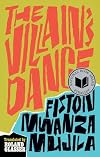
The Publisher Says: Following the international success of his debut novel Tram 83, Fiston Mwanza Mujila is back with his highly anticipated second novel, which follows a remarkable series of characters during the Mobutu regime.
The Democratic Republic of Congo, otherwise known as Congo-Kinshasa or DRCongo, has had a series of names since its founding. The name of Zaire best corresponds to the experience of the novel’s characters. The years of Mobutu’s regime were show more filled with utopias, dreams, fantasies and other uncontrolled desires for social redemption, the quest for easy enrichment and the desecration of places of power.
Among these Zairians’ immigration to Angola during the civil war boycotting the borders inherited from colonization, as if the country did not have its own diamonds, and the occupation of public places by children from outside. The author creates the atmosphere of the time through a roundup of the diviner Tshiamuena, also known as Madonna of the Cafunfo mines, prides herself of being God with whoever is willing to listen to her. Franz Baumgartner, an apprentice writer originally from Austria and rumba lover, goes around the bars in search of material for his novel. Sanza, Le Blanc and other street children share information to the intelligence services when they are not living off begging and robbery. Djibril, taxi driver, only lives for reggae music.
As soon as night falls, each character dances and plays his own role in a country mined by dictatorship.
I RECEIVED A DRC FROM THE PUBLISHER VIA EDELWEISS+. THANK YOU.
My Review: Want to know how much I appreciate Author Fiston Mwanza Mujila's talents?
I didn't pan, belittle, or insult his poetry. All y'all know how I feel about poetry. And I gave it more than three stars! Be amazed, be impressed...I hope you'll be inspired to go get one. Tram 83 worked for me, as well; I know a lot of folks were't fans but it felt like a breeze from Africa to me, hot, wet, heavily freighted. This impression left me for dead in the first instance; I was less enrapt with its story and atmosphere then than I am in retrospect. In part that's down to my subsequent experience of reading The Villain's Dance.
In common with my earlier reads of the author's books, I began this one with an awareness of atmosphere. He is always, or so it feels to me, careful to begin as he means to go on. I'm reasonably sure the huge majority of my readers are unaware of Mobutu's identity, and are more or less uninformed about the name "Zaire" and its history...many in my generation will have known the name Zaire vaguely applies to a huge place near the Congo River but be blissfully unaware that the name is no longer used, or why that happened.
I think that gives the novel almost an SFnal appeal. There's little sense of geography encompassing the story in US readers, so why not just go all the way and market it as taking place on a different planet entirely? *I* can do this, I'm a book reviewer, the publisher can't. The level of outrage engendered would be epic. However, let me propose this to you: If you're willing to learn the names of made-up places like Middle Earth, Arrakis, Pern, Atlantis, Downbelow Station, and their different inhabitants, conflicts, social norms, what's the hold up on Zaire and Brazzaville?
Maybe the tiniest taint of racism? Worth some energy to think about.
Assuming you're in the already-overcame-it or the overcoming-it-now group, this story's got great conflicts between dark-grey, pitch-black, and palest shades of violet people trying their best to make it in a world where up and down just switched places...like being on a space station whose spin just changed speeds dramatically.
Maybe my increased appreciation for this read makes more sense than I thought it did at first.
The people in this book aren't just as well-realized as the setting, for the most part; see below. The pace of the story is provided by history, as it's based on the realities then prevailing. The entire enterprise of nation-building collapsing into civil war (by definition a chaotic break in the life of a society) honestly needs little of that tarting up to make it compelling, even riveting, reading. What Author Fiston does very well here is to fragment the locations of the chaos to give different people reason to speak their truth without losing the core purpose of telling us this story. Like Do Androids Dream of Electric Sheep?, we are taken into realms of deep desperation and left there long enough to get it; then we're offered a peek into the purpose of the extraction and the exploitation that requires...we're not left to wallow, the way The Octopus, f/ex, does with us in service of the same sharp criticism of the cutting edge of capitalism. Poe said it very succinctly in the nineteenth century: "{C}orporations, it is very well known, have neither posteriors to be kicked, nor souls to be damned." (Thanks for showing me the accurate quote again, P-E!)
Edges, as noted above, cut; in this story we're in the path of the blade so see both the wielding and cutting inherent in its very existence. People fail. It is inevitable. Challenges go unmet still less mastered. As often as not that is a design feature of the challenge. It engenders judgment and contempt for failure, but leaves the challenge, well, unchallenged. I suspect the true-to-life experience of people showing up for a minute then vanishing will affront a lot of complacently smug story-structure addicts. It's not by accident, y'all; it's a feature not a bug. Like life in an unstable place at a volatile time, different people will come, only to go without fanfare, or even explanation. Most of the characters trying to make it any old how they can haven't got the wherewithal to care, often enough to notice, who is who except at the precise flash of the camera that "now" represents.
I am trying as best I can to explain away the most common issues I've seen raised in others's assessments of the book. I'm not sure it matters. I hope y'all will attend to my 4.5* rating more closely than to my blandishments. A book of this trenchance is not to be dismissed. I'm hopeful that a few will take this moment of US culture shock to see what has happened in other places at this kind of inflection point.
Forewarned is forearmed. show less
The Publisher Says: Following the international success of his debut novel Tram 83, Fiston Mwanza Mujila is back with his highly anticipated second novel, which follows a remarkable series of characters during the Mobutu regime.
The Democratic Republic of Congo, otherwise known as Congo-Kinshasa or DRCongo, has had a series of names since its founding. The name of Zaire best corresponds to the experience of the novel’s characters. The years of Mobutu’s regime were show more filled with utopias, dreams, fantasies and other uncontrolled desires for social redemption, the quest for easy enrichment and the desecration of places of power.
Among these Zairians’ immigration to Angola during the civil war boycotting the borders inherited from colonization, as if the country did not have its own diamonds, and the occupation of public places by children from outside. The author creates the atmosphere of the time through a roundup of the diviner Tshiamuena, also known as Madonna of the Cafunfo mines, prides herself of being God with whoever is willing to listen to her. Franz Baumgartner, an apprentice writer originally from Austria and rumba lover, goes around the bars in search of material for his novel. Sanza, Le Blanc and other street children share information to the intelligence services when they are not living off begging and robbery. Djibril, taxi driver, only lives for reggae music.
As soon as night falls, each character dances and plays his own role in a country mined by dictatorship.
I RECEIVED A DRC FROM THE PUBLISHER VIA EDELWEISS+. THANK YOU.
My Review: Want to know how much I appreciate Author Fiston Mwanza Mujila's talents?
I didn't pan, belittle, or insult his poetry. All y'all know how I feel about poetry. And I gave it more than three stars! Be amazed, be impressed...I hope you'll be inspired to go get one. Tram 83 worked for me, as well; I know a lot of folks were't fans but it felt like a breeze from Africa to me, hot, wet, heavily freighted. This impression left me for dead in the first instance; I was less enrapt with its story and atmosphere then than I am in retrospect. In part that's down to my subsequent experience of reading The Villain's Dance.
In common with my earlier reads of the author's books, I began this one with an awareness of atmosphere. He is always, or so it feels to me, careful to begin as he means to go on. I'm reasonably sure the huge majority of my readers are unaware of Mobutu's identity, and are more or less uninformed about the name "Zaire" and its history...many in my generation will have known the name Zaire vaguely applies to a huge place near the Congo River but be blissfully unaware that the name is no longer used, or why that happened.
I think that gives the novel almost an SFnal appeal. There's little sense of geography encompassing the story in US readers, so why not just go all the way and market it as taking place on a different planet entirely? *I* can do this, I'm a book reviewer, the publisher can't. The level of outrage engendered would be epic. However, let me propose this to you: If you're willing to learn the names of made-up places like Middle Earth, Arrakis, Pern, Atlantis, Downbelow Station, and their different inhabitants, conflicts, social norms, what's the hold up on Zaire and Brazzaville?
Maybe the tiniest taint of racism? Worth some energy to think about.
Assuming you're in the already-overcame-it or the overcoming-it-now group, this story's got great conflicts between dark-grey, pitch-black, and palest shades of violet people trying their best to make it in a world where up and down just switched places...like being on a space station whose spin just changed speeds dramatically.
Maybe my increased appreciation for this read makes more sense than I thought it did at first.
The people in this book aren't just as well-realized as the setting, for the most part; see below. The pace of the story is provided by history, as it's based on the realities then prevailing. The entire enterprise of nation-building collapsing into civil war (by definition a chaotic break in the life of a society) honestly needs little of that tarting up to make it compelling, even riveting, reading. What Author Fiston does very well here is to fragment the locations of the chaos to give different people reason to speak their truth without losing the core purpose of telling us this story. Like Do Androids Dream of Electric Sheep?, we are taken into realms of deep desperation and left there long enough to get it; then we're offered a peek into the purpose of the extraction and the exploitation that requires...we're not left to wallow, the way The Octopus, f/ex, does with us in service of the same sharp criticism of the cutting edge of capitalism. Poe said it very succinctly in the nineteenth century: "{C}orporations, it is very well known, have neither posteriors to be kicked, nor souls to be damned." (Thanks for showing me the accurate quote again, P-E!)
Edges, as noted above, cut; in this story we're in the path of the blade so see both the wielding and cutting inherent in its very existence. People fail. It is inevitable. Challenges go unmet still less mastered. As often as not that is a design feature of the challenge. It engenders judgment and contempt for failure, but leaves the challenge, well, unchallenged. I suspect the true-to-life experience of people showing up for a minute then vanishing will affront a lot of complacently smug story-structure addicts. It's not by accident, y'all; it's a feature not a bug. Like life in an unstable place at a volatile time, different people will come, only to go without fanfare, or even explanation. Most of the characters trying to make it any old how they can haven't got the wherewithal to care, often enough to notice, who is who except at the precise flash of the camera that "now" represents.
I am trying as best I can to explain away the most common issues I've seen raised in others's assessments of the book. I'm not sure it matters. I hope y'all will attend to my 4.5* rating more closely than to my blandishments. A book of this trenchance is not to be dismissed. I'm hopeful that a few will take this moment of US culture shock to see what has happened in other places at this kind of inflection point.
Forewarned is forearmed. show less

I RECEIVED A DRC OF THIS BOOK FROM THE PUBLISHER VIA EDELWEISS+. THANK YOU.
Many people have spoken to the poetic nature of this book's text. I agree, in both the good sense...the author's (and crucially the translator's) ear for the heightened meanings of words used in poetry is always adding a bass line to this melody...and the bad, that being the obfuscatory and often obscurantist requirement for the reader to unpack subtexts and discover new senses for familiar words while mid-read.
It's not an impossible task. It's often uncomfortable, and it's always a way of slowing the reader down. That isn't always a bad thing. It can feel sort of like the author is being pedantic, the repetition of variants on "You have the time?" is my favorite example. The time to disport yourself with a prostitute. The time to listen to a song. The time as spending, a transaction, an exchange of money for value or attention for money; the issue at hand isn't that it's hard to do this work but that it's required. Read cold, flat, without investment other than decoding, there is no through-line of story to receive. It is a list of lists, a repetition of phrases and names and all strung on a thin cord of criticism for capitalist society's multi-level destruction of the characters. That isn't a terribly satisfying read; and the fact that it is in itself a sharp critique of the mental laziness of many readers is a bit off-putting.
So much is inside the world of Tram 83 that it can feel as overwhelming as a physical trip to Africa does to many Westerners. For the whitest among us, the experience of being a vanishingly small minority is so unsettling as to be agony. For that reason I want many many US whites to read it; I recognize the futility of that wish but am stubbornly advocating it. It's the end of 2020. The world has changed because of COVID-19. It is long past time people with our First-World privilege, regular garbage pick-up and grocery stores and paved roads, heard about the reality of the rest of the world in their own words.
What I want from white people like me reading this thunderflash of words, this uncappable well of natural story-gas, is that we stop and do the work of being in fellowship with the world that isn't like us. Because that surface difference, as this intense and unmissable read says and shows, means nothing against the deepest human need of all: To connect and commune with Humanity. As cheesy as that sounds, this really is the take-away I hope you'll have when you spend a day immersed in Tram 83. show less
Many people have spoken to the poetic nature of this book's text. I agree, in both the good sense...the author's (and crucially the translator's) ear for the heightened meanings of words used in poetry is always adding a bass line to this melody...and the bad, that being the obfuscatory and often obscurantist requirement for the reader to unpack subtexts and discover new senses for familiar words while mid-read.
Theshow more
City-State is one of those territories that have already broken through the barrier of internal suffering. You share the same destiny as everyone else, the same history, the same hardship, the same trains, the same Tram beer, the same dog kebabs, the same narrative as soon as you come into the world. You start out baby-chick or slim-jim or child soldier. You graduate to endlessly striking student or desperado. If you've got family on the trains, then you work on the trains; otherwise, like a ship, you wash up on the edge of hope - a suicidal, a carjacker, a digger with dirty teeth, a mechanic, a street sleeper, a commission agent, an errand boy employed by for-profit tourists, a hawker of secondhand coffins. Your fate is already sealed, the route marked out in advance. Fate sealed like that of the locomotives carrying spoiler merchandise and the dying.
It's not an impossible task. It's often uncomfortable, and it's always a way of slowing the reader down. That isn't always a bad thing. It can feel sort of like the author is being pedantic, the repetition of variants on "You have the time?" is my favorite example. The time to disport yourself with a prostitute. The time to listen to a song. The time as spending, a transaction, an exchange of money for value or attention for money; the issue at hand isn't that it's hard to do this work but that it's required. Read cold, flat, without investment other than decoding, there is no through-line of story to receive. It is a list of lists, a repetition of phrases and names and all strung on a thin cord of criticism for capitalist society's multi-level destruction of the characters. That isn't a terribly satisfying read; and the fact that it is in itself a sharp critique of the mental laziness of many readers is a bit off-putting.
The Northern Station was going to the dogs. It was essentially an unfinished metal structure, gutted by artillery, train tracks, and locomotives that called to mind the railroad built by Stanley, cassava fields, cut-rate hotels, greasy spoons, bordellos, Pentecostal churches, bakeries, and noise engineered by men of all generations and nationalities combined. It was the only place on earth you could hang yourself, defecate, blaspheme, fall into infatuation, and thieve without regard to prying eyes.
So much is inside the world of Tram 83 that it can feel as overwhelming as a physical trip to Africa does to many Westerners. For the whitest among us, the experience of being a vanishingly small minority is so unsettling as to be agony. For that reason I want many many US whites to read it; I recognize the futility of that wish but am stubbornly advocating it. It's the end of 2020. The world has changed because of COVID-19. It is long past time people with our First-World privilege, regular garbage pick-up and grocery stores and paved roads, heard about the reality of the rest of the world in their own words.
Eyes shrivelled by cigarettes and alcohol. Potbellies full to bursting with roundworms, amoebas, earthworms, and assorted mollusks. Heads shaved with knives. Arms and legs stiff with digging graves from morning till morning. They were close to ten, maybe twelve years old. They toted the same justifications: “We’re doing this to pay for our studies. Dad’s already gone with the locomotives. He doesn’t write no more. Mom’s sick. The uncles and aunts and grandmothers say we’re sorcerers and it’s because of that dad got married a third time and that our sorcery comes from our mom and that we should go to see the preachers who will cut the links by getting us to swallow palm oil to make us vomit up our sorcery and prevent us flying round at night.” They lived off a multitude of rackets, like all the kids in town.
They worked as porters at the Northern Station, and on the Congo River and at the Central Market, as slim-jims in the mines, errand boys at Tram 83, undertakers, and gravediggers. The more sensitive ones stood guard at the greasy spoons abutting the station, whose metal structure recalled the 1885s, in exchange for a bowl of badly boiled beans.
What I want from white people like me reading this thunderflash of words, this uncappable well of natural story-gas, is that we stop and do the work of being in fellowship with the world that isn't like us. Because that surface difference, as this intense and unmissable read says and shows, means nothing against the deepest human need of all: To connect and commune with Humanity. As cheesy as that sounds, this really is the take-away I hope you'll have when you spend a day immersed in Tram 83. show less
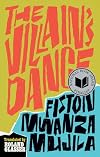
This book has a lively energy. It is fast-paced and moves around to all kinds of characters which really gives a sense of place and the people. Taking place in Zaire during a period of changes, I found that background information added a unique flavor. Mujila is good. On the strength of this book, I went ahead and purchased his first novel "Tram 83".
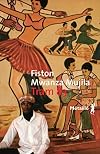
A feverish burst of slam-poetry yelled in your ear over pounding music, so close and so loud you can practically feel the spittle hitting your face. Reading these dispatches from the sharp end of globalisation is like being hit by an undammed river of language – rhythmic, sinuous, dirty, improvisational, perspiring but also weirdly inspiring.
The setting is a nameless ‘city-state’ in central Africa which exists in de-facto secession, run by a Kabila-like ‘dissident General’ busy show more exploiting the region's mineral resources. The rest of the inhabitants live their short lives in a Hobbesian nightmare of near-total lawlessness and lack of infrastructure, fitting into a limited number of social strata: mine workers, students, ‘for-profit tourists’, and the underage prostitutes known in this book's patois as ‘ducklings’ (canetons). It sounds depressing, but despite the very serious realities being described, the primary feeling is one of exuberance and of messy, creative, insuppressible life.
The main reason for this is Mwanza Mujila's prose style, which is designed to mimic the author's beloved jazz music – he's said he wanted his novel to be a literary version of Coltrane's Giant Steps (Mwanza Mujila would probably have been a musician himself, were it not for the inconvenience that Lubumbashi has no music school or saxophone). ‘Pour moi, la langue française, c'est comme un orchestre de jazz,’ he told one interviewer, and he's used the instruments available to him incredibly well, stringing together these long, comma-spliced, elegiac, almost Kerouac-esque riffs:
les nuits étaient un bonheur pour ceux qui savaient en profiter, les vraies nuits étaient longues et populaires, les vraies nuits étaient toujours événementielles, les vraies nuits n'échappaient plus à la corruption et autres coups bas, les vraies nuits puaient la névralgie, les crachats et traumatismes de ceux qui construisaient ce beau monde cassé…
[…the nights were a joy to those who knew how to take advantage of them, the true nights were long and belonged to the people, the true nights were always events, the true nights didn't run from corruption and other below-the-belt activities, the true nights stank of the neuralgia, gobs of spit and injuries of those who were creating this beautiful broken world…]
At the centre of it all, the city in microcosm, is the eponymous Tram 83 (which I hear in my head in a heavy accent, tram kat van twa!), a bar-cum-brothel-cum-greasy spoon which goes straight into the top ten of greatest literary drinking halls. A small, shabby stage with a band playing bebop or Congolese rumba; waitresses and busgirls supplying Brazzaville beer and dogmeat kebabs; catatonic miners and Chinese tourists; and, circling, the ‘ducklings’, teen mothers and assorted ‘no-knicker girls’ (filles-sans-calbars) trying to drag men off for a quick, remunerative assignation in the mixed-sex toilets. The girls' patter is forever interrupting the narrative prose, from the standard approach – ‘You got the time?’ – which is crowbarred into the text again and again, to more elaborate comments and flirtations: ‘Foreplay to me is like democracy. If you don't touch me right, I'm calling in the Americans.’
Mwanza Mujila took the name of his bar from a late-night Brussels tramline, which immediately makes me want to transpose it in my head to the N3, the bus I got home from London every Saturday night throughout my adolescence. I love the idea of naming a bar after a transport route, and in this case it's especially meaningful because of how central the idea of train lines, in particular, are – remembering always that while in Europe trains often represent progress and development, in Africa they come instead with colonial connotations of forced labour, exploitation and deportation. He tries to incorporate this history, both by referring to it directly (the city's train station ‘brings to mind the railway line built by Stanley’), and also by slipping into a certain trainlike rhythm – among other things, Tram 83 is determinedly ‘locomotive literature’.
The novel's setting is somewhat exaggerated, no doubt, but I suspect critics have underestimated the extent to which it faithfully reproduces Lubumbashi, which throughout much of both Congo Wars, and for that matter earlier, too, perfectly fitted the book's description of ‘une ville devenue pays par la force des kalachnikovs’. Certainly it won't do to imply (as some critics have seemed at risk of doing) that this is a flight of fancy – what makes this book important as well as viscerally entertaining is that this world, with all its frenetic violence and grotesque gender polarisation, is real and moreover is the flipside of our own western lifestyle.
What Tram 83 is actually showing us is the consequences of producing seventy million iPhones a year: this is what it comes down to, quite literally – the coltan in all these modern gadgets is dug up right here by people who can expect to die in their mid-forties. Mwanza Mujila has taken that basic obscenity and made great literature out of it. show less
The setting is a nameless ‘city-state’ in central Africa which exists in de-facto secession, run by a Kabila-like ‘dissident General’ busy show more exploiting the region's mineral resources. The rest of the inhabitants live their short lives in a Hobbesian nightmare of near-total lawlessness and lack of infrastructure, fitting into a limited number of social strata: mine workers, students, ‘for-profit tourists’, and the underage prostitutes known in this book's patois as ‘ducklings’ (canetons). It sounds depressing, but despite the very serious realities being described, the primary feeling is one of exuberance and of messy, creative, insuppressible life.
The main reason for this is Mwanza Mujila's prose style, which is designed to mimic the author's beloved jazz music – he's said he wanted his novel to be a literary version of Coltrane's Giant Steps (Mwanza Mujila would probably have been a musician himself, were it not for the inconvenience that Lubumbashi has no music school or saxophone). ‘Pour moi, la langue française, c'est comme un orchestre de jazz,’ he told one interviewer, and he's used the instruments available to him incredibly well, stringing together these long, comma-spliced, elegiac, almost Kerouac-esque riffs:
les nuits étaient un bonheur pour ceux qui savaient en profiter, les vraies nuits étaient longues et populaires, les vraies nuits étaient toujours événementielles, les vraies nuits n'échappaient plus à la corruption et autres coups bas, les vraies nuits puaient la névralgie, les crachats et traumatismes de ceux qui construisaient ce beau monde cassé…
[…the nights were a joy to those who knew how to take advantage of them, the true nights were long and belonged to the people, the true nights were always events, the true nights didn't run from corruption and other below-the-belt activities, the true nights stank of the neuralgia, gobs of spit and injuries of those who were creating this beautiful broken world…]
At the centre of it all, the city in microcosm, is the eponymous Tram 83 (which I hear in my head in a heavy accent, tram kat van twa!), a bar-cum-brothel-cum-greasy spoon which goes straight into the top ten of greatest literary drinking halls. A small, shabby stage with a band playing bebop or Congolese rumba; waitresses and busgirls supplying Brazzaville beer and dogmeat kebabs; catatonic miners and Chinese tourists; and, circling, the ‘ducklings’, teen mothers and assorted ‘no-knicker girls’ (filles-sans-calbars) trying to drag men off for a quick, remunerative assignation in the mixed-sex toilets. The girls' patter is forever interrupting the narrative prose, from the standard approach – ‘You got the time?’ – which is crowbarred into the text again and again, to more elaborate comments and flirtations: ‘Foreplay to me is like democracy. If you don't touch me right, I'm calling in the Americans.’
Mwanza Mujila took the name of his bar from a late-night Brussels tramline, which immediately makes me want to transpose it in my head to the N3, the bus I got home from London every Saturday night throughout my adolescence. I love the idea of naming a bar after a transport route, and in this case it's especially meaningful because of how central the idea of train lines, in particular, are – remembering always that while in Europe trains often represent progress and development, in Africa they come instead with colonial connotations of forced labour, exploitation and deportation. He tries to incorporate this history, both by referring to it directly (the city's train station ‘brings to mind the railway line built by Stanley’), and also by slipping into a certain trainlike rhythm – among other things, Tram 83 is determinedly ‘locomotive literature’.
The novel's setting is somewhat exaggerated, no doubt, but I suspect critics have underestimated the extent to which it faithfully reproduces Lubumbashi, which throughout much of both Congo Wars, and for that matter earlier, too, perfectly fitted the book's description of ‘une ville devenue pays par la force des kalachnikovs’. Certainly it won't do to imply (as some critics have seemed at risk of doing) that this is a flight of fancy – what makes this book important as well as viscerally entertaining is that this world, with all its frenetic violence and grotesque gender polarisation, is real and moreover is the flipside of our own western lifestyle.
What Tram 83 is actually showing us is the consequences of producing seventy million iPhones a year: this is what it comes down to, quite literally – the coltan in all these modern gadgets is dug up right here by people who can expect to die in their mid-forties. Mwanza Mujila has taken that basic obscenity and made great literature out of it. show less
Lists
Awards


You May Also Like


Associated Authors
Statistics
- Works
- 12
- Members
- 343
- Popularity
- #69,542
- Rating
- 3.3
- Reviews
- 24
- ISBNs
- 33
- Languages
- 10