

Jean-Pierre Vernant (1914–2007)
Author of The Universe, the Gods, and Men: Ancient Greek Myths Told by Jean-Pierre Vernant
About the Author
Jean-Pierre Vernant is a leading French scholar of ancient Greece who attempts to elucidate Greek religions, especially mythology, through the development of a historical anthropology. In 1984 he retired from his position as professor of the comparative study of ancient religion at the College de show more France. Among his earlier accomplishments, Vernant received the Croix de Guerre and the Croix de la Liberation for his service in the French army in World War II; he was also made an officer in the French Legion of Honor. Vernant is a writer of essays more than of books. As anthropologist James Redfield (see Vol. 3) puts it, "His forte . . . has been the informal, slightly rambling essay. . .; he does not collect evidence in order to make a case but rather cites the material in order to illustrate his ideas."Vernant's career has been distinguished by his collaboration with other scholars, most notably with Marcel Detienne and Pierre Vidal-Naquet. His interest in applying anthropological study to ancient Greece derives from his teacher, Louis Gernet, a member of Emile Durkheim's (see Vol. 3) school of L'Annee Sociologique. Vernant also adapts ideas from structuralist anthropology, without, however, surrendering a historical perspective. He works most often on materials from Greece of the fifth century b.c. Classicists often resist Vernant's approach because it is so heavily informed by theory. Nevertheless, it provides a wonderfully rich and complex vision of the ancient world and is worth serious and prolonged consideration. (Bowker Author Biography) show less
Series
Works by Jean-Pierre Vernant
The Universe, the Gods, and Men: Ancient Greek Myths Told by Jean-Pierre Vernant (1999) — some editions — 566 copies, 8 reviews
Cunning Intelligence in Greek Culture and Society (European Philosophy and the Human Sciences) (1974) 96 copies, 1 review
Nascita Di Immagini 1 copy
L'uomo greco — Editor — 1 copy
Associated Works
A City Of Images : Iconography and Society in Ancient Greece (1984) — Preface; Author, some editions — 14 copies
Visualizing the Tragic: Drama, Myth, and Ritual in Greek Art and Literature (2007) — Contributor — 3 copies
Arethusa (vol 20 no 1 and 2): Herodotus and the Invention of History (1987) — Contributor — 3 copies
La Notion De Daimon Dans Le Pythagorisme Ancien: De La Pensee Religieuse a La Pensee Philosophique (Anagoge) (French Edition) (2021) — Preface — 3 copies, 1 review
Arethusa (vol 15 no 1 and 2): American Classical Studies in Honor of J.-P. Vernant — Contributor — 1 copy
Tagged
Common Knowledge
- Canonical name
- Vernant, Jean-Pierre
- Legal name
- Vernant, Jean-Pierre
- Birthdate
- 1914-01-04
- Date of death
- 2007-01-09
- Gender
- male
- Education
- Agrégation de philosophie (Rang 1, 1937)
Université de la Sorbonne (Diplôme d'études supérieures, philosophie, 1935)
Lycée Louis-le-Grand, Paris
Lycée Carnot, Paris - Occupations
- Professeur (Histoire ∙ Anthropologie)
Historien (Antiquité)
Helléniste
Anthropologue - Organizations
- Collège de France (Professeur, Chaire 'Etude comparée des religions antiques', 19 75 (Professeur, Chaire 'Etude comparée des religions antiques', 19 75)
Ecole Pratique des Hautes Etudes, Paris, France (Directeur d’études, 19 58 l 19 75)
Centre National de la Recherche Scientifique (Attaché de recherche , 19 48, Chargé de recherche, 19 52 l 19 57)
Lycée Jacques-Decour, Paris (Professeur, Philosophie, 19 46 l 19 48)
Lycée de Toulouse (Professeur, Philosophie, 19 40 l 19 46)
Parti communiste française (1934l1970) (show all 11)
Académie royale de Belgique (Membre associé)
American Academy of Arts and Sciences (Foreign honorary member)
British Academy (Corresponding Fellow)
Society for the Promotion of Hellenic Studies (Honory Member)
Academia Europaea (Membre) - Awards and honors
- Grand officier de l'ordre national du Mérite
Commandeur de la Légion d'honneur
Officier des Arts et des Lettres
Médaille d'or du CNRS (1984)
Compagnon de la Libération (1946)
Croix de guerre 1939-1945 (show all 16)
Université de Chicago (Docteur honoris causa)
Université de Bristol (Docteur honoris causa)
Université de Dublin (Docteur honoris causa)
Université de Naples (Docteur honoris causa)
Université d'Oxford (Docteur honoris causa)
Université Masaryk de Brno (Docteur honoris caus)
Université de Crète (Docteur honoris causa ∙ 2002)
Nouvelle Université bulgare (Docteur honoris causa ∙ 2004)
Premio di Storia (1991)
AAAS Award for Humanistic Studies (1993) - Relationships
- Nahimovitch, Lida (wife)
- Short biography
- Jean-Pierre Vernant was born in 1914 in Provins and is a teacher of philosophy. He was the director of studies in the college of further education from 1957 to 1975. He was also the founder (1964) and director, until 1985, of the centre for comparative research into ancient societies. He is considered one of the foremost specialists of ancient Greek history. Since 1984 he has been an honorary professor of the Collège de France where he was awarded the chair of comparative ancient religions from 1975 to 1984. He has been awarded the Médaille d’Or by the CNRS, is Commander of the Legion of Honour, Grand Officier in l’Ordre du Mérite and has received le Croix de Guerre for his active role in the French Resistance under the pseudonyme of Colonel Berthier.
- Nationality
- France
- Birthplace
- Provins, Seine-et-Marne, Île-de-France, France
- Place of death
- Sèvres, Hauts-de-Seine, Île-de-France, France
- Map Location
- France
- Associated Place (for map)
- France
Members
Reviews
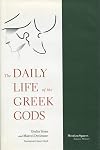
This book has interesting information but is oddly organized. The first part tells of how the poets saw the gods: as having daily lives of feasting, traveling, interacting with mortals, discussing with one another. The philosophers disagreed, seeing any action as incompatible with the bliss that definitional for their concept of divinity. We also contrast the relatively stable personalities and attributes of the Olympians in mythology with the fragmented identities in which Aphrodite can be show more worshipped in one place as a goddess of sex and in another as a war goddess. Book also describes Greek ideas of citizenship, founding of cities (with the establishment of altars and patron gods an important part), and the festivals of Dionysus. show less
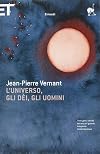
Per un ex liceale, è bello, utile (e doveroso) rinfrescarsi la memoria con la mitologia greca incontrata al classico. Per chiunque altro, immagino sia un testo ottimo come introduzione per avventurarsi nelle letture dei classici originali. Una sola nota: lo stile è cronachistico, alla lunga un po' piatto. L'autore concentra il poche pagine una grande quantità di informazioni e se l'opera gli riesce particolarmente bene nella prima parte del libro (l'universo e gli dei, diciamo fino alla show more guerra di Troia), nella seconda va forse un po' troppo veloce risultando poco scorrevole e troppo fitto di contenuti. A ogni modo, piacevolissimo. show less
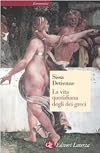
Che uso fanno gli dèi del tempo?
Per rispondere a questa domanda occorre prima di tutto definire un dio, quindi immaginare l’esperienza che egli ha del tempo, e infine descrivere il suo rapporto col mondo. Per definire un dio la filosofia greca si divideva fra chi sosteneva che un dio esiste in quanto agisce o fra chi concepiva gli dèi beati nella pienezza della loro immobile perfezione.
Partendo da queste premesse, adeguatamente argomentate, questo saggio a quattro mani esplora la vita show more quotidiana degli dèi greci in un confronto continuo col quotidiano dell’altro, degli uomini, affidandosi alle parole dei poeti, in primo luogo Omero, e dei filosofi antichi.
La prima parte, a cura di Giulia Sissa, è più scorrevole e trascinante col suo andamento narrativo e avventuroso, i continui richiami all’Iliade contribuiscono a creare questo effetto; la seconda parte, di competenza di Marcel Detienne, di tono più accademico, è meno movimentata ma non per questo meno interessante.
Da far precedere o affiancare alla lettura o rilettura, in particolare, dell’Iliade. show less
Per rispondere a questa domanda occorre prima di tutto definire un dio, quindi immaginare l’esperienza che egli ha del tempo, e infine descrivere il suo rapporto col mondo. Per definire un dio la filosofia greca si divideva fra chi sosteneva che un dio esiste in quanto agisce o fra chi concepiva gli dèi beati nella pienezza della loro immobile perfezione.
Partendo da queste premesse, adeguatamente argomentate, questo saggio a quattro mani esplora la vita show more quotidiana degli dèi greci in un confronto continuo col quotidiano dell’altro, degli uomini, affidandosi alle parole dei poeti, in primo luogo Omero, e dei filosofi antichi.
La prima parte, a cura di Giulia Sissa, è più scorrevole e trascinante col suo andamento narrativo e avventuroso, i continui richiami all’Iliade contribuiscono a creare questo effetto; la seconda parte, di competenza di Marcel Detienne, di tono più accademico, è meno movimentata ma non per questo meno interessante.
Da far precedere o affiancare alla lettura o rilettura, in particolare, dell’Iliade. show less
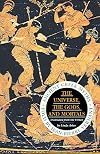
An English translation of a French work based on Ancient Greek texts, this could easily have become a garbled mess. But it isn't. 'The Universe, the Gods, and Mortals' is actually a very easy and enjoyable read. While I am certainly no expert on the subject concerned, Vernant's retelling (or, rather, explanations) of the various stories contained has fuelled my enthusiasm for Ancient Greek mythology (which is, I assume, precisely what he was trying to achieve). Undoubtedly a worthwhile read.
Awards


You May Also Like


Associated Authors
Statistics
- Works
- 67
- Also by
- 15
- Members
- 2,601
- Popularity
- #9,871
- Rating
- 4.0
- Reviews
- 22
- ISBNs
- 267
- Languages
- 17
- Favorited
- 4


