
Carl de Keyzer
Author of ZONA: Siberian Prison Camps
About the Author
Works by Carl de Keyzer
Tagged
Common Knowledge
- Canonical name
- de Keyzer, Carl
- Birthdate
- 1958-12-27
- Gender
- male
- Occupations
- photographer
photography teacher - Organizations
- Magnum Photo Agency
Royal Academy of Fine Arts in Ghent
Higher Institute of Arts in Antwerp
L'école des Arts Décoratifs, Paris - Nationality
- Belgium
- Birthplace
- Kortrijk, Belgium
- Places of residence
- Ghent, Belgium
Antwerp, Belgium
Paris, France - Associated Place (for map)
- Belgium
Members
Reviews
The prison camps of Siberia still have customers, in fact over a million of them. Sent there for minor offensives such as stealing cabbages or even a hamster from a Moscow pet shop, the prisoners and their prisons are captured here by Carl de Keyser in brilliant colour, as if seen through some disturbing hallucinatory dream.
It's official. The gulags of Siberia are no more. Solzhenitsin's nightmare of the absurd does not exist. The prisons are still there, of course, with plenty of customers, show more probably more than a million, such as the 15-year-old boy serving three and a half years for stealing two hamsters from a Moscow pet shop, or the mother of four who stole 12 cabbages - what can have possessed her? - and was rewarded with four years in Siberia.
So the inhuman lunacy still exists, but it is now officially apolitical. In reality it is an economic social endeavour. It does not pay to be a poor thief in Russia, since you will not have the resources to avoid the interminable train ride to the East when you are caught. Carl De Keyzer took that journey to photograph the prisons today. With two army colonels as his shadows, one to the left and one to the right, he photographed what he was allowed to see, and no more. But he has revealed a kind of winter wonderland, a Disneyland where all normal credibility is suspended - look, for example, at the tattoos in the photographs. "Where do they come from?" he asked. The answer came: "What tattoos? There are no tattoos. They are illegal." So they don't exist. Your eyes deceive you.
It has been said that the collective memory is black and white. In Zona, De Keyzer has elaborated on the brocaded fantasy of the Siberian prisons by using brilliant colour, as if from a hallucinatory dream. Look at the faces, and then the eyes, of the prisoners. There is a Zen despair there, as if they were wearing lederhosen in a remarkable holiday camp. They tell a disturbing story.
'Magnum photographer Carl de Keyzer captures the wintry landscape, harsh realities and surreal elements of prison life'. Guardian Review
Awards:
Photo District News Annual 2003
Kraszna Krausz Award, Best Books category 2003
Carl de Keyzer was born in Belgium in 1958, and began his career as a freelance photographer in 1982 while supporting himself as a lecturer at the Royal Academy of Fine Arts of Belgium (1982-89). At the same time his interest in the work of other photographers led him to co-found and co-direct the XYZ-Photography Gallery. A Magnum nominee in 1990, he became a full member in 1994. show less
It's official. The gulags of Siberia are no more. Solzhenitsin's nightmare of the absurd does not exist. The prisons are still there, of course, with plenty of customers, show more probably more than a million, such as the 15-year-old boy serving three and a half years for stealing two hamsters from a Moscow pet shop, or the mother of four who stole 12 cabbages - what can have possessed her? - and was rewarded with four years in Siberia.
So the inhuman lunacy still exists, but it is now officially apolitical. In reality it is an economic social endeavour. It does not pay to be a poor thief in Russia, since you will not have the resources to avoid the interminable train ride to the East when you are caught. Carl De Keyzer took that journey to photograph the prisons today. With two army colonels as his shadows, one to the left and one to the right, he photographed what he was allowed to see, and no more. But he has revealed a kind of winter wonderland, a Disneyland where all normal credibility is suspended - look, for example, at the tattoos in the photographs. "Where do they come from?" he asked. The answer came: "What tattoos? There are no tattoos. They are illegal." So they don't exist. Your eyes deceive you.
It has been said that the collective memory is black and white. In Zona, De Keyzer has elaborated on the brocaded fantasy of the Siberian prisons by using brilliant colour, as if from a hallucinatory dream. Look at the faces, and then the eyes, of the prisoners. There is a Zen despair there, as if they were wearing lederhosen in a remarkable holiday camp. They tell a disturbing story.
'Magnum photographer Carl de Keyzer captures the wintry landscape, harsh realities and surreal elements of prison life'. Guardian Review
Awards:
Photo District News Annual 2003
Kraszna Krausz Award, Best Books category 2003
Carl de Keyzer was born in Belgium in 1958, and began his career as a freelance photographer in 1982 while supporting himself as a lecturer at the Royal Academy of Fine Arts of Belgium (1982-89). At the same time his interest in the work of other photographers led him to co-found and co-direct the XYZ-Photography Gallery. A Magnum nominee in 1990, he became a full member in 1994. show less
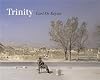
Trinty is a milestone in the work of Magnum photographer Carl De Keyzer. It is a triptych on the theme of he omnipresence of power and violence. The title itself refers not only to the traditional image of the Supreme Power in classical painting, but also, for example, to the code name of the ominous project with which Oppenheimer lead a team of atomic physicists to produce the first atom bomb. Based on three probing themes, De Keyzer grabs contemporary power, its images: Tableaux d' show more Histoire, Tableaux de Guerre; Tableaux Politiques. The first tableaux cast a surprising light on the theatrical that has characterized power since time immemorial and without which it could not exist. The second perspective shows us violence as a timeless, placeless phenomenon. War appears in an aesthetic of the sublime, although subdued and painful, as glorification, heroism and justitication are absent.
The third part takes us behind the scenes of political power, which should, when all is said and done, actually be the power of the people; the facade, the lobbying, the backrooms, the haggling. show less
The third part takes us behind the scenes of political power, which should, when all is said and done, actually be the power of the people; the facade, the lobbying, the backrooms, the haggling. show less
Voor het boek "Zona" reisde Carl De Keyzer een aantal maanden door Rusland om de gevangeniskampen te bezoeken en daar foto's te maken. Zoals bij al zijn boeken zijn de foto's ook hier weer veelzeggend. Het is moeilijk om precies aan te geven wat de foto's van Carl de Keyzer zo bijzonder maakt, maar ze houden altijd de aandacht vast. Niet zo mooi als het boek over Kongo, maar een van zijn mooiere fotoboeken.
You May Also Like


Statistics
- Works
- 29
- Members
- 301
- Popularity
- #78,061
- Rating
- 4.0
- Reviews
- 13
- ISBNs
- 27
- Languages
- 6
- Favorited
- 1