

Eric Linklater (1899–1974)
Author of The Wind on the Moon
About the Author
Series
Works by Eric Linklater
Det blæser på Månen 1 2 copies
Robert the Bruce. With ... maps 2 copies
God Likes Them Plain 2 copies
Kind Kitty 1 copy
Associated Works
Tagged
Common Knowledge
- Legal name
- Linklater, Eric Robert Russell
- Birthdate
- 1899-02-08
- Date of death
- 1974-11-07
- Gender
- male
- Education
- Aberdeen Grammar School
University of Aberdeen - Occupations
- journalist
teacher
novelist
poet
autobiographer
historian - Organizations
- British Army (WWI|WWII)
- Awards and honors
- Order of the British Empire (Commander, 1954)
Royal Society of Edinburgh (Fellow, 1971) - Relationships
- Linklater, Elizabeth (grandmother)
Linklater, Andro (son)
Linklater, Kristin (daughter)
Linklater, Magnus (son) - Nationality
- UK
- Birthplace
- Penarth, Glamorgan, Wales, UK
- Places of residence
- Aberdeen, Aberdeenshire, Scotland, UK
Orkney, Scotland, UK
Bombay, India - Place of death
- Aberdeen, Aberdeenshire, Scotland, UK
- Burial location
- Harray Churchyard, Mainland, Orkney, Scotland
- Map Location
- Scotland, UK
Members
Reviews

Linklater is described in wiki as a Welsh-born Scottish poet, fiction writer, military historian and travel writer. His most famous book is probably The Wind on the Moon which is a children's fantasy novel. Laxdale Hall was published in 1951 and it was made into a film of the same name; I have not seen it, but imagine it as a British made 'b' movie following on the coat tails of Whiskey Galore, however looking at the cast list: Ronald Squire, Kathleen Ryan, Raymond Huntley, Sebastian Shaw show more and Fulton Mackay I am thinking it might have had pretensions of better things.
The novel is very much of its time. An isolated Scottish village on the west coast is preparing to put on an amateur production of a play by Euripides. The villagers have been canvassing their MP in London for money to build a new road and an improved docking facility and are thrilled to learn of the arrival of a delegation from London. They have been refusing to pay their road tax because they claim they have not got a road on which they can safely drive their cars. The General who owns Laxdale Hall is leading the protest group and his large house is the only suitable accommodation for the delegation. A criminal group from Glasgow have targeted the salmon river running by Laxdale hall for a poaching expedition. The villagers must persuade the London delegation they are worthy of monetary support, fight off the criminal gang and make a success of a controversial play.
Linklater's book never quite hits the right note, not quite funny enough, not serious enough about the problems facing a remote highland village and underestimates the problems of putting on such a play. The General tries to be all things to all men while various other characters become caricatures of half crazy people living in a remote village that still have the wit to outfox a criminal gang and dupe a bunch of stuffed shirts from London. Linklater writes some excellent prose describing the countryside and the beating of the criminal gang is carried out like a military exercise, however there are still fifty pages to go, when most of the issues have been resolved and there is only the play left to bring the story to a climax that unfortunately has already been largely resolved. The book is entertaining enough and the colourful characters have their moments, but it all seems so old fashioned; and not in a good way, to be reading this now. 3 stars. show less
The novel is very much of its time. An isolated Scottish village on the west coast is preparing to put on an amateur production of a play by Euripides. The villagers have been canvassing their MP in London for money to build a new road and an improved docking facility and are thrilled to learn of the arrival of a delegation from London. They have been refusing to pay their road tax because they claim they have not got a road on which they can safely drive their cars. The General who owns Laxdale Hall is leading the protest group and his large house is the only suitable accommodation for the delegation. A criminal group from Glasgow have targeted the salmon river running by Laxdale hall for a poaching expedition. The villagers must persuade the London delegation they are worthy of monetary support, fight off the criminal gang and make a success of a controversial play.
Linklater's book never quite hits the right note, not quite funny enough, not serious enough about the problems facing a remote highland village and underestimates the problems of putting on such a play. The General tries to be all things to all men while various other characters become caricatures of half crazy people living in a remote village that still have the wit to outfox a criminal gang and dupe a bunch of stuffed shirts from London. Linklater writes some excellent prose describing the countryside and the beating of the criminal gang is carried out like a military exercise, however there are still fifty pages to go, when most of the issues have been resolved and there is only the play left to bring the story to a climax that unfortunately has already been largely resolved. The book is entertaining enough and the colourful characters have their moments, but it all seems so old fashioned; and not in a good way, to be reading this now. 3 stars. show less

I rarely read footnotes. In this book, I miss them anyway.
Erik Linklater wrote mostly novels, plus children's books, plays, verse -- almost everything. But very little history. The writing in this book is sprightly and confident -- but the bibliography is only two and a half pages, and there are no notes. How much of the result is actual history, and how much historical romance? There is no absolute way to answer that question.
The good news is, the general outline is correct. The death of show more Edward the Confessor, the election of Harold II, the invasion of Harald Hardrada, the invasion of William the Conqueror -- it's all here. (I don't know what the alternative would be, but then, I'm not a novelist....) The details -- I don't trust so much.
To sum up: If you want a good readable history of the Norman Conquest and the events which led to it, this book is for you. If you want a very reliable history -- well, try something with better source information. show less
Erik Linklater wrote mostly novels, plus children's books, plays, verse -- almost everything. But very little history. The writing in this book is sprightly and confident -- but the bibliography is only two and a half pages, and there are no notes. How much of the result is actual history, and how much historical romance? There is no absolute way to answer that question.
The good news is, the general outline is correct. The death of show more Edward the Confessor, the election of Harold II, the invasion of Harald Hardrada, the invasion of William the Conqueror -- it's all here. (I don't know what the alternative would be, but then, I'm not a novelist....) The details -- I don't trust so much.
To sum up: If you want a good readable history of the Norman Conquest and the events which led to it, this book is for you. If you want a very reliable history -- well, try something with better source information. show less
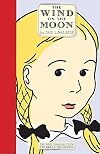
So, I'm reading a "wartime book" edition from the university archives. Thin paper, small margins... so fascinating to see history fall into my hands like that.
Also it was owned by St. Louis Mercantile Library: "Established in 1846 by civic leaders and philanthropists.... It is the oldest library west of the Mississippi and the grandparent of St. Louis cultural institutions." On the UMSL campus. This book also has markings indicating it now is avl. directly from the current university show more library. So, from 1944 to 2020 I wonder how many ppl read this copy. It's in great shape.
As to the story itself, well, I'm surprised it was reissued this century. It's a tiny bit Mary Poppins or Charlie and the Chocolate Factory, almost as clever, but not nearly as heartfelt or resonant. I do admit child me probably would have loved it, but I'm glad I didn't read it then, especially the glorification of revenge, because I'm proud of the fact that I have even now not a vengeful bone in my body.
---
Now about 1/2 way. There sure is plenty of humor, and adventure. And bad science. And beautiful writing: the speeches of the Puma and the Falcon about the beauty of their original homes, and about freedom, and about hunting, are poetic. And there's insight; "The only way to keep your friends was to make allowance for them.... You had to understand her point of view...."
And the characters are two young girls, not only adventurous but independent and clever. And to me they feel very real.
---
Ok done. Ack. Such mixed feelings I have. I'm def. glad that I was recommended it. I'd recommend it to some of you, but those of you who I imagine would be most likely to enjoy it also have, I'm confident, the longest to-read lists. Also can't rate. Parts & aspects I loved, others, well, not so much. Part of me wants to reread it... I know child me would have. Oh well. Done and done. show less
Also it was owned by St. Louis Mercantile Library: "Established in 1846 by civic leaders and philanthropists.... It is the oldest library west of the Mississippi and the grandparent of St. Louis cultural institutions." On the UMSL campus. This book also has markings indicating it now is avl. directly from the current university show more library. So, from 1944 to 2020 I wonder how many ppl read this copy. It's in great shape.
As to the story itself, well, I'm surprised it was reissued this century. It's a tiny bit Mary Poppins or Charlie and the Chocolate Factory, almost as clever, but not nearly as heartfelt or resonant. I do admit child me probably would have loved it, but I'm glad I didn't read it then, especially the glorification of revenge, because I'm proud of the fact that I have even now not a vengeful bone in my body.
---
Now about 1/2 way. There sure is plenty of humor, and adventure. And bad science. And beautiful writing: the speeches of the Puma and the Falcon about the beauty of their original homes, and about freedom, and about hunting, are poetic. And there's insight; "The only way to keep your friends was to make allowance for them.... You had to understand her point of view...."
And the characters are two young girls, not only adventurous but independent and clever. And to me they feel very real.
---
Ok done. Ack. Such mixed feelings I have. I'm def. glad that I was recommended it. I'd recommend it to some of you, but those of you who I imagine would be most likely to enjoy it also have, I'm confident, the longest to-read lists. Also can't rate. Parts & aspects I loved, others, well, not so much. Part of me wants to reread it... I know child me would have. Oh well. Done and done. show less

Despite the invasion in 1943 by the Allied troops, the Nazis held on to Italy till the very last of the Second World War. The Scottish author Eric Linklater was able to observe the final years of the war in Italy in official capacity, working for the publicity department of the British War Office. Linklater spent six months in 1944 in Italy as the War Office's official historian. In 1952, he published a semi-official report about the British campaign, although his 1946 novel Private Angelo show more presents a much fresher and more original account of the final years of the war.
Private Angelo is repeatedly described as and self-acclaimed a soldier without courage, lacking il dono di coraggio. His claim is accepted as factual, and without any shame, throughout the novel. Angelo's fear makes most of his actions capricious, often resulting in unexpected outcomes. Thus, quite without volition, Angelo switches sides, ending up fighting for the Italians, the germans and the British in quick succession. His position changes from common soldier, to tutor of a high-ranking Nazi officer, from a POW "slave" labourer to a hero.
Not just private Angelo's fate responds to such a capricious pattern. Throughout the novel, Angelo is committed to the nobleman Count of Pontefiore, who plays a very dubious role, despite of which he gets into real trouble.
Private Angelo is a comic novel, and mostly lacks a coherent plot. The novel operates like an opera buffo. The Italian characters all take their fate with a great deal of resignation. The Nazis are portrayed as dead serious till the very end, while the British come away as largely lucky. For the Italians, there is no question about ideology or courage. They are just plain practical: survival, no matter how. show less
Private Angelo is repeatedly described as and self-acclaimed a soldier without courage, lacking il dono di coraggio. His claim is accepted as factual, and without any shame, throughout the novel. Angelo's fear makes most of his actions capricious, often resulting in unexpected outcomes. Thus, quite without volition, Angelo switches sides, ending up fighting for the Italians, the germans and the British in quick succession. His position changes from common soldier, to tutor of a high-ranking Nazi officer, from a POW "slave" labourer to a hero.
Not just private Angelo's fate responds to such a capricious pattern. Throughout the novel, Angelo is committed to the nobleman Count of Pontefiore, who plays a very dubious role, despite of which he gets into real trouble.
Private Angelo is a comic novel, and mostly lacks a coherent plot. The novel operates like an opera buffo. The Italian characters all take their fate with a great deal of resignation. The Nazis are portrayed as dead serious till the very end, while the British come away as largely lucky. For the Italians, there is no question about ideology or courage. They are just plain practical: survival, no matter how. show less
Lists
Awards


You May Also Like


Associated Authors
Statistics
- Works
- 69
- Also by
- 20
- Members
- 1,881
- Popularity
- #13,680
- Rating
- 4.0
- Reviews
- 26
- ISBNs
- 143
- Languages
- 8
- Favorited
- 2