
A.G. Lafley
Author of Playing to Win: How Strategy Really Works
Works by A.G. Lafley
The Game-Changer: How You Can Drive Revenue and Profit Growth with Innovation (2008) 146 copies, 3 reviews
Associated Works
Seizing the White Space: Business Model Innovation for Growth and Renewal (2010) — Foreword — 89 copies
HBR's 10 Must Reads on Strategy, Vol. 2 (with bonus article "Creating Shared Value" By Michael E. Porter and Mark R. Kramer) (2020) — Contributor — 23 copies, 1 review
Tagged
Common Knowledge
There is no Common Knowledge data for this author yet. You can help.
Members
Reviews
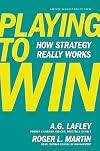
This book is known as a classics on strategic planning and the role of strategy in business. It speaks from the point of view of leadership over Procter & Gamble’s (P&G) numerous businesses. The company identified its organization to be weak in understanding strategy, and it sought to inculcate strategic thinking into its leadership. Although this book references a few other corporations, it consists largely of case studies around how P&G succeeded using strategy.
The authors divide show more strategy into two central questions: Where to play, and how to win? The first question is often overlooked in meeting rooms. Deciding what consumers to target can provide a make-or-break decision concerning whether a product will succeed. The authors then break down these two central questions into sub-questions with cases to illustrate insights.
The book tries to identify general principles based on P&G’s experiences. One author was the CEO, and the other was a paid consultant to the company. Both were intimately involved in P&G’s refashioned approach to the market and in its numerous successes and occasional failures. The book’s main weakness lies in its magnified focus on and access to P&G. I would like to have heard a critical analysis of other ventures’ strategic plans, especially in my fields of healthcare and technology. That is probably too much to want from one treatment.
This book portrays a relentless focus on “winning.” In the field of healthcare technology, this verbiage can repel and appear difficult. My workplace does not talk about “wins” as much (though we occasionally talk so); we more often use language of fulfilling “goals.” Still, I remained able to abstract the point, but the authors’ bias towards a game-centered view of the world, with winners and losers, was apparent throughout.
This book’s audience consists of business folk, especially at more leadership levels. It’s reputed to be one of the best looks on strategy in the literature. I can see why. Although a scientist, I found its wording fairly accessible although I found it voyaged into jargon occasionally. Someone need not be an expert to learn from this book. show less
The authors divide show more strategy into two central questions: Where to play, and how to win? The first question is often overlooked in meeting rooms. Deciding what consumers to target can provide a make-or-break decision concerning whether a product will succeed. The authors then break down these two central questions into sub-questions with cases to illustrate insights.
The book tries to identify general principles based on P&G’s experiences. One author was the CEO, and the other was a paid consultant to the company. Both were intimately involved in P&G’s refashioned approach to the market and in its numerous successes and occasional failures. The book’s main weakness lies in its magnified focus on and access to P&G. I would like to have heard a critical analysis of other ventures’ strategic plans, especially in my fields of healthcare and technology. That is probably too much to want from one treatment.
This book portrays a relentless focus on “winning.” In the field of healthcare technology, this verbiage can repel and appear difficult. My workplace does not talk about “wins” as much (though we occasionally talk so); we more often use language of fulfilling “goals.” Still, I remained able to abstract the point, but the authors’ bias towards a game-centered view of the world, with winners and losers, was apparent throughout.
This book’s audience consists of business folk, especially at more leadership levels. It’s reputed to be one of the best looks on strategy in the literature. I can see why. Although a scientist, I found its wording fairly accessible although I found it voyaged into jargon occasionally. Someone need not be an expert to learn from this book. show less
Took a while. Surprisingly it gets more clever in the end! As it is fifty % written by a former P&G CEO you should not wonder that most of the examples are out of the P&G universe. Sadly some of the FMCG brands are not known to the typical European like me.
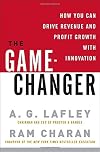
This is a great example of a large company using agile methods to shorten the feedback loop and quickly develop products that matter, and then sell them effectively. A couple notes:
- innovation isn't the r&D department, it has to be fostered on every level
- the best source of innovation is the customer. Put them in the middle of what you do.
- products have life cycles. brands don’t
- innovation isn't the r&D department, it has to be fostered on every level
- the best source of innovation is the customer. Put them in the middle of what you do.
- products have life cycles. brands don’t
I had to read this one for work. It was a well written business book, but tough to translate to a real life business example if you are not leading a large organization or business unit.
Lists
Awards

You May Also Like


Associated Authors
Statistics
- Works
- 7
- Also by
- 3
- Members
- 551
- Popularity
- #45,289
- Rating
- 3.9
- Reviews
- 6
- ISBNs
- 17
- Languages
- 2
- Favorited
- 1