
Carmen Boullosa
Author of A Narco History: How the United States and Mexico Jointly Created the "Mexican Drug War"
About the Author
Image credit: Carmen Boullosa in 1996 [credit: Günter Prust]
Works by Carmen Boullosa
A Narco History: How the United States and Mexico Jointly Created the "Mexican Drug War" (2015) 128 copies
Azúcar negra. El negro mexicano blanqueado o borrado (Centzontle) (Spanish Edition) (2013) 4 copies, 1 review
El mundo. Novelas II / The World. Novel II (Biblioteca Carmen Boullosa) (Spanish Edition) (2018) 3 copies
Cuando México se (re)apropia de Texas: Ensayos / When Mexico Recaptures Texas: Essays (Spanish Edition) (Spanish and English Edition) (2015) 2 copies
Ser el escalvo que perdió su cuerpo 2 copies
Paradores 1 copy
Associated Works
Sudden Fiction Latino: Short-Short Stories from the United States and Latin America (2010) — Contributor — 76 copies, 15 reviews
Daughters of Latin America: An International Anthology of Writing by Latine Women (2023) — Contributor — 38 copies, 1 review
A Very Mexican Christmas: The Greatest Mexican Holiday Stories of All Time (2022) — Contributor — 11 copies
Tagged
Common Knowledge
- Birthdate
- 1954-09-04
- Gender
- female
- Occupations
- poet
novelist
playwright - Awards and honors
- Premio Nacional de la ANLE “Enrique Anderson Imbert” (2025)
- Relationships
- Wallace, Mike (2nd spouse)
Aura, Alejandro (1st spouse) - Nationality
- Mexico
- Birthplace
- Mexico City, Mexico
- Places of residence
- Mexico City, Mexico
New York, New York, USA - Associated Place (for map)
- Mexico
Members
Reviews
Rating: 4.5* of five
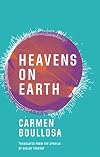
The Publisher Says: Three narrators from different historical eras engage in preserving history in Heavens on Earth. As her narrators sense each other and interact through time and space, Boullosa challenges the primacy of recorded history and asserts literature and language's power to transcend the barriers of time and space in vivid, urgent prose.
Carmen Boullosa is one of Mexico's leading novelists, poets, and playwrights. Her most recent novel The Great Theft (Deep show more Vellum, 2014) was shortlisted for the PEN Translation Prize, nominated for the International Dublin Literary Award, and won Typographical Era's Translation Award. She lives in Brooklyn, New York, and Mexico City, Mexico.
I RECEIVED A DRC FROM THE PUBLISHER VIA EDELWEISS+. THANK YOU.
My Review: Deeply, deeply examines our modern-US obsession with The Past. Every excursion into The Past requires acts of translation. You and I, reading and writing on our devices, pushing our words into strangers' faces as a matter of course (possibly detrimentally to discourse) can't know what anyone in The Past really meant to say. We can see the words. We can, but mostly won't bother to, study the time and thus learn some cultural facts that help us get a hint. But, like the radical fascist folk who assert their politicosocial ideas as representing those of the US "founders," we're translating words, not recovering facts. Author Boullosa uses multiple narrators in multiple timelines to examine the role of History and Tradition as anchors, as dead weights, and as foundations. What even is The Past, a key question for each narrator. The same events look hugely different to people with different perspectives.
I am usually a bit iffy on this narrative technique. In this case, I lapped it up because Estela in the present, Learo in the future, and Don Hernando in the past each explore this story's central thesis, the nature of narrative in shaping culture, without resorting to speeches. No one says, "if they/we had only known" or the equivalent. They tell us, their readers, the reality they live in as seen from their differing levels of privilege granted to each one's identity. Fair warning, there is frank...but uncelebrated...homophobia, colorism, and racism. They are facts of the past and present. The future, well...we won't know for a while, will we?
The narrative conceit is of a manuscript written in Latin when the Conquest was within living memory. Its author's a gay man in Holy Orders; not so shocking an idea for the time. It falls into the hands of a present-day scholar, Estela, who translates it (into Spanish). She is living in the failing Western country, Mexico. She annotates the manuscript with an academic eye on the roots of the present-day struggles in the clueless past, intending to make it public. Somehow the manuscript reaches Learo living in a wildly posthuman, post-scarcity future where The Past is not discussed, not heeded, not mined for clues or used as either guide or horrible warning. Learo's narrative is, unsurprisingly, polyphonic with Don Hernando's account of how the Conquest violently and cruelly mangled the memories and the bodies of the dwellers in "New Spain," an utterly invented and brutally enforced culture. As is always the case in examples of conquest, the ordinary person is required to graft a new identity onto their lifelong one, an intimate violation of self that begets more and more violence.
It is a stunning psychic violence that pollutes every facet of the future.
Yet without an honest reckoning with it, the present is unmoored, is prone to equal, congruent violence. The future that creates is...chilling. I'll say, for fear of spoilers, what Author Boullosa says: this novel explores "the prohibition of memory that will take us to the abolition of language, the repercussions of which the reader will witness."
"Repercussions" might be the best-translated word Shelby Vincent chose.
This novel, in its translation from Spanish to English, offers a far more trenchant riposte to foolhardy US politicosocial "essentialism" than a dozen more "factual" analyses could. A story does something an analysis can't: Personalizes the reverberations of actions taken or not taken, of salvations offered and denied. How we read this novel, in English, is already a thing apart from how it was written in Spanish. Its echoes of Anglophone sensation Cloud Atlas will be seen by the myriads of y'all who read (and mostly loved) that timeweaving narrative. More recently we had the multiversal Everything Everywhere All at Once pursuing the layering of causality in its own specially fraught way. The topic is a delightfully rich one, offering many opportunities to contemplate the story, its message, its execution, and its presentation in an enhanced framework. The effort of following the story through its curlicues and oddly bent pathways is richly repaid.
What effort you make at translation is always a life-altering thing. Reader be aware. You will leave a different soul than the one you entered as. show less
The Publisher Says: Three narrators from different historical eras engage in preserving history in Heavens on Earth. As her narrators sense each other and interact through time and space, Boullosa challenges the primacy of recorded history and asserts literature and language's power to transcend the barriers of time and space in vivid, urgent prose.
Carmen Boullosa is one of Mexico's leading novelists, poets, and playwrights. Her most recent novel The Great Theft (Deep show more Vellum, 2014) was shortlisted for the PEN Translation Prize, nominated for the International Dublin Literary Award, and won Typographical Era's Translation Award. She lives in Brooklyn, New York, and Mexico City, Mexico.
I RECEIVED A DRC FROM THE PUBLISHER VIA EDELWEISS+. THANK YOU.
My Review: Deeply, deeply examines our modern-US obsession with The Past. Every excursion into The Past requires acts of translation. You and I, reading and writing on our devices, pushing our words into strangers' faces as a matter of course (possibly detrimentally to discourse) can't know what anyone in The Past really meant to say. We can see the words. We can, but mostly won't bother to, study the time and thus learn some cultural facts that help us get a hint. But, like the radical fascist folk who assert their politicosocial ideas as representing those of the US "founders," we're translating words, not recovering facts. Author Boullosa uses multiple narrators in multiple timelines to examine the role of History and Tradition as anchors, as dead weights, and as foundations. What even is The Past, a key question for each narrator. The same events look hugely different to people with different perspectives.
I am usually a bit iffy on this narrative technique. In this case, I lapped it up because Estela in the present, Learo in the future, and Don Hernando in the past each explore this story's central thesis, the nature of narrative in shaping culture, without resorting to speeches. No one says, "if they/we had only known" or the equivalent. They tell us, their readers, the reality they live in as seen from their differing levels of privilege granted to each one's identity. Fair warning, there is frank...but uncelebrated...homophobia, colorism, and racism. They are facts of the past and present. The future, well...we won't know for a while, will we?
The narrative conceit is of a manuscript written in Latin when the Conquest was within living memory. Its author's a gay man in Holy Orders; not so shocking an idea for the time. It falls into the hands of a present-day scholar, Estela, who translates it (into Spanish). She is living in the failing Western country, Mexico. She annotates the manuscript with an academic eye on the roots of the present-day struggles in the clueless past, intending to make it public. Somehow the manuscript reaches Learo living in a wildly posthuman, post-scarcity future where The Past is not discussed, not heeded, not mined for clues or used as either guide or horrible warning. Learo's narrative is, unsurprisingly, polyphonic with Don Hernando's account of how the Conquest violently and cruelly mangled the memories and the bodies of the dwellers in "New Spain," an utterly invented and brutally enforced culture. As is always the case in examples of conquest, the ordinary person is required to graft a new identity onto their lifelong one, an intimate violation of self that begets more and more violence.
It is a stunning psychic violence that pollutes every facet of the future.
Yet without an honest reckoning with it, the present is unmoored, is prone to equal, congruent violence. The future that creates is...chilling. I'll say, for fear of spoilers, what Author Boullosa says: this novel explores "the prohibition of memory that will take us to the abolition of language, the repercussions of which the reader will witness."
"Repercussions" might be the best-translated word Shelby Vincent chose.
This novel, in its translation from Spanish to English, offers a far more trenchant riposte to foolhardy US politicosocial "essentialism" than a dozen more "factual" analyses could. A story does something an analysis can't: Personalizes the reverberations of actions taken or not taken, of salvations offered and denied. How we read this novel, in English, is already a thing apart from how it was written in Spanish. Its echoes of Anglophone sensation Cloud Atlas will be seen by the myriads of y'all who read (and mostly loved) that timeweaving narrative. More recently we had the multiversal Everything Everywhere All at Once pursuing the layering of causality in its own specially fraught way. The topic is a delightfully rich one, offering many opportunities to contemplate the story, its message, its execution, and its presentation in an enhanced framework. The effort of following the story through its curlicues and oddly bent pathways is richly repaid.
What effort you make at translation is always a life-altering thing. Reader be aware. You will leave a different soul than the one you entered as. show less
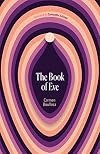
This is a feminist re-telling of the Book of Genesis. Told from Eve’s perspective, it challenges the Biblical patriarchal narrative.
According to Eve, she, not Adam, is the first human; Eden is not a paradise; the knowledge gained by her eating a fruit is essential, not damning; Abel, not Cain, is the villain; Noah never builds an ark; and the Tower of Babel is destroyed by an angry Earth. Eve’s story, however, is subverted by Adam. Jealous of Eve, he distorts the truth of creation and show more places himself at the centre and establishes a religion which sidelines Eve and all women.
Eve’s depiction of Eden is interesting. She describes it as bland and “a tepid emptiness, a void.” It is a place with “nothing good, nothing bad, no clothes, no scent, no taste, no words.” Leaving Eden allows her to realize the beauty of the world and to discover fire, gastronomy, pleasure, and words. Eve claims that “The apple was the key that set us free. It made us understand ourselves, making us who we were.” She states, “the unbitten apple that hung from the branch of the fruit tree would otherwise have rotted. I gave it meaning because I enjoyed it, and I gave us meaning, too: feelings, intuition, action, desire, pleasure.” Cain argues with his father that “’knowledge is a good thing, life is good, how can you say that what Eve has given us is bad?’”
Eve is a fully-developed character, though at times she seems almost saintly. She is the narrator so of course her flaws are not highlighted, though she does castigate herself for remaining silent: “I never should have held my tongue when I had things to say. Never.” It is reasonable to question how reliable a narrator she is: certainly there is a lack of nuance in the depiction of Adam. Because she experiences pleasure “so effortlessly and simply,” she believes Adam suffers from “clitoris envy. Males always have it, that unspoken, unexpressed envy of the clitoris.” In addition, “His belly always lacked what he needed to be able to give birth.” This jealousy, she asserts, is the foundation of his religiosity and his spiteful concocting of tales in which Eve is “’just the offshoot of a piece of [man], an afterthought, worthless.’” Since we are not privy to his thoughts and feelings, as we are to Eve’s, Adam’s violence and bizarre behaviour sometimes seem to come out of nowhere.
Just as Eve emphasizes that she is the mother of all, she suggests that Adam is responsible for all the mistreatment of women: “with his absurd stories Adam planted the seed, ignited the flame that made raping women a right, a necessity, a pleasure, and even a joy, and justified the murder of more than one – beautiful but nameless – only on account of their gender.” In the end, she states that “being male became equated with causing pain,” all because “They feared us because we could give life . . . they feared our red lips and our beauty, they feared their attraction to us and the boundless pleasure we experienced.” A litany of rules which women have to follow is presented: “We lost half of our names. We had no right to own property. Children were named after their fathers even though [women] were still responsible for looking after them. They used sharp stones to excise the clitoris . . . They made up all sorts of rules about good manners and bad manners. They imposed them on all our households. . . . girls –with or without clitorises – weren’t allowed to attend school. . . . And if they went out in the streets, it was never without a chaperone, and the girls and their mothers had to veil their bodies and faces.”
Besides being critical of men who place themselves above women, the book criticizes humans’ treatment of the planet. Earth is angry at the arrival of humans: “’What am I going to do with so many people living off of me!’” Earth and He (God?) arrive at an agreement so He would help Earth to produce enough. The agreement also defines “the unforgiveable exceptions to the natural order of things . . . any group that cursed, slandered, or plundered the Earth senselessly would be subjected to lethal heatwaves and freezes.” As the world becomes more populated, “Earth was even angrier. What she had known from the beginning was proving true: the hordes of humanity would strip her bare. Arrogant, they continued to build upon her surface, ignoring her.”
Despite its serious themes, there are some humourous touches. Who cannot smile at Eve’s comment that “Adam, who was aware of our nakedness, hid among some plants with very small leaves” or Adam and Eve’s attempts to procreate?
Some readers will find this an uncomfortable read. It questions the existence of God. Eve describes only an abstract Thunder who “expressed itself like falling rock, without words, without verbs, without adjectives; like long oooohs and aaaahs emanating from a fearsome throat, like the blows of an axe or shovel or hammer; but not guttural like the sounds a mouth makes; more like a weapon, or gunpowder.”
Though sometimes heavy-handed in its approach, the book does emphasize the power of words and stories: “The stories Adam invented had triumphed. And therein lies the power of the word: it shapes mankind, their customs, their communities. Words don’t just say things, they do things.” Certainly the novel should leave readers thinking about how the story in the Book of Genesis, definitely not written by women, has shaped the lives of women.
Note: Please check out my reader's blog (https://schatjesshelves.blogspot.com/) and follow me on Twitter (https://twitter.com/DCYakabuski) show less
According to Eve, she, not Adam, is the first human; Eden is not a paradise; the knowledge gained by her eating a fruit is essential, not damning; Abel, not Cain, is the villain; Noah never builds an ark; and the Tower of Babel is destroyed by an angry Earth. Eve’s story, however, is subverted by Adam. Jealous of Eve, he distorts the truth of creation and show more places himself at the centre and establishes a religion which sidelines Eve and all women.
Eve’s depiction of Eden is interesting. She describes it as bland and “a tepid emptiness, a void.” It is a place with “nothing good, nothing bad, no clothes, no scent, no taste, no words.” Leaving Eden allows her to realize the beauty of the world and to discover fire, gastronomy, pleasure, and words. Eve claims that “The apple was the key that set us free. It made us understand ourselves, making us who we were.” She states, “the unbitten apple that hung from the branch of the fruit tree would otherwise have rotted. I gave it meaning because I enjoyed it, and I gave us meaning, too: feelings, intuition, action, desire, pleasure.” Cain argues with his father that “’knowledge is a good thing, life is good, how can you say that what Eve has given us is bad?’”
Eve is a fully-developed character, though at times she seems almost saintly. She is the narrator so of course her flaws are not highlighted, though she does castigate herself for remaining silent: “I never should have held my tongue when I had things to say. Never.” It is reasonable to question how reliable a narrator she is: certainly there is a lack of nuance in the depiction of Adam. Because she experiences pleasure “so effortlessly and simply,” she believes Adam suffers from “clitoris envy. Males always have it, that unspoken, unexpressed envy of the clitoris.” In addition, “His belly always lacked what he needed to be able to give birth.” This jealousy, she asserts, is the foundation of his religiosity and his spiteful concocting of tales in which Eve is “’just the offshoot of a piece of [man], an afterthought, worthless.’” Since we are not privy to his thoughts and feelings, as we are to Eve’s, Adam’s violence and bizarre behaviour sometimes seem to come out of nowhere.
Just as Eve emphasizes that she is the mother of all, she suggests that Adam is responsible for all the mistreatment of women: “with his absurd stories Adam planted the seed, ignited the flame that made raping women a right, a necessity, a pleasure, and even a joy, and justified the murder of more than one – beautiful but nameless – only on account of their gender.” In the end, she states that “being male became equated with causing pain,” all because “They feared us because we could give life . . . they feared our red lips and our beauty, they feared their attraction to us and the boundless pleasure we experienced.” A litany of rules which women have to follow is presented: “We lost half of our names. We had no right to own property. Children were named after their fathers even though [women] were still responsible for looking after them. They used sharp stones to excise the clitoris . . . They made up all sorts of rules about good manners and bad manners. They imposed them on all our households. . . . girls –with or without clitorises – weren’t allowed to attend school. . . . And if they went out in the streets, it was never without a chaperone, and the girls and their mothers had to veil their bodies and faces.”
Besides being critical of men who place themselves above women, the book criticizes humans’ treatment of the planet. Earth is angry at the arrival of humans: “’What am I going to do with so many people living off of me!’” Earth and He (God?) arrive at an agreement so He would help Earth to produce enough. The agreement also defines “the unforgiveable exceptions to the natural order of things . . . any group that cursed, slandered, or plundered the Earth senselessly would be subjected to lethal heatwaves and freezes.” As the world becomes more populated, “Earth was even angrier. What she had known from the beginning was proving true: the hordes of humanity would strip her bare. Arrogant, they continued to build upon her surface, ignoring her.”
Despite its serious themes, there are some humourous touches. Who cannot smile at Eve’s comment that “Adam, who was aware of our nakedness, hid among some plants with very small leaves” or Adam and Eve’s attempts to procreate?
Some readers will find this an uncomfortable read. It questions the existence of God. Eve describes only an abstract Thunder who “expressed itself like falling rock, without words, without verbs, without adjectives; like long oooohs and aaaahs emanating from a fearsome throat, like the blows of an axe or shovel or hammer; but not guttural like the sounds a mouth makes; more like a weapon, or gunpowder.”
Though sometimes heavy-handed in its approach, the book does emphasize the power of words and stories: “The stories Adam invented had triumphed. And therein lies the power of the word: it shapes mankind, their customs, their communities. Words don’t just say things, they do things.” Certainly the novel should leave readers thinking about how the story in the Book of Genesis, definitely not written by women, has shaped the lives of women.
Note: Please check out my reader's blog (https://schatjesshelves.blogspot.com/) and follow me on Twitter (https://twitter.com/DCYakabuski) show less
Rating: 3.75* of five
The Publisher Says: What if everything they’ve told us about the Garden was the other way around? Faced with what appears to be an apocryphal manuscript containing ten books and 91 passages, Eve decides to tell her version: she was neither created from Adam's rib, nor is it exact that she was expelled by the apple and the serpent, nor is story they tell of Abel and Cain true, neither that of the Flood, nor that of the Tower of Babel...
With brilliant prose, Carmen show more Boullosa gives a twist to the book of Genesis to dismantle the male figure and rebuild the world, the origin of gastronomy, the domestication of animals, the cultivation of land and pleasure, through the feminine gaze. Based on this exploration, sometimes fun and other times painful, The Book of Eve takes a tour through the stories they’ve told us and which have helped to foster (and cement) the absurd idea that woman is the companion, complement, and even accessory to man, which opens the door to criminal violence against women. Boullosa refutes and breaks them in this feminist novel, foundational and brazen.
I RECEIVED A DRC FROM THE PUBLISHER VIA EDELWEISS+. THANK YOU.
My Review: Feminist retelling of Adam and Eve from Genesis.
As one might expect I was no fan of the patriarchal version, it being part of a religious tradition that I detest. I can't say that flipping the script to make it clear that Eve was hard done by in the Abrahamic original, and offering an Eve-centered corrective, was particularly agreeable, either; the entire religious framework is just so utterly nonsensical that making a shift in viewpoint doesn't make it less ridiculous.
I've seen significant consumer-review criticism of Author Boullosa (of Heavens on Earth fame) for sounding angry and anti-man in this retelling of the ur-text of misogyny. Well, honestly! How silly of the woman to feel some kinda way about a story that's been used for literal millennia to bludgeon women into submission to men in god's name? Outrageous!
The storytelling volume is indeed turned to eleven of ten, and the weird stop on the organ is out all the way. Eve reclaims the Ark myth as her own (which makes a lot of sense TBH) and has a really, um, off-center story of how we all came to have those indispensible things, the anus. Have to read it to find out. But the fact is, neither Adam nor Eve as created being would have one...or a navel...as they never gestated so never grew 'em. What the hell did I just read was my most frequent thought as I kept reading this uncorked, vociferous Eve's take on the stories I value so little.
So, on the one hand, yes indeed this woman's take on a man's story of why women should submit to him is plenty angry, on the other hand it always makes a story more interesting and more relevant to look at it upside down. Author Boullosa is a dab hand at making her characters sound like they are in the room with you. I found this storytelling voice compelling, angry, and Eve herself resolutely unwilling to be a good girl and quiet down. Thank goodness, though in spite of her absence of sham modesty Eve never addressed my most burning Biblical question:
Can anyone explain to me why the myth got started the Eve was created from Adam's rib, when we've all got the same number of these bones? Clearly it makes more sense...insofar as any of this guff does...to have her created from his baculum, since humans ain't got those no more. show less
The Publisher Says: What if everything they’ve told us about the Garden was the other way around? Faced with what appears to be an apocryphal manuscript containing ten books and 91 passages, Eve decides to tell her version: she was neither created from Adam's rib, nor is it exact that she was expelled by the apple and the serpent, nor is story they tell of Abel and Cain true, neither that of the Flood, nor that of the Tower of Babel...
With brilliant prose, Carmen show more Boullosa gives a twist to the book of Genesis to dismantle the male figure and rebuild the world, the origin of gastronomy, the domestication of animals, the cultivation of land and pleasure, through the feminine gaze. Based on this exploration, sometimes fun and other times painful, The Book of Eve takes a tour through the stories they’ve told us and which have helped to foster (and cement) the absurd idea that woman is the companion, complement, and even accessory to man, which opens the door to criminal violence against women. Boullosa refutes and breaks them in this feminist novel, foundational and brazen.
I RECEIVED A DRC FROM THE PUBLISHER VIA EDELWEISS+. THANK YOU.
My Review: Feminist retelling of Adam and Eve from Genesis.
As one might expect I was no fan of the patriarchal version, it being part of a religious tradition that I detest. I can't say that flipping the script to make it clear that Eve was hard done by in the Abrahamic original, and offering an Eve-centered corrective, was particularly agreeable, either; the entire religious framework is just so utterly nonsensical that making a shift in viewpoint doesn't make it less ridiculous.
I've seen significant consumer-review criticism of Author Boullosa (of Heavens on Earth fame) for sounding angry and anti-man in this retelling of the ur-text of misogyny. Well, honestly! How silly of the woman to feel some kinda way about a story that's been used for literal millennia to bludgeon women into submission to men in god's name? Outrageous!
The storytelling volume is indeed turned to eleven of ten, and the weird stop on the organ is out all the way. Eve reclaims the Ark myth as her own (which makes a lot of sense TBH) and has a really, um, off-center story of how we all came to have those indispensible things, the anus. Have to read it to find out. But the fact is, neither Adam nor Eve as created being would have one...or a navel...as they never gestated so never grew 'em. What the hell did I just read was my most frequent thought as I kept reading this uncorked, vociferous Eve's take on the stories I value so little.
So, on the one hand, yes indeed this woman's take on a man's story of why women should submit to him is plenty angry, on the other hand it always makes a story more interesting and more relevant to look at it upside down. Author Boullosa is a dab hand at making her characters sound like they are in the room with you. I found this storytelling voice compelling, angry, and Eve herself resolutely unwilling to be a good girl and quiet down. Thank goodness, though in spite of her absence of sham modesty Eve never addressed my most burning Biblical question:
Can anyone explain to me why the myth got started the Eve was created from Adam's rib, when we've all got the same number of these bones? Clearly it makes more sense...insofar as any of this guff does...to have her created from his baculum, since humans ain't got those no more. show less
"No one in this world who does not steal can live in it. Why do you think the judges and officers of the law hate us so? Sometimes they banish us, sometimes they have us whipped, and sometimes hanged, even though our saint's day may yet not have arrived....It is because they do not want any other thieves besides themselves and their underlings around them. What keeps us free more than anything else is an ample stock of clever guile." --Quevedo, La vida del Buscon.
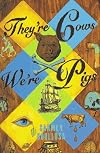
This quote aptly starts off show more Carmen Boullosa's fast paced and rollicking tale of pirate life in the Carribean Sea during the 17th century. From reading, it seems the other thing that kept the Brethren of the Coast free was the absence of women from the island of Tortuga. Interestingly, it seems that the brethren were able to live communally and share everything until women and property crept onto the island. Once the first brother bought a wife, it was all over. As Boullosa says in her Author's Note, "In its series of adventures, this novel is then a laboratory of things feminine in absentia as much as it is a reminiscence of men who rebelled against a cruel order, and outlaw order, and ended by being as cruel and outside the law as the order they detested."
For me there was an eerie parallel between Smeeks, the pirate's physician, and the military doctors in Iraq who allegedly "oversaw" torture procedures. Both can apparently dutifully value and preserve life with one persona and the with another persona witness and participate in the degradation, torture and loss of life. As with many of the other latin american writers I've read, the point of view or persona of the narrator continually shifts in this book so that if you get reading at too great a clip one can easily get lost.
Overall, this was a quick and enjoyable read. I will be looking for other books by Boullosa as they become available in translation. show less
This quote aptly starts off show more Carmen Boullosa's fast paced and rollicking tale of pirate life in the Carribean Sea during the 17th century. From reading, it seems the other thing that kept the Brethren of the Coast free was the absence of women from the island of Tortuga. Interestingly, it seems that the brethren were able to live communally and share everything until women and property crept onto the island. Once the first brother bought a wife, it was all over. As Boullosa says in her Author's Note, "In its series of adventures, this novel is then a laboratory of things feminine in absentia as much as it is a reminiscence of men who rebelled against a cruel order, and outlaw order, and ended by being as cruel and outside the law as the order they detested."
For me there was an eerie parallel between Smeeks, the pirate's physician, and the military doctors in Iraq who allegedly "oversaw" torture procedures. Both can apparently dutifully value and preserve life with one persona and the with another persona witness and participate in the degradation, torture and loss of life. As with many of the other latin american writers I've read, the point of view or persona of the narrator continually shifts in this book so that if you get reading at too great a clip one can easily get lost.
Overall, this was a quick and enjoyable read. I will be looking for other books by Boullosa as they become available in translation. show less
Lists
Awards


You May Also Like


Associated Authors
Statistics
- Works
- 50
- Also by
- 8
- Members
- 855
- Popularity
- #29,931
- Rating
- 3.8
- Reviews
- 13
- ISBNs
- 130
- Languages
- 6