
Roger Luckhurst
Author of Late Victorian Gothic Tales
About the Author
Roger Luckhurst is Professor of Modern Literature, Birkbeck College, University of London. He is a specialist in science fiction and the Gothic. His many books include The Angle between Two Walk: The Fiction of J.G. Ballard (1997) and Science Fiction: A Cultural History (2005). He has also edited show more several Oxford World's Classics, including H.G. Wells' The time Machine (2017). show less
Works by Roger Luckhurst
Cementerios, tumbas y sepulturas 2 copies
The Time Machine 1 copy
Associated Works
Dr. Jekyll and Mr. Hyde and Other Tales [Oxford World's Classics] (2006) — Editor; Introduction; Anmerkungen — 709 copies, 5 reviews
The Ghost Stories of M.R. James (British Library Hardback Classics) (2018) — Editor — 56 copies, 1 review
Tagged
Common Knowledge
- Birthdate
- 1967
- Gender
- male
- Occupations
- professor (modern literature)
- Organizations
- University of London, Birbeck (Professor ∙ Modern and Contemporary Literature)
Columbia University (Distinguished Visiting Professor, 20 16) - Awards and honors
- IAFA Distinguished Scholarship (2008)
- Nationality
- UK
- Map Location
- UK
Members
Reviews
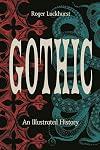
Roger Luckhurst, an academic specialising in the subject, has produced a lush coffee table book exploring all aspects of the Gothic genre in a thematic way. I found it immensely useful in helping me to find a few new sources and allowing me to define what it all meant to me.
It is not a chronological history by any means (there are plenty of those on the market) but something that weaves its way between trying to recreate the mood of the Gothic in all its forms and (in a rather contradictory show more way) reveal something of the current academic approach to the subject.
If I have a criticism it is that, by the end, it seems to have become something of a catalogue or an unconventional cultural encyclopedia. The definition of Gothic becomes stretched to its limits to encompass all that the academic imperialism of cultural studies can possibly seize for itself.
Luckhurst strains at times to be inclusive as is the current fashion and to claim as much as possible for the genre. He spreads himself widely (and usefully) to introduce not just literary manifestations but alleged cinematic, folklore, historical and intellectual ones. There is little restraint.
Gothic gets stretched far into Horror. Although Horror's roots are certainly in the genre, it is hard to consider something like John Halkin's 'Slither' or the Godzilla movies as truly Gothic. After all, you would not include all Science Fiction on the basis of its origins in 'Frankenstein'.
Similarly, the current sly academic appropriation of almost any issue into the genre and the moonlighting of academic minds as 'writers' gives us cultural studies and politics masquerading as the Gothic, appropriating the form to provide what is often an anti-Gothic substance.
The whole point of the Gothic is that it derives from the Burkean sublime and from the psychic handling of the irrational (which is why the uncanny is very much part of it). Thinking it out and creating reasoned counter-rationalities to meet current ideological needs is not Gothic.
Anti-colonialism, environmentalism, feminism, transgenderism and so on and so forth use the Gothic but are not Gothic which only stands as an expression of actual primal fears rather than stand-offish implicitly outraged commentary on the problems of social existence.
I took the time to explore the academic world of Gothic studies and found a cottage industry busy applying the Gothic to anything within reach like arms traders looking for small wars and hoping for the big one. Who pays for all this in the age of food banks is worth asking.
So, while a very useful, entertaining and interesting book, a bit of a health warning is due. By trying to be encyclopedic about as much of what the term Gothic can take, Luckhurst has taken us into the expanding territories of academic imperialism and even contemporary ideology.
Having said that, it is sumptuously illustrated. It will give a great deal of dark pleasure. Notwithstanding criticisms, it is a great place to get a grounding in the subject and then go down the highways and byways that may interest you. All in all, good value. show less
It is not a chronological history by any means (there are plenty of those on the market) but something that weaves its way between trying to recreate the mood of the Gothic in all its forms and (in a rather contradictory show more way) reveal something of the current academic approach to the subject.
If I have a criticism it is that, by the end, it seems to have become something of a catalogue or an unconventional cultural encyclopedia. The definition of Gothic becomes stretched to its limits to encompass all that the academic imperialism of cultural studies can possibly seize for itself.
Luckhurst strains at times to be inclusive as is the current fashion and to claim as much as possible for the genre. He spreads himself widely (and usefully) to introduce not just literary manifestations but alleged cinematic, folklore, historical and intellectual ones. There is little restraint.
Gothic gets stretched far into Horror. Although Horror's roots are certainly in the genre, it is hard to consider something like John Halkin's 'Slither' or the Godzilla movies as truly Gothic. After all, you would not include all Science Fiction on the basis of its origins in 'Frankenstein'.
Similarly, the current sly academic appropriation of almost any issue into the genre and the moonlighting of academic minds as 'writers' gives us cultural studies and politics masquerading as the Gothic, appropriating the form to provide what is often an anti-Gothic substance.
The whole point of the Gothic is that it derives from the Burkean sublime and from the psychic handling of the irrational (which is why the uncanny is very much part of it). Thinking it out and creating reasoned counter-rationalities to meet current ideological needs is not Gothic.
Anti-colonialism, environmentalism, feminism, transgenderism and so on and so forth use the Gothic but are not Gothic which only stands as an expression of actual primal fears rather than stand-offish implicitly outraged commentary on the problems of social existence.
I took the time to explore the academic world of Gothic studies and found a cottage industry busy applying the Gothic to anything within reach like arms traders looking for small wars and hoping for the big one. Who pays for all this in the age of food banks is worth asking.
So, while a very useful, entertaining and interesting book, a bit of a health warning is due. By trying to be encyclopedic about as much of what the term Gothic can take, Luckhurst has taken us into the expanding territories of academic imperialism and even contemporary ideology.
Having said that, it is sumptuously illustrated. It will give a great deal of dark pleasure. Notwithstanding criticisms, it is a great place to get a grounding in the subject and then go down the highways and byways that may interest you. All in all, good value. show less
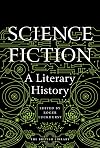
The British Library has long since turned entrepreneurial with extensive and relatively cheap collections of classic British crime novels and collections of weird tales. Its science fiction efforts have not paid off so well, possibly because the genre ages far too fast for the general reader.
The cosy mystery set in a nostalgic English past and the frisson of the weird and the occult still appeal, as we know from re-runs of tales of Hercule Poirot and the fashion for folk horror, but the show more dystopianism and clunky technologies of British golden age science fiction much less so.
If the Science Fiction Classics series seems to have died a death (I am glad now that I snapped up three of them), the experiment left behind Luckhurst's literary history of the genre (2017) which is very much above the average for this sort of general guide.
Eight relatively short yet full and well written essays take us chronologically from the precursors of the genre through to the current century in an orderly way that is surprisingly seamless albeit with somewhat eclectic further reading suggestions.
The first half of the story through to the American-dominated Golden Age is well known although there are insights that make the tale fresh. It is the second half that adds most value - the curious dialectic between 'conservative' and 'new wave' forms of science fiction and its unfolding.
Luckhurst's own contribution on the late Victorian and Edwardian era manages to introduce H. Rider Haggard without patronising him which is a rare pleasure nowadays. He succinctly contextualises H. G. Wells and explains why he is important.
Caroline Edwards of Birkbeck also gives us a solid presentation of utopianism and dystopianism in the first half of the twentieth century including pre-Soviet and Soviet Russian attempts to imagine the future under communist ideological conditions.
The following chapter on pulp science fiction, mostly in the US, by Mark Bould is precisely how such history should be done, dealing with issues of war, politics, race, feminism and the market on terms that respect the world of the work rather than imposing anything on that world from today.
If there is a fault to the book it is that editorial direction enabled the subsequent story of ideological wars within post war science fiction to be told well but failed to stop those wars infecting some of the contributions, especially towards the end. Some contributors edged into implied polemic.
Given that the worst offenders are American-based contributors (two of them female academics) then, as a British reader, I came away a little depressed at the insistent over-egging of diversity and the obvious preference for progressive examples of science fiction at the expense of its complexity.
Ideology could be seen triumphing over objectivity. Of course, the final contribution must have the completely unnecessary to us (but necessary to our anxious and troubled university elite) reference to Brexit and 2016 as well as the usual over-excitable references to climate change.
We just have to live with this now, much as older wise heads once had to live with the hegemony of the nonsense of Social Darwinism in the late nineteenth century and a pig-headed Marxism in the middle of the last century. But it does become tiresome after a while.
Nevertheless, if Luckhurst is a little lazy in not weeding out these inherent prejudices, and the propensity of one contributor just to list diversity-friendly story lines, he still manages to produce an excellent guide which teaches a lot even while we grit our teeth in places.
Where the book scores is in linking the genre to modes of production - turn of the century periodicals, the fan magazines of the post-war period, the rise of the book and then the blockbuster - as well as to events outside the often closed world of the creators.
Gerry Canavan, who comes under my general definition of 'cause of gritted teeth', nevertheless makes an excellent point in his opening to his contribution that little predicted by science fiction ever actually happened as proposed. Perhaps he should have taken this on board in the rest of his essay.
Science fiction, heavily anglophone in its historical orientation despite attempts to globalise or 'indigenise' it by the diversity crowd, cannot be divorced from its environment. It does not dictate to society but reflects its rebellions, fears and anxieties (liberal) or aspirations (right wing or socialist).
It is also dynamic. Even if it rarely tells us what the world is actually like or going to be like, its attempt to do so can make people behave as if they may have the power to reshape the world on its lines. The cash-fuelled fantasies of Elon Musk can be linked directly to his reading of Heinlein.
Science fiction is thus very important culturally even if it quickly becomes redundant having left behind only a few canonical examples. It is not the truth of the matter but its noble lies and fantasy are culture-shaping. Hence the concern to capture it for any currently prevailing ideology.
The struggles (well explained in this book) between the American version of the 'New Wave' (culturally progressive) and the determined traditionalism of the American Right, economically libertarian and yet militaristic and progressive in a very different sense, are indicative of this.
The British 'New Wave' was more introvert and literary and much less interested in politics but, proportionately, unable to build a large mass base. Here was a common situation where a short period of intense innovation influenced much of what followed but could not sustain itself for long.
At a certain point, we have a synthesis. The passions subside but the struggle meant that, instead of science fiction reflecting a social consensus of reader requirements, it became a matter of self-conscious 'auteurs' and then of attempts to impose an implicit world view that spoke to anxieties.
This has always been a part of science fiction - although Wells became duller the more he became didactic - but the threat of nuclear war and the experience of the individual (which writers tend to accentuate as type) in an age of conformity created the seeds of dissent that became sixties rebellion.
As the decades have rolled on, the politics of identity, especially feminism, and fear of what is now called techno-feudalism and the machines (leading to the hysteria around the coming 'singularity') have driven tales of science fantasy. Eco-fears have now added to the mix.
Cyberpunk remains an excellent case study of a writer with little practical knowledge of what he was writing about (William Gibson) using a fertile imagination to extrapolate reality into a science fantasy that came to define what many people would think was reality or a coming reality.
Still (although you might not know it from this book), not everything is about ideology and anxiety. There are still solid old-fashioned space operas out there as well as thrillers with a strong science fiction coating (Michael Crichton is not mentioned which is odd and yet in character with the book).
We must not make the mistake (as some contributors in this book seem to do) of thinking what science fiction should be and then reading back its story in order to make it what we think it ought to have been. A literary history is useful but science fiction is sociology as much as literature.
Nevertheless this is a worthy and useful addition to the mounting numbers of popular academic books on the genre since Amis and Alldiss had attempted to create the first definitions and canons. There are discoveries and ideas in here. The book is also an easy and relaxed read. show less
The cosy mystery set in a nostalgic English past and the frisson of the weird and the occult still appeal, as we know from re-runs of tales of Hercule Poirot and the fashion for folk horror, but the show more dystopianism and clunky technologies of British golden age science fiction much less so.
If the Science Fiction Classics series seems to have died a death (I am glad now that I snapped up three of them), the experiment left behind Luckhurst's literary history of the genre (2017) which is very much above the average for this sort of general guide.
Eight relatively short yet full and well written essays take us chronologically from the precursors of the genre through to the current century in an orderly way that is surprisingly seamless albeit with somewhat eclectic further reading suggestions.
The first half of the story through to the American-dominated Golden Age is well known although there are insights that make the tale fresh. It is the second half that adds most value - the curious dialectic between 'conservative' and 'new wave' forms of science fiction and its unfolding.
Luckhurst's own contribution on the late Victorian and Edwardian era manages to introduce H. Rider Haggard without patronising him which is a rare pleasure nowadays. He succinctly contextualises H. G. Wells and explains why he is important.
Caroline Edwards of Birkbeck also gives us a solid presentation of utopianism and dystopianism in the first half of the twentieth century including pre-Soviet and Soviet Russian attempts to imagine the future under communist ideological conditions.
The following chapter on pulp science fiction, mostly in the US, by Mark Bould is precisely how such history should be done, dealing with issues of war, politics, race, feminism and the market on terms that respect the world of the work rather than imposing anything on that world from today.
If there is a fault to the book it is that editorial direction enabled the subsequent story of ideological wars within post war science fiction to be told well but failed to stop those wars infecting some of the contributions, especially towards the end. Some contributors edged into implied polemic.
Given that the worst offenders are American-based contributors (two of them female academics) then, as a British reader, I came away a little depressed at the insistent over-egging of diversity and the obvious preference for progressive examples of science fiction at the expense of its complexity.
Ideology could be seen triumphing over objectivity. Of course, the final contribution must have the completely unnecessary to us (but necessary to our anxious and troubled university elite) reference to Brexit and 2016 as well as the usual over-excitable references to climate change.
We just have to live with this now, much as older wise heads once had to live with the hegemony of the nonsense of Social Darwinism in the late nineteenth century and a pig-headed Marxism in the middle of the last century. But it does become tiresome after a while.
Nevertheless, if Luckhurst is a little lazy in not weeding out these inherent prejudices, and the propensity of one contributor just to list diversity-friendly story lines, he still manages to produce an excellent guide which teaches a lot even while we grit our teeth in places.
Where the book scores is in linking the genre to modes of production - turn of the century periodicals, the fan magazines of the post-war period, the rise of the book and then the blockbuster - as well as to events outside the often closed world of the creators.
Gerry Canavan, who comes under my general definition of 'cause of gritted teeth', nevertheless makes an excellent point in his opening to his contribution that little predicted by science fiction ever actually happened as proposed. Perhaps he should have taken this on board in the rest of his essay.
Science fiction, heavily anglophone in its historical orientation despite attempts to globalise or 'indigenise' it by the diversity crowd, cannot be divorced from its environment. It does not dictate to society but reflects its rebellions, fears and anxieties (liberal) or aspirations (right wing or socialist).
It is also dynamic. Even if it rarely tells us what the world is actually like or going to be like, its attempt to do so can make people behave as if they may have the power to reshape the world on its lines. The cash-fuelled fantasies of Elon Musk can be linked directly to his reading of Heinlein.
Science fiction is thus very important culturally even if it quickly becomes redundant having left behind only a few canonical examples. It is not the truth of the matter but its noble lies and fantasy are culture-shaping. Hence the concern to capture it for any currently prevailing ideology.
The struggles (well explained in this book) between the American version of the 'New Wave' (culturally progressive) and the determined traditionalism of the American Right, economically libertarian and yet militaristic and progressive in a very different sense, are indicative of this.
The British 'New Wave' was more introvert and literary and much less interested in politics but, proportionately, unable to build a large mass base. Here was a common situation where a short period of intense innovation influenced much of what followed but could not sustain itself for long.
At a certain point, we have a synthesis. The passions subside but the struggle meant that, instead of science fiction reflecting a social consensus of reader requirements, it became a matter of self-conscious 'auteurs' and then of attempts to impose an implicit world view that spoke to anxieties.
This has always been a part of science fiction - although Wells became duller the more he became didactic - but the threat of nuclear war and the experience of the individual (which writers tend to accentuate as type) in an age of conformity created the seeds of dissent that became sixties rebellion.
As the decades have rolled on, the politics of identity, especially feminism, and fear of what is now called techno-feudalism and the machines (leading to the hysteria around the coming 'singularity') have driven tales of science fantasy. Eco-fears have now added to the mix.
Cyberpunk remains an excellent case study of a writer with little practical knowledge of what he was writing about (William Gibson) using a fertile imagination to extrapolate reality into a science fantasy that came to define what many people would think was reality or a coming reality.
Still (although you might not know it from this book), not everything is about ideology and anxiety. There are still solid old-fashioned space operas out there as well as thrillers with a strong science fiction coating (Michael Crichton is not mentioned which is odd and yet in character with the book).
We must not make the mistake (as some contributors in this book seem to do) of thinking what science fiction should be and then reading back its story in order to make it what we think it ought to have been. A literary history is useful but science fiction is sociology as much as literature.
Nevertheless this is a worthy and useful addition to the mounting numbers of popular academic books on the genre since Amis and Alldiss had attempted to create the first definitions and canons. There are discoveries and ideas in here. The book is also an easy and relaxed read. show less

An excellent, if slightly peculiar, volume of the series. It improves by leaps and bounds once Luckhurst gets beyond his initial few pages, which detail the literal development of the film and the inspiration for its story. After that, what seems like a straightforward narrative goes a little weird, breaking into segments to examine the Nostromo itself and each member of its crew (counting them down in order of their deaths). This results in a lopsided but remarkably interesting series of show more semi-tangents, from a look at the (potentially meaningless) references to Joseph Conrad, to the uselessness of the presumed masculine protagonist, to a theory that the film is really about Jonesy. Along the way, there are lashings of Kristeva, Freudian symbolism, "corridor anxiety," and a poem.
It's a heady brew, but it's worth it for a number of sideways looks at an already well-documented film. show less
It's a heady brew, but it's worth it for a number of sideways looks at an already well-documented film. show less
I spotted [b:Science Fiction: A Literary History|35606447|Science Fiction A Literary History|Roger Luckhurst|https://i.gr-assets.com/images/S/compressed.photo.goodreads.com/books/1523864004l/35606447._SX50_.jpg|57044063] in a library display and obviously had to borrow it. Although I enjoy a lot of different genres, sci-fi is my favourite and the one I've read most widely in. Published in 2017, this history is impressively concise and thorough without becoming dense. The structure is akin to show more an academic book as each chapter has a different author, but it coheres very well and is highly readable. Each of the eight chapters covers a different period of sci-fi, from the 16th to 21st centuries. None of them claim to be definitive and most refer to previous histories of the genre. In 230-odd pages there isn't space for digressions or a lot of detail, so each chapter provides suggestions for further reading. I would have liked it to be at least twice the length, as I found the whole book fascinating and thought-provoking. It definitely invited me to consider my own ideas about sci-fi.
The first chapter includes a taxonomy of early forms of sci-fi, from the 16th century to the mid-19th. The earliest was probably the imaginary voyage to a fanciful place, the characteristics of which satirised, critiqued, or otherwise commented on contemporary society. As the centuries passed, these voyages to undiscovered islands, cut-off communities, or the moon ventured further, to other planets and even the future. Early visions of the future in the 19th century were generally apocalyptic, for example Mary Shelley's [b:The Last Man|966835|The Last Man|Mary Wollstonecraft Shelley|https://i.gr-assets.com/images/S/compressed.photo.goodreads.com/books/1392984325l/966835._SY75_.jpg|835097] in 1826. As the chapter comments, it was the Enlightenment and start of the Industrial Revolution that brought about an expectation that the future could differ significantly from the present and past, for better or worse. A 1905 novel quoted in chapter 3 specifically states that, 'the Modern utopia must be not static but kinetic, must shape not as a permanent state but as a hopeful stage leading to a long ascent of stages'. Conversely, from the 19th century onward non-religious apocalyptic visions proliferated, each reflecting anxiety about humanity's increasing powers of self-destruction.
When reading a summary of sci-fi over hundreds of years, there's a sort of cyclical tendency, which you could call dialectic. From its earliest beginnings, sci-fi used fantastical concepts both to entertain & astonish and to critique & analyse. Utopias and dystopias are hard to distinguish as they are generally attempting the same things from different directions: displaying a better or a worse society by exaggerating or modifying the flaws in the current one and transposing them elsewhere (and/or elsewhen). Such visions can warn or inspire or do both at the same time, as perceptions of utopian or dystopian characteristics are mediated by time and place. I find a certain wry amusement in reading once-dystopian novels that depict futures more stable, safe, and just than the actual present. Should we re-designate them utopian? I don't believe so. I always find it interesting deciding whether to tag novels as utopia or dystopia - a revealing and somewhat arbitrary choice. I was pleased to learn this term that applies to both:
The fantastical elements and settings of sci-fi provide a distance from which to reflect upon the absurdities of reality; this seems to me both a defining feature and a great pleasure of the genre. Returning to its characteristics as entertainment and social critique, obviously much of the best sci-fi does both at the same time. However, there does appear to be tension in the 20th century about what the main purpose of the genre should be. This has a correlation with format: sci-fi magazine serials became popular in the early 20th century and were predominantly written rapidly for entertainment. Sci-fi began in novels and returned to them in the latter half of the 20th century. Although sci-fi short stories can and do include thoughtful social critique, the role of magazine editors in imposing limits on topics and style was more significant than I'd realised:
The novel as a form seems to allow more experiments in style and topic, both pre-20th century and in the 'New Wave' of the 1960s and 70s. The tropes popularised by sci-fi magazines also expanded from short stories into novels (and films and video games, although the book doesn't cover these). I found chapter six's account of the resulting philosophical clash striking. Clearly there was a disagreement about appropriate topics for sci-fi, as the more conservative authors and critics objected to transgressive treatment of sex, drugs, religion, etc. Yet there also seems to have been a fundamental difference in views on how the future should be portrayed. The example quoted in the chapter is [a:Algis Budrys|109116|Algis Budrys|https://images.gr-assets.com/authors/1247757363p2/109116.jpg] condemning a [a:Thomas M. Disch|29998|Thomas M. Disch|https://images.gr-assets.com/authors/1215627384p2/29998.jpg] novel for bleak pessimistic fatalism and defending 'the school of science fiction which takes hope in science and in Man'. Ironically, I remember the one Budrys novel I've read, [b:Rogue Moon|939709|Rogue Moon|Algis Budrys|https://i.gr-assets.com/images/S/compressed.photo.goodreads.com/books/1280105196l/939709._SY75_.jpg|924687], as very bleak! This is surely not a debate about sci-fi so much as a facet of the wider reaction against technological utopianism in the 1960s. Once again, it acts as a 'hill-top' from which to consider the present - different generations and groups viewed the world very differently in the shadow of the Cold War.
The book reaches recent decades in the last two chapters, considering cyberpunk quite briefly and observing a weird feeling I expect many sci-fi readers share with me:
I started reading the sci-fi masterworks series around 1999 and have spent my adult life with this vertiginous sensation. The twenty-first century has not proved quite as advertised, although snippets of accurate predictions and unsettling relevance keep turning up in older sci-fi (and critical theory). I last read [b:Nineteen Eighty-Four|5471|Nineteen Eighty-Four|George Orwell|https://i.gr-assets.com/images/S/compressed.photo.goodreads.com/books/1617559981l/5471._SX50_.jpg|153313] many years ago, but this comment made me realise it has unpleasant new resonance for a UK rife with surveillance capitalism, wealth inequality, and public sector austerity:
The final chapter also acknowledges that climate change now hangs over the genre, from [a:Kim Stanley Robinson|1858|Kim Stanley Robinson|https://images.gr-assets.com/authors/1376955089p2/1858.jpg]'s determined hopefulness to the proliferation of apocalyptic literary novels like [b:The Road|6288|The Road|Cormac McCarthy|https://i.gr-assets.com/images/S/compressed.photo.goodreads.com/books/1600241424l/6288._SY75_.jpg|3355573], [b:Under the Blue|54897735|Under the Blue|Oana Aristide|https://i.gr-assets.com/images/S/compressed.photo.goodreads.com/books/1610711138l/54897735._SY75_.jpg|85665590], [b:Alexandria|52310896|Alexandria|Paul Kingsnorth|https://i.gr-assets.com/images/S/compressed.photo.goodreads.com/books/1583267977l/52310896._SY75_.jpg|73035795], [b:My Name is Monster|40951767|My Name is Monster|Katie Hale|https://i.gr-assets.com/images/S/compressed.photo.goodreads.com/books/1543838534l/40951767._SY75_.jpg|63868340], and [b:Severance|36348525|Severance|Ling Ma|https://i.gr-assets.com/images/S/compressed.photo.goodreads.com/books/1507060524l/36348525._SY75_.jpg|58029884]. This was, I admit, an area where I felt I had better examples than the chapter's author, as I wasn't impressed by the treatment of ecological themes in [b:Julian Comstock: A Story of 22nd-Century America|5997978|Julian Comstock A Story of 22nd-Century America|Robert Charles Wilson|https://i.gr-assets.com/images/S/compressed.photo.goodreads.com/books/1312046700l/5997978._SX50_.jpg|6172639] or [b:The Windup Girl|6597651|The Windup Girl|Paolo Bacigalupi|https://i.gr-assets.com/images/S/compressed.photo.goodreads.com/books/1278940608l/6597651._SY75_.jpg|6791425]. I felt similarly about the non-fiction [b:Four Futures: Life After Capitalism|22551901|Four Futures Life After Capitalism|Peter Frase|https://i.gr-assets.com/images/S/compressed.photo.goodreads.com/books/1474751383l/22551901._SY75_.jpg|42009582], which was also mentioned. Nonetheless, I appreciated that this and other chapters included non-anglophone sci-fi and addressed the increasing diversity of the genre.
Somehow I've got more than a thousand words in without mentioning space opera and hard sci-fi. The overlap of these with dystopian and utopian social critiques isn't huge, which could be a residual effect of the schisms of the 1960s, but it appears to be growing. The far future does enable an escape from the immediate anxieties of today, while also offering an opportunity to imagine creative ways of dealing with them. In my view, the best hard sci-fi tackles fundamental questions of what humanity is and what we should become, by deploying advanced technologies indistinguishable from magic. While such hard sci-fi generally has less immediate social relevance than some utopian or dystopian sci-fi set on a still-recognisable Earth, I still consider it more of an interesting social critique than most of the literary apocalypses I cited previously. These have, I notice, a tendency to narrow the point of view to a family or single person, as if to focus on the individual psychological implications of extreme disaster. I find this less interesting than fiction that brings in the source of the disaster and considers ways to recover from it - a personal preference, but also a historical characteristic of the genre.
Sci-fi is all about exploring our present via alternatives to it, be they near or far, terrible or glorious. I love it for its interest in settings, as well as or over and above characters. If a novel's setting is an unspecified catastrophe that has no bearing upon the narrative, which focuses almost entirely on the emotional state of the protagonist(s), I'd classify it as apocalyptic but not sci-fi. [b:Science Fiction: A Literary History|35606447|Science Fiction A Literary History|Roger Luckhurst|https://i.gr-assets.com/images/S/compressed.photo.goodreads.com/books/1523864004l/35606447._SX50_.jpg|57044063] definitely helped me to distil my own personal definition of sci-fi, as follows: fiction set in imagined other (often future) worlds with a connection to our own, and concerned with how these other worlds work differently to our own. To my mind that draws a line between Thomas Moore's 1516 [b:Utopia|1663412|Utopia|Thomas More|https://i.gr-assets.com/images/S/compressed.photo.goodreads.com/books/1348947980l/1663412._SY75_.jpg|2798280] and Adam Robert's 2022 [b:The This|58950899|The This|Adam Roberts|https://i.gr-assets.com/images/S/compressed.photo.goodreads.com/books/1639950958l/58950899._SY75_.jpg|92907496], as well as offering some way of distinguishing fantasy (other worlds unconnected to our own). While this is undoubtedly a flawed and partial definition, it encapsulates for me what I love most about sci-fi and what has kept me reading it avidly for more than twenty years. Sci-fi of the past helps me to understand history, while sci-fi written recently helps me to parse the present, and both inspire me to contemplate the future. I also find it the most imaginative, dynamic, and mind-expanding of genres. I recommend this literary history to any sci-fi reader. While I would like to read a longer and more detailed book on the topic, I found it an excellent synthesis. It may even inspire me to finally finish a book I've ostensibly been reading since 2012: Frederick Jameson's [b:Archaeologies of the Future: The Desire Called Utopia and Other Science Fictions|298972|Archaeologies of the Future The Desire Called Utopia and Other Science Fictions|Fredric Jameson|https://i.gr-assets.com/images/S/compressed.photo.goodreads.com/books/1373999807l/298972._SX50_.jpg|218962]. show less
The first chapter includes a taxonomy of early forms of sci-fi, from the 16th century to the mid-19th. The earliest was probably the imaginary voyage to a fanciful place, the characteristics of which satirised, critiqued, or otherwise commented on contemporary society. As the centuries passed, these voyages to undiscovered islands, cut-off communities, or the moon ventured further, to other planets and even the future. Early visions of the future in the 19th century were generally apocalyptic, for example Mary Shelley's [b:The Last Man|966835|The Last Man|Mary Wollstonecraft Shelley|https://i.gr-assets.com/images/S/compressed.photo.goodreads.com/books/1392984325l/966835._SY75_.jpg|835097] in 1826. As the chapter comments, it was the Enlightenment and start of the Industrial Revolution that brought about an expectation that the future could differ significantly from the present and past, for better or worse. A 1905 novel quoted in chapter 3 specifically states that, 'the Modern utopia must be not static but kinetic, must shape not as a permanent state but as a hopeful stage leading to a long ascent of stages'. Conversely, from the 19th century onward non-religious apocalyptic visions proliferated, each reflecting anxiety about humanity's increasing powers of self-destruction.
When reading a summary of sci-fi over hundreds of years, there's a sort of cyclical tendency, which you could call dialectic. From its earliest beginnings, sci-fi used fantastical concepts both to entertain & astonish and to critique & analyse. Utopias and dystopias are hard to distinguish as they are generally attempting the same things from different directions: displaying a better or a worse society by exaggerating or modifying the flaws in the current one and transposing them elsewhere (and/or elsewhen). Such visions can warn or inspire or do both at the same time, as perceptions of utopian or dystopian characteristics are mediated by time and place. I find a certain wry amusement in reading once-dystopian novels that depict futures more stable, safe, and just than the actual present. Should we re-designate them utopian? I don't believe so. I always find it interesting deciding whether to tag novels as utopia or dystopia - a revealing and somewhat arbitrary choice. I was pleased to learn this term that applies to both:
It was exactly the kind of inversion Wells would use in The War of the Worlds, dethroning the arrogance of an imperial metropole that considered its population to be the most advanced beings on the planet. Allen called these romances 'hill-top novels', rising above the cesspool of the Thames Valley, to observe and critique the mores of London society.
The fantastical elements and settings of sci-fi provide a distance from which to reflect upon the absurdities of reality; this seems to me both a defining feature and a great pleasure of the genre. Returning to its characteristics as entertainment and social critique, obviously much of the best sci-fi does both at the same time. However, there does appear to be tension in the 20th century about what the main purpose of the genre should be. This has a correlation with format: sci-fi magazine serials became popular in the early 20th century and were predominantly written rapidly for entertainment. Sci-fi began in novels and returned to them in the latter half of the 20th century. Although sci-fi short stories can and do include thoughtful social critique, the role of magazine editors in imposing limits on topics and style was more significant than I'd realised:
By the end of the [1950s], writers could begin to imagine careers that were not beholden to the small handful of editors - Campbell at Astounding, Horace Gold at Galaxy, Anthony Boucher at The Magazine of Fantasy and Science Fiction - who had once controlled the flow of output into the marketplace. Maverick talents such as [a:Philip José Farmer|10089|Philip José Farmer|https://images.gr-assets.com/authors/1234714074p2/10089.jpg] and [a:Theodore Sturgeon|12531|Theodore Sturgeon|https://images.gr-assets.com/authors/1211292667p2/12531.jpg] had long chafed at the constraints imposed by these gatekeepers, in particular their routine excision of hot-button content, especially politically controversial or sexually suggestive material. According to Farmer, Campbell and Gold invariably rejected 'any story which contains a society based on different sexual mores' because they found the topic 'personally disgusting and disturbing'.
The novel as a form seems to allow more experiments in style and topic, both pre-20th century and in the 'New Wave' of the 1960s and 70s. The tropes popularised by sci-fi magazines also expanded from short stories into novels (and films and video games, although the book doesn't cover these). I found chapter six's account of the resulting philosophical clash striking. Clearly there was a disagreement about appropriate topics for sci-fi, as the more conservative authors and critics objected to transgressive treatment of sex, drugs, religion, etc. Yet there also seems to have been a fundamental difference in views on how the future should be portrayed. The example quoted in the chapter is [a:Algis Budrys|109116|Algis Budrys|https://images.gr-assets.com/authors/1247757363p2/109116.jpg] condemning a [a:Thomas M. Disch|29998|Thomas M. Disch|https://images.gr-assets.com/authors/1215627384p2/29998.jpg] novel for bleak pessimistic fatalism and defending 'the school of science fiction which takes hope in science and in Man'. Ironically, I remember the one Budrys novel I've read, [b:Rogue Moon|939709|Rogue Moon|Algis Budrys|https://i.gr-assets.com/images/S/compressed.photo.goodreads.com/books/1280105196l/939709._SY75_.jpg|924687], as very bleak! This is surely not a debate about sci-fi so much as a facet of the wider reaction against technological utopianism in the 1960s. Once again, it acts as a 'hill-top' from which to consider the present - different generations and groups viewed the world very differently in the shadow of the Cold War.
The book reaches recent decades in the last two chapters, considering cyberpunk quite briefly and observing a weird feeling I expect many sci-fi readers share with me:
A century of science fiction predicted space missions, first contact, robot uprisings, and nuclear wars that were all dated before now. To live in the twenty-first century is thus in a very real sense to live after the future - after the future we invented together, the one that never happened.
I started reading the sci-fi masterworks series around 1999 and have spent my adult life with this vertiginous sensation. The twenty-first century has not proved quite as advertised, although snippets of accurate predictions and unsettling relevance keep turning up in older sci-fi (and critical theory). I last read [b:Nineteen Eighty-Four|5471|Nineteen Eighty-Four|George Orwell|https://i.gr-assets.com/images/S/compressed.photo.goodreads.com/books/1617559981l/5471._SX50_.jpg|153313] many years ago, but this comment made me realise it has unpleasant new resonance for a UK rife with surveillance capitalism, wealth inequality, and public sector austerity:
What is so striking about Orwell's dystopian vision is the combination of high-tech surveillance with the low-tech setting of decaying Victorian architecture, electricity shortages, and impoverished, rat-infested slums.
The final chapter also acknowledges that climate change now hangs over the genre, from [a:Kim Stanley Robinson|1858|Kim Stanley Robinson|https://images.gr-assets.com/authors/1376955089p2/1858.jpg]'s determined hopefulness to the proliferation of apocalyptic literary novels like [b:The Road|6288|The Road|Cormac McCarthy|https://i.gr-assets.com/images/S/compressed.photo.goodreads.com/books/1600241424l/6288._SY75_.jpg|3355573], [b:Under the Blue|54897735|Under the Blue|Oana Aristide|https://i.gr-assets.com/images/S/compressed.photo.goodreads.com/books/1610711138l/54897735._SY75_.jpg|85665590], [b:Alexandria|52310896|Alexandria|Paul Kingsnorth|https://i.gr-assets.com/images/S/compressed.photo.goodreads.com/books/1583267977l/52310896._SY75_.jpg|73035795], [b:My Name is Monster|40951767|My Name is Monster|Katie Hale|https://i.gr-assets.com/images/S/compressed.photo.goodreads.com/books/1543838534l/40951767._SY75_.jpg|63868340], and [b:Severance|36348525|Severance|Ling Ma|https://i.gr-assets.com/images/S/compressed.photo.goodreads.com/books/1507060524l/36348525._SY75_.jpg|58029884]. This was, I admit, an area where I felt I had better examples than the chapter's author, as I wasn't impressed by the treatment of ecological themes in [b:Julian Comstock: A Story of 22nd-Century America|5997978|Julian Comstock A Story of 22nd-Century America|Robert Charles Wilson|https://i.gr-assets.com/images/S/compressed.photo.goodreads.com/books/1312046700l/5997978._SX50_.jpg|6172639] or [b:The Windup Girl|6597651|The Windup Girl|Paolo Bacigalupi|https://i.gr-assets.com/images/S/compressed.photo.goodreads.com/books/1278940608l/6597651._SY75_.jpg|6791425]. I felt similarly about the non-fiction [b:Four Futures: Life After Capitalism|22551901|Four Futures Life After Capitalism|Peter Frase|https://i.gr-assets.com/images/S/compressed.photo.goodreads.com/books/1474751383l/22551901._SY75_.jpg|42009582], which was also mentioned. Nonetheless, I appreciated that this and other chapters included non-anglophone sci-fi and addressed the increasing diversity of the genre.
Somehow I've got more than a thousand words in without mentioning space opera and hard sci-fi. The overlap of these with dystopian and utopian social critiques isn't huge, which could be a residual effect of the schisms of the 1960s, but it appears to be growing. The far future does enable an escape from the immediate anxieties of today, while also offering an opportunity to imagine creative ways of dealing with them. In my view, the best hard sci-fi tackles fundamental questions of what humanity is and what we should become, by deploying advanced technologies indistinguishable from magic. While such hard sci-fi generally has less immediate social relevance than some utopian or dystopian sci-fi set on a still-recognisable Earth, I still consider it more of an interesting social critique than most of the literary apocalypses I cited previously. These have, I notice, a tendency to narrow the point of view to a family or single person, as if to focus on the individual psychological implications of extreme disaster. I find this less interesting than fiction that brings in the source of the disaster and considers ways to recover from it - a personal preference, but also a historical characteristic of the genre.
Sci-fi is all about exploring our present via alternatives to it, be they near or far, terrible or glorious. I love it for its interest in settings, as well as or over and above characters. If a novel's setting is an unspecified catastrophe that has no bearing upon the narrative, which focuses almost entirely on the emotional state of the protagonist(s), I'd classify it as apocalyptic but not sci-fi. [b:Science Fiction: A Literary History|35606447|Science Fiction A Literary History|Roger Luckhurst|https://i.gr-assets.com/images/S/compressed.photo.goodreads.com/books/1523864004l/35606447._SX50_.jpg|57044063] definitely helped me to distil my own personal definition of sci-fi, as follows: fiction set in imagined other (often future) worlds with a connection to our own, and concerned with how these other worlds work differently to our own. To my mind that draws a line between Thomas Moore's 1516 [b:Utopia|1663412|Utopia|Thomas More|https://i.gr-assets.com/images/S/compressed.photo.goodreads.com/books/1348947980l/1663412._SY75_.jpg|2798280] and Adam Robert's 2022 [b:The This|58950899|The This|Adam Roberts|https://i.gr-assets.com/images/S/compressed.photo.goodreads.com/books/1639950958l/58950899._SY75_.jpg|92907496], as well as offering some way of distinguishing fantasy (other worlds unconnected to our own). While this is undoubtedly a flawed and partial definition, it encapsulates for me what I love most about sci-fi and what has kept me reading it avidly for more than twenty years. Sci-fi of the past helps me to understand history, while sci-fi written recently helps me to parse the present, and both inspire me to contemplate the future. I also find it the most imaginative, dynamic, and mind-expanding of genres. I recommend this literary history to any sci-fi reader. While I would like to read a longer and more detailed book on the topic, I found it an excellent synthesis. It may even inspire me to finally finish a book I've ostensibly been reading since 2012: Frederick Jameson's [b:Archaeologies of the Future: The Desire Called Utopia and Other Science Fictions|298972|Archaeologies of the Future The Desire Called Utopia and Other Science Fictions|Fredric Jameson|https://i.gr-assets.com/images/S/compressed.photo.goodreads.com/books/1373999807l/298972._SX50_.jpg|218962]. show less
Lists
Awards

You May Also Like


Associated Authors
Statistics
- Works
- 26
- Also by
- 12
- Members
- 787
- Popularity
- #32,340
- Rating
- 4.0
- Reviews
- 14
- ISBNs
- 55
- Languages
- 3