
Jáchym Topol
Author of City, Sister, Silver
About the Author
Image credit: Jáchym Topol auf der Leipziger Buchmesse 2019 bei der Vorstellung seines Romans "Ein empfindsamer Mensch" By Amrei-Marie - Own work, CC BY-SA 4.0, https://commons.wikimedia.org/w/index.php?curid=77529722
Works by Jáchym Topol
Melek Kavsagi 1 copy
Associated Works
Daylight in Nightclub Inferno: Czech Fiction from the Post-Kundera Generation (1997) — Contributor — 20 copies
Tagged
Common Knowledge
- Canonical name
- Topol, Jáchym
- Birthdate
- 1962-08-04
- Gender
- male
- Occupations
- journalist
author - Awards and honors
- Vilenica International Literary Prize (2015)
- Relationships
- Topol, Josef (father)
Topol, Filip (brother)
Schulz, Karel (grandfather) - Nationality
- Czech Republic
- Birthplace
- Prague, Czechoslovakia
- Places of residence
- Prague, Czech Republic
- Associated Place (for map)
- Czech Republic
Members
Reviews
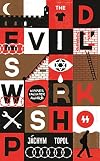
Recently, a screencap from a Swedish high schooler's Facebook made the rounds on social media. It pictured her and her friends on a school trip to Auschwitz, dancing under the ARBEIT MACHT FREI sign, captioned with "Refuse to be PC, lol!"
In The Devil's Workshop, a young Swedish woman comes to Theresienstadt looking for her family history, winds up staying and masterminding the campaign to turn what's left of the city into a tourist attraction, complete with slogans like "If Franz Kafka had show more survived, they would have killed him here". Unlike the moronic brats in the example above, it's done for the best of reasons; to make sure this is remembered. She's horrified at the cavalier attitude towards atrocities in the so-called "East" (to which everyone, all the way to Vladivostok, responds "What do you mean, East? This is Central Europe!"). Concentration camps turned into pig farms, goats grazing in the ruins of Theresienstadt, etc. In the West, we've learned to compartmentalize, to turn monuments into safe Never Again-Lands. In the parts of the world where millions died at their neighbours' hands, it all got hushed up by the next tyrant.
The fact that it's Theresienstadt - constructed by the Nazis as the "nice" face of concentration camps - is not coincidental. The fact that I, as a Swede, have spent much of the review talking about a minor character in the book probably isn't either. Our hero, of course, is the guy who grew up in what's left of the city, with a mother traumatized by literally being fished out of a pile of corpses and a father who represented the new oppressors. How do you make a memorial to something that's ongoing? Well, he's not sure, but there's always demand for it, especially with the likes of Lukashenko and Putin working for political points... Conscripting the dead to fight ideological battles for you has rarely not worked. Once we've picked the martyrs, we can point them at any villain we want. At the same time, we need to remember, don't we? How can we promise "never again" if we don't know what happened - how can we promise it if we define it as ONE event, safely stored away behind glass? If we only honour the dead, how do we rate the living?
The Devil's Workshop works partly exactly because it's a quick, picaresque romp, with a bleak sense of humour not miles away from Vonnegut or Hrabal. Our nameless hero is swept up in a story older and bigger than himself, one where nobody really has any say, but everyone tries to wrest control of the narrative to make it play along. Memory is a tricky beast, but so is The Devil's Workshop. That it works fine as a short, sharp companion piece to the equally excellent Museum of Abandoned Secrets doesn't hurt either.
As I write this, Europe is once again scuttling back towards the slogans and easy answers of the 30s, in many cases spearheaded by the very countries who grew up on rhetoric about the Soviet friends smashing fascism. Wasn't it a Czech who said "When you smash monuments, keep the pedestals - they'll come in handy"? show less
In The Devil's Workshop, a young Swedish woman comes to Theresienstadt looking for her family history, winds up staying and masterminding the campaign to turn what's left of the city into a tourist attraction, complete with slogans like "If Franz Kafka had show more survived, they would have killed him here". Unlike the moronic brats in the example above, it's done for the best of reasons; to make sure this is remembered. She's horrified at the cavalier attitude towards atrocities in the so-called "East" (to which everyone, all the way to Vladivostok, responds "What do you mean, East? This is Central Europe!"). Concentration camps turned into pig farms, goats grazing in the ruins of Theresienstadt, etc. In the West, we've learned to compartmentalize, to turn monuments into safe Never Again-Lands. In the parts of the world where millions died at their neighbours' hands, it all got hushed up by the next tyrant.
The fact that it's Theresienstadt - constructed by the Nazis as the "nice" face of concentration camps - is not coincidental. The fact that I, as a Swede, have spent much of the review talking about a minor character in the book probably isn't either. Our hero, of course, is the guy who grew up in what's left of the city, with a mother traumatized by literally being fished out of a pile of corpses and a father who represented the new oppressors. How do you make a memorial to something that's ongoing? Well, he's not sure, but there's always demand for it, especially with the likes of Lukashenko and Putin working for political points... Conscripting the dead to fight ideological battles for you has rarely not worked. Once we've picked the martyrs, we can point them at any villain we want. At the same time, we need to remember, don't we? How can we promise "never again" if we don't know what happened - how can we promise it if we define it as ONE event, safely stored away behind glass? If we only honour the dead, how do we rate the living?
The Devil's Workshop works partly exactly because it's a quick, picaresque romp, with a bleak sense of humour not miles away from Vonnegut or Hrabal. Our nameless hero is swept up in a story older and bigger than himself, one where nobody really has any say, but everyone tries to wrest control of the narrative to make it play along. Memory is a tricky beast, but so is The Devil's Workshop. That it works fine as a short, sharp companion piece to the equally excellent Museum of Abandoned Secrets doesn't hurt either.
As I write this, Europe is once again scuttling back towards the slogans and easy answers of the 30s, in many cases spearheaded by the very countries who grew up on rhetoric about the Soviet friends smashing fascism. Wasn't it a Czech who said "When you smash monuments, keep the pedestals - they'll come in handy"? show less
This novel by Czech writer Jáchym Topol is a dark satire which asks troubling questions on what we should remember and what we should forget.
The unnamed narrator grows up in Terezín, a town which houses a Medieval fortress and a former Nazi prison. His father is a military bandsman, his mother a survivor of the prison, as are most of the people of the town. The narrator grows up, in a mockery of a pastoral idyll, herding goats on the fortifications, scrabbling in underground tunnels for show more Nazi memorabilia and failing to live up to his father’s ambitions before he is forced to leave.
Years later he returns to Terezín. The army has left and the authorities no longer want to maintain the town. His “uncle”, Lebo, born in the Nazi prison, is determined that nothing should be lost. They begin a protest movement which draws international attention – and lucrative opportunities as they sell souvenir T-shirts and accommodate visitors and obtain funding from philanthropists worldwide. Then political upheaval means the narrator has to leave for Belarus where the book takes a darker turn.
The narrator has a sly naivety. He recounts events as he experiences them, stripped of context. This can make it difficult at times to follow events. There is an afterword by the translator which fills in some of the gaps but I think he was right to put it at the end. It means that like the narrator, the reader experiences conflict and instability as most people do when they are at the heart of them –seeing details, specifics, without a coherent narrative, which is only imposed later, and somehow make whatever occurred seem inevitable.
The narrator has no sense of history, only of a home. He accepts the world as he finds it and makes the best of the opportunities he sees. In contrast, Terezín attracts what he calls the “bunk seekers”. They are distinct from the casual sightseers who take photos and walk the heritage trail. They are western descendants of Holocaust survivors who believe they have a personal interest in the town’s story. They look for meaning in the prison camp, something to give them an identity.
The book’s humour lies in the way it overturns assumptions. Sara, a bunk seeker from Sweden, berates the narrator. She, not he, is the one that truly suffers the legacy of Terezín. His complexes only arise because of what he’s lived through. Hers are a product of her unique personality.
The simple language of the book contrasts with the complexity of the ideas as the story turns in on itself. How is the past commodified, and for whose benefit? If you don’t know your history, does it still shape you? Does it even make sense to call it "yours"?
This book is dark, unsettling and raises lots of questions. It also resolutely refuses to provide any answers.
-
This review first appeared on TNBBC's book blog http://thenextbestbookblog.blogspot.co.uk/2015/04/kate-reviews-devils-workshop.h... show less
The unnamed narrator grows up in Terezín, a town which houses a Medieval fortress and a former Nazi prison. His father is a military bandsman, his mother a survivor of the prison, as are most of the people of the town. The narrator grows up, in a mockery of a pastoral idyll, herding goats on the fortifications, scrabbling in underground tunnels for show more Nazi memorabilia and failing to live up to his father’s ambitions before he is forced to leave.
Years later he returns to Terezín. The army has left and the authorities no longer want to maintain the town. His “uncle”, Lebo, born in the Nazi prison, is determined that nothing should be lost. They begin a protest movement which draws international attention – and lucrative opportunities as they sell souvenir T-shirts and accommodate visitors and obtain funding from philanthropists worldwide. Then political upheaval means the narrator has to leave for Belarus where the book takes a darker turn.
The narrator has a sly naivety. He recounts events as he experiences them, stripped of context. This can make it difficult at times to follow events. There is an afterword by the translator which fills in some of the gaps but I think he was right to put it at the end. It means that like the narrator, the reader experiences conflict and instability as most people do when they are at the heart of them –seeing details, specifics, without a coherent narrative, which is only imposed later, and somehow make whatever occurred seem inevitable.
The narrator has no sense of history, only of a home. He accepts the world as he finds it and makes the best of the opportunities he sees. In contrast, Terezín attracts what he calls the “bunk seekers”. They are distinct from the casual sightseers who take photos and walk the heritage trail. They are western descendants of Holocaust survivors who believe they have a personal interest in the town’s story. They look for meaning in the prison camp, something to give them an identity.
The book’s humour lies in the way it overturns assumptions. Sara, a bunk seeker from Sweden, berates the narrator. She, not he, is the one that truly suffers the legacy of Terezín. His complexes only arise because of what he’s lived through. Hers are a product of her unique personality.
The simple language of the book contrasts with the complexity of the ideas as the story turns in on itself. How is the past commodified, and for whose benefit? If you don’t know your history, does it still shape you? Does it even make sense to call it "yours"?
This book is dark, unsettling and raises lots of questions. It also resolutely refuses to provide any answers.
-
This review first appeared on TNBBC's book blog http://thenextbestbookblog.blogspot.co.uk/2015/04/kate-reviews-devils-workshop.h... show less

I have many good friends in Belarus, very involved in the struggle for freedom and human rights in Europe’s last dictatorship. They have all fared badly in the horrors after the presidential “election” in December: being arrested, harassed and beaten. My friends in Free Theatre Belarus are in the USA at the moment – smuggled out of Belarus on trucks. It’s at the moment very unclear if they are at all able to return home, and back in Minsk their families are getting harassed by the show more KGB (which is blatantly still called just that…). All this creates a chilling backdrop to the rioting going on in Minsk when our main character arrives there.
Tópol’s novel deals with a difficult subject matter: the concept of “horror tourism”, bringing in tourists to the death camps and slaughter grounds of WW2. On one hand, it’s of course important not to forget history. On the other hand, there’s something slightly unseemly with making an industry of human misery. Tópol doesn’t shy away from the many aspects of this issue, but paints a complex picture with nightmarish streaks.
Our unnamed narrator is born in Theresienstadt just outside Prague. A military town built on the bones of the dead under communist times, it crumbles under the years he spends in prison for accidently killing his father. When he returns to the only home he knows, it’s a ruin populated with outcasts and junkies. But the first misery tourists are beginning to find their way there – descendants to the victims of the Nazis looking for answers – and under the leadership of the local father figure Lebo, the inhabitants begin to build a small industry. They sell “This is where Kafka would have gone if he hadn’t died first” T-shirts, ghetto pizza and relics from the underground catacombs. They get press. Celebrities are supporting them. Funding is trickling in.
But then our main character is more or less kidnapped by a couple of agents from the Belarusian tourist authorities. They are adamant to make Belarus the centre of European horror tourism. After all, this is “The devil’s workshop”, where most people got killed. But there are also forces that would rather just forget about the past, since not every mass murder was committed by Nazis. Soon our main character is in the middle of a very violent conflict. And a very bizarre museum indeed.
My first Tópol was a very interesting and provocative read. I’m left with many thoughts. show less
Tópol’s novel deals with a difficult subject matter: the concept of “horror tourism”, bringing in tourists to the death camps and slaughter grounds of WW2. On one hand, it’s of course important not to forget history. On the other hand, there’s something slightly unseemly with making an industry of human misery. Tópol doesn’t shy away from the many aspects of this issue, but paints a complex picture with nightmarish streaks.
Our unnamed narrator is born in Theresienstadt just outside Prague. A military town built on the bones of the dead under communist times, it crumbles under the years he spends in prison for accidently killing his father. When he returns to the only home he knows, it’s a ruin populated with outcasts and junkies. But the first misery tourists are beginning to find their way there – descendants to the victims of the Nazis looking for answers – and under the leadership of the local father figure Lebo, the inhabitants begin to build a small industry. They sell “This is where Kafka would have gone if he hadn’t died first” T-shirts, ghetto pizza and relics from the underground catacombs. They get press. Celebrities are supporting them. Funding is trickling in.
But then our main character is more or less kidnapped by a couple of agents from the Belarusian tourist authorities. They are adamant to make Belarus the centre of European horror tourism. After all, this is “The devil’s workshop”, where most people got killed. But there are also forces that would rather just forget about the past, since not every mass murder was committed by Nazis. Soon our main character is in the middle of a very violent conflict. And a very bizarre museum indeed.
My first Tópol was a very interesting and provocative read. I’m left with many thoughts. show less
Says Jáchym Topol: “the tongue I use is one of Czechs, of Slavs, of slaves, of onetime slaves to Germans and Russians, and it’s a dog’s tongue. . . . It’s a tongue that often had to be spoken only in whispers.âÂ? Fortunately, that constraint no longer applies. This first novel, a fantasia of the Czech Republic after the Velvet Revolution, is anything but quiet. It blusters and wails, and its keening is often songlike. Its characters, who cobble together an informal syndicate in show more an attempt to make sense of their new freedom, are reminiscent of the revolutionaries in VollmannâÂÂs You Bright and Risen Angels, and its dreamy unreality recalls Bulgakov, but the presiding deity here is Anthony Burgess. As in A Clockwork Orange, TopolâÂÂs âÂÂaccelerated city-speakâÂ? employs countless neologisms and portmanteaux to dazzle readers and depict a uniquely unfamiliar environment. While occasional infelicities arise, as when the bedeviled translator must somehow render rural Bohemian dialect and Laotian-accented Czech into English, the overall effect is a healthy disorientation that mimics the sensation of living through flux. The rapidity of these changes in Prague produces the feeling in Potok, the twentysomething narrator, of living outside of history and time; one minor by-product is that he sees the children around him as part of a completely different generation, subject to sometimes pernicious new influences. Shops that once held teddy bears now stock plastic, western-style âÂÂNuclear Asexual HomonucleoidsâÂ? that, in TopolâÂÂs private symbolism, are referred to as âÂÂtoyfilsâÂ? (homonymous for devil in German, Teufel). Given the American mediaâÂÂs current fascination with kid culture, PotokâÂÂs unease may ring particularly true for Gen-Xers who feel theyâÂÂve been supplanted by their younger siblings, but TopolâÂÂs dynamic voice will exhilarate anyone who can still be swept away by a torrent of words. show less
Lists
Awards


You May Also Like


Associated Authors
Statistics
- Works
- 28
- Also by
- 2
- Members
- 541
- Popularity
- #46,067
- Rating
- 3.7
- Reviews
- 12
- ISBNs
- 83
- Languages
- 13
