
John Arthur Garraty (1920–2007)
Author of The Columbia History of the World
About the Author
John Garraty wrote more than a dozen books on American history-both textbooks and biographies of well-known Americans. Garraty also wrote several books for young adult readers; among them are one about Woodrow Wilson and another about the Great Depression. He died in 2007 in Sag Harbor, New York.
Works by John Arthur Garraty
Historical Viewpoints: Notable Articles from American Heritage Volume 1 (1970) 180 copies, 2 reviews
The American Nation: a History of the United States (Central Texas College Edition) (1966) 159 copies
The 20th Century: An Illustrated History Of Our Lives And Times (1999) — Editor — 139 copies, 4 reviews
The American Nation: A History of the United States, Volume 1 (to 1877) Value Package (includes Study Guide) (1971) 104 copies
The Great Depression: An Inquiry into the Causes, Course, and Consequences of the Worldwide Depression of the Nineteen-Thirties, As Seen by Contempor (1986) 50 copies, 1 review
American Destiny: Narrative of a Nation, Volume I (to 1877) (Penguin Academics Series) (2nd Edition) (2002) — Author — 26 copies
The American Nation: A History of the United States, Volume 2 (since 1865) (13th Edition) (2002) 24 copies
American Destiny, Vol. 2, Chapters 16-33: Narrative of a Nation (Penguin Academic Series) (2002) 19 copies
Labor and capital in the gilded age: testimony taken by the Senate Committee upon the relations between labor and capita (1968) 16 copies
Storia del mondo 3 copies
Dictionary of American Biography Supplement, 1974-1975 : With an Index Guide to the Supplements — Editor — 2 copies
3: Età contemporanea 2 copies
Dictionary of American biography. with an index guide to the supplements / Supplement three- 2 copies
3: Età contemporanea 1 copy
1: Eta antica e Medioevo 1 copy
2: Eta moderna 1 copy
3: Eta contemporanea 1 copy
2: Età moderna 1 copy
1: Età antica e Medioevo 1 copy
2: Età moderna 1 copy
The Unforgettable Americans 1 copy
Associated Works
Tagged
Common Knowledge
- Legal name
- Garraty, John Arthur
- Birthdate
- 1920-07-04
- Date of death
- 2007-12-19
- Gender
- male
- Education
- Brooklyn College
Columbia University - Occupations
- historian
biographer - Organizations
- Columbia University
- Nationality
- USA
- Birthplace
- Brooklyn, New York, USA
- Place of death
- Sag Harbor, New York, USA
- Associated Place (for map)
- New York, USA
Members
Reviews
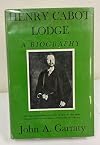
From Daniel Webster to Elizabeth Warren, Massachusetts has a storied tradition of electing United States senators who enjoy an outsized presence on the national stage. One of the most prominent among this group is Henry Cabot Lodge, the Boston Brahmin who over the course of his three decades in the Senate exercised a profound and enduring influence on both national and international events. Drawing upon Lodge’s personal papers and the records left by his contemporaries, John A. Garraty show more pushes past the stereotypes and misconceptions surrounding Lodge to better understand the man and his legacy as a politician.
Garraty begins his book by recounting Lodge’s early years. The son of a prominent upper-class family, he enjoyed a privileged childhood and an elite education in which he earned both a legal degree and a Ph.D in history and government. Though initially an academic, he soon gravitated towards public office and was a rising star in Massachusetts politics in the 1870s and 1880s. These were formative years for the budding politician, during which time Lodge took up the cause of civil service reform and campaigned against the corruption of the Grant administration. Yet by the early 1880s Lodge had abandoned his flirtation with party heterodoxy and became a committed party man, a stance he would maintain for the rest of his long political career.
Lodge enjoyed a rapid ascent in politics due to his wealth and his social connections, winning a seat in the House of Representatives in 1886 that he would hold until his election to the Senate in 1892. His ascent in Congress coincided with the growing importance of foreign affairs in national politics, a subject dear to Lodge. An advocate of both a stronger navy and intervention in Cuba, he emerged as a leading supporter of American expansion abroad, a stance he shared with his good friend Theodore Roosevelt. Their relationship receives considerable attention throughout Garraty’s book, as he shows how the two men personally remained close even after Roosevelt’s bolt from the Republican Party in 1912 put the two friends at political odds with one another.
Yet the attention Garraty gives to Lodge’s friendship with Roosevelt pales before that of the space devoted to Lodge’s clashes with Woodrow Wilson. These chapters take up nearly a quarter of the book, describing an epic political confrontation between the two men colored by a high degree of personal hostility. This conflict culminated in an epic fight over the Versailles Treaty and the League of Nations, the legislative battle over which Garraty recounts in considerable detail. Here he demonstrates that the outcome was not a foregone conclusion, and was decided as much by the personal qualities of the men involved as much as they were the broader issues at stake. Though Lodge emerged the victor in the sense that the treaty to which he objected failed to win ratification, it proved the climax of his career, as his influence faded with the return of the Republicans to the White House just three years before his death in 1924.
Ever since it was first published in 1953 Garraty’s book had stood as the definitive biography of Lodge, and it’s difficult to imagine how it could be bettered. The author’s coverage of Lodge’s career is thorough in its scope and penetrating in its analysis, pushing through his subject’s justifications and dissembling to provide an understanding of Lodge that is both critical and fair. Though some subjects could have been explored in greater detail (such as Lodge’s views of Roosevelt’s domestic policies as president), it remains the best book about Lodge’s life and career, one that endures thanks to Garraty’s solid scholarship and perceptive assessments of his subject. show less
Garraty begins his book by recounting Lodge’s early years. The son of a prominent upper-class family, he enjoyed a privileged childhood and an elite education in which he earned both a legal degree and a Ph.D in history and government. Though initially an academic, he soon gravitated towards public office and was a rising star in Massachusetts politics in the 1870s and 1880s. These were formative years for the budding politician, during which time Lodge took up the cause of civil service reform and campaigned against the corruption of the Grant administration. Yet by the early 1880s Lodge had abandoned his flirtation with party heterodoxy and became a committed party man, a stance he would maintain for the rest of his long political career.
Lodge enjoyed a rapid ascent in politics due to his wealth and his social connections, winning a seat in the House of Representatives in 1886 that he would hold until his election to the Senate in 1892. His ascent in Congress coincided with the growing importance of foreign affairs in national politics, a subject dear to Lodge. An advocate of both a stronger navy and intervention in Cuba, he emerged as a leading supporter of American expansion abroad, a stance he shared with his good friend Theodore Roosevelt. Their relationship receives considerable attention throughout Garraty’s book, as he shows how the two men personally remained close even after Roosevelt’s bolt from the Republican Party in 1912 put the two friends at political odds with one another.
Yet the attention Garraty gives to Lodge’s friendship with Roosevelt pales before that of the space devoted to Lodge’s clashes with Woodrow Wilson. These chapters take up nearly a quarter of the book, describing an epic political confrontation between the two men colored by a high degree of personal hostility. This conflict culminated in an epic fight over the Versailles Treaty and the League of Nations, the legislative battle over which Garraty recounts in considerable detail. Here he demonstrates that the outcome was not a foregone conclusion, and was decided as much by the personal qualities of the men involved as much as they were the broader issues at stake. Though Lodge emerged the victor in the sense that the treaty to which he objected failed to win ratification, it proved the climax of his career, as his influence faded with the return of the Republicans to the White House just three years before his death in 1924.
Ever since it was first published in 1953 Garraty’s book had stood as the definitive biography of Lodge, and it’s difficult to imagine how it could be bettered. The author’s coverage of Lodge’s career is thorough in its scope and penetrating in its analysis, pushing through his subject’s justifications and dissembling to provide an understanding of Lodge that is both critical and fair. Though some subjects could have been explored in greater detail (such as Lodge’s views of Roosevelt’s domestic policies as president), it remains the best book about Lodge’s life and career, one that endures thanks to Garraty’s solid scholarship and perceptive assessments of his subject. show less

* Read the Swedish translation of the book *
This is not a book about unemployment in history per se, but rather, as the author himself says in the foreword, a book about how unemployment has been understood and treated in history. As such it goes back to ancient Greece and covers the road of european and american unemployment until the middle of the 1970s.
The best part of the book is the parts discussing pre-20th century history. Before the 20th century, or maybe rather before Marx, show more unemployment as a problem wasn’t really discussed on a theoretical level. Rather it was discussed in a often very practical sense of, for example, who of the beggars was really deserving of aid and who was just begging as an easy way out of having to work (getting a job seemed to have been supposed wouldn’t be a problem if you just wanted one). As such the views discussed by Garraty is directly connected to the material history of working people and the poor. The lack of theoretical discussions brings the history closer to the actual lives of people.
When writing the later chapters they become much more focused on individuals and their theoretical treatises about unemployment and to a certain extent how much influence they had on governments in their day. The connection to the lives of ordinary people is lost.
There is some discussion about technological unemployment, unemployment because new technology make workers obsolete, which I find interesting in connection to the discussions of today on the subject with fully automated storages and Elon Musks plans for a fully automated car factory. But this isn’t discussed very much, maybe because it was written in the last stages of the golden era with full employment.
The hero, although fallen, of the book has to be Keynes who get the credit for having a solution to the unemployment after the great depression. But as said he is a fallen hero since when discussion unemployment in the 1960s and 1970s Garraty does note that the solutions Keynes offered doesn’t seem to work. Keynes solution was to accept a quite high level of inflation to achieve full employment, but in the 60s and 70s there seemed to be a dimishing return to every investment to force down unemployment numbers and instead an increasing rate of higher inflation.
All in all I thought it was an interesting book worth a read, but not a second. It deserves more readers than Goodreads indicates it has at least. show less
This is not a book about unemployment in history per se, but rather, as the author himself says in the foreword, a book about how unemployment has been understood and treated in history. As such it goes back to ancient Greece and covers the road of european and american unemployment until the middle of the 1970s.
The best part of the book is the parts discussing pre-20th century history. Before the 20th century, or maybe rather before Marx, show more unemployment as a problem wasn’t really discussed on a theoretical level. Rather it was discussed in a often very practical sense of, for example, who of the beggars was really deserving of aid and who was just begging as an easy way out of having to work (getting a job seemed to have been supposed wouldn’t be a problem if you just wanted one). As such the views discussed by Garraty is directly connected to the material history of working people and the poor. The lack of theoretical discussions brings the history closer to the actual lives of people.
When writing the later chapters they become much more focused on individuals and their theoretical treatises about unemployment and to a certain extent how much influence they had on governments in their day. The connection to the lives of ordinary people is lost.
There is some discussion about technological unemployment, unemployment because new technology make workers obsolete, which I find interesting in connection to the discussions of today on the subject with fully automated storages and Elon Musks plans for a fully automated car factory. But this isn’t discussed very much, maybe because it was written in the last stages of the golden era with full employment.
The hero, although fallen, of the book has to be Keynes who get the credit for having a solution to the unemployment after the great depression. But as said he is a fallen hero since when discussion unemployment in the 1960s and 1970s Garraty does note that the solutions Keynes offered doesn’t seem to work. Keynes solution was to accept a quite high level of inflation to achieve full employment, but in the 60s and 70s there seemed to be a dimishing return to every investment to force down unemployment numbers and instead an increasing rate of higher inflation.
All in all I thought it was an interesting book worth a read, but not a second. It deserves more readers than Goodreads indicates it has at least. show less
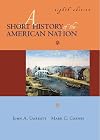
This is by far the most readable history text I've ever read. At the same time, it covers so much territory that it is forced to cover quickly and, at times, generalize. What makes this book stand out though is the tendency to give incredible amounts of detail to go with certain anecdotes, and turn the "historical figures" you're reading about into people and characters. This is readable and makes history memorable. If you need a crash course in American history or are hoping to get your show more student interested (or simply to remember something of their history class), this book is a good choice. show less
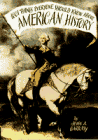
This book is full of tidbits about people, places, and events in American History. As a history major, I recognized most of the the 1001 items discussed, but there were a few of which I had never heard. For instance, I had never heard of many of the women pioneers that were listed. I think that the reason for this is that women's studies in the past have been overlooked in many history textbooks. Also, there was the Argonne-Meuse Campaign of World War I, of which I had never studied. Again, show more World War I is often somewhat neglected in our history books. Working in a bookstore, as I do, I know how few books are written on the subject of World War I. While the Civil War might have a whole bookcase devoted to it, and World War II might have two whole bookcases, there might only be two shelves dedicated to the subject of World War I. The Korean War is another area that is often neglected.
This book was written in 1989, and does a fairly good job of covering events in American History up to that time. If anything was neglected in this book, I might have to say it was the Civil Rights Movement. I just didn't see a lot on that subject. However, I felt that this was a very informative and interesting book. Each fact was short enough to catch your attention and make you want to go research the subjects that you didn't know about. show less
This book was written in 1989, and does a fairly good job of covering events in American History up to that time. If anything was neglected in this book, I might have to say it was the Civil Rights Movement. I just didn't see a lot on that subject. However, I felt that this was a very informative and interesting book. Each fact was short enough to catch your attention and make you want to go research the subjects that you didn't know about. show less
Lists
Awards


You May Also Like


Associated Authors
Statistics
- Works
- 103
- Also by
- 2
- Members
- 4,104
- Popularity
- #6,130
- Rating
- 3.7
- Reviews
- 29
- ISBNs
- 237
- Languages
- 2