

Julia Whitty
Author of The Fragile Edge: Diving and Other Adventures in the South Pacific
About the Author
Julia Whitty's fiction has appeared in Harper's Magazine, Story, Ploughshares, and Zoetrope. Whitty has won an O. Henry Award and been a finalist for a National Magazine Award. She has also written and produced more than seventy documentaries for PBS, National Geographic, the Discovery Channel, and show more the Arts and Entertainment Network. She lives in northern California show less
Works by Julia Whitty
Associated Works
Tagged
Common Knowledge
Members
Reviews
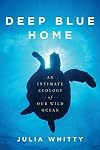
I'm ashamed to admit that I practice avoidance. The truth is that it all seems to be too much for me at times. War, climate change politics...wait, they're all the same thing, aren't they? Well, What drew me to Deep Blue Home, quite frankly was it's cover. I love turtles, tortoises, dolphins, whales and in fact, I love animals of all types. I may not be so keen on the two legged human variety at times. We are so arrogant, and all knowing, but only I'm afraid in our own minds. The truth of it show more is that humans all seem to have an agenda, and that agenda is to make their own lives better, and to have more money than everyone else, never mind the cost to others. At least, all too many humans seem to be this way.
I wanted this book to bring me joy. I wanted it to be a beautiful peek into the lives of creatures who live in mystery in the beautiful blue oceans that cover most of our planet. I wanted to see them leaping joyfully, swimming peacefully and in fact, being happy in ways that human can never be. The imagery created by the author was in fact beautiful, and compelling. The story, however was not. It brought home to me in ways that I had been avoiding acknowledgement of, that things are worse that I imagined them to be. That we were killing our planet and its beautiful life in so many ways, big and small.
Julia Whitty did more than describe our seas and their populations, she brought home the fact with a passionate and no nonsense approach, that our seas are dying and we are guilty of killing them. It made me sad, it made me afraid, and it made me feel powerless. I'm not sorry that I read this book, but what I read made me feel sorry. It made me feel sorry for things that I have no direct hand in doing, and sorry for not knowing some of the ways that we are spoiling our home. I think everyone should read this one. show less
I wanted this book to bring me joy. I wanted it to be a beautiful peek into the lives of creatures who live in mystery in the beautiful blue oceans that cover most of our planet. I wanted to see them leaping joyfully, swimming peacefully and in fact, being happy in ways that human can never be. The imagery created by the author was in fact beautiful, and compelling. The story, however was not. It brought home to me in ways that I had been avoiding acknowledgement of, that things are worse that I imagined them to be. That we were killing our planet and its beautiful life in so many ways, big and small.
Julia Whitty did more than describe our seas and their populations, she brought home the fact with a passionate and no nonsense approach, that our seas are dying and we are guilty of killing them. It made me sad, it made me afraid, and it made me feel powerless. I'm not sorry that I read this book, but what I read made me feel sorry. It made me feel sorry for things that I have no direct hand in doing, and sorry for not knowing some of the ways that we are spoiling our home. I think everyone should read this one. show less
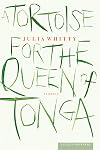
Superb short stories, the first being the title of this book. The giant tortoise named Tu'i Malila was captured by Captain Cook stuck in the ship’s hold without food and water for a year, to be fresh meat if the crew needed. When he got to Tonga he gifted her to the queen. The tortoise lives like royalty but never forgets the pain of that year. 😭 Each story is unique and I felt the author did an amazing amount of research. One is hilarious: Darwin in Heaven had me rolling with laughter. show more I highly recommend it. show less
This thematically-linked series of essays gives a simple and compelling portrait of some of the various animals that either live in the sea or rely on it for sustenance, and of what their eventual disappearance will cost us, both economically and scientifically. Whitty's sense of wonder is contagious, and it's impossible to read her words without getting caught up in them.
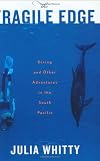
Whitty, a documentary filmmaker, weaves a tale of the coral reefs of the South Pacific touching on a wide range of topics. The environment, climate, sea creatures and the coral reefs are the main focus.
But she also touches on yoga and Buddhism, the culture of the inhabitants of the atolls as well as descriptions of wonderful characters like Father Kamilo - Catholic priest, originally from Quebec, who was sent to Funafuti from Samoa, sent into exile from paradise to minister to 50 dutiful show more Catholics, the minimum number for a parish - only to find that that number was padded by half, by the dead.
She describes the effects of the French and US nuclear testing the South Pacific, the current garbage dumps on Funafuti which "had grown too crowded for its inhabitants to grow their own food" and the destruction of coral reefs (the fragile edge) by the aquarium trade and the live reef food fish trade, among others, which collect fish with poisons and blasting.
There were times, especially at the beginning of the book, where she lost me with the "superlatives" - 64 thousand square miles, 30 thousand islands, 5 climate regions, 40% of the world's reefs, etc. Or with her descriptions of pranayama and diving. (Perhaps this would appeal more to divers than to me).
But then there were the passages like this: "Above them, huge swells from the Antarctic roll toward the islands. Below, the stony corals of the outer reef slope hunker down to withstand the surge. Ahead lies the barrier reef, the natural buttress between sea and lagoon. . . It is this seemingly insurmountable obstacle the baby fish must breach to enter the sanctuary of Mo'orea's inner lagoon. The young fish are anticipating the moonless night to come. . .After nightfall, despite having never done anything of the kind before, they will gather under the humped back of a wave, ride up its powerful rise and down its thunderous landfall and surge across the algal ridge."
A wonderful read for a cold, winter's night. show less
But she also touches on yoga and Buddhism, the culture of the inhabitants of the atolls as well as descriptions of wonderful characters like Father Kamilo - Catholic priest, originally from Quebec, who was sent to Funafuti from Samoa, sent into exile from paradise to minister to 50 dutiful show more Catholics, the minimum number for a parish - only to find that that number was padded by half, by the dead.
She describes the effects of the French and US nuclear testing the South Pacific, the current garbage dumps on Funafuti which "had grown too crowded for its inhabitants to grow their own food" and the destruction of coral reefs (the fragile edge) by the aquarium trade and the live reef food fish trade, among others, which collect fish with poisons and blasting.
There were times, especially at the beginning of the book, where she lost me with the "superlatives" - 64 thousand square miles, 30 thousand islands, 5 climate regions, 40% of the world's reefs, etc. Or with her descriptions of pranayama and diving. (Perhaps this would appeal more to divers than to me).
But then there were the passages like this: "Above them, huge swells from the Antarctic roll toward the islands. Below, the stony corals of the outer reef slope hunker down to withstand the surge. Ahead lies the barrier reef, the natural buttress between sea and lagoon. . . It is this seemingly insurmountable obstacle the baby fish must breach to enter the sanctuary of Mo'orea's inner lagoon. The young fish are anticipating the moonless night to come. . .After nightfall, despite having never done anything of the kind before, they will gather under the humped back of a wave, ride up its powerful rise and down its thunderous landfall and surge across the algal ridge."
A wonderful read for a cold, winter's night. show less
Awards


You May Also Like


Associated Authors
Statistics
- Works
- 3
- Also by
- 2
- Members
- 161
- Popularity
- #131,050
- Rating
- 3.8
- Reviews
- 5
- ISBNs
- 9
- Languages
- 1