
Martin Sixsmith
Author of Philomena: A Mother, Her Son, and a Fifty-Year Search
About the Author
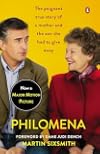
Martin Sixsmith was educated at Oxford, Harvard and the Sorbonne. From 1980 to 1997, he was the BBC correspondent in Moscow, Washington, Brussels and Warsaw. From 1997 to 2002, he worked as the director of communications and press secretary for Harriet Harman, Alistair Darling, and Stephen Byers. show more He is the author of two novels, Spin and I Heard Lenin Laugh. His non-fiction work, The Lost Child of Philomena Lee, is the basis for the film Philomena starring Steve Coogan and Judi Dench. (Bowker Author Biography) show less
Image credit: via Pan Macmillan
Series
Works by Martin Sixsmith
Rusia: un mileniu de istorie 2 copies
Rusia-un mileniu de istorie 1 copy
Associated Works
Tagged
Common Knowledge
- Birthdate
- 1954-09-24
- Gender
- male
- Education
- Manchester Grammar School
University of Oxford (St Antony's College)
Harvard University
The Sorbonne, Paris
Birkbeck College, University of London (Dip.|Applied Psychology|2006) - Occupations
- author
civil servant
radio presenter
foreign correspondent - Organizations
- BBC
- Nationality
- UK
- Birthplace
- Warrington, Cheshire, England, UK
- Places of residence
- London, England, UK
- Associated Place (for map)
- England, UK
Members
Reviews
Un libro bellissimo pur nella sua dolorosa e terribile realtà e che è riuscito a suscitare in me una profonda rabbia verso un sistema retrogrado, reazionario, assurdo e inconcepibile.
Una storia vera, narrata con piglio giornalistico, che porta alla luce il dramma delle ragazze madri irlandesi, vittime di pregiudizi e ostracismo sociale. Queste, per una morale bigotta e priva di qualsiasi scrupolo e umanità, venivano costrette anche a privarsi dei loro figli, dati in adozione forzata a show more famiglie straniere, dietro compenso dovuto agli enti religiosi presso i quali le stesse venivano recluse e trattate, dalle religiose che li gestivano, alla stregua di schiave prive di qualsiasi diritto e dignità.
La prima parte narra la storia di Philomena e dei tre difficilissimi anni passati nell’Abbazia di Sean Ross dove partorisce il figlio, Anthony, a cui può restare a malapena vicino sino al giorno in cui le viene strappato via per essere consegnato in adozione, quasi fosse un pacco postale, a una famiglia americana.
Da quel momento in poi ci viene raccontata la nuova vita di questo dolcissimo bambino che vedrà cambiato pure il suo nome in Michael e che, per tutta la vita, rimarrà condizionato da questa terribile esperienza che vivrà sempre come fosse una sua colpa, subendone anche delle terribili conseguenze.
Un libro che squarcia le tenebre sui soprusi e le ipocrisie perpetrate per anni in Irlanda su povere e ingenue ragazze madri, succubi di un sistema perverso e crudele gestito e condotto da religiosi nel più completo dispregio dei principi fondanti del loro credo ecclesiale di amore e carità cristiana.
Da leggere per scoprire qualcosa di inimmaginabile che è realmente accaduto in un passato alquanto recente. show less
Una storia vera, narrata con piglio giornalistico, che porta alla luce il dramma delle ragazze madri irlandesi, vittime di pregiudizi e ostracismo sociale. Queste, per una morale bigotta e priva di qualsiasi scrupolo e umanità, venivano costrette anche a privarsi dei loro figli, dati in adozione forzata a show more famiglie straniere, dietro compenso dovuto agli enti religiosi presso i quali le stesse venivano recluse e trattate, dalle religiose che li gestivano, alla stregua di schiave prive di qualsiasi diritto e dignità.
La prima parte narra la storia di Philomena e dei tre difficilissimi anni passati nell’Abbazia di Sean Ross dove partorisce il figlio, Anthony, a cui può restare a malapena vicino sino al giorno in cui le viene strappato via per essere consegnato in adozione, quasi fosse un pacco postale, a una famiglia americana.
Da quel momento in poi ci viene raccontata la nuova vita di questo dolcissimo bambino che vedrà cambiato pure il suo nome in Michael e che, per tutta la vita, rimarrà condizionato da questa terribile esperienza che vivrà sempre come fosse una sua colpa, subendone anche delle terribili conseguenze.
Un libro che squarcia le tenebre sui soprusi e le ipocrisie perpetrate per anni in Irlanda su povere e ingenue ragazze madri, succubi di un sistema perverso e crudele gestito e condotto da religiosi nel più completo dispregio dei principi fondanti del loro credo ecclesiale di amore e carità cristiana.
Da leggere per scoprire qualcosa di inimmaginabile che è realmente accaduto in un passato alquanto recente. show less

Vladimir Putin's invasion of Ukraine has reshaped history. In the decades after the collapse of Soviet communism, the West convinced itself that liberal democracy would henceforth be the dominant, ultimately unique, system of governance - a hubris that shaped how the West would treat Russia for the next two decades. But history wasn't over.
Putin is a paradox. In the early years of his presidency, he appeared to commit himself to friendship with the West, suggesting that Russia could join the show more European Union or even NATO. He said he supported free-market democracy and civil rights. But the Putin of those years is unrecognisable today. The Putin of the 2020s is an autocratic nationalist, dedicated to repression at home and anti-Western militarism abroad. So, what happened? Was he lying when he proclaimed his support for freedom, democracy and friendship with the West? Or, was he sincere? Did he change his views at some stage between then and now? And if that is the case, what happened to change him?
Putin and the Return of History examines these questions in the context of Russia's thousand-year past, tracing the forces and the myths that have shaped Putin's politics of aggression: the enduring terror of encirclement by outsiders, the subjugation of the individual to the cause of the state, the collectivist values that allow the sacrifice of human lives in battle, the willingness to lie and deceive, the co-opting of religion and the belief in Great Russia's mission to change the world. show less
Putin is a paradox. In the early years of his presidency, he appeared to commit himself to friendship with the West, suggesting that Russia could join the show more European Union or even NATO. He said he supported free-market democracy and civil rights. But the Putin of those years is unrecognisable today. The Putin of the 2020s is an autocratic nationalist, dedicated to repression at home and anti-Western militarism abroad. So, what happened? Was he lying when he proclaimed his support for freedom, democracy and friendship with the West? Or, was he sincere? Did he change his views at some stage between then and now? And if that is the case, what happened to change him?
Putin and the Return of History examines these questions in the context of Russia's thousand-year past, tracing the forces and the myths that have shaped Putin's politics of aggression: the enduring terror of encirclement by outsiders, the subjugation of the individual to the cause of the state, the collectivist values that allow the sacrifice of human lives in battle, the willingness to lie and deceive, the co-opting of religion and the belief in Great Russia's mission to change the world. show less
As a person who was interviewed for this book and who appears as a “character” in it, I believe this book should be categorized as fiction. The Lost Child of Philomena Lee, written by Martin Sixsmith, was originally published in 2009. After the success of the movie Philomena, the book was reissued with a new title. By now, everyone knows that the book tells the tragic story of Philomena Lee, who had an illegitimate child in the early 1950s while living at an abbey run by nuns in Ireland. show more An American couple adopted her son, Anthony Lee, when he was 3 years old and renamed him Michael Hess. Philomena and Michael were stymied in their search to find each other by the nuns’ refusal to give them information.
About 7 years ago, Michael’s partner (called Pete in the book) referred me to a journalist who was trying to pitch a book based on the story of Michael’s birth mother’s search for her son. Following Pete’s lead, I agreed to speak to Martin Sixsmith about my friendship with Michael. He recorded our 2-hour conversation. Pete expected to hear from Sixsmith if the book proposal ever came to fruition.
When the book appeared without prior notice to Pete or me in 2009, I was appalled to find that Sixsmith had written a fictional version of Michael’s life in which characters engage in conversations that never happened. Because the book received consistently bad reviews in the British newspapers, I decided not to write a review, hoping that the book would fade from view. That is exactly what happened until Steve Coogan read the 2009 newspaper article by Sixsmith and the rest is history.
I cringed when I read my “character” engaging in fictional dialogue with Michael. Things only went downhill from there. The dialogue that Sixsmith invented for the conversations Michael and I supposedly had were not quotes from the interview I gave, and I did not agree to my interview being turned into scenes with made-up dialogue. Michael is dead and cannot verify these conversations or, for that matter, any of the conversations he is purported to have had throughout the book.
Inaccuracies abound. I met Michael when he hired me to work for him in December of 1977. The book has me engaging in fictional conversations during 1975 and 1976 with Michael about his boyfriend Mark, and even having conversations with Mark about Michael’s supposedly dark moods and behavior. I think the author created these events to support his premise that Michael was a troubled and tortured soul because he could not find his birth mother and because he was required to hide his sexuality at his place of work. This was the 1980s and there were very few gay men or woman who were “out” at work.
The fiction continues. I did not discuss politics with Michael during this time period and never talked about supporting Carter. Also, Sixsmith has Michael moving in with me to “recover” from too much partying. Not true. The many purported conversations in which I provide advice to Michael about his love life or work problems simply did not occur. Like most good friends, I did a lot of listening and nodding.
It is really difficult for those of us who knew Michael to see him portrayed so poorly. He was smart, charming, good looking and thoughtful. Michael always went out of his way to make his friends’ birthdays special. For 10 years, he took my daughter and me to many Christmas tree lots in search of the perfect tree.
Michael was a great boss and mentor who taught me so much about legal research and writing and encouraged me to take on difficult and challenging assignments. He was a terrific writer and speaker. These talents and a lot of hard work contributed to his successful career.
Pete and other friends have tried to correct Sixsmith’s depiction of Michael as a tortured soul in recent articles that appeared in The New York Times and Politico. They stress his long-term relationship with Pete and his multifaceted interests, which ranged from following Notre Dame sports to predicting the best new Broadway musicals to his prodigious gardening.
Between the made-up dialogue and almost prurient focus on Michael’s sexual behavior, the author has failed to present anything near a recognizable picture of Michael Hess. While I can only speak definitively to the information that I gave Sixsmith and my knowledge of Michael, the book contains other conversations that can’t possibly be sourced because the people are dead. If you plan to read the book, be aware that you will be reading fiction and, not very well written fiction, at that. show less
About 7 years ago, Michael’s partner (called Pete in the book) referred me to a journalist who was trying to pitch a book based on the story of Michael’s birth mother’s search for her son. Following Pete’s lead, I agreed to speak to Martin Sixsmith about my friendship with Michael. He recorded our 2-hour conversation. Pete expected to hear from Sixsmith if the book proposal ever came to fruition.
When the book appeared without prior notice to Pete or me in 2009, I was appalled to find that Sixsmith had written a fictional version of Michael’s life in which characters engage in conversations that never happened. Because the book received consistently bad reviews in the British newspapers, I decided not to write a review, hoping that the book would fade from view. That is exactly what happened until Steve Coogan read the 2009 newspaper article by Sixsmith and the rest is history.
I cringed when I read my “character” engaging in fictional dialogue with Michael. Things only went downhill from there. The dialogue that Sixsmith invented for the conversations Michael and I supposedly had were not quotes from the interview I gave, and I did not agree to my interview being turned into scenes with made-up dialogue. Michael is dead and cannot verify these conversations or, for that matter, any of the conversations he is purported to have had throughout the book.
Inaccuracies abound. I met Michael when he hired me to work for him in December of 1977. The book has me engaging in fictional conversations during 1975 and 1976 with Michael about his boyfriend Mark, and even having conversations with Mark about Michael’s supposedly dark moods and behavior. I think the author created these events to support his premise that Michael was a troubled and tortured soul because he could not find his birth mother and because he was required to hide his sexuality at his place of work. This was the 1980s and there were very few gay men or woman who were “out” at work.
The fiction continues. I did not discuss politics with Michael during this time period and never talked about supporting Carter. Also, Sixsmith has Michael moving in with me to “recover” from too much partying. Not true. The many purported conversations in which I provide advice to Michael about his love life or work problems simply did not occur. Like most good friends, I did a lot of listening and nodding.
It is really difficult for those of us who knew Michael to see him portrayed so poorly. He was smart, charming, good looking and thoughtful. Michael always went out of his way to make his friends’ birthdays special. For 10 years, he took my daughter and me to many Christmas tree lots in search of the perfect tree.
Michael was a great boss and mentor who taught me so much about legal research and writing and encouraged me to take on difficult and challenging assignments. He was a terrific writer and speaker. These talents and a lot of hard work contributed to his successful career.
Pete and other friends have tried to correct Sixsmith’s depiction of Michael as a tortured soul in recent articles that appeared in The New York Times and Politico. They stress his long-term relationship with Pete and his multifaceted interests, which ranged from following Notre Dame sports to predicting the best new Broadway musicals to his prodigious gardening.
Between the made-up dialogue and almost prurient focus on Michael’s sexual behavior, the author has failed to present anything near a recognizable picture of Michael Hess. While I can only speak definitively to the information that I gave Sixsmith and my knowledge of Michael, the book contains other conversations that can’t possibly be sourced because the people are dead. If you plan to read the book, be aware that you will be reading fiction and, not very well written fiction, at that. show less
Aha, my first VG read of the New Year! This is a chilling extension of the Magdalene Laundries story. The protagonist asks for help from a reporter to find her son, who was sold fifty years prior from an Irish convent to an American family looking to adopt an Irish child. When unmarried Philomena gets pregnant in 1952, she is brought to the convent and abandoned by her family. She is allowed to care for her son Anthony for three years before he is stolen from her. Where and how Anthony ends show more up is completely startling and compelling. I wish that Philomena herself had been more fully realized, but that's a minor quibble in a non fiction that so completely immerses itself in a remarkable American life. Can't wait to see the movie! show less
Lists
Awards


You May Also Like


Associated Authors
Statistics
- Works
- 16
- Also by
- 1
- Members
- 1,390
- Popularity
- #18,497
- Rating
- 3.6
- Reviews
- 42
- ISBNs
- 97
- Languages
- 7