

Peter Levi (1931–2000)
Author of Penguin Modern European Poets : Yevtushenko : selected poems
About the Author
Image credit: half shot of Peter Levi By Source (WP:NFCC#4), Fair use, https://en.wikipedia.org/w/index.php?curid=58188229
Series
Works by Peter Levi
Penguin Modern European Poets : Yevtushenko : selected poems (1962) — Translator, Introduction — 424 copies, 2 reviews
The Light Garden of the Angel King: Travels in Afghanistan with Bruce Chatwin (1972) 153 copies, 4 reviews
In memory of George Seferis 2 copies
A görög világ atlasza 1 copy
La Civilizacion Griega 1 copy
Among the ruins 1 copy
Associated Works
The Oresteia: Agamemnon, Women at the Graveside, Orestes in Athens (0458) — Introduction, some editions — 11,743 copies, 87 reviews
The Oxford History of Greece & the Hellenistic World (1986) — Contributor, some editions — 782 copies, 4 reviews
Journals of the Western Islands of Scotland [and] The Journal of a Tour to the Hebrides (1775) — Editor, some editions — 778 copies, 5 reviews
Boswell's Journal of a Tour to the Hebrides with Samuel Johnson (1786) — Editor, some editions — 573 copies, 11 reviews
Tagged
Common Knowledge
- Canonical name
- Levi, Peter
- Legal name
- Levi, Peter Chad Tigar
- Birthdate
- 1931-05-16
- Date of death
- 2000-02-01
- Gender
- male
- Education
- Beaumont College
Heythrop College, London
University of Oxford (Campion Hall) - Occupations
- classical scholar
archaeologist
poet
Professor of Poetry
Jesuit priest - Organizations
- University of Oxford
Society of Jesus - Awards and honors
- Society of Antiquaries of London (Fellow)
Royal Society of Literature (Fellow) - Short biography
- Levi was brought up in the Catholic faith of his Spanish mother (to which his father, a Jew from Istanbul, had converted), and was a member of the Society of Jesus (Jesuits) until resigning the Catholic priesthood in 1977 in favour of marriage. He spent a brief period as archaeology correspondent of "The Times", and was elected to a five-year term as Professor of Poetry at the University of Oxford in 1984. He studied classics (Greek and Latin), and as well as poetry wrote on ancient Greek mythology and literature, travel, and other literary biography.
- Nationality
- England
UK - Birthplace
- Ruislip, Middlesex, England, UK
- Places of residence
- Ruislip, Middlesex, England, UK
Frampton-on-Severn, Gloucestershire, England, UK - Place of death
- Frampton-on-Severn, Gloucestershire, England, UK
- Associated Place (for map)
- England, UK
Members
Reviews

I just don't know how I feel about Levi's tome, a vastly under-reviewed but clearly vital piece of Shakespearean scholarship.
In painstaking detail, Levi sorts through countless aspects of Shakespeare's life, sources, lifestyle, theatrical notions, as well as the legends and rumours surrounding the Bard. Moreso than some of the great Shakespearean biographers of our day - such as James Shapiro - Levi is sometimes tempted more by hearsay and tradition. On the other hand, he believes very much show more that a lot of the story of Shakespeare can be told or inferred from what was happening in the era. On this ground, he is brilliant. Sorting through so much information, Levi pulls together convincing discussions of everything from Shakespeare's family background to his final years, drawing a lot of inferences, but also connecting all of the extant elements of the Bard's life into one cohesive whole. This is clearly a labour of love, and it shows.
There are some flaws, however. Number one being that the book was clearly either self-published or by a smaller company, as it hasn't been proofread all that well. Levi was a poetry professor, and one gets the verbal style of an orator who needs an editor. Combine this with his off-handed references to political or religious history which are oblique enough that they could only be fully grasped by people of his age, class, and religious background, and there's a feeling that Levi's intended audience is a small one. (This is most notable in the early chapters on English history, where he will sometimes draw comparisons to points of the aristocracy or religion that have no baseline reference for a 25-year-old Australian like myself!) Beyond this, the sheer ambition of Levi's scope is sometimes overwhelming. This is part-biography, part-hypothesis, part-history, part-literary analysis, and (as many commentators have pointed out) part-epic poem. Sometimes, the book fills full-to-bursting with dense information. It doesn't help that - as I mentioned - sometimes I felt like an outsider, even though I consider myself a bit of an armchair Shakespeare scholar.
In short, this book is not for beginners. Unlike some of the better 'popular non-fiction' titles on the Bard, Levi's work is for people who consider themselves reasonably adept in Shakespeare's accepted history, in a solid number of his works, and preferably in a bit of English history of the time. Once you have brushed up on that, the complexities of Levi are worth a visit.
As for the religious element, well it's there. Levi talks in the introduction about his own religious affiliations, and they add to the occasional confusing moments of commentary - confusing, that is, to someone not of his time and place. Still, when he begins disclosing his fascinating amount of knowledge about Shakespeare's era, his experience shines through. And Levi himself clearly has the mentality of a poet, as his literary analyses are - even if you don't always agree - truly absorbing.
I firmly believe that failing ambitiously is better than succeeding with mediocrity. In Levi's case, he hasn't failed - he's just over-egged the pudding somewhat. This is a multi-faceted book: slow reading but worthy, poetic, sometimes fantastical but sometimes deeply pragmatic. One of the great trends of modern Shakespearean scholarship is to accept that there is much we will never know about William Shakespeare (as there is much we can never know of any genius, let alone one who lived in an era where few personal records remain), but we can make some reasonable assumptions. There were parts of Shakespeare's mind that would have been inaccessible even to those closest to him. There were parts of his life which are lost due to carelessness, a lack of foresight, and simply the verisimilitudes of the era. But beyond that, Shakespeare was a man, a jobbing writer, and a product of his time. In that regard, we can look to the world around him, to the idiosyncrasies of the specific theatre companies he wrote for, and the monarchs, commoners, and systems he was part of. We may not find all the answers there but, if we can believe Levi and his cohort, we can at least hazard a guess. show less
In painstaking detail, Levi sorts through countless aspects of Shakespeare's life, sources, lifestyle, theatrical notions, as well as the legends and rumours surrounding the Bard. Moreso than some of the great Shakespearean biographers of our day - such as James Shapiro - Levi is sometimes tempted more by hearsay and tradition. On the other hand, he believes very much show more that a lot of the story of Shakespeare can be told or inferred from what was happening in the era. On this ground, he is brilliant. Sorting through so much information, Levi pulls together convincing discussions of everything from Shakespeare's family background to his final years, drawing a lot of inferences, but also connecting all of the extant elements of the Bard's life into one cohesive whole. This is clearly a labour of love, and it shows.
There are some flaws, however. Number one being that the book was clearly either self-published or by a smaller company, as it hasn't been proofread all that well. Levi was a poetry professor, and one gets the verbal style of an orator who needs an editor. Combine this with his off-handed references to political or religious history which are oblique enough that they could only be fully grasped by people of his age, class, and religious background, and there's a feeling that Levi's intended audience is a small one. (This is most notable in the early chapters on English history, where he will sometimes draw comparisons to points of the aristocracy or religion that have no baseline reference for a 25-year-old Australian like myself!) Beyond this, the sheer ambition of Levi's scope is sometimes overwhelming. This is part-biography, part-hypothesis, part-history, part-literary analysis, and (as many commentators have pointed out) part-epic poem. Sometimes, the book fills full-to-bursting with dense information. It doesn't help that - as I mentioned - sometimes I felt like an outsider, even though I consider myself a bit of an armchair Shakespeare scholar.
In short, this book is not for beginners. Unlike some of the better 'popular non-fiction' titles on the Bard, Levi's work is for people who consider themselves reasonably adept in Shakespeare's accepted history, in a solid number of his works, and preferably in a bit of English history of the time. Once you have brushed up on that, the complexities of Levi are worth a visit.
As for the religious element, well it's there. Levi talks in the introduction about his own religious affiliations, and they add to the occasional confusing moments of commentary - confusing, that is, to someone not of his time and place. Still, when he begins disclosing his fascinating amount of knowledge about Shakespeare's era, his experience shines through. And Levi himself clearly has the mentality of a poet, as his literary analyses are - even if you don't always agree - truly absorbing.
I firmly believe that failing ambitiously is better than succeeding with mediocrity. In Levi's case, he hasn't failed - he's just over-egged the pudding somewhat. This is a multi-faceted book: slow reading but worthy, poetic, sometimes fantastical but sometimes deeply pragmatic. One of the great trends of modern Shakespearean scholarship is to accept that there is much we will never know about William Shakespeare (as there is much we can never know of any genius, let alone one who lived in an era where few personal records remain), but we can make some reasonable assumptions. There were parts of Shakespeare's mind that would have been inaccessible even to those closest to him. There were parts of his life which are lost due to carelessness, a lack of foresight, and simply the verisimilitudes of the era. But beyond that, Shakespeare was a man, a jobbing writer, and a product of his time. In that regard, we can look to the world around him, to the idiosyncrasies of the specific theatre companies he wrote for, and the monarchs, commoners, and systems he was part of. We may not find all the answers there but, if we can believe Levi and his cohort, we can at least hazard a guess. show less
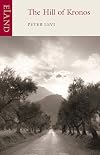
Wonderful report of a man’s love affair with Greece, “Greece has twisted itself in my skeleton like a climbing flower”(p. 203).
In an evocative way Levi (priest, poet, scholar) describes his journeys through and stays in the country from 1963 till 1978 - and in some ways for those who visited Greece this book is a real vacation. You see the light again, feel the heat, are refreshed by the sea, smell the scents, hear the sounds.
Levi also reports of his labour on Pausanias, he is the show more translator of Pausanias Guide to Greece for which he visited all the sites himself.
And he tells of his friendships with Seferis, Gatsos, Katsimbalis and others poets. How they all lived and some died during the terrible years of the regime of the Colonels.
In Athens “the cemetery became one of my favorite lurking places. The heroes of the war of independence lie here, in a wilderness of other monuments, and the first Greek aviator, and by now a number of my friends. The neoclassic marbles run riot, they reflower as rococo, they burst out into sunblasts of baroque. My favorite tomb is that of Makryiannis, the peasant general of 1821 whose memoirs, written with a purity and a force that has no parallel in Europe since the sixteenth century, are the foundation documents of whatever is best in Greece. They were recovered as wrapping paper from a butcher’s shop, and it was George Seferis who first pointed to their profundity and their value. During the 1939 war they circulated in typescript; the Germans put a price on the head of rebellious Makryiannis. Under the Colonels, people left red carnations at his monument. His face on the bronze plaque is consumed with rage and suffering; he has the face of a starved prophet. In his old age he wrote a long and bitter series of reproach to God. He was imprisoned, tortured, virtually starved to death, under the early monarchy. I am constantly moved to tears by his writings” (p. 138) show less
In an evocative way Levi (priest, poet, scholar) describes his journeys through and stays in the country from 1963 till 1978 - and in some ways for those who visited Greece this book is a real vacation. You see the light again, feel the heat, are refreshed by the sea, smell the scents, hear the sounds.
Levi also reports of his labour on Pausanias, he is the show more translator of Pausanias Guide to Greece for which he visited all the sites himself.
And he tells of his friendships with Seferis, Gatsos, Katsimbalis and others poets. How they all lived and some died during the terrible years of the regime of the Colonels.
In Athens “the cemetery became one of my favorite lurking places. The heroes of the war of independence lie here, in a wilderness of other monuments, and the first Greek aviator, and by now a number of my friends. The neoclassic marbles run riot, they reflower as rococo, they burst out into sunblasts of baroque. My favorite tomb is that of Makryiannis, the peasant general of 1821 whose memoirs, written with a purity and a force that has no parallel in Europe since the sixteenth century, are the foundation documents of whatever is best in Greece. They were recovered as wrapping paper from a butcher’s shop, and it was George Seferis who first pointed to their profundity and their value. During the 1939 war they circulated in typescript; the Germans put a price on the head of rebellious Makryiannis. Under the Colonels, people left red carnations at his monument. His face on the bronze plaque is consumed with rage and suffering; he has the face of a starved prophet. In his old age he wrote a long and bitter series of reproach to God. He was imprisoned, tortured, virtually starved to death, under the early monarchy. I am constantly moved to tears by his writings” (p. 138) show less

9/10th of the way through this book, I learned that Tennyson was a virulent n-word racist.
That colors his legacy, no?
While the book would benefit from a culling of at least one fourth of the irrelevant, repetitive, and boring details,
Peter Levi offers many insightful and critical personal judgements.
The time sequence also is often choppy.
That colors his legacy, no?
While the book would benefit from a culling of at least one fourth of the irrelevant, repetitive, and boring details,
Peter Levi offers many insightful and critical personal judgements.
The time sequence also is often choppy.
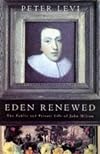
I am sorry to say that, for me, this is too literary; it seems too concerned with proving its own cleverness and to view the possibility that the reader will exit these pages none the wise, with an arrogant nod towards the ignorance of the plebiscite. This book is rather like wading in treacle. Every time that one starts to progress into the life of Milton, the learned Mr Levi curtails the advance with words of his own fine wisdom.
I find that most outstanding authors, like Milton himself, show more write in a manner that leaves the reader feeling that he already knew the truths being aired and that the scrivener's skill is in the clear laying out thereof. Mr Levi, perhaps justifiably, leaves me feeling ignorant and that his great understanding is beyond me. I must, therefore, either crawl away and admit my lowly status, or attack in turn and, I am far too self assured to bend the knee to such a monologue. I shall simply find myself another author who makes Milton the central character and brings the poet to life for me. show less
I find that most outstanding authors, like Milton himself, show more write in a manner that leaves the reader feeling that he already knew the truths being aired and that the scrivener's skill is in the clear laying out thereof. Mr Levi, perhaps justifiably, leaves me feeling ignorant and that his great understanding is beyond me. I must, therefore, either crawl away and admit my lowly status, or attack in turn and, I am far too self assured to bend the knee to such a monologue. I shall simply find myself another author who makes Milton the central character and brings the poet to life for me. show less
Lists
You May Also Like


Associated Authors
Statistics
- Works
- 60
- Also by
- 17
- Members
- 2,051
- Popularity
- #12,539
- Rating
- 3.8
- Reviews
- 20
- ISBNs
- 146
- Languages
- 9
- Favorited
- 2