
Anton Myrer (1922–1996)
Author of Once an Eagle
About the Author
Works by Anton Myrer
Associated Works
Reader's Digest Condensed Books 1978 v03: A Stranger is Watching / Such a Life / The Last Convertible / The Miracle of Dommatina (1978) — Author — 45 copies
Tagged
Common Knowledge
- Legal name
- Myrer, Anton Olmstead
- Birthdate
- 1922-11-03
- Date of death
- 1996-01-19
- Gender
- male
- Education
- Harvard University (AB, 1947)
- Organizations
- US Marine Corps
- Nationality
- USA
- Places of residence
- California, USA
Saugerties, New York, USA - Associated Place (for map)
- USA
Members
Reviews
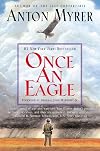
This book is an absolute tome -- 1300 pages in print. That length was a little daunting, but I decided to read it because of the very good reviews, and because it's used as a text for West Point cadets. I was curious why.
It's an excellent book on leadership, contrasting Sam Damon (the guy everyone wants to be) and Courtney Massengale (the guy most folks don't). I imagined, before I started, that each of them would be a caricature. That's not the case. Each is an interesting and complex show more character, though that's truer of Damon than of Massengale. The two are surrounded by interesting friends, family and colleagues, and those relationships are deep and nicely drawn.
Damon's military career begins just before WWI, and the book closes in the run-up to the Vietnam War. Damon is the central character throughout. It could, maybe, have ended earlier, but it kept me engaged all the way to the end. There's come casual racism and sexism in the book, but Damon (and Myrer) are ahead of their time in their challenges to those tropes.
I never served in the military and have certainly never seen combat. I found the combat scenes in the book absolutely gripping. I bet that Myrer did a good job capturing life in the Army in general, including the time Damon served during peacetime.
If you're wondering whether this book is for you, I think that Steinbeck's East of Eden is a reasonable comparison -- sweeping, generational, complex characters working against the cultural and social backgrounds of the time. The characters are equally interesting, I thought, and the story every bit as gripping. show less
It's an excellent book on leadership, contrasting Sam Damon (the guy everyone wants to be) and Courtney Massengale (the guy most folks don't). I imagined, before I started, that each of them would be a caricature. That's not the case. Each is an interesting and complex show more character, though that's truer of Damon than of Massengale. The two are surrounded by interesting friends, family and colleagues, and those relationships are deep and nicely drawn.
Damon's military career begins just before WWI, and the book closes in the run-up to the Vietnam War. Damon is the central character throughout. It could, maybe, have ended earlier, but it kept me engaged all the way to the end. There's come casual racism and sexism in the book, but Damon (and Myrer) are ahead of their time in their challenges to those tropes.
I never served in the military and have certainly never seen combat. I found the combat scenes in the book absolutely gripping. I bet that Myrer did a good job capturing life in the Army in general, including the time Damon served during peacetime.
If you're wondering whether this book is for you, I think that Steinbeck's East of Eden is a reasonable comparison -- sweeping, generational, complex characters working against the cultural and social backgrounds of the time. The characters are equally interesting, I thought, and the story every bit as gripping. show less

I tried, this time, to read this book analytically- to figure out why it means so much to me, why it looms so large in my head. I don't know that I have a rational answer- the protagonist is a Puritan, bound by duty and hampered by unnecessary suffering. His wife is presented as completely unlikeable, a martinet and a shrew. Really, there aren't a lot of characters here with whom I can identify even a little bit- but it doesn't matter. Somehow, for me, this novel exemplifies a generation. It show more explains things to me about World War Two, about the people who were caught up in it and changed by it, and how the sixties were born. It's a huge, sweeping portrait of a time that seems golden in retrospect. I adore it still. show less

So far Urban Renewal and the most sickly sweet marriage of sexist proportions I can hardly stand to read about just to get the old Boston flavor.
Alright, this had so much Boston flavor that I loved it even though the writing was a bit too lyrical in places and the author is a sexist bastard.
This is a novel about a rape and the aftermath of the rape to a marriage. Not very realistic in some ways... At least, I found myself doubting the validity of the author's description of things quite show more frequently.
I guess the main character was pretty hard to take. Even though it's about his wife, Janet, getting raped, the main character is her husband, Gardner Alcock Lawring. He's a real Boston Blue Blood. Money and Victorian morality. Work ethic, duty, basically Republican. To him everything is right or wrong, black and white, which is a lot easier to think if you have enough money to stay out of trouble all your life.
Lawring is an big-time architect working on all the buildings to replace the old West End during urban renewal. Part of the reason his wife gets raped is because urban renewal tore the (Italian)rapist's house down. But it goes much deeper than that...I won't give any more away.
Urban renewal is a real sore spot with me. My family lived near the West End on Beacon Hill until the early 70s and they were very bitter about it.
I am just now thinking about how racist it is too. Black people figure only as criminals and suspects. But more than that Lawring basically has a caste system with him at the top. Every-fucking-one is beneath him, even his wife. His mother has a very old house on Mount Vernon Street, whereas she's just a working class girl from Somerville.
It was absolutely sickeningly racist and sexist, no lie, but I guess you could write anything and if you set it in Boston and walked around a lot, I'd probably like it. show less
Alright, this had so much Boston flavor that I loved it even though the writing was a bit too lyrical in places and the author is a sexist bastard.
This is a novel about a rape and the aftermath of the rape to a marriage. Not very realistic in some ways... At least, I found myself doubting the validity of the author's description of things quite show more frequently.
I guess the main character was pretty hard to take. Even though it's about his wife, Janet, getting raped, the main character is her husband, Gardner Alcock Lawring. He's a real Boston Blue Blood. Money and Victorian morality. Work ethic, duty, basically Republican. To him everything is right or wrong, black and white, which is a lot easier to think if you have enough money to stay out of trouble all your life.
Lawring is an big-time architect working on all the buildings to replace the old West End during urban renewal. Part of the reason his wife gets raped is because urban renewal tore the (Italian)rapist's house down. But it goes much deeper than that...I won't give any more away.
Urban renewal is a real sore spot with me. My family lived near the West End on Beacon Hill until the early 70s and they were very bitter about it.
I am just now thinking about how racist it is too. Black people figure only as criminals and suspects. But more than that Lawring basically has a caste system with him at the top. Every-fucking-one is beneath him, even his wife. His mother has a very old house on Mount Vernon Street, whereas she's just a working class girl from Somerville.
It was absolutely sickeningly racist and sexist, no lie, but I guess you could write anything and if you set it in Boston and walked around a lot, I'd probably like it. show less
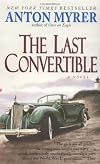
Perhaps my favorite novel of any genre. Told through the eyes of George Virdon, a hardworking working class kid from Towanda, NY. This is a set of stories that cover 25 years or so beginning with a Freshman year at Harvard before WWII and ending during the Vietnam War on the day that Cadillac anounced it was stopping production of the ragtop El-Dorado - the last convertible. What ties the two eras together are the relationships - off and on - of these college friends and the one constant in show more their seperate lives, "The Empress", a 1938 Packard convertible, given to them by their Bon-Vivant French suitemate who returns to France to figh the Germans. For some of the characters life is about success, fame, for others it's financial comfort and for George it's everything. Love, chances taken or not taken, friendships, politics and war. His experiences as an infantryman in Europe and after coming home, raising a family, only to see his friend's son grapple with the reality of the draft.
Throughout the years, George's solidity and the "Empress" are the book's generational constant. It ends with the youngsters not very interested in the old car as gift. George heads back to the garage and tells the car: "Well old girl, I guess you stay with me." show less
Throughout the years, George's solidity and the "Empress" are the book's generational constant. It ends with the youngsters not very interested in the old car as gift. George heads back to the garage and tells the car: "Well old girl, I guess you stay with me." show less
Lists
Awards


You May Also Like


Associated Authors
Statistics
- Works
- 13
- Also by
- 4
- Members
- 1,646
- Popularity
- #15,604
- Rating
- 3.9
- Reviews
- 23
- ISBNs
- 81
- Languages
- 4
- Favorited
- 1