
Mark Hertsgaard
Author of A Day in the Life: The Music and Artistry of the Beatles
About the Author
Mark Hertsgaard, called "one of Americas finest reporters" by Barbara Ehrenreich, covers climate change for Vanity Fair, The Nation, and L'Espresso. He is the author of six books, which have been translated into sixteen languages, including Earth Odyssey.
Image credit: itsyourworld.org
Works by Mark Hertsgaard
Associated Works
Drawdown: The Most Comprehensive Plan Ever Proposed to Reverse Global Warming (2016) — Contributor — 620 copies, 13 reviews
Tagged
Common Knowledge
- Birthdate
- 1956-12-29
- Gender
- male
- Occupations
- journalist
- Nationality
- USA
- Associated Place (for map)
- USA
Members
Reviews
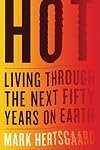
This book took me quite a while to read. Not because of its length or complexity, but because of the subject matter. Climate change is one of the most important issues facing our planet, but because of the enormity of the consequences, it is also one of the scariest.
“In triggering climate change, humanity has unwittingly launched a planetary experiment. Because this experiment has never been run before, and because it involves extremely complicated systems, knowing exactly how it will turn show more out is impossible.”
All of the science and scientific predictions in “Hot” agree that the results will be far from good. There is no disagreement that climate change is here and that it means dire things for many parts of Earth, the only thing that remains to be seen is how dire.
Because of all of this, I had to read “Hot” in parts. I could only take bits at a time…and some bit were easier than others. I am lucky enough to live in an area where one of the people profiled as being a positive force regarding climate change is laying good groundwork for our region going forward. I could focus on those successes and the things that the author outlined that individuals could do as I read the parts about what would occur if nothing was done.
I liked that Hertsgaard puts his daughter and another child at the forefront of this book. Because climate change is a gradual occurrence, it easier for many people to take the “I’ll think about that tomorrow” approach. But when again and again, Hertsgaard reminds the reader that tomorrow is alive in the children of today, it makes it harder and harder to push the reality away. We save mementoes, heirlooms and money for our children’s future – it’s hard to disagree that we need to make sure that the world they will inhabit shouldn’t be saved for them as well.
I was very interested to read that, “Bangladesh has done more over the past twenty years to understand and adapt to climate change than any other country in the world except for Great Britain and the Netherlands.” Which is amazing to me as well as ironic because, “There is a terrible injustice at the heart of the climate problem: climate change punishes the world’s poor first and worst, even though they did almost nothing to bring it on.”
Though there are some very hard and necessary truths in “Hot”, Mark Hertsgaard does a good job in walking the reader close to the ledge, but then showing them there is a ladder there. He deftly shifts the focus between the science of what will probably happen in the next fifty years to the actions that are being taken around the world to minimize and deal with the impacts. He does not let the reader off the hook or pretend that everything will be fine – but leads them to the blueprints of how things can be better.
I applaud the author for taking this subject on, especially with the concerted and highly funded campaign of lying with which climate change deniers are assaulting the world. This is about us, but more importantly, it is about our children. Not the children of tomorrow, but the children we are raising and protecting and loving today. “We are responsible for laying the foundations that future generations will build on, somewhat like the mason’s who laid the foundation of the European cathedrals that took several centuries to complete. They knew they would not live to see the final product of their work, but they also knew they needed to do very solid, precise work because of all the weight that was going to be placed on top of their work.”
We, too, need to take this long world view. We need to understand that tackling climate change is not only our most important challenge as a people but also possibly our greatest triumph. show less
“In triggering climate change, humanity has unwittingly launched a planetary experiment. Because this experiment has never been run before, and because it involves extremely complicated systems, knowing exactly how it will turn show more out is impossible.”
All of the science and scientific predictions in “Hot” agree that the results will be far from good. There is no disagreement that climate change is here and that it means dire things for many parts of Earth, the only thing that remains to be seen is how dire.
Because of all of this, I had to read “Hot” in parts. I could only take bits at a time…and some bit were easier than others. I am lucky enough to live in an area where one of the people profiled as being a positive force regarding climate change is laying good groundwork for our region going forward. I could focus on those successes and the things that the author outlined that individuals could do as I read the parts about what would occur if nothing was done.
I liked that Hertsgaard puts his daughter and another child at the forefront of this book. Because climate change is a gradual occurrence, it easier for many people to take the “I’ll think about that tomorrow” approach. But when again and again, Hertsgaard reminds the reader that tomorrow is alive in the children of today, it makes it harder and harder to push the reality away. We save mementoes, heirlooms and money for our children’s future – it’s hard to disagree that we need to make sure that the world they will inhabit shouldn’t be saved for them as well.
I was very interested to read that, “Bangladesh has done more over the past twenty years to understand and adapt to climate change than any other country in the world except for Great Britain and the Netherlands.” Which is amazing to me as well as ironic because, “There is a terrible injustice at the heart of the climate problem: climate change punishes the world’s poor first and worst, even though they did almost nothing to bring it on.”
Though there are some very hard and necessary truths in “Hot”, Mark Hertsgaard does a good job in walking the reader close to the ledge, but then showing them there is a ladder there. He deftly shifts the focus between the science of what will probably happen in the next fifty years to the actions that are being taken around the world to minimize and deal with the impacts. He does not let the reader off the hook or pretend that everything will be fine – but leads them to the blueprints of how things can be better.
I applaud the author for taking this subject on, especially with the concerted and highly funded campaign of lying with which climate change deniers are assaulting the world. This is about us, but more importantly, it is about our children. Not the children of tomorrow, but the children we are raising and protecting and loving today. “We are responsible for laying the foundations that future generations will build on, somewhat like the mason’s who laid the foundation of the European cathedrals that took several centuries to complete. They knew they would not live to see the final product of their work, but they also knew they needed to do very solid, precise work because of all the weight that was going to be placed on top of their work.”
We, too, need to take this long world view. We need to understand that tackling climate change is not only our most important challenge as a people but also possibly our greatest triumph. show less
The contribution of this book seems to be the focus on adaptation. Of course we need to prevent climate change to whatever extent we can, but that extent is limited. Climate change is already underway and will continue for decades, no matter how we act in the future.
The posture of the book is prescriptive. It is about what we ought to do. Hertsgaard describes many different projects around the world, e.g. the work in the Netherlands to prevent sea level rise from destroying their country. show more These exemplary projects then point the way we need to follow.
Here we are some 14 years later. It's not like nothing has happened. Electric cars, electric bicycles, electric lawnmowers, etc. Wind turbines are all over the place, as are solar panels. It looks like CO2 emissions per capita in the USA have dropped maybe 15% since 2010. That is a significant decrease! On the other hand, climate denialism is as rampant as ever. The planetary response to environmental stresses seems to be violence and authoritarianism as much as anything helpful.
Here's a next step of analysis that Hertsgaard didn't really take up. We will adapt to climate change. Mostly far too late, but still. But... how will we adapt? This descent into violence shows that a lot of our adaptation will be stupid and ugly. From a climate perspective though, the key question is: will our adaptation promote mitigation or conflict with it. For humans to solve a problem in a way that makes the problem worse.... we are certainly capable of digging ourselves into pits like that. Can we avoid it? show less
The posture of the book is prescriptive. It is about what we ought to do. Hertsgaard describes many different projects around the world, e.g. the work in the Netherlands to prevent sea level rise from destroying their country. show more These exemplary projects then point the way we need to follow.
Here we are some 14 years later. It's not like nothing has happened. Electric cars, electric bicycles, electric lawnmowers, etc. Wind turbines are all over the place, as are solar panels. It looks like CO2 emissions per capita in the USA have dropped maybe 15% since 2010. That is a significant decrease! On the other hand, climate denialism is as rampant as ever. The planetary response to environmental stresses seems to be violence and authoritarianism as much as anything helpful.
Here's a next step of analysis that Hertsgaard didn't really take up. We will adapt to climate change. Mostly far too late, but still. But... how will we adapt? This descent into violence shows that a lot of our adaptation will be stupid and ugly. From a climate perspective though, the key question is: will our adaptation promote mitigation or conflict with it. For humans to solve a problem in a way that makes the problem worse.... we are certainly capable of digging ourselves into pits like that. Can we avoid it? show less
I skimmed the other reviews and it seems the main complaint with the book is that it is bleak and depressing and this is, apparently, the author's fault. I wish I could say I were shocked to see such blatant evidence that we as a culture now feel ourselves entitled not only to the pursuit of happiness in a really big house with a bunch of oversized televisions and closets full of crap we never use, but entitled also to books that will describe to us a catastrophe that could end human show more civilization and render the planet unfit for human habitation in an uplifting and hopeful manner. That's incredible. Sorry to say, buttercups, but as anyone with even the slightest modicum of a background in climate change will tell you, if this book has one major flaw (and it does), it is that it is too optimistic.
It's over-optimism rests primarily on the lack of analysis of where the solutions he presents will actually take us. Are they enough? He never says. He is a journalist by training, not a scientist, so he goes after the story (which he does with aplomb). As a result, I was left holding a grab-bag of potential policies to address climate change and absolutely no idea if that grab-bag would, if implemented universally beginning tomorrow, possibly be enough. I suspect they wouldn't.
(Yep, that's not optimism, but I've read dozens of books on climate change and at least a hundred articles and research papers and I've worked in the environmental field for a long time now, so this is based on something more than an innate propensity towards doom and gloom. Which, by the way, I don't have.)
That said, the material is comprehensive, engaging, well-written, fairly thorough, global in scope, and as a parent I appreciated the focus on his young daughter. I share his motivation with my work and writing and activism so I know all too well what he writes of when he writes of his fear and rage over his daughter's future. So I would not hesitate to recommend this to anyone with a basic to moderate understanding of climate change; anyone who is already well-versed in the subject will likely find it repetitive rather than illuminating. On a scientific basis I found Andrew Weaver's book better (he's one of the world's leading climatologists; look up Keeping Our Cool if interested) but Hot is still worthwhile.
If, on the other hand, you think books about climate change should be chipper and upbeat so you can feel good about your and your born & unborn children's prospects, might I recommend giving up and going back to Harlequin novels. show less
It's over-optimism rests primarily on the lack of analysis of where the solutions he presents will actually take us. Are they enough? He never says. He is a journalist by training, not a scientist, so he goes after the story (which he does with aplomb). As a result, I was left holding a grab-bag of potential policies to address climate change and absolutely no idea if that grab-bag would, if implemented universally beginning tomorrow, possibly be enough. I suspect they wouldn't.
(Yep, that's not optimism, but I've read dozens of books on climate change and at least a hundred articles and research papers and I've worked in the environmental field for a long time now, so this is based on something more than an innate propensity towards doom and gloom. Which, by the way, I don't have.)
That said, the material is comprehensive, engaging, well-written, fairly thorough, global in scope, and as a parent I appreciated the focus on his young daughter. I share his motivation with my work and writing and activism so I know all too well what he writes of when he writes of his fear and rage over his daughter's future. So I would not hesitate to recommend this to anyone with a basic to moderate understanding of climate change; anyone who is already well-versed in the subject will likely find it repetitive rather than illuminating. On a scientific basis I found Andrew Weaver's book better (he's one of the world's leading climatologists; look up Keeping Our Cool if interested) but Hot is still worthwhile.
If, on the other hand, you think books about climate change should be chipper and upbeat so you can feel good about your and your born & unborn children's prospects, might I recommend giving up and going back to Harlequin novels. show less
Upsetting but necessary reporting on the implacable disaster we're facing unless something dramatic is done in the very near future about our use of fossil fuels and other sources of greenhouse gases. Hertsgaard uses speculation about the future his young daughter will face as a effective, and moving, pivot for his reporting on the current state of climate research. Most hopeful moment: the aggressive 200-year plan of the Dutch government (and people) to mitigate and adapt to climate change. show more Most depressing: Hertsgaard's account of the disappointingly tepid actions of the Obama administration and the criminal resistance of the Bush administration to any action at all. show less
Lists
Awards


You May Also Like


Associated Authors
Statistics
- Works
- 11
- Also by
- 2
- Members
- 1,023
- Popularity
- #25,180
- Rating
- 3.8
- Reviews
- 16
- ISBNs
- 52
- Languages
- 9