
Frank McLynn
Author of Marcus Aurelius
About the Author
Frank McLynn is currently visiting professor in the Department of Literature at Strathclyde University.
Image credit: The Royal Literary Fund
Series
Works by Frank McLynn
Heroes and Villains: Inside the Minds of the Greatest Warriors in History (2007) 84 copies, 2 reviews
Cengiz Han 1 copy
Tagged
Common Knowledge
- Canonical name
- McLynn, Frank
- Legal name
- McLynn, Francis James
- Birthdate
- 1941-08-29
- Gender
- male
- Education
- University of Oxford (Wadham College)
University of London (PhD) - Occupations
- author
biographer
historian
journalist - Awards and honors
- Fellow, Goldsmiths College, University of London
Associate Fellow, Royal Literary Fund
Royal Historical Society (Fellow)
Royal Geographical Society (Fellow) - Nationality
- UK
- Associated Place (for map)
- UK
Members
Reviews

This was the best kind of Christmas present - a book I would never have chosen for myself but a fascinating read. Burton was almost beyond parody as a Victorian caricature - on the one hand a polymath who neared greatness in disparate fields such as languages, exploration, anthropology and many other areas of arcane knowledge, but also an intolerant egotistical bigot who made enemies easily, oscillated between extremes and frequently undermined himself. McLynn has synthesised this material show more into a surprisingly nuanced, entertaining and coherent portrait. show less
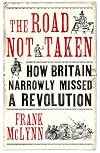
I firmly believe that it’s impossible to write a book about revolutions without showing your personal view of them. In this case, my back was initially put up by McLynn’s comments in the preface that, ‘I am not a Marxist nor even a socialist’ (why is such a disclaimer necessary?) and ‘no-one could seriously claim that today’s citizens face the spectre of starvation’ (which is sadly no longer tenable in these days of benefit sanctions and food banks). In light of the remainder show more of the book, however, I think McLynn protests too much initially. He certainly cites plenty of Marxist historians and theories, whilst expressing considerable sympathy for the putative revolutionaries in each of the seven instances when Britain came close to revolution. Moreover, he displays an astonishing degree of hostility to certain monarchs, especially Henry VIII, who he considers an unusually vicious thug. My own ill-informed view of Henry had been that he was no better or worse than other monarchs of that century, but McLynn does make a strong argument that he was an especially egregious example. In retrospect, it’s amazing how neutrally schoolchildren in the UK are taught that Henry VIII murdered so many of his wives - as if that’s normal, reasonable behaviour as long as you’re a Tudor king!
Tudor tangents aside, I found the accounts of near-revolutions absolutely fascinating. I’d never even heard of the Pilgrimage of Grace 1536 or the General Strike of 1926, and knew next to nothing about the Jacobite Rebellion of 1745-6 and Jack Cade rising of 1450. More generally, I hadn’t realised how close any of these moment came to changing the UK’s political structure in a lasting fashion. McLynn doesn’t get into counterfactuals, although I’d love to read some well-researched fiction doing just that, merely commenting that at various points Britain could have ended up more like the Nordic states, without an empire and much less economically dependent on financial services. He discusses the reasons that these almost-revolutions failed both in general and particular, from which I concluded that England really doesn’t produce decent revolutionaries. Clearly we needed (need?) to import them from Scotland, Ireland, and/or France. Unfortunately, in the last 800 years England has spent a great deal of time fighting Scotland, Ireland, and/or France, which seems to have limited cross-border revolutionary collusion. Aside from the Jacobite Rebellion, an incredible moment when such co-operation very nearly worked. I won’t go further into individual chapters, as there’s such a lot packed into five hundred pages. Suffice it to say, the book does what it claims, exhaustively examining each of the seven occasions when Britain nearly had a revolution and discussing why and how they failed. It's all fascinating stuff, with the caveat that I think E.P. Thompson's [b:The Making of the English Working Class|947848|The Making of the English Working Class|E.P. Thompson|https://images.gr-assets.com/books/1320413439s/947848.jpg|932773] is better on the Chartists.
The thought-provoking, deeply interesting contents of the book deserve five stars, however I’m withholding one for stylistic reasons. I wondered while reading who exactly the intended audience was meant to be. I’ve read popular and academic histories and the writing here sits somewhat awkwardly between the two, sometimes falling into the trap of turgid pomposity. In academic work, this level of density is justified by more systematic use of sources and excision of generalisations. In popular histories, the language is clearer and more accessible. Although I’m a fan of long words, even I think that terms like fissiparous and gallimaufry should be used sparingly. Which I take to mean ‘once per book’. I counted at least four gallimaufries here, which made me wonder if it has a broader meaning than I thought. This sort of thing starts to conceal rather than elucidate the meaning of what’s being said, which is a great pity.
Returning to personal revolutionary politics, one very difficult question raised by this book is, ‘Is Britain better off for not having had a revolution?’ McLynn remains carefully on the fence about this until the very last paragraph of the appendix, causing me to exclaim, “Ha, gotcha!” when I read, ‘Certainly in Britain’s case, the nation can be thankful that it never had to endure the travails of rank two revolutions’. Instead, we endured the travails of failed revolutions and still endure inequalities such as a recognisably feudal pattern of land ownership. Despite this final brief repudiation, I think McLynn’s analysis is well-balanced and nuanced. I wonder, though, whether said thankfulness is an understandable tendency to rationalise national history. France takes pride in its revolution as a formative event; Britain takes pride in its centuries of monarchy as equally formative. I agree with McLynn’s comment that this ongoing cultural attachment to the monarchy (execution of Charles I aside) is one reason for the absence of successful British revolutions.
Finally, as always it is tempting to reflect on the current moment in light of history. I consider the vote for Brexit to be an unmitigated disaster, however it’s also interesting to see how the worst British constitutional crisis for decades (centuries?) will play out. At this point, it seems quite likely to break up the United Kingdom, destabilise the wobbly conventions that make up the constitution, and deal a much greater blow to financialisation of the economy than the financial crisis managed to. Could it be a reactionary revolution in the making? Who knows what may result - likely nothing good, but it could make for some great history books in fifty years time. show less
Tudor tangents aside, I found the accounts of near-revolutions absolutely fascinating. I’d never even heard of the Pilgrimage of Grace 1536 or the General Strike of 1926, and knew next to nothing about the Jacobite Rebellion of 1745-6 and Jack Cade rising of 1450. More generally, I hadn’t realised how close any of these moment came to changing the UK’s political structure in a lasting fashion. McLynn doesn’t get into counterfactuals, although I’d love to read some well-researched fiction doing just that, merely commenting that at various points Britain could have ended up more like the Nordic states, without an empire and much less economically dependent on financial services. He discusses the reasons that these almost-revolutions failed both in general and particular, from which I concluded that England really doesn’t produce decent revolutionaries. Clearly we needed (need?) to import them from Scotland, Ireland, and/or France. Unfortunately, in the last 800 years England has spent a great deal of time fighting Scotland, Ireland, and/or France, which seems to have limited cross-border revolutionary collusion. Aside from the Jacobite Rebellion, an incredible moment when such co-operation very nearly worked. I won’t go further into individual chapters, as there’s such a lot packed into five hundred pages. Suffice it to say, the book does what it claims, exhaustively examining each of the seven occasions when Britain nearly had a revolution and discussing why and how they failed. It's all fascinating stuff, with the caveat that I think E.P. Thompson's [b:The Making of the English Working Class|947848|The Making of the English Working Class|E.P. Thompson|https://images.gr-assets.com/books/1320413439s/947848.jpg|932773] is better on the Chartists.
The thought-provoking, deeply interesting contents of the book deserve five stars, however I’m withholding one for stylistic reasons. I wondered while reading who exactly the intended audience was meant to be. I’ve read popular and academic histories and the writing here sits somewhat awkwardly between the two, sometimes falling into the trap of turgid pomposity. In academic work, this level of density is justified by more systematic use of sources and excision of generalisations. In popular histories, the language is clearer and more accessible. Although I’m a fan of long words, even I think that terms like fissiparous and gallimaufry should be used sparingly. Which I take to mean ‘once per book’. I counted at least four gallimaufries here, which made me wonder if it has a broader meaning than I thought. This sort of thing starts to conceal rather than elucidate the meaning of what’s being said, which is a great pity.
Returning to personal revolutionary politics, one very difficult question raised by this book is, ‘Is Britain better off for not having had a revolution?’ McLynn remains carefully on the fence about this until the very last paragraph of the appendix, causing me to exclaim, “Ha, gotcha!” when I read, ‘Certainly in Britain’s case, the nation can be thankful that it never had to endure the travails of rank two revolutions’. Instead, we endured the travails of failed revolutions and still endure inequalities such as a recognisably feudal pattern of land ownership. Despite this final brief repudiation, I think McLynn’s analysis is well-balanced and nuanced. I wonder, though, whether said thankfulness is an understandable tendency to rationalise national history. France takes pride in its revolution as a formative event; Britain takes pride in its centuries of monarchy as equally formative. I agree with McLynn’s comment that this ongoing cultural attachment to the monarchy (execution of Charles I aside) is one reason for the absence of successful British revolutions.
Finally, as always it is tempting to reflect on the current moment in light of history. I consider the vote for Brexit to be an unmitigated disaster, however it’s also interesting to see how the worst British constitutional crisis for decades (centuries?) will play out. At this point, it seems quite likely to break up the United Kingdom, destabilise the wobbly conventions that make up the constitution, and deal a much greater blow to financialisation of the economy than the financial crisis managed to. Could it be a reactionary revolution in the making? Who knows what may result - likely nothing good, but it could make for some great history books in fifty years time. show less
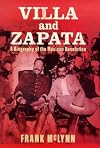
I blithely started reading ‘Villa and Zapata’ thinking it would be fun to learn about a revolution I had no familiarity with at all. As I got into it I realised that, a) when you know practically nothing about the history of a country, much more concentration is required to understand what was going on, and b) Mexico’s revolution could just as accurately be described as a decade of bloody and unremitting civil war. As a consequence, I found this book very interesting and informative, show more as well as hard work and depressing. McFlynn manages to clarify the complex dynamics of the various factions, however the majority of the book reads as a military history. A succession of battles with escalating death tolls characterises the events of 1910 to 1920 and all the major figures ended their lives with multiple massacres under their belts. As the title suggests, Villa and Zapata are the focus and their extraordinary lives are vividly evoked.
This is not just a ‘Great Man’ history, though. McFlynn also explores the relationship between America and Mexico at the time (fraught), the impacts of WWI on Mexico (surprisingly economically positive), and the political philosophy of Zapatismo (Zapata being the only figure who really had such a thing). It may sound silly, but one particularly strong aspect of the book was conveying just how huge and diverse a country Mexico is. For someone like me who is familiar with reading about revolutions in much smaller Western European countries, this was a striking aspect of the Mexican Revolution. McFlynn comes to the conclusion that Villa and Zapata's movements ultimately failed because neither wanted to rule Mexico, alone or together. Each was ultimately most concerned with his own region. In some ways I was surprised that neither turned around and declared regional independence, however I assume there were reasons in the earlier history of Mexico why this was not considered an option.
One aspect of the revolution that I felt wasn't given its due in ‘Villa and Zapata’ was the role of women. The fact that a lot of women fought in the factional armies comes up several times, however the only women who merit actually being named in the narrative are relatives and mistresses of the major male figures. All the leaders of factions either raped and murdered women themselves, or encouraged their soldiers to do so, or both. I felt that the female fighters deserved more attention, although I assume less documentary evidence of who they were and what they did probably survived. That always seems to be the way. Nonetheless, the book does do justice to the impact of the revolution on the population at large and their waxing and waning loyalties to various figures. It is not a happy tale, though. At the end, McFlynn has to specifically explain what changed as a result of the revolution, as superficially it exchanged one autocrat for another after a decade of vicious war that absolutely devastated the whole country and killed up to a million people. I wouldn’t call the whole thing enjoyable, however once I worked out who was who it was fascinating. show less
This is not just a ‘Great Man’ history, though. McFlynn also explores the relationship between America and Mexico at the time (fraught), the impacts of WWI on Mexico (surprisingly economically positive), and the political philosophy of Zapatismo (Zapata being the only figure who really had such a thing). It may sound silly, but one particularly strong aspect of the book was conveying just how huge and diverse a country Mexico is. For someone like me who is familiar with reading about revolutions in much smaller Western European countries, this was a striking aspect of the Mexican Revolution. McFlynn comes to the conclusion that Villa and Zapata's movements ultimately failed because neither wanted to rule Mexico, alone or together. Each was ultimately most concerned with his own region. In some ways I was surprised that neither turned around and declared regional independence, however I assume there were reasons in the earlier history of Mexico why this was not considered an option.
One aspect of the revolution that I felt wasn't given its due in ‘Villa and Zapata’ was the role of women. The fact that a lot of women fought in the factional armies comes up several times, however the only women who merit actually being named in the narrative are relatives and mistresses of the major male figures. All the leaders of factions either raped and murdered women themselves, or encouraged their soldiers to do so, or both. I felt that the female fighters deserved more attention, although I assume less documentary evidence of who they were and what they did probably survived. That always seems to be the way. Nonetheless, the book does do justice to the impact of the revolution on the population at large and their waxing and waning loyalties to various figures. It is not a happy tale, though. At the end, McFlynn has to specifically explain what changed as a result of the revolution, as superficially it exchanged one autocrat for another after a decade of vicious war that absolutely devastated the whole country and killed up to a million people. I wouldn’t call the whole thing enjoyable, however once I worked out who was who it was fascinating. show less
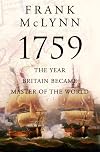
History books are notably hard to write for an inattentive, probably ill-educated mass audience. Books written by historians for historians are hard to sell, because they're usually inelegantly written. Okay, they're usually BORING to the point of suicide.
This is a popular history written like a standard work of today's non-fiction, with real attention to the narrative drive of the story and also a fine hand at illuminating the character of the dramatis personae. McLynn's book is very show more involving, and it's a rarity in that the subject matter, the role of the events of a single year in the subsequent development of the world, is handled un-portentously.
The urge to shout and wave one's arms about when presenting historical facts that one knows will be important later must be nigh on irresistible. McLynn resists. He lets the story develop at the same pace as the year itself did, though inevitably the events move out of strict time sequence because the narrative is driven by the locations as much as by the time. I was impressed by the analysis in the book, the support for his contention that, had 1759 turned out differently at any point, then so would our present world. It's very hard to make that weave into a book about the past without coming across as a cranky, tendentious old fuffertut. McLynn manages to do it, so KUDOS!
Why, then, only 3-1/2 stars? Because I don't think McLynn accomplished his stated aim of making a watertight case for 1759 being the final turning-point of the British march to world domination. I'm certainly not an historian, but there are some unsupported assertions in the book that could simply represent holes in my education and be facts that are Received Wisdom. But there are enough of them that I wasn't all the way convinced by the text.
Recommended? Oh yes, please go get one and read it of you're an Anglophile, a Francophobe, or an aficionado of the 18th century's fascinating history. It will repay you...especially the last chapter, on the naval Battle of Quiberon Way. Exciting stuff! show less
This is a popular history written like a standard work of today's non-fiction, with real attention to the narrative drive of the story and also a fine hand at illuminating the character of the dramatis personae. McLynn's book is very show more involving, and it's a rarity in that the subject matter, the role of the events of a single year in the subsequent development of the world, is handled un-portentously.
The urge to shout and wave one's arms about when presenting historical facts that one knows will be important later must be nigh on irresistible. McLynn resists. He lets the story develop at the same pace as the year itself did, though inevitably the events move out of strict time sequence because the narrative is driven by the locations as much as by the time. I was impressed by the analysis in the book, the support for his contention that, had 1759 turned out differently at any point, then so would our present world. It's very hard to make that weave into a book about the past without coming across as a cranky, tendentious old fuffertut. McLynn manages to do it, so KUDOS!
Why, then, only 3-1/2 stars? Because I don't think McLynn accomplished his stated aim of making a watertight case for 1759 being the final turning-point of the British march to world domination. I'm certainly not an historian, but there are some unsupported assertions in the book that could simply represent holes in my education and be facts that are Received Wisdom. But there are enough of them that I wasn't all the way convinced by the text.
Recommended? Oh yes, please go get one and read it of you're an Anglophile, a Francophobe, or an aficionado of the 18th century's fascinating history. It will repay you...especially the last chapter, on the naval Battle of Quiberon Way. Exciting stuff! show less
Lists
Awards


You May Also Like


Associated Authors
Statistics
- Works
- 33
- Members
- 3,237
- Popularity
- #7,903
- Rating
- 3.8
- Reviews
- 42
- ISBNs
- 134
- Languages
- 6
- Favorited
- 1