
Beverly Gage
Author of G-Man: J. Edgar Hoover and the Making of the American Century
About the Author
Beverly Gage teaches U.S. history at Yale University. Her writing has appeared in the New York Times. The Chicago Tribune. Slate.com, The Nation, and the Washington Post. She has been featured as a guest commentator on the NewsHour with Jim Lebrer and in Time magazine.
Works by Beverly Gage
The Day Wall Street Exploded: A Story of America in Its First Age of Terror (2009) 184 copies, 6 reviews
This Land is Your Land: A Road Trip Through U.S. History (English Edition) (2026) 63 copies, 3 reviews
This Land is Your Land 1 copy
Associated Works
Tagged
Common Knowledge
- Legal name
- Gage, Beverly
- Gender
- female
- Education
- Columbia University (Ph.D. | History | 2004)
- Occupations
- professor (history)
- Organizations
- Yale University (associate professor)
- Awards and honors
- Sarai Ribicoff Award for Teaching Excellence in Yale College (2009)
- Relationships
- Dawley, Alan (mentor)
- Nationality
- USA
- Associated Place (for map)
- USA
Members
Reviews
G-Man (Pulitzer Prize Winner): J. Edgar Hoover and the Making of the American Century by Beverly Gage
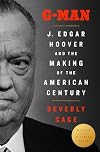
**So pleased to see this win the 2023 Pulitzer for Biography!**
The damage one man can do is astounding. It comes as no surprise to me that J. Edgar Hoover was a terrible man. I am fully aware that he was given unchecked power for half a century by presidents Republican and Democrat, and that he used that power to orchestrate the ruin and murder of people who were unacceptable to him, mostly Black and Jewish Americans. I am reasonably well schooled in 20th-century US history, and no one, no show more one, is more central to 20th century US history than Hoover. But there were many things about Hoover I did not know, things that surprised me (and not in a good way) and that filled in the gaps in my knowledge. Gage writes like a prosecutor, a really good one, laying out her case and in the end it turns out most everything that is wrong with America today is connected to the beliefs and actions of J. Edgar Hoover. I don't mean to be hyperbolic, Hoover is by no means solely responsible for the devaluation of the lives of Black people, for the hubris of January 6th and Charlottesville idiots, for the back door dealing, for the villainization of anyone who seeks to be an honest broker, for wage compression, for absurd Congressional hearings about trumped up scare scenarios (HUAC, violent lyrics in rap/imagery in video games, the dangers of social media and tech in general) that absolutely do not matter but keep lazy people distracted while bad people fiddle about. But all these things and more have some connecting thread to Hoover. He nearly single handedly devised and maintained the Cold War. He literally ordered agents to not intervene to stop lynchings, and refused to participate meaningfully in investigating murders by judges and sheriffs and other powerful men, allowing them to police themselves to avoid federal overreach(this is still the way many in Congress and on talk radio think things should be.) If fact, he chose to not tell the Dallas police about credible assassination threats made against John Kennedy because he did not want to "interfere" is local law enforcement. He created the Red Scare and the Lavender Scare (this very very Gay man routed out and destroyed the careers and lives many many civil servants because they were Gay - unless they were his friends, in which case he covered for them), dividing people and creating identity politics. There is so much more. He was depraved.
It is easy to fall back on the excuse that as a Gay man the pressure to live a lie twisted him, but that is too simple. For one, he did not really live a lie. For 44 years he openly lived with his partner Clyde Tolson. They were invited everywhere as a couple including to the White House wedding of one of LBJ's daughters. There are letters between him and presidents (Johnson and Nixon) that speak of them as a couple. When Hoover died, the soldiers folded the flag placed over his coffin and handed it to Tolson. I mean I assume they did not hold hands or anything, but they were not in the shadows either. Under his rule he was in fact the only Gay man (well, also a few friends) who got to live comfortably with his partner. The truth is that he was a martinet and a despot. He was a man whose belief in White supremacy was the most foundational most central belief he possessed. Hoover belonged to a fraternity that had a pledge of a belief in White supremacy in its charter, required frat houses to hang a Confederate battle flag over their doors and held annual blackface parties. It is from this fraternity that Hoover hired for the FBI almost exclusively, and the fraternity was a primary source for his social and business relationships all through his life. Hoover was a bad man. Yes, I imagine he had some feelings of self-loathing stemming from his homosexuality and the social condemnation of LTBTQ+ people in the time he lived, but that does not erase the fact that he was a dimensional bad man, that there were a lot of reasons for his villainy, and yet none of them justify a bit of it.
There is more, to learn, and you should. One of the most illuminating bios I have ever read. show less
The damage one man can do is astounding. It comes as no surprise to me that J. Edgar Hoover was a terrible man. I am fully aware that he was given unchecked power for half a century by presidents Republican and Democrat, and that he used that power to orchestrate the ruin and murder of people who were unacceptable to him, mostly Black and Jewish Americans. I am reasonably well schooled in 20th-century US history, and no one, no show more one, is more central to 20th century US history than Hoover. But there were many things about Hoover I did not know, things that surprised me (and not in a good way) and that filled in the gaps in my knowledge. Gage writes like a prosecutor, a really good one, laying out her case and in the end it turns out most everything that is wrong with America today is connected to the beliefs and actions of J. Edgar Hoover. I don't mean to be hyperbolic, Hoover is by no means solely responsible for the devaluation of the lives of Black people, for the hubris of January 6th and Charlottesville idiots, for the back door dealing, for the villainization of anyone who seeks to be an honest broker, for wage compression, for absurd Congressional hearings about trumped up scare scenarios (HUAC, violent lyrics in rap/imagery in video games, the dangers of social media and tech in general) that absolutely do not matter but keep lazy people distracted while bad people fiddle about. But all these things and more have some connecting thread to Hoover. He nearly single handedly devised and maintained the Cold War. He literally ordered agents to not intervene to stop lynchings, and refused to participate meaningfully in investigating murders by judges and sheriffs and other powerful men, allowing them to police themselves to avoid federal overreach(this is still the way many in Congress and on talk radio think things should be.) If fact, he chose to not tell the Dallas police about credible assassination threats made against John Kennedy because he did not want to "interfere" is local law enforcement. He created the Red Scare and the Lavender Scare (this very very Gay man routed out and destroyed the careers and lives many many civil servants because they were Gay - unless they were his friends, in which case he covered for them), dividing people and creating identity politics. There is so much more. He was depraved.
It is easy to fall back on the excuse that as a Gay man the pressure to live a lie twisted him, but that is too simple. For one, he did not really live a lie. For 44 years he openly lived with his partner Clyde Tolson. They were invited everywhere as a couple including to the White House wedding of one of LBJ's daughters. There are letters between him and presidents (Johnson and Nixon) that speak of them as a couple. When Hoover died, the soldiers folded the flag placed over his coffin and handed it to Tolson. I mean I assume they did not hold hands or anything, but they were not in the shadows either. Under his rule he was in fact the only Gay man (well, also a few friends) who got to live comfortably with his partner. The truth is that he was a martinet and a despot. He was a man whose belief in White supremacy was the most foundational most central belief he possessed. Hoover belonged to a fraternity that had a pledge of a belief in White supremacy in its charter, required frat houses to hang a Confederate battle flag over their doors and held annual blackface parties. It is from this fraternity that Hoover hired for the FBI almost exclusively, and the fraternity was a primary source for his social and business relationships all through his life. Hoover was a bad man. Yes, I imagine he had some feelings of self-loathing stemming from his homosexuality and the social condemnation of LTBTQ+ people in the time he lived, but that does not erase the fact that he was a dimensional bad man, that there were a lot of reasons for his villainy, and yet none of them justify a bit of it.
There is more, to learn, and you should. One of the most illuminating bios I have ever read. show less
41. G-Man: J. Edgar Hoover and the Making of the American Century by Beverly Gage
reader: Gabra Zackman
OPD: 2022
format: 36:36 audible audiobook (864 pages in hardcover)
acquired: May 19 listened: May 19 – Jul 24
rating: 4.5
genre/style: Biography theme: random audio
locations: Washington, D.C.
about the author: History professor at Yale (Yale alum, 1994)
Goodness, where to begin.
It worth spending a moment to point out that J. Edgar Hoover was considered an American hero during his lifetime. He show more was the one who built and defined the FBI as a mythically clean-cut law abiding, apolitical, white-collar, effective law enforcement organization that broke the 1930's crime rings, led communist crackdowns, and caught and prosecuted some WWII spies. He was supported and depended on by presidents FDR, Eisenhower, Johnson and Nixon, who considered him a close friend. He joined the justice department in 1917, led the FBI from 1924 (under a different name. He got to name it the FBI), appointed under Calvin Coolidge. He served as director under eight presidents (Coolidge, Herbert Hoover, FDR, Eisenhower, Truman, Kennedy, Johnson and Nixon), for 48 years until his death of a heart attack or stroke in 1972. His approval rating among Americans was over 90%. And he was given a hero's funeral, with a passionate speech by Richard Nixon.
It wasn't until Watergate that public opinion turned. The arrests leading to Watergate happened a week or so after Hoover's death. As part of the investigation, the FBI files were opened up, and country learned for the first time all the secret activities the FBI had been up to the last 48 years, spying, wiretapping, infiltrating and intentionally disrupting organizations deemed dangerous...or just leftwing. Martin Luther King was wiretapped, as was Malcom X. The Black Panthers were destroyed by infiltrators. The FBI was listening everywhere. And no one outside the FBI previously really knew. Hoover, in death, has become a villain he never realized he was, and a scapegoat of everything wrong with conservative paranoid America in the 1950's and 1960's. Where does one go with all these stories.
Hoover was born and raised in Washington, D.C., where he would live his entire life. He went to college locally, at George Washington University, where he joined Kappa Alpha, a notoriously southern and racist fraternity. His first government job was with the Library of Congress, and the information skills he learned there would influence his career. He was very conservative, something he was open about, and he was gay, something known but not widely, and never acknowledged. He later had a life-long partner, his main assistant in the FBI, Clyde Tolston, and they basically lived as a married couple.
His first infamous efforts in the Justice Department were as an active part of the Palmer Raids in 1919, during a Communist scare. Several radicals were found and arrested, with information carefully collated in part by Hoover, but public opinion turned against the law enforcement, and raids were a great justice department failure. Hoover dodged the blame. In an odd sequence, he was appointed director of the Bureau of Investigation by a liberal US attorney general who believed in Hoover's integrity and capacity. Hoover did some really important things as director, defining the FBI myth. Needing to breakdown the resistance of local police toward federal interference, he created the first national database of fingerprints. Local police would contribute and then use the FBI to get matches. He also created the FBI academy, where police from around the country were sent for FBI training, being trained into the FBI mentality, and developing FBI connections and loyalties. Academy graduates would form key contacts throughout the FBI's history.
Up till WWII, Hoover's crimes were one of methodology and preference. He set up the FBI to be loyal to him, and under his thumb, despite his simplistic views on crime. He was in full control and very demanding. But once WWII began across the ocean, FDR needed surveillance, and he turned to Hoover. And then the wiretapping began, and the breaking of foreign codes. It was never legal. But Hoover had Roosevelt's encouragement. The British counterintelligence were horrified by Hoover because he was so unimaginative to them, and unsophisticated. (But also the British intelligence had a Russian spy at the highest lever, Kim Philby.) What I found interesting is that FBI would eventually identify over 100 Russian spies activity working for the Soviet Union in the United States, some in key roles, but they couldn't prosecute. Because the way they got the information was either illegal, or too secret to share. So, for example, Hoover knew Ted Hall was a key spy who gave Russians critical atomic bomb information, but he never prosecuted.
This became a policy. Collect information through any means possible, but then sit on that information, which was too valuable to divulge. Hoover would use it, but not in court. After his death, Nixon missed Hoover's influence, because he thought congressmen would be so afraid of the information Hoover had on them, they would never have been able to act against Nixon. But the truth is, no one outside the FBI understood just how extensive the FBI database was.
Hoover's fervent anticommunism became popular in the early Cold War, during the time of the House Un-American Activities Committee (HUAC), and Joseph McCarthy's era. Hoover found McCarthy a problem, because he was so self-promoting, and bombastic and a liar. But Hoover supported the goal of fighting American communists. Among his policies, was investigating every government employee and even schoolteachers, looking for Communist affiliations. Hundreds were confronted and investigated, and around half lost their jobs. Ironically, he also was in charge of rooting out homosexuals in government.
The origin of COINTELPRO was as a tool against Communist organizations, a way to fight these organizations without going through the courts, or congress, or anyone. FBI agents would infiltrate Communist groups, and then actively disrupt them, creating conflict and divisions and distrust. It was effective. The techniques were later used against the Klu Klux Klan, and then against the non-Communist new left and civil rights groups, most notoriously the Black Panthers.
An interesting aspect of Hoover was that he worked against both the KKK and Civil Rights. He was a hard conservative that basically didn't want any cultural changes, as least not from the perspective of a Washington, D. C. southerner. And he blamed everything wrong on the country on groups undermining this status quo. But he also had his limits. When Johnson asked Hoover to plant wiretaps in the Democratic National Convention, Johnson's own party and a completely illegal request and unethical for the supposedly non-political FBI, Hoover agreed but demanded the request in writing. When Nixon became president, he was very frustrated that Hoover would not do whatever he asked for. Hoover balked at the requests, stalling. Nixon was forced to create his own dirty-work group, the Plumbers, the group busted in Watergate.
Over the years, Hoover became a power-center. The FBI ran to his rules, kept the hot information private. He had connections throughout the country through his FBI academy, and ex-FBI agents, several of whom were elected to congress. Politically, Hoover was very savvy, a conservative serving in liberal presidential administrations, often the only conservative of prominence. He had ways to creating trust. He was famous for making anyone, of any political persuasion, who came into his office, walk out thinking Hoover was on their side. Thurgood Marshall liked Hoover and would defend him publicly, even as the FBI was actively undermining his NAACP. During the 1950's, Hoover's favorite decade, he made key connections, and became close friends with Joe Kennedy, JFK's father, Lyndon Johnson and Richard Nixon, giving him deep connections to the next three presidential administrations. (He was also on close terms with Robert Ford, Nixon's successor.) It meant he stayed around, was publicly praised, viewed and talked about as an American hero. Those listening closely, the woke ones, if you like, were critical, but were also part of a small minority that had no popular traction.
If you can't tell, I found the book excellent. It's the first Hoover biography in 30 years and it's thorough and well done. It's a tough read in that Hoover is a tough person to spend a lot of time with. I felt some internal relief when he passed away in the book. The problem with processing Hoover in our heads is that he wasn't all bad, and never saw himself as doing anything wrong. He was of his era. But the crimes add up, and they got very hard to read about. So, an excellent biography of a difficult, unpleasant, but important American figure.
-------
addendum:
After post this, I thought about all the stuff I didn’t mention - southern lynchings and Jim Crowe, the Rosenbergs, the jfk assassination, and the insights into Truman (not consulting experts), Eisenhower (had to be baptized so he could promote Christian America), the Kennedys (hot headed and mob connected and not supportive of civil rights), Johnson (and his efforts to keep conservative southern support and push civil rights), MLK, and Nixon (who comes across almost human). There is a lot within.
-------
2023
https://www.librarything.com/topic/351556#8201534 show less
reader: Gabra Zackman
OPD: 2022
format: 36:36 audible audiobook (864 pages in hardcover)
acquired: May 19 listened: May 19 – Jul 24
rating: 4.5
genre/style: Biography theme: random audio
locations: Washington, D.C.
about the author: History professor at Yale (Yale alum, 1994)
Goodness, where to begin.
It worth spending a moment to point out that J. Edgar Hoover was considered an American hero during his lifetime. He show more was the one who built and defined the FBI as a mythically clean-cut law abiding, apolitical, white-collar, effective law enforcement organization that broke the 1930's crime rings, led communist crackdowns, and caught and prosecuted some WWII spies. He was supported and depended on by presidents FDR, Eisenhower, Johnson and Nixon, who considered him a close friend. He joined the justice department in 1917, led the FBI from 1924 (under a different name. He got to name it the FBI), appointed under Calvin Coolidge. He served as director under eight presidents (Coolidge, Herbert Hoover, FDR, Eisenhower, Truman, Kennedy, Johnson and Nixon), for 48 years until his death of a heart attack or stroke in 1972. His approval rating among Americans was over 90%. And he was given a hero's funeral, with a passionate speech by Richard Nixon.
It wasn't until Watergate that public opinion turned. The arrests leading to Watergate happened a week or so after Hoover's death. As part of the investigation, the FBI files were opened up, and country learned for the first time all the secret activities the FBI had been up to the last 48 years, spying, wiretapping, infiltrating and intentionally disrupting organizations deemed dangerous...or just leftwing. Martin Luther King was wiretapped, as was Malcom X. The Black Panthers were destroyed by infiltrators. The FBI was listening everywhere. And no one outside the FBI previously really knew. Hoover, in death, has become a villain he never realized he was, and a scapegoat of everything wrong with conservative paranoid America in the 1950's and 1960's. Where does one go with all these stories.
Hoover was born and raised in Washington, D.C., where he would live his entire life. He went to college locally, at George Washington University, where he joined Kappa Alpha, a notoriously southern and racist fraternity. His first government job was with the Library of Congress, and the information skills he learned there would influence his career. He was very conservative, something he was open about, and he was gay, something known but not widely, and never acknowledged. He later had a life-long partner, his main assistant in the FBI, Clyde Tolston, and they basically lived as a married couple.
His first infamous efforts in the Justice Department were as an active part of the Palmer Raids in 1919, during a Communist scare. Several radicals were found and arrested, with information carefully collated in part by Hoover, but public opinion turned against the law enforcement, and raids were a great justice department failure. Hoover dodged the blame. In an odd sequence, he was appointed director of the Bureau of Investigation by a liberal US attorney general who believed in Hoover's integrity and capacity. Hoover did some really important things as director, defining the FBI myth. Needing to breakdown the resistance of local police toward federal interference, he created the first national database of fingerprints. Local police would contribute and then use the FBI to get matches. He also created the FBI academy, where police from around the country were sent for FBI training, being trained into the FBI mentality, and developing FBI connections and loyalties. Academy graduates would form key contacts throughout the FBI's history.
Up till WWII, Hoover's crimes were one of methodology and preference. He set up the FBI to be loyal to him, and under his thumb, despite his simplistic views on crime. He was in full control and very demanding. But once WWII began across the ocean, FDR needed surveillance, and he turned to Hoover. And then the wiretapping began, and the breaking of foreign codes. It was never legal. But Hoover had Roosevelt's encouragement. The British counterintelligence were horrified by Hoover because he was so unimaginative to them, and unsophisticated. (But also the British intelligence had a Russian spy at the highest lever, Kim Philby.) What I found interesting is that FBI would eventually identify over 100 Russian spies activity working for the Soviet Union in the United States, some in key roles, but they couldn't prosecute. Because the way they got the information was either illegal, or too secret to share. So, for example, Hoover knew Ted Hall was a key spy who gave Russians critical atomic bomb information, but he never prosecuted.
This became a policy. Collect information through any means possible, but then sit on that information, which was too valuable to divulge. Hoover would use it, but not in court. After his death, Nixon missed Hoover's influence, because he thought congressmen would be so afraid of the information Hoover had on them, they would never have been able to act against Nixon. But the truth is, no one outside the FBI understood just how extensive the FBI database was.
Hoover's fervent anticommunism became popular in the early Cold War, during the time of the House Un-American Activities Committee (HUAC), and Joseph McCarthy's era. Hoover found McCarthy a problem, because he was so self-promoting, and bombastic and a liar. But Hoover supported the goal of fighting American communists. Among his policies, was investigating every government employee and even schoolteachers, looking for Communist affiliations. Hundreds were confronted and investigated, and around half lost their jobs. Ironically, he also was in charge of rooting out homosexuals in government.
The origin of COINTELPRO was as a tool against Communist organizations, a way to fight these organizations without going through the courts, or congress, or anyone. FBI agents would infiltrate Communist groups, and then actively disrupt them, creating conflict and divisions and distrust. It was effective. The techniques were later used against the Klu Klux Klan, and then against the non-Communist new left and civil rights groups, most notoriously the Black Panthers.
An interesting aspect of Hoover was that he worked against both the KKK and Civil Rights. He was a hard conservative that basically didn't want any cultural changes, as least not from the perspective of a Washington, D. C. southerner. And he blamed everything wrong on the country on groups undermining this status quo. But he also had his limits. When Johnson asked Hoover to plant wiretaps in the Democratic National Convention, Johnson's own party and a completely illegal request and unethical for the supposedly non-political FBI, Hoover agreed but demanded the request in writing. When Nixon became president, he was very frustrated that Hoover would not do whatever he asked for. Hoover balked at the requests, stalling. Nixon was forced to create his own dirty-work group, the Plumbers, the group busted in Watergate.
Over the years, Hoover became a power-center. The FBI ran to his rules, kept the hot information private. He had connections throughout the country through his FBI academy, and ex-FBI agents, several of whom were elected to congress. Politically, Hoover was very savvy, a conservative serving in liberal presidential administrations, often the only conservative of prominence. He had ways to creating trust. He was famous for making anyone, of any political persuasion, who came into his office, walk out thinking Hoover was on their side. Thurgood Marshall liked Hoover and would defend him publicly, even as the FBI was actively undermining his NAACP. During the 1950's, Hoover's favorite decade, he made key connections, and became close friends with Joe Kennedy, JFK's father, Lyndon Johnson and Richard Nixon, giving him deep connections to the next three presidential administrations. (He was also on close terms with Robert Ford, Nixon's successor.) It meant he stayed around, was publicly praised, viewed and talked about as an American hero. Those listening closely, the woke ones, if you like, were critical, but were also part of a small minority that had no popular traction.
If you can't tell, I found the book excellent. It's the first Hoover biography in 30 years and it's thorough and well done. It's a tough read in that Hoover is a tough person to spend a lot of time with. I felt some internal relief when he passed away in the book. The problem with processing Hoover in our heads is that he wasn't all bad, and never saw himself as doing anything wrong. He was of his era. But the crimes add up, and they got very hard to read about. So, an excellent biography of a difficult, unpleasant, but important American figure.
-------
addendum:
After post this, I thought about all the stuff I didn’t mention - southern lynchings and Jim Crowe, the Rosenbergs, the jfk assassination, and the insights into Truman (not consulting experts), Eisenhower (had to be baptized so he could promote Christian America), the Kennedys (hot headed and mob connected and not supportive of civil rights), Johnson (and his efforts to keep conservative southern support and push civil rights), MLK, and Nixon (who comes across almost human). There is a lot within.
-------
2023
https://www.librarything.com/topic/351556#8201534 show less
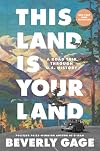
I like history and I love road trips, and though my explorations do include visiting historic sites, ofttimes it’s more about the trip than the destination. For Ms. Gage, at least in this book, it’s the other way around and we are enriched. We get an academic's assessment of selected histories, but it doesn't read like an academic text. Far from it, this is an nice read.
She packs a lot into each of the 13 chapters though the reader doesn't have the burden of unpacking because this is show more well-composed. A bit of trip background, some historical background, overviews of what she saw (and didn't see) with enough depth to both satisfy curiosity and plant seeds for further digging. Some of the most interesting road trips are the ones that involve detours, side excursions and her narrative has those. We get some off the selected path seemingly meandering but every time she ties it back neatly to her overall theme for the chapter, or at least subsection of the chapter. I think James Burke would be proud of her Connections.
History may be written by the victors, but she went to places where the losers still have their own narrative, true or not. Ms Gage swings her critical eye on the exhibits, installations, museums she visits and shares with us the progress and regress of social change on how events are portrayed, ignored, and yes, distorted. She says, "While I hit many history-saturated places, I skipped some others, including a few we tend to think of as especially 'historic.' There is no Boston, no New York City, no New Orleans, no Washington, D.C." I've lived in some of the places she recounts here, and visited several others, though I admit I don't have a lot of interest in battlefields and war memorials. And she gave me a few eyeopeners in some of the places with which I was more familiar than the average resident/visitor.
I like her writing style. I don’t, however, like the Notes style she used. End notes with semi-anchoring sentence fragments from somewhere in the text are frustrating to me. They are an unwelcome scavenger hunt dependent on my patience to go back through the text. (Digital forms do make it easier with a search function, but physical copies? Yeah, frustrating. ) But .... she makes up for it with Recommended Reading lists that connect where she got some information with sources available to the reader.
I received a digital review copy of an advance uncorrected reader's proof of this from the publisher, Simon & Schuster through Edelweiss, for which I am grateful. My copy did not have any of the maps that will be in the final copy and I would be curious to see them.
Some of my highlights and observations:
“Then I became a historian. As part of my academic training, I took a more tempered and realistic look at the United States, with all of its contradictions and injustices. I also learned to be skeptical of self-congratulatory narratives: progress, manifest destiny, shining-city-on-a-hill exceptionalism. Historians tend to be myth-busters.”
{I like that kind of myth-busting and I appreciate when someone else does it, especially with history.}
"What I did not expect was how intensely local so much of that history would be. Each chapter of the book describes a small group of people who happened to live in a certain place at a certain time—and who, for that fleeting moment, came to stand in for the nation at large."
"Philadelphia is not just about the history that happened there; it’s about the ways Americans have invented and reinvented that history over time"
{How many of the places described - and not touched on at all - here are reinventions?}
[on the Ohio Presidential Trail]
"That […] might not sound so interesting, but between the 1840s and the 1920s Ohio produced a lot of presidents. (Since you asked: Harrison, Grant, Hayes, Garfield, another Harrison, McKinley, Taft, and Harding.)"
{now that I live in Ohio, perhaps I should check this out}
[on that particular thorn, Texas]
"Unlike Connecticut, Texas mandates that students actually learn about their state’s history.
Governor Greg Abbott thinks this history should be presented in 'heroic' form, without the 'political correctness' that has allegedly infected so many history books in recent years."
{Don’t get me started on Abbott and cronies, and that insufferable Texan attitude.}
[on tourist merch distorted by gun images or slogans adjunct to the "I was there" point of the tourist merch]
"I get it: Guns are a big deal in Texas. And to be fair, similar merchandise is sold at other historic sites too. But I’ve never understood why today’s aggressive gun politics should get to own all that history."
{Oh, my, but I do like how she phrased that.}
[on the 1846 Mexican War]
" Decades later, another general-turned-president, Ulysses S. Grant, looked back on the Mexican War as 'one of the most unjust ever waged by a stronger against a weaker nation.' He believed that the crisis that followed—including the Civil War itself—was 'punishment' for seizing Texas and making it American."
{uh oh. Fast forward 180 years...}
[Chicago]
"Many of Chicago’s top destinations date back to the era of the Columbian Expo, including the Art Institute of Chicago, the Newberry Library, the University of Chicago, the Field Museum of Natural History, and Burnham’s Orchestra Hall. Chicago also contains the remnants of institutions built in an effort to answer the era’s social question. On the campus of the University of Illinois at Chicago, students and visitors can stop by Hull House, the influential “settlement house” established in 1889 by reformers Jane Addams and Ellen Gates Starr, who believed that everyone—even the city’s poorest and newest residents—deserved access to the good life that modern industrial society had to offer."
{I really need to go back to Chicago and check out more than the Art Institute.}
[In Atlanta]
"While reading about all this [Stone Mountain, the community, state laws and how they've changed] in preparation for my return visit, I learned that I was going to be in Stone Mountain the day after Confederate Memorial Day—[…]"
{Wait, wtf? This is still a thing? Okay, dig a little and I see that it isn't a state recognized event in Geaorgia anymore, but it still is in Alabama, Mississippi, South Carolina and Texas. This is my surprised face.}
[on trying to talk to people at Stone Mountain about that ...observance]
"As several Sons [of the Confederacy] acknowledged, they had been instructed not to speak with the press—or even, apparently, with itinerant history teachers."
[on future National Parks development]
"The National Park Service has announced plans to invest $10 million in downtown Selma."
{Ms. Gage mentions the NPS planning to spend several many million$ in a couple of places. This book hasn't been published yet, so a caveat might be appropriate (“although the agency’s funding has been cut significantly in 2025 and these projects may have been cut.” She does acknowledge the program cuts to the NPS and other institutions in her Epilogue.}
[on a frustrating to me fact of unbalanced disparity]
"When Reagan was president in the 1980s, the population of Orange County was about two million people. Today it’s more than three million, making it the sixth most populous county in the United States, home to about the same number of people as Montana, Wyoming, and the Dakotas combined."
{And those states account for four times the senatorial representation that OC shares with 36 million other Californians.}
[on Disney's Carousel of Progress]
"The Carousel appeared as Progressland in the GE pavilion at the 1964 World's Fair in Flushing Meadows, Queens, one of the last American extravaganzas of its kind."
{I saw it! I was not quite four years old when my parent took me there (from tiny Montville Connecticut). I remember that, Borden's Elsie the Cow, Michaelangelo's The Pieta, and the Sinclair dinosaurs.}
[on the semiquincentennial]
"Some people may choose not to celebrate at all, given the state of things. But that’s a shame, since most of us do have to live in this country and might as well figure out which parts of it are worth cheering for. I hope this book has offered some ways to think about the nation and its history with room for criticism and optimism, patriotism and dissent, the highs and the lows."
{Hear, hear! We are witnessing erasure and rewriting unfold, but they should get to own all that history.} show less
She packs a lot into each of the 13 chapters though the reader doesn't have the burden of unpacking because this is show more well-composed. A bit of trip background, some historical background, overviews of what she saw (and didn't see) with enough depth to both satisfy curiosity and plant seeds for further digging. Some of the most interesting road trips are the ones that involve detours, side excursions and her narrative has those. We get some off the selected path seemingly meandering but every time she ties it back neatly to her overall theme for the chapter, or at least subsection of the chapter. I think James Burke would be proud of her Connections.
History may be written by the victors, but she went to places where the losers still have their own narrative, true or not. Ms Gage swings her critical eye on the exhibits, installations, museums she visits and shares with us the progress and regress of social change on how events are portrayed, ignored, and yes, distorted. She says, "While I hit many history-saturated places, I skipped some others, including a few we tend to think of as especially 'historic.' There is no Boston, no New York City, no New Orleans, no Washington, D.C." I've lived in some of the places she recounts here, and visited several others, though I admit I don't have a lot of interest in battlefields and war memorials. And she gave me a few eyeopeners in some of the places with which I was more familiar than the average resident/visitor.
I like her writing style. I don’t, however, like the Notes style she used. End notes with semi-anchoring sentence fragments from somewhere in the text are frustrating to me. They are an unwelcome scavenger hunt dependent on my patience to go back through the text. (Digital forms do make it easier with a search function, but physical copies? Yeah, frustrating. ) But .... she makes up for it with Recommended Reading lists that connect where she got some information with sources available to the reader.
I received a digital review copy of an advance uncorrected reader's proof of this from the publisher, Simon & Schuster through Edelweiss, for which I am grateful. My copy did not have any of the maps that will be in the final copy and I would be curious to see them.
Some of my highlights and observations:
“Then I became a historian. As part of my academic training, I took a more tempered and realistic look at the United States, with all of its contradictions and injustices. I also learned to be skeptical of self-congratulatory narratives: progress, manifest destiny, shining-city-on-a-hill exceptionalism. Historians tend to be myth-busters.”
{I like that kind of myth-busting and I appreciate when someone else does it, especially with history.}
"What I did not expect was how intensely local so much of that history would be. Each chapter of the book describes a small group of people who happened to live in a certain place at a certain time—and who, for that fleeting moment, came to stand in for the nation at large."
"Philadelphia is not just about the history that happened there; it’s about the ways Americans have invented and reinvented that history over time"
{How many of the places described - and not touched on at all - here are reinventions?}
[on the Ohio Presidential Trail]
"That […] might not sound so interesting, but between the 1840s and the 1920s Ohio produced a lot of presidents. (Since you asked: Harrison, Grant, Hayes, Garfield, another Harrison, McKinley, Taft, and Harding.)"
{now that I live in Ohio, perhaps I should check this out}
[on that particular thorn, Texas]
"Unlike Connecticut, Texas mandates that students actually learn about their state’s history.
Governor Greg Abbott thinks this history should be presented in 'heroic' form, without the 'political correctness' that has allegedly infected so many history books in recent years."
{Don’t get me started on Abbott and cronies, and that insufferable Texan attitude.}
[on tourist merch distorted by gun images or slogans adjunct to the "I was there" point of the tourist merch]
"I get it: Guns are a big deal in Texas. And to be fair, similar merchandise is sold at other historic sites too. But I’ve never understood why today’s aggressive gun politics should get to own all that history."
{Oh, my, but I do like how she phrased that.}
[on the 1846 Mexican War]
" Decades later, another general-turned-president, Ulysses S. Grant, looked back on the Mexican War as 'one of the most unjust ever waged by a stronger against a weaker nation.' He believed that the crisis that followed—including the Civil War itself—was 'punishment' for seizing Texas and making it American."
{uh oh. Fast forward 180 years...}
[Chicago]
"Many of Chicago’s top destinations date back to the era of the Columbian Expo, including the Art Institute of Chicago, the Newberry Library, the University of Chicago, the Field Museum of Natural History, and Burnham’s Orchestra Hall. Chicago also contains the remnants of institutions built in an effort to answer the era’s social question. On the campus of the University of Illinois at Chicago, students and visitors can stop by Hull House, the influential “settlement house” established in 1889 by reformers Jane Addams and Ellen Gates Starr, who believed that everyone—even the city’s poorest and newest residents—deserved access to the good life that modern industrial society had to offer."
{I really need to go back to Chicago and check out more than the Art Institute.}
[In Atlanta]
"While reading about all this [Stone Mountain, the community, state laws and how they've changed] in preparation for my return visit, I learned that I was going to be in Stone Mountain the day after Confederate Memorial Day—[…]"
{Wait, wtf? This is still a thing? Okay, dig a little and I see that it isn't a state recognized event in Geaorgia anymore, but it still is in Alabama, Mississippi, South Carolina and Texas. This is my surprised face.}
[on trying to talk to people at Stone Mountain about that ...observance]
"As several Sons [of the Confederacy] acknowledged, they had been instructed not to speak with the press—or even, apparently, with itinerant history teachers."
[on future National Parks development]
"The National Park Service has announced plans to invest $10 million in downtown Selma."
{Ms. Gage mentions the NPS planning to spend several many million$ in a couple of places. This book hasn't been published yet, so a caveat might be appropriate (“although the agency’s funding has been cut significantly in 2025 and these projects may have been cut.” She does acknowledge the program cuts to the NPS and other institutions in her Epilogue.}
[on a frustrating to me fact of unbalanced disparity]
"When Reagan was president in the 1980s, the population of Orange County was about two million people. Today it’s more than three million, making it the sixth most populous county in the United States, home to about the same number of people as Montana, Wyoming, and the Dakotas combined."
{And those states account for four times the senatorial representation that OC shares with 36 million other Californians.}
[on Disney's Carousel of Progress]
"The Carousel appeared as Progressland in the GE pavilion at the 1964 World's Fair in Flushing Meadows, Queens, one of the last American extravaganzas of its kind."
{I saw it! I was not quite four years old when my parent took me there (from tiny Montville Connecticut). I remember that, Borden's Elsie the Cow, Michaelangelo's The Pieta, and the Sinclair dinosaurs.}
[on the semiquincentennial]
"Some people may choose not to celebrate at all, given the state of things. But that’s a shame, since most of us do have to live in this country and might as well figure out which parts of it are worth cheering for. I hope this book has offered some ways to think about the nation and its history with room for criticism and optimism, patriotism and dissent, the highs and the lows."
{Hear, hear! We are witnessing erasure and rewriting unfold, but they should get to own all that history.} show less
G-Man (Pulitzer Prize Winner): J. Edgar Hoover and the Making of the American Century by Beverly Gage
I experienced J. Edgar Hoover at the end of his career, what folks like me saw as the end of his reign of terror. Because of how I saw him at that time, I always thought Hoover did not understand that those on the extreme right posed dangers to the nation that he, supporting those groups, ignored.
I'm glad to know, now, that their support for him irritated him because he did view them as a danger. Sadly, though, not as much of a danger as Communists on the extreme left so, other than show more disapproving of them and warning Nixon not to get support from them, he did virtually nothing else.
I did enjoy learning more about Mr. Hoover and his development of the FBI and his goals and accomplishments. Nonetheless, the level to which he, throughout his career, either dismissed or ignored constitutional rights of American citizens left me with the assessment that he was, indeed, leading a reign of terror. show less
I'm glad to know, now, that their support for him irritated him because he did view them as a danger. Sadly, though, not as much of a danger as Communists on the extreme left so, other than show more disapproving of them and warning Nixon not to get support from them, he did virtually nothing else.
I did enjoy learning more about Mr. Hoover and his development of the FBI and his goals and accomplishments. Nonetheless, the level to which he, throughout his career, either dismissed or ignored constitutional rights of American citizens left me with the assessment that he was, indeed, leading a reign of terror. show less
Lists
Awards


You May Also Like


Associated Authors
Statistics
- Works
- 5
- Also by
- 1
- Members
- 695
- Popularity
- #36,411
- Rating
- 4.1
- Reviews
- 20
- ISBNs
- 17
- Favorited
- 1