
Kenneth D. Ackerman
Author of Dark Horse: The Surprise Election and Political Murder of President James A. Garfield
About the Author
Kenneth D. Ackerman has served for more than twenty-five years in senior posts on Capitol Hill and in the Executive Branch, including as counsel to two U.S. Senate committees and as administrator of the Department of Agriculture's Risk Management Agency
Works by Kenneth D. Ackerman
Dark Horse: The Surprise Election and Political Murder of President James A. Garfield (2003) 255 copies, 5 reviews
Boss Tweed: The Rise and Fall of the Corrupt Pol Who Conceived the Soul of Modern New York (2005) 208 copies, 5 reviews
Young J. Edgar: Hoover, the Red Scare, and the Assault on Civil Liberties (2007) 71 copies, 2 reviews
Tagged
Common Knowledge
- Legal name
- Ackerman, Kenneth David
- Other names
- Ackerman, Ken
- Birthdate
- 1952
- Gender
- male
- Education
- Brown University (B.A., 1973)
Georgetown University (J.D., 1976) - Nationality
- USA
- Birthplace
- Albany, New York, USA
- Places of residence
- Falls Church, Virginia, USA
- Associated Place (for map)
- USA
Members
Reviews
Dark Horse: The Surprise Election and Political Murder of President James A. Garfield by Kenneth D. Ackerman

I read this and Candice Millard’s Destiny of the Republic back to back. Both document one of the most dramatic episodes in U. S. history, the unexpected nomination and subsequent assassination of James A. Garfield. Ackerman’s strength is his reportorial skill. He tells the story in largely chronological order, skillfully interweaving the parallel tales of Garfield, the assassin Charles Guiteau, Garfield’s successor Chester A. Arthur, and others. He begins however neither in 1880, the show more year of the election, nor with any of these three figures, but with an incident more than a dozen years earlier that led to undying enmity between two of the most powerful figures in post-Civil War politics, James G. Blaine and the larger-than-life though today widely forgotten Roscoe Conkling. Like many political feuds, theirs was not based on their political views, which were nearly identical, but sprang from a clash of ambition. They came to Chicago for the 1880 convention locked in a struggle for the nomination, Blaine as candidate, Conkling as manager of convention favorite U. S. Grant, seeking a then-unprecedented third term. Neither would budge, leading to a deadlock and the risk of defeat in November. Ackerman recounts this battle in compelling detail, a style he maintains throughout the book.
One aspect of Ackerman’s account is his take on the two principal characters. He does not say so directly, but his depiction of Garfield’s dealings with Conkling, Blaine, and Levi Morton portray a man of surprising naivete, easily swayed by stronger personalities. It is probable that the titanic battle over political appointments that ended with the shooting of Garfield and the political self-destruction of Conkling would have happened even had Garfield been more circumspect in his conversations, but Ackerman’s depiction left me questioning the political skill of this otherwise most admirable of men. Ackerman is even more revisionist in his assessment of the man who gunned down Garfield. Although described then and since as a disappointed office-seeker, Guiteau’s mental imbalance seemed indubitable. Ackerman doesn’t directly dispute this, but points out that Guiteau had a clear political aim — to make Arthur president — and achieved it, something that can be said of no other presidential assassin. Of course, Arthur went on to confound the expectations not only of Guiteau, but of every other American at the time, by turning his back on Conkling and embracing the cause of Civil Service reform.
A good read. show less
One aspect of Ackerman’s account is his take on the two principal characters. He does not say so directly, but his depiction of Garfield’s dealings with Conkling, Blaine, and Levi Morton portray a man of surprising naivete, easily swayed by stronger personalities. It is probable that the titanic battle over political appointments that ended with the shooting of Garfield and the political self-destruction of Conkling would have happened even had Garfield been more circumspect in his conversations, but Ackerman’s depiction left me questioning the political skill of this otherwise most admirable of men. Ackerman is even more revisionist in his assessment of the man who gunned down Garfield. Although described then and since as a disappointed office-seeker, Guiteau’s mental imbalance seemed indubitable. Ackerman doesn’t directly dispute this, but points out that Guiteau had a clear political aim — to make Arthur president — and achieved it, something that can be said of no other presidential assassin. Of course, Arthur went on to confound the expectations not only of Guiteau, but of every other American at the time, by turning his back on Conkling and embracing the cause of Civil Service reform.
A good read. show less
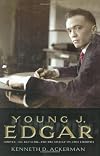
A popular account of the "Palmer Raids" of 1919 that, while launched to confront supposed revolutionary danger in the United States in the wake of a series of anarchist bombing, were allowed to snow-ball out of control due to institutional pressures for a stronger stand against uncontrolled immigration.
Apart from outlining J. Edgar Hoover's public career in its early days, what I found particularly enlightening about the book is the institutional conflicts that turned what was intended to be show more a high-profile, but limited operation into an out-of-control steam roller. The key point is that in regards to the proposed deportation of suspect political dissidents the Justice Department did not have jurisdiction; that belonged to the Labor Department. That there were major stresses at Labor over the drive to deport supposed undesirables, regardless of their politics, along with Hoover's single-minded efficiency, created the resulting public-relations disaster. The end result was that Attorney General A. Mitchell Palmer took the fall for the scandal to protect Woodrow Wilson's reputation, thus saving the career of a much-chastened Hoover.
In all this panicked security theater, Kenneth Ackerman finds the real hero to be Assistant Secretary of Labor Louis Post, who was willing to take responsibility for dismissing the deportation proceedings against the bulk of those detained and who had the political and bureaucratic skills to make the dismissals stick. Would that a little more enlightened restraint had been deployed sooner in regards to the excesses of the post-9/11 era. show less
Apart from outlining J. Edgar Hoover's public career in its early days, what I found particularly enlightening about the book is the institutional conflicts that turned what was intended to be show more a high-profile, but limited operation into an out-of-control steam roller. The key point is that in regards to the proposed deportation of suspect political dissidents the Justice Department did not have jurisdiction; that belonged to the Labor Department. That there were major stresses at Labor over the drive to deport supposed undesirables, regardless of their politics, along with Hoover's single-minded efficiency, created the resulting public-relations disaster. The end result was that Attorney General A. Mitchell Palmer took the fall for the scandal to protect Woodrow Wilson's reputation, thus saving the career of a much-chastened Hoover.
In all this panicked security theater, Kenneth Ackerman finds the real hero to be Assistant Secretary of Labor Louis Post, who was willing to take responsibility for dismissing the deportation proceedings against the bulk of those detained and who had the political and bureaucratic skills to make the dismissals stick. Would that a little more enlightened restraint had been deployed sooner in regards to the excesses of the post-9/11 era. show less
Dark horse : the surprise election and political murder of President James A. Garfield by Kenneth D. Ackerman
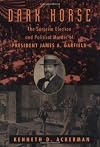
For me, the Presidency between Abraham Lincoln and Theodore Roosevelt was a murky parade of difficult-to-distinguish whiskered men. The achievement of this book is to give personality and context not only to presidents like Grant, Hayes, Garfield, and Arthur, but to congressmen and senators such as Roscoe Conkling and James Blaine, who arguably had far more influence over the government during their years of service (or self-service, as the case may be). These people and their political, not show more to say personal, conflicts come alive as vividly as more contemporary politicians such as Newt Gingrich and John Boehner. It's decently entertaining reading, and I now have a much better understanding of how government worked in the First Gilded Age—the second, of course, being our own. show less
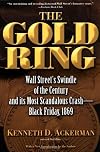
Admittedly I am a Kenneth Ackerman fan, I find his work on 19th Century America nearly faultless. It is always well researched, documented and compelling and this book is no exception. I had recently finished Grant's biography which, if you have read it, contains little more than a topographical cover of his life and times and looked to this book to get a little more meat on one of the major controversy's of his presidency. This book delivers that and much more. Grant is portrayed as naive show more at the least and Fisk and Gould (two of the more interesting characters of the period) are fleshed out in full order. The back story of how these two personalities worked the East Coast Financial Markets is still relevant today and the details of their machinations are worthy of a play by Shakespeare. If you are interested in the Gilded Age, the robber barons, financial markets or just human deviousness I highly recommend this book. show less
Lists
True Crime (1)
You May Also Like


Statistics
- Works
- 9
- Members
- 667
- Popularity
- #37,821
- Rating
- 3.9
- Reviews
- 15
- ISBNs
- 24
- Favorited
- 1