
William Lindsay White (1900–1973)
Author of They Were Expendable
About the Author
Image credit: FedFlix/Internet Archive
Works by William Lindsay White
The Captives of Korea: An Unofficial White Paper on the Treatment of War Prisoners (1979) 14 copies, 1 review
Seven Came Through 1 copy
Associated Works
America Eats! On the Road with the WPA: The Fish Fries, Box Supper Socials, and Chitlin Feasts That Define Real American Food (2008) — Contributor — 174 copies, 23 reviews
100 Best True Stories of World War II (WW2) (with 32 illustrations) (2011) — Contributor — 36 copies
The Ethnic Image in Modern American Literature, 1900-1950, Volumes 1-2 (1984) — Contributor — 1 copy
Tagged
Common Knowledge
- Canonical name
- White, William Lindsay
- Legal name
- White, William Lindsay
- Birthdate
- 1900-06-17
- Date of death
- 1973-07-26
- Gender
- male
- Education
- University of Kansas
Harvard University - Occupations
- journalist
editor
publisher - Organizations
- The Washington Post
Fortune
Emporia Gazette
Reader's Digest - Awards and honors
- Pulitzer Prize, 1946
William Lindsay White Auditorium named in his honor
William Lindsay White Memorial Park - Relationships
- White, William Allen (father)
- Nationality
- USA
- Places of residence
- Emporia, Kansas, USA
New York, New York, USA - Associated Place (for map)
- USA
Members
Reviews
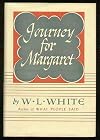
Well, this kind of book is the reason why I read contemporaneously-written history: it's much more effective at translating the weight of events without the overly morbid backwards-looking feel of secondary histories. White did a great job of giving Americans a taste of Blitzed London and what life was like for regular Britishers. Knowing that he was writing for an American audience that was divided between isolationism, some Antisemitism, and ignorance about what was happening over in show more Europe, I could feel his anger. He very directly derides his countrymen for sitting back (at their bridge tables) and admiring the bombed-out British from an ocean away, without sending any real help.
The Margaret O'Brien movie of the same name is extremely good, although it changed a significant part of the ending for Hollywood's benefit (and Good. Lord. that girl was aDORable). Big recommend for both. show less
The Margaret O'Brien movie of the same name is extremely good, although it changed a significant part of the ending for Hollywood's benefit (and Good. Lord. that girl was aDORable). Big recommend for both. show less

Published just months after the events described, this has a fresh and naive feel about it. I am sure this is because we know what happened after these events and we know now why the US military was so helpless in those first few weeks. Having said that, it is still an amazing story of bravery and determination to continue the fight even after their weapons and ammunition were gone. White interview five surviving members of Motor Patrol Boot Squadron 3 stationed in Manila at the start of WW show more II. While they suspected a Japanese attack, when it came it was still a shock for which they were not prepared. Some of the propaganda is now humorous such as one comment by one of the sailors that he knew they were Japanese soldiers because they all wore glasses. One aspect that I might follow up on is what happened to the American nurses that were trapped in Bataan and Corregidor after the surrender for one of the officers described his relationship with one of them. The descriptions of the battles between the PT Boats and the Japanese vessels are exciting and probably a little too one sided to be absolutely true. The officers do comment on the propaganda and incorrect reporting of the first battles in the Pacific for the men & women trapped in the Philippines were misled into thinking help was on the way and when they realized it was not, they discovered they were expendable and thus were very bitter at being abandoned. show less
The Captives of Korea: An Unofficial White Paper on the Treatment of War Prisoners by William Lindsay White
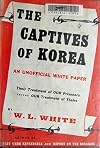
An excellent comparison of treatment received by soldiers of all sides during the Korean War. Although dated, it illustrates how difficult it was to follow the rules of the Geneva Convention when only one side recognizes the convention. Although hopelessly opinionated, the differences between Chinese communists, Chinese Nationals,Chinese who just want to go home to farm, Communist Koreans, Non-Communists Koreans, Koreans who had no clue and go where the food was best versus the U.N. backed show more troops and neutrals who tried to please everyone. I had not realized the complexity of holding prisoners under such conditions. Definitely worth reading now in order to try and understand the different Islamic faiths with their different desires and how people react. show less
They Were Expendable: An American Torpedo Boat Squadron in the U.S. Retreat from the Philippines (Bluejacket Books) by W. L. White
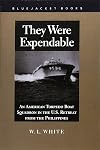
This book was rushed to press in 1942, to give Americans a raise in their morale, as the Japanese expanded across the Pacific, threatening Hawaii and Australia.It concentrates on mostly inflated tales of Japanese Navy losses to the small but mighty PT boats when the Philippines, a poorly prepared posssession fell into Imperial hands. Parts of it were recycled into a film script which featured John Wayne...so only of intrest to the student of propaganda.
Lists
Awards

You May Also Like


Associated Authors
Statistics
- Works
- 16
- Also by
- 5
- Members
- 433
- Popularity
- #56,453
- Rating
- 3.8
- Reviews
- 8
- ISBNs
- 22