
Edwin Palmer Hoyt (1923–2005)
Author of Japan's War: The Great Pacific Conflict
About the Author
Edwin P. Hoyt (1923-2005) was an independent historian who published nearly two hundred books, mostly in the area of military history, including The Last Kamikaze and Hirohito. After serving in World War II with the Office of War Information, he was a journalist for more than a decade before show more becoming a full-time writer. show less
Series
Works by Edwin Palmer Hoyt
Bowfin: The True Story of a Fabled Fleet Submarine in World War II (Classics of War) (1983) 99 copies, 2 reviews
McCampbell's Heroes: The Story of the U.S. Navy's Most Celebrated Carrier Fighters of the Pacific War (1983) 57 copies, 2 reviews
The Last Cruise of the Emden: The Amazing True WWI Story of a German-Light Cruiser and Her Courageous Crew (1967) 51 copies, 2 reviews
The Day the Chinese Attacked, Korea, 1950: The Story of the Failure of America's (1990) 19 copies, 1 review
Three Military Leaders: Heihachiro Togo, Isoroku Yamamoto, Tomoyuki Yamashita (Kodansha Biographies) (1993) 14 copies
The Last Stand: A Novel About George Armstrong Custer and the Indians of the Plains (1995) 10 copies
Pacific destiny : the story of America in the western sea from the early 1800s to the 1980s (1981) 10 copies
Leland Stanford 3 copies
American steamboat stories 3 copies
Count von Luckner; knight of the sea 3 copies
The Glorious Flattops 3 copies
The supersalesmen 3 copies
Blood in The Jungle: The Extraordinary Saga of One of The Greates Special Operations Units of World War II (2004) 2 copies
Deadly Craft: Fireships to PT Boats 2 copies
A Short History of Science Volume 1-Ancient Science From the beginnings through the Middle Ages (1965) 2 copies
The Tempering Years 2 copies
The elusive seagull;: The adventures of the World War One German minelayer, the Moewe (1970) 2 copies
The Ghost Lane 1 copy
The Idea Men 1 copy
Lost Statesmen 1 copy
A matter of conscience 1 copy
The Voice of Allah 1 copy
Exploring the stamp world 1 copy
Tagged
Common Knowledge
- Canonical name
- Hoyt, Edwin Palmer
- Legal name
- Hoyt, Edwin Palmer, Jr.
- Other names
- Hoito, Edoin
Martin, Christopher
Stuart, David
Hoyt, Edwin P.
Forbes, Cabot L. - Birthdate
- 1923-08-05
- Date of death
- 2005-07-29
- Gender
- male
- Education
- University of Oregon
- Occupations
- writer
producer
director
foreign correspondent
lecturer
editor (show all 7)
journalist - Organizations
- The Oregonian
United Press
ABC
CBS
Collier's Weekly
University of Hawaii (show all 9)
American Heritage
Denver Post
Office of War Information (WWII) - Relationships
- Hoyt, Palmer (father)
- Nationality
- USA
- Birthplace
- Portland, Oregon, USA
- Places of residence
- Portland, Oregon, USA
Betterton, Maryland, USA
Kent, Connecticut, USA
Tokyo, Japan - Place of death
- Tokyo, Japan
- Associated Place (for map)
- USA
Members
Reviews

Edwin P. Hoyt has done a masterful job of conveying to the reader, inasmuch as possible, the full story of the early days of the Pacific War (December 1941-May 1942) in which the Imperial Japanese military (ground, air, and naval units) was able to sweep aside long established Western ascendancy in the Far East and Pacific. For a Mass Market paperback book packed with so much detail and replete with lots of stirring, heartbreaking, and inspiring eyewitness accounts of sacrifice, defeat.
This show more was a well-written work on the history of really three different things. It is the history of the United States Asiatic Squadron, based in east Asia, which existed from the 1850s till it became the United States Asiatic Fleet in 1902, a squadron intended primarily at first to protect American interests in China and Japan, seeing action in the Korean Expedition of 1871, the Spanish-American War in 1898, the Philippine-American War, and the Boxer Rebellion. It is the history of the Yangtze Patrol, another United States naval operation, based in China and tasked with patrolling the Yangtze River to protect American commercial interests and to protect American missionaries (and also patrolled associated coastal waters), operating from 1854 till 1942 when the United States withdrew what was left as it was needed elsewhere to fight the Japanese. Most of all I think it is the history of the United States Asiatic Fleet (previously known as the Asiatic Squadron). The Asiatic Fleet was a relatively small fleet (most of the world would not regard it as a real fleet owing to its size and for the majority of its existence lacking any capital ships such as battleships or fleet aircraft carriers, instead made up of a few cruisers, a number of destroyers, even smaller surface warships, submarines, and associated support vessels) assigned primarily to patrol Philippine waters (at least for the time covered in the bulk of the book devoted to it, through the 1920s and the 1930s it had a role in China as well) and existed until February 1942, most of the fleet having been destroyed fighting or fleeing the Japanese, those few ships remaining later incorporated into the Seventh Fleet (beyond the scope of this book).
Most of the book is about the U.S. Asiatic Fleet, though to be fair I have to mention my copy of the book is missing pretty much the entire section on the Yangtze Patrol, as pages 85 to 116 are simply not a part of this copy and from what I can tell never were. I continued to read the book as I had already read good coverage of the Asiatic Squadron and the entirety of the book on the Asiatic Fleet was correctly printed (pages 1 to 132 covered the Asiatic Squadron and the Yangtze Patrol appeared to be the main subject of the missing pages going by the table of contents, while from page 133 to 323 was on the Asiatic Fleet, that section mostly on what happened right before and then during World War II).
The book is organized into two sections, the first optimistic and with American power on the rise, centering on the Asiatic Squadron and the Yangtze Patrol. This section though with some gripping sections was primarily it felt an overview of the subject (I felt for instance the section on the Spanish-American War, while definitely adequate, was fairly brief). The second half (more than half really) is heroic but grim, as it the tale of a vastly outnumbered, outgunned, isolated American naval command doing what little it could against the Japanese at their very height, running, fighting, hiding, fighting some more, running some more, the Fleet slowly whittled down till just a couple of ships remained, some run aground on reefs or shores avoiding the Japanese (or launching desperate attacks) thanks to their lack of familiarity with where they had to operate (their center of operations continually changing as base after base fell or had to evacuate due to Japanese advances), other ships destroyed in desperate battles, often badly outnumbered, lacking any way to resupply or repair ships most of the time, and operating with a near complete lack of air cover (several times PBY flying boats were available and did heroic work, sitting ducks as they were against Japanese fighter craft). Also in this section is some good coverage of the final stand of American forces on Corregidor Island as well.
The book is at its absolute best in a minute my minute or hour by hour account of various actions, whether overall specific battles such as the Battle of Balikpapan or the heroic but often doomed fates of various individual ships, such as the U.S.S. Langley (the U.S.’s first aircraft carrier, though by the time of World War II it was too slow for fleet operations and was a seaplane tender serving with the Asiatic Fleet, destroyed by its escort after becoming inoperable due to repeated Japanese air attacks in February 1942 near Java), the U.S.S. Houston (a heavy cruiser, the most powerful ship of the Asiatic Fleet, fighting in the Battle of the Java Sea and meeting her end at the Battle of Sunda Strait, launching their attack with only one accompanying vessel, the Australian vessel HMAS Perth, 2, originally 3 vessels against something like 20 Japanese warships and almost 60 transports), the U.S.S. Marblehead (a light cruiser, fighting in the Battle of Makassar Strait in 1942, fighting alongside Dutch and Australian ships, somehow heroically making it to safety despite numerous attacks and being almost inoperable, successfully retreating to India), and the U.S.S. Pecos (replenishment oiler that was part of the Asiatic Fleet, despite heroic action, was sunk in March 1942 south of Java while carrying 700 survivors from U.S.S. Langley and U.S.S. Stewart, in the end only 242 survivors rescued after the ship sank thanks to Japanese aircraft). Each of these ships (and more) detailed the individual actions of sailors and officers, of what they were trying to accomplish, what they did to overcome extremely tall odds (whether trying to hide their vessel near the shore by the day with palm fronds and green paint or coming up with makeshift repairs or darting in and out of rain squalls to shake Japanese aircraft) and made for gripping reading.
In addition some of the most gripping stories weren’t necessarily about individual vessels or particular battles, with some engaging tales of survival, such as the tale of the crew of PBY No. 18, under the command of Lieutenant Thomas H. Moorer, their flying boat shot down by Japanese aircraft that were on their way to bomb Darwin, Australia (and the ships anchored there), the author detailing a harrowing tale of trying to land a severely damaged aircraft while still very much being shot at, the crew getting rescued by an American freighter, Florence D, that ship getting suck by Japanese aircraft, the combined aircraft and ship crews surviving at sea for a time, making their way to an uninhabited part of Bathurst Island, after a fifteen mile trek through the wilderness concluded that they couldn’t walk to safety, and were eventually rescued by the H.M.A.S. Warranambool, a coastal patrol boat that couldn’t reach the men and had to ferry them in shifts using a sailboat, with that boat then attacked by a Japanese Kawasishi flying boat (fortunately successfully making it back to Darwin, Australia). This was just one of several such stories the author relayed and were riveting reading.
It was sad to read about all the frustrations and real danger the Asiatic Fleet (and its Dutch, Australian, and British allies) faced, ranging from faulty torpedoes (a huge problem facing the U.S. Navy early on in World War II), a near complete lack of aircover (and what few planes they had were either not designed to fight top of the line Japanese fighters such as the PBYs, were badly outdated, or sometimes even when modern were piloted by extremely inexperienced pilots), extreme difficulties in getting repairs (the U.S.S. Houston was in several engagements without the use of its rear guns as there was no way to repair them), lack of charts (at one point Americans were able to trace using pencil and paper a chart in one instance an ally let them look at), language difficulties (mainly between Dutch and American warships), political infighting (in the ABDA, the joint American, British, Dutch, Australian force cobbled together to try to hold the line against the Japanese, one that did the best it could but often had political infighting about who was in charge, the use of particular resources – particularly what little airpower they had – and differing goals, with the Dutch wanting to fight to the bitter end to protect the Dutch East Indies and the other allies not so much).
There is a good index, bibliography, and some good maps scattered throughout the text. No photographs though, that would have been nice. No real complaints about the book otherwise. show less
This show more was a well-written work on the history of really three different things. It is the history of the United States Asiatic Squadron, based in east Asia, which existed from the 1850s till it became the United States Asiatic Fleet in 1902, a squadron intended primarily at first to protect American interests in China and Japan, seeing action in the Korean Expedition of 1871, the Spanish-American War in 1898, the Philippine-American War, and the Boxer Rebellion. It is the history of the Yangtze Patrol, another United States naval operation, based in China and tasked with patrolling the Yangtze River to protect American commercial interests and to protect American missionaries (and also patrolled associated coastal waters), operating from 1854 till 1942 when the United States withdrew what was left as it was needed elsewhere to fight the Japanese. Most of all I think it is the history of the United States Asiatic Fleet (previously known as the Asiatic Squadron). The Asiatic Fleet was a relatively small fleet (most of the world would not regard it as a real fleet owing to its size and for the majority of its existence lacking any capital ships such as battleships or fleet aircraft carriers, instead made up of a few cruisers, a number of destroyers, even smaller surface warships, submarines, and associated support vessels) assigned primarily to patrol Philippine waters (at least for the time covered in the bulk of the book devoted to it, through the 1920s and the 1930s it had a role in China as well) and existed until February 1942, most of the fleet having been destroyed fighting or fleeing the Japanese, those few ships remaining later incorporated into the Seventh Fleet (beyond the scope of this book).
Most of the book is about the U.S. Asiatic Fleet, though to be fair I have to mention my copy of the book is missing pretty much the entire section on the Yangtze Patrol, as pages 85 to 116 are simply not a part of this copy and from what I can tell never were. I continued to read the book as I had already read good coverage of the Asiatic Squadron and the entirety of the book on the Asiatic Fleet was correctly printed (pages 1 to 132 covered the Asiatic Squadron and the Yangtze Patrol appeared to be the main subject of the missing pages going by the table of contents, while from page 133 to 323 was on the Asiatic Fleet, that section mostly on what happened right before and then during World War II).
The book is organized into two sections, the first optimistic and with American power on the rise, centering on the Asiatic Squadron and the Yangtze Patrol. This section though with some gripping sections was primarily it felt an overview of the subject (I felt for instance the section on the Spanish-American War, while definitely adequate, was fairly brief). The second half (more than half really) is heroic but grim, as it the tale of a vastly outnumbered, outgunned, isolated American naval command doing what little it could against the Japanese at their very height, running, fighting, hiding, fighting some more, running some more, the Fleet slowly whittled down till just a couple of ships remained, some run aground on reefs or shores avoiding the Japanese (or launching desperate attacks) thanks to their lack of familiarity with where they had to operate (their center of operations continually changing as base after base fell or had to evacuate due to Japanese advances), other ships destroyed in desperate battles, often badly outnumbered, lacking any way to resupply or repair ships most of the time, and operating with a near complete lack of air cover (several times PBY flying boats were available and did heroic work, sitting ducks as they were against Japanese fighter craft). Also in this section is some good coverage of the final stand of American forces on Corregidor Island as well.
The book is at its absolute best in a minute my minute or hour by hour account of various actions, whether overall specific battles such as the Battle of Balikpapan or the heroic but often doomed fates of various individual ships, such as the U.S.S. Langley (the U.S.’s first aircraft carrier, though by the time of World War II it was too slow for fleet operations and was a seaplane tender serving with the Asiatic Fleet, destroyed by its escort after becoming inoperable due to repeated Japanese air attacks in February 1942 near Java), the U.S.S. Houston (a heavy cruiser, the most powerful ship of the Asiatic Fleet, fighting in the Battle of the Java Sea and meeting her end at the Battle of Sunda Strait, launching their attack with only one accompanying vessel, the Australian vessel HMAS Perth, 2, originally 3 vessels against something like 20 Japanese warships and almost 60 transports), the U.S.S. Marblehead (a light cruiser, fighting in the Battle of Makassar Strait in 1942, fighting alongside Dutch and Australian ships, somehow heroically making it to safety despite numerous attacks and being almost inoperable, successfully retreating to India), and the U.S.S. Pecos (replenishment oiler that was part of the Asiatic Fleet, despite heroic action, was sunk in March 1942 south of Java while carrying 700 survivors from U.S.S. Langley and U.S.S. Stewart, in the end only 242 survivors rescued after the ship sank thanks to Japanese aircraft). Each of these ships (and more) detailed the individual actions of sailors and officers, of what they were trying to accomplish, what they did to overcome extremely tall odds (whether trying to hide their vessel near the shore by the day with palm fronds and green paint or coming up with makeshift repairs or darting in and out of rain squalls to shake Japanese aircraft) and made for gripping reading.
In addition some of the most gripping stories weren’t necessarily about individual vessels or particular battles, with some engaging tales of survival, such as the tale of the crew of PBY No. 18, under the command of Lieutenant Thomas H. Moorer, their flying boat shot down by Japanese aircraft that were on their way to bomb Darwin, Australia (and the ships anchored there), the author detailing a harrowing tale of trying to land a severely damaged aircraft while still very much being shot at, the crew getting rescued by an American freighter, Florence D, that ship getting suck by Japanese aircraft, the combined aircraft and ship crews surviving at sea for a time, making their way to an uninhabited part of Bathurst Island, after a fifteen mile trek through the wilderness concluded that they couldn’t walk to safety, and were eventually rescued by the H.M.A.S. Warranambool, a coastal patrol boat that couldn’t reach the men and had to ferry them in shifts using a sailboat, with that boat then attacked by a Japanese Kawasishi flying boat (fortunately successfully making it back to Darwin, Australia). This was just one of several such stories the author relayed and were riveting reading.
It was sad to read about all the frustrations and real danger the Asiatic Fleet (and its Dutch, Australian, and British allies) faced, ranging from faulty torpedoes (a huge problem facing the U.S. Navy early on in World War II), a near complete lack of aircover (and what few planes they had were either not designed to fight top of the line Japanese fighters such as the PBYs, were badly outdated, or sometimes even when modern were piloted by extremely inexperienced pilots), extreme difficulties in getting repairs (the U.S.S. Houston was in several engagements without the use of its rear guns as there was no way to repair them), lack of charts (at one point Americans were able to trace using pencil and paper a chart in one instance an ally let them look at), language difficulties (mainly between Dutch and American warships), political infighting (in the ABDA, the joint American, British, Dutch, Australian force cobbled together to try to hold the line against the Japanese, one that did the best it could but often had political infighting about who was in charge, the use of particular resources – particularly what little airpower they had – and differing goals, with the Dutch wanting to fight to the bitter end to protect the Dutch East Indies and the other allies not so much).
There is a good index, bibliography, and some good maps scattered throughout the text. No photographs though, that would have been nice. No real complaints about the book otherwise. show less

A quick read that covers the final stages of the Pacific War. Hoyt was clearly a Halsey man, so knocks Spruance often, and supports "the Bull" always. Despite those inclinations and coming from a 1982 perspective it is sufficiently thorough and succinct for anyone looking for the big picture.

I am not familiar with the Korean War, but as a reader interested in military history I find it very engaging. Book begins with the Inchon landings, oddly enough, with out a whole lot of background of the prior events. As the story evolves, he relates a great deal of tactical information on the battles to retake the Korean peninsula.
It is extremely detail oriented as far as units down to company level, without much background on the individuals involved. I know he is old school, but I show more would like a bit of personal info on background. It isn't the old school way, but....
Pulls no punches regarding idol worship of McArthur, which I find refreshing.
Regarding fighting during the summer of 1950- seems like complete US air superiority ruled the day, with the nod going to Marine Corsairs blasting NK to oblivion. Artillery cited as very influential also, but NK also said to have effective artillery.
Hoyt has no pity for Truman administration, American politicians in general, and the US Army leadership in Korea.
Interesting observation that US gov't was completely clueless as to the intentions of Mao and mainland China during this period. Serious infighting during the transition of influence between old and new Chinese gov't.
I believe this is a multi book series, though I have seen no info to support that. show less
It is extremely detail oriented as far as units down to company level, without much background on the individuals involved. I know he is old school, but I show more would like a bit of personal info on background. It isn't the old school way, but....
Pulls no punches regarding idol worship of McArthur, which I find refreshing.
Regarding fighting during the summer of 1950- seems like complete US air superiority ruled the day, with the nod going to Marine Corsairs blasting NK to oblivion. Artillery cited as very influential also, but NK also said to have effective artillery.
Hoyt has no pity for Truman administration, American politicians in general, and the US Army leadership in Korea.
Interesting observation that US gov't was completely clueless as to the intentions of Mao and mainland China during this period. Serious infighting during the transition of influence between old and new Chinese gov't.
I believe this is a multi book series, though I have seen no info to support that. show less
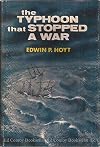
Remember the war between Germany, England, and the United States over Samoa that started in 1889? No? Well, that's because it didn't happen. However, it could have happened; all three countries had interests in Samoa, all three had sent warships to the island to protect national interests, and prior international conferences had not defused the potential crisis. Before the shooting could start, a typhoon intervened, sending ships to the bottom and relieving the tensions long enough for show more diplomacy to succeed. Hoyt's dramatic description of the preceding incidents, along with the battle of all sides (even the Samoans, whose interests were hardly considered) against the storm makes this a thrilling and informative read. show less
Lists
Awards

You May Also Like


Associated Authors
Statistics
- Works
- 170
- Members
- 3,669
- Popularity
- #6,897
- Rating
- 3.5
- Reviews
- 44
- ISBNs
- 296
- Languages
- 4
- Favorited
- 3