
About the Author
Hugh Wilford is a professor of history at California State University Long Beach, and the author of four books, including The Mighty Wurlitzer: How the CIA Played America. He lives in Long Beach, California.
Image credit: Photo credit: Amy Bentley-Smith
Works by Hugh Wilford
America's Great Game: The CIA's Secret Arabists and the Shaping of the Modern Middle East (2013) 108 copies, 1 review
Associated Works
Tagged
Common Knowledge
- Birthdate
- 1965-04-24
- Gender
- male
- Awards and honors
- Fulbright Scholar
- Short biography
- Hugh Wilford joined the CSULB History Department in 2006, having taught previously at the University of Sheffield in the United Kingdom. Trained in the U.K. as a U.S. intellectual historian, he has published widely on such topics as the New York Intellectuals, the history of the American left, Americanization and anti-Americanism in Europe, and the “Cultural Cold War.” His most recent works concern the role of the CIA in shaping Cold War American and western culture, and the role of culture in shaping the Cold War operations of the CIA. The Mighty Wurlitzer: How the CIA Played America (Harvard University Press, 2008) examines the relationship between the CIA and various apparently private U.S. citizen groups the Agency secretly funded in the Cold War “battle for hearts and minds.” America’s Great Game: The CIA’s Secret Arabists and the Shaping of the Modern Middle East (Basic Books, 2013) tells the surprising story of a group of pro-Arab operatives in the early CIA, locating them in longer traditions of American missionary and British imperial engagement with the Arab world.
http://www.csulb.edu/colleges/cla/dep... - Nationality
- UK
- Associated Place (for map)
- UK
Members
Reviews
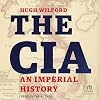
The author has gathered a considerable quantity of historical material concerning the origins and development of the CIA. Unfortunately, having done so, he did not know how to organise material into a coherent narrative. As a result, the story, if there is one, is very difficult to follow.
As a result, the book quickly exhausts the reader's patience.
Additionally, every page is crowded with excessive numbers of acronyms. Acronym saturation level is rapidly reached and then exceeded.
The show more author's arguments, whatever they might be, are obscure and confusing. The book just will not sit still.
In essence, this book required a skilful editor to knock this sprawling book into shape and excise at least 70% of the acronyms. There might then be revealed a readable and informative book. I rarely fail to finish a book, but I could not finish this one. It was just too exasperating. show less
As a result, the book quickly exhausts the reader's patience.
Additionally, every page is crowded with excessive numbers of acronyms. Acronym saturation level is rapidly reached and then exceeded.
The show more author's arguments, whatever they might be, are obscure and confusing. The book just will not sit still.
In essence, this book required a skilful editor to knock this sprawling book into shape and excise at least 70% of the acronyms. There might then be revealed a readable and informative book. I rarely fail to finish a book, but I could not finish this one. It was just too exasperating. show less
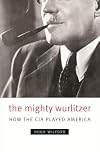
Fascinating material, solidly researched, but the content of the book doesn't live up to the title.
Wilford shows that the CIA’s covert network began in the late 1940s, based on the Cold War, domestic anti-communism, and American love of associations. The book’s title comes from a remark by Frank Wisner, “the Agency’s first chief of political warfare.” Wilford describes three phases: 1) organizations providing cover for émigrés; 2) operations to shore up Western European civil show more society; 3) programs aimed at Third World nations. Earlier interpretations have exaggerated the CIA’s ability to call the tune.
This book aims to be comprehensive though not exhaustive, and to present as rounded a picture as possible. “U.S. citizens at first followed the Agency’s score, then began improvising their own tunes, eventually turning harmony into cacophony,” Wilford writes, forcing his metaphor. show less
Wilford shows that the CIA’s covert network began in the late 1940s, based on the Cold War, domestic anti-communism, and American love of associations. The book’s title comes from a remark by Frank Wisner, “the Agency’s first chief of political warfare.” Wilford describes three phases: 1) organizations providing cover for émigrés; 2) operations to shore up Western European civil show more society; 3) programs aimed at Third World nations. Earlier interpretations have exaggerated the CIA’s ability to call the tune.
This book aims to be comprehensive though not exhaustive, and to present as rounded a picture as possible. “U.S. citizens at first followed the Agency’s score, then began improvising their own tunes, eventually turning harmony into cacophony,” Wilford writes, forcing his metaphor. show less
America's great game : the CIA's secret Arabists and the shaping of the modern Middle East by Hugh Wilford
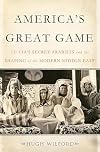
A deep study of how the romanticized "Arabist" CIA operatives of the late 1940s and 1950s, misread the Middle East, supported authoritarian regimes, opposed Israel, shaped foreign policy and contributed to anti-American view in the Arab world. Three individuals are traced through the 1940s and 1950s: Roosevelt's grandson "Kim" Roosevelt, first head of covert action for the CIA in the Middle East; his cousin Archie Roosevelt, first Beirut station chief, and covert operations specialist Miles show more Copeland. show less
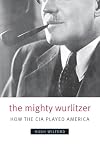
he Central Intelligence Agency had been secretly funding and managing a wide range of citizen front groups intended to counter communist influence around the world. In addition to embarrassing prominent individuals caught up, wittingly or unwittingly, in the secret superpower struggle for hearts and minds, the revelations of 1967 were one of the worst operational disasters in the history of American intelligence and presaged a series of public scandals from which the CIA's reputation has show more arguably never recovered.
CIA official Frank Wisner called the operation his "mighty Wurlitzer," on which he could play any propaganda tune. In this illuminating book, Hugh Wilford provides the first comprehensive account of the clandestine relationship between the CIA and its front organizations. Using an unprecedented wealth of sources, he traces the rise and fall of America's Cold War front network from its origins in the 1940s to its Third World expansion during the 1950s and ultimate collapse in the 1960s. show less
CIA official Frank Wisner called the operation his "mighty Wurlitzer," on which he could play any propaganda tune. In this illuminating book, Hugh Wilford provides the first comprehensive account of the clandestine relationship between the CIA and its front organizations. Using an unprecedented wealth of sources, he traces the rise and fall of America's Cold War front network from its origins in the 1940s to its Third World expansion during the 1950s and ultimate collapse in the 1960s. show less
Lists
Awards

You May Also Like


Associated Authors
Statistics
- Works
- 8
- Also by
- 1
- Members
- 300
- Popularity
- #78,267
- Rating
- 3.6
- Reviews
- 4
- ISBNs
- 21