

Robert Shapard
Author of Sudden Fiction: American Short-Short Stories
About the Author
Image credit: FlashFiction.Net
Series
Works by Robert Shapard
Sudden Fiction Latino: Short-Short Stories from the United States and Latin America (2010) — Editor — 76 copies, 15 reviews
New Sudden Fiction: Short-short Stories from America and Beyond by Robert Shapard (2007-01-08) 2 copies
Best Small Fictions 2025 2 copies
Tagged
Common Knowledge
- Gender
- male
- Occupations
- editor
associate professor - Organizations
- University of Hawaii
Members
Reviews
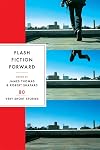
This is a fast read with a lot of variety and entertainment packed into its pages. I picked it up to get more of a view into flash fiction, which I've not read much, and ended up enjoying it more than I expected to. There were some stories that just went on by without much impression, and even left me wondering why they'd be included in an anthology, but this was rare. More often, a surprising amount of power, character, and story got packed into each piece, short as they were, and the show more writing throughout the book was stellar.
Probably, I'll never search out flash fiction on a regular basis, but as an occasional curiosity, I'll be more likely to look for it now.
Absolutely, recommended. show less
Probably, I'll never search out flash fiction on a regular basis, but as an occasional curiosity, I'll be more likely to look for it now.
Absolutely, recommended. show less
Sudden Fiction Latino: Short-Short Stories from the United States and Latin America by Robert Shapard

I'm biased with my background in Hispanic Literature, but I agree with the editors that the best short fiction comes out of Latin America and US Latinos. There is a huge variety of stories here, a very strong point of the book. Sometimes, a story has to be read a couple of times for it to have any resonance for me, and of course different readers will prefer different stories, but with so much material, you're sure to find something that you like! I love the short-short format and feel that show more it can create powerful, lasting images, raise questions, and inspire more writing. I'm slogging through 2666 right now, so I really appreciated the chance to see that Roberto Bolaño can write a complete story in less than five gazillion words! I may also be biased because the Julio Ortega who closes the collection was my Borges professor! The worst thing about this book is the cover. The flaming newspaper probably contains a statement about the media or the act of writing or reading, but it first of all suggests the barbaric practice of ear candling (to remove excess wax) and would be very off-putting in a bookstore. I received this book through the Early Reviewers program, and I'm so glad. It is a very worthy addition to the dialog on short fiction. show less
 This review was written for LibraryThing Early Reviewers.
I have mixed feelings about the short-short (or flash fiction, of micro-fiction, or whatever it is we want to call it these days). On the one hand, it's a powerful form, as close to the compression and deceptive complexity of poetry as fiction can get (my friend Beth Ann Fennelly, who is one of my favorite poets, insists there is no difference between the short-short and the prose poem, and I can't find any good reason to disagree with her). But because the short-short is so, well, short, show more writers deceive themselves into thinking it's an easy genre, and to be honest, most of what I read turns out to be silly at best: they're often sketches in the guise of a story, or scenes that belong in a longer story, or poems having an identity crisis. Sometimes they're not anything at all--a writing exercise gone bad, or just foolishness made out of words. And, to be fair, some of the stories in this book are like that, inglorious examples of all of the above. (Why, for instance, did the editors insist on including humor bits from the New Yorker's "Shouts and Murmurs" section? I'm as big a fan of Jack Handey as any New Yorker reader can be, but really, is this genuine fiction?)
But some of these stories are surprisingly effective, even when they start out reading like disasters. John Edgar Wideman's "Stories," for example, reads for all the world like a list of story ideas generated by a writing exercise, but if you stick with it, it provides a surprising and almost poetic turn at the end that keeps me rereading the piece again and again. Tom Hazuka's "I Didn't Do That" is a haunting, disturbing little piece, barely a page long but heavy on the mind. Kit Coyne Irwin's "Parrot Talk" and Eva Marie Ginsburg's "The Kettle" ought to read like silly puns or cute cocktail-party jokes, but they bring such human emotion and clever wordplay into these tiny stories that I read each of them out loud to my wife, just for the excuse to read them a second time.
I could go on, because while some of these stories are disappointing, the bulk of them are delightful, and a surprising number are true gems, tiny but radiant examples of what Italo Calvino calls the quality of "quickness" at work in only the best literature. It's not a perfect book, but it's certainly worth reading and, if you're a writer, worth keeping on your bookshelf. show less
But some of these stories are surprisingly effective, even when they start out reading like disasters. John Edgar Wideman's "Stories," for example, reads for all the world like a list of story ideas generated by a writing exercise, but if you stick with it, it provides a surprising and almost poetic turn at the end that keeps me rereading the piece again and again. Tom Hazuka's "I Didn't Do That" is a haunting, disturbing little piece, barely a page long but heavy on the mind. Kit Coyne Irwin's "Parrot Talk" and Eva Marie Ginsburg's "The Kettle" ought to read like silly puns or cute cocktail-party jokes, but they bring such human emotion and clever wordplay into these tiny stories that I read each of them out loud to my wife, just for the excuse to read them a second time.
I could go on, because while some of these stories are disappointing, the bulk of them are delightful, and a surprising number are true gems, tiny but radiant examples of what Italo Calvino calls the quality of "quickness" at work in only the best literature. It's not a perfect book, but it's certainly worth reading and, if you're a writer, worth keeping on your bookshelf. show less
I've never read flash fiction before but I think sometimes the form says a lot even with its limited space. Some of the stories that had the most impact on me are: "Level" by Keith Scribner (p. 79) and "Currents" by Hannah Bottomy (p. 51). "Level" is my favourite, though, because unlike the majourity of the other stories, it was a simple moment of happiness (with a little bit of mixed feelings about the future thrown in). Most of the stories had a melancholy tone and it was rather depressing show more reading that many stories about death and missed opportunities again and again and again. So, Scribner's piece was a breath of fresh air. Overall, I feel like while some of these stories weren't to my taste in terms of content, I really enjoyed seeing how these authors explored and experimented with form and style.
See my book blog for more reviews: http://turningpagebooks.tumblr.com/ show less
See my book blog for more reviews: http://turningpagebooks.tumblr.com/ show less
Lists
You May Also Like


Associated Authors
Statistics
- Works
- 15
- Members
- 1,339
- Popularity
- #19,226
- Rating
- 3.6
- Reviews
- 39
- ISBNs
- 20
- Languages
- 3
