
Alfred Döblin (1878–1957)
Author of Berlin Alexanderplatz
About the Author
Novelist, playwright, poet, essayist, Alfred Doblin was one of the most prolific writers of his time. He was also a practicing physician in Berlin's working-class district of Alexanderplatz. His novel of this name (1930) is considered his best work, and represents, in its montage technique, show more Doblin's experimental attitude toward prose writing. Doblin fled the Nazi regime in 1933 and lived for a while in the United States. Later, he became a French citizen and a convert to the Roman Catholic Church. (Bowker Author Biography) show less
Image credit: Döblin, Alfred in 1928
Series
Works by Alfred Döblin
Der Oberst und der Dichter oder Das menschliche Herz. Die Pilgerin Aetheria: Zwei Erzählungen (1987) 7 copies
Ausgewählte Werke in Einzelbänden: Der deutsche Maskenball von Linke Poot. Wissen und Verändern. ( Ausgewählte Werke in Einzelausgaben.) (1972) 4 copies
Die literarische Situation 2 copies
Nocturno 2 copies
Erzählungen 2 copies
Bajka o materijalizmu 1 copy
Das Land ohne Tod Roman 1 copy
Monts Mers et Géants 1 copy
Doblin Alfred 1 copy
Jüdische Erneuerung 1 copy
El tigre azul 1 copy
Berlin Alexanderplatz 1 copy
Die Stücke 1 copy
dialog: Die Stücke 1 copy
Ölümsüz Ülkeye Doğru 1 copy
Associated Works
Spells of Enchantment: The Wondrous Fairy Tales of Western Culture (1991) — Contributor — 603 copies, 5 reviews
August Sander: Face of Our Time (Schirmer Visual Library) (1977) — Introduction — 124 copies, 2 reviews
Die Sammlung der Nationalgalerie : 1900-1945 : Moderne Zeiten : die Dokumentation einer Ausstellung (2014) — Contributor — 7 copies
Never-Ending Tales: Stories from the Golden Age of Jewish Literature (2025) — Contributor — 7 copies
The intellectual tradition of modern Germany : A collection of writings from the eighteenth to the twentieth century (1973) — Contributor — 3 copies
Halt auf freiem Felde : Eisenbahnabenteuer von Agatha Christie bis Tucholsky (1975) — Author — 2 copies
The intellectual tradition of modern Germany : A collection of writings from the eighteenth to the twentieth century : Volume 1 : Philosophy, religion and the arts (1973) — Contributor — 2 copies
50 seltsame Geschichten — Contributor — 1 copy
Tagged
Common Knowledge
- Canonical name
- Döblin, Alfred
- Legal name
- Döblin, Bruno Alfred
- Other names
- Döblin, Alfred Bruno
Linke Poot (Pseudonyme)
Linke-Poot (Pseudonyme)
Fiedeler, Hans (Pseudonyme)
Poot, Linke (Pseudonyme)
Piethe, Knaas (Pseudonyme) (show all 7)
Ntemplin, Alphrent (Pseudonyme) - Birthdate
- 1878-08-10
- Date of death
- 1957-06-26
- Gender
- male
- Education
- Friedrich Wilhelm University (medicine)
Freiburg Psychiatric Clinic (Ph.D. | 1905 | neurology) - Occupations
- psychiatrist
writer - Organizations
- Ministère français de l'Information (Collaborateur, 1939 | 1940, Inspecteur littéraire, 1945)
Hôpitaux de Berlin (Médecin, 1906 | 1933)
Das goldene Tor, Revue littéraire (Rédacteur en chef, 1946 | 1951)
Prager Tagblatt, Journal (Collaborateur, 1921 | 1924)
Der Sturm, Magazine (Rédacteur, 1912)
Académie prussienne des arts, Berlin (Membre expulsé, 19 28 | 19 33) (show all 9)
Académie des Arts de Berlin Est (Membre correspondant, 19 55 | 19 57)
Association de protection des écrivains allemands (Président, 19 24)
Académie des sciences et des lettres de Mayence (Cofondateur et vice-président, 19 49) - Awards and honors
- Theodor-Fontane-Preis für Kunst und Literatur (1916)
- Relationships
- Döblin, Wolfgang (Fils)
- Short biography
- Alfred Döblin was born to an assimilated Jewish family in Stettin, Germany (present-day Szczecin, Poland). He graduated from medical school and became a psychiatrist, with a private practice in the working-class Alexanderplatz district in Berlin. After the rise of the Nazi regime in 1933, he had to flee Germany for France; in 1940, at the outbreak of World War II, he escaped to the USA, where he converted to the Roman Catholic faith. He returned to Germany at the end of the war to work for the Allies, but settled in Paris in the early 1950s. He began writing while still in medical school, and his third novel Die drei Sprünge des Wang-lun (The Three Leaps of Wang Lun, 1915), the first to be published, won him the Theodor Fontane Prize. His best-known work, Berlin Alexanderplatz (1929) is considered an Expressionist masterpiece and an iconic work of the Weimar era. He also wrote other novels, including two trilogies of historical novels, a science fiction novel, as well as essays on political and literary topics, and a travelogue. He recounted his flight from France in 1940 and his observations of postwar Germany in the book Schicksalsreise (Destiny’s Journey, 1949).
Although Döblin's work was critically acclaimed in his lifetime, he is much less famous than his contemporaries such as Thomas Mann, Robert Musil, and Bertolt Brecht. His reputation today rests solely on Berlin Alexanderplatz. - Nationality
- Germany (birth)
France (naturalized) - Birthplace
- Stettin, Germany (now Szczecin, Poland)
- Places of residence
- Regensburg, Germany
Freiburg, Germany
Berlin, Germany
Zürich, Switzerland
Paris, France
Lisbon, Portugal (show all 10)
Hollywood, California, USA
Mainz, Germany
France
Emmendingen, West Germany - Place of death
- Emmendingen, Germany
- Burial location
- Housseras, France
- Map Location
- Germany
Members
Reviews
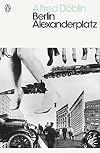
Franz Biberkopf is a weak man. He tries to make good in his life and to make the right choices, but he can’t succeed. Everything seems to work against him. Certainly, he makes some bad decisions, but in working-class Berlin in the 1920s his options are limited. I don’t want to make excuses for a man who, before the story begins, has drunkenly killed his girlfriend, and who trades girlfriends around like objects. He tries to make a living peddling, but he is ripped off by his friends. He show more commits thefts, although only from profitable businesses. And he pimps his girlfriend, although she is happy enough to make money for him. And yet in this story, Franz’s struggle to get by becomes a comic epic.
Döblin sets the story within the chaos of life, bringing in a wonderfully rich background of the sounds, sights and especially the texts of Franz’s time. Franz’s story would be quite pathetic without the rich background. He would be a sad-sack loser who stumbles along until he somehow has a miraculous conversion. By capturing the whole scene, Döblin makes Franz a kind of Everyman who has to face everything that the Fates choose to throw at him. He struggles doggedly, often making mistakes or falling prey to his own weakness, but coming back time and again to his effort to get things right. Ironically, his most epic and successful struggle occurs when he is motionless in a hospital bed after Death has written him off saying you only think about yourself and you don’t even deserve to die.
Although highly specific to one small area of Berlin in the 1920s, the complex literary references also shift it into a universal theme. While Franz struggles in his life, the narrator compares him to the biblical Job (I didn’t realize how terrible Job’s afflictions were until I read Döblin’s paraphrase) and comments on the contemporary political slogans and advertisements that Franz spouts.
The narrator is a key part of the book. He (a male in my mind – I wonder how it would sound in a female voice) tells us what a loser Franz is, and tells Franz to smarten up. In fact, he tells us the whole story in half a page at the beginning of the book, and again at the start of each section, so there is no mystery to the plot. The only question is what Franz will go through to get to the end. But while the narrator comments acidly on Franz and Berlin, he also has some remarkable lyrical passages. He is poetic about the thoughts of a calf waiting in the slaughterhouse. Other parts are like rants against the failings of the German republic: “parliamentary democracy merely prolongs the agony of the proletariat,” the narrator says. It is corrupt and preserves the bureaucratic state. “We aim to destroy all the institutions of state by direct action.” Although this is in quotes, it’s not clear who is saying this – the narrator seems to be voicing a sentiment that is in the air.
There is much about Franz and his friends that is ugly, not merely a question of bad choices. Women are secondary objects in this world of men, and most relationships with them are transactional. Although Franz and Mitzi develop a caring relationship for each other, he beats her badly when she embarrasses him. His friend Reinhold is a psychopath, who turns on him, as well as on the women in his own life. Their lives are shaped by a toxic masculinity that we would recognize today, 100 years after the book was written. They often turn to violence to resolve issues, and they are drunks and criminals. They are anti-Semitic, although the first generous exchange Franz has after getting out of prison is with a Jewish shopkeeper. They are nationalistic, although they don’t take Nazis, socialists or anarchists very seriously.
While showing the details of their behaviours and relationships, Döblin’s style places them in a holistic web of social influences. Their poverty and inability to see any alternatives come from the disintegrating society after World War I. It is specific to Germany but seems universal in the wild cultural soup that Döblin creates. It appears extreme, but in many ways it describes the confusion and futility that lead people today to authoritarian figures offering clarity. Somehow, in the end, Franz escapes this and finds a way out, but this is more like the satisfying conclusion of an epic story than a likely resolution. show less
Döblin sets the story within the chaos of life, bringing in a wonderfully rich background of the sounds, sights and especially the texts of Franz’s time. Franz’s story would be quite pathetic without the rich background. He would be a sad-sack loser who stumbles along until he somehow has a miraculous conversion. By capturing the whole scene, Döblin makes Franz a kind of Everyman who has to face everything that the Fates choose to throw at him. He struggles doggedly, often making mistakes or falling prey to his own weakness, but coming back time and again to his effort to get things right. Ironically, his most epic and successful struggle occurs when he is motionless in a hospital bed after Death has written him off saying you only think about yourself and you don’t even deserve to die.
Although highly specific to one small area of Berlin in the 1920s, the complex literary references also shift it into a universal theme. While Franz struggles in his life, the narrator compares him to the biblical Job (I didn’t realize how terrible Job’s afflictions were until I read Döblin’s paraphrase) and comments on the contemporary political slogans and advertisements that Franz spouts.
The narrator is a key part of the book. He (a male in my mind – I wonder how it would sound in a female voice) tells us what a loser Franz is, and tells Franz to smarten up. In fact, he tells us the whole story in half a page at the beginning of the book, and again at the start of each section, so there is no mystery to the plot. The only question is what Franz will go through to get to the end. But while the narrator comments acidly on Franz and Berlin, he also has some remarkable lyrical passages. He is poetic about the thoughts of a calf waiting in the slaughterhouse. Other parts are like rants against the failings of the German republic: “parliamentary democracy merely prolongs the agony of the proletariat,” the narrator says. It is corrupt and preserves the bureaucratic state. “We aim to destroy all the institutions of state by direct action.” Although this is in quotes, it’s not clear who is saying this – the narrator seems to be voicing a sentiment that is in the air.
There is much about Franz and his friends that is ugly, not merely a question of bad choices. Women are secondary objects in this world of men, and most relationships with them are transactional. Although Franz and Mitzi develop a caring relationship for each other, he beats her badly when she embarrasses him. His friend Reinhold is a psychopath, who turns on him, as well as on the women in his own life. Their lives are shaped by a toxic masculinity that we would recognize today, 100 years after the book was written. They often turn to violence to resolve issues, and they are drunks and criminals. They are anti-Semitic, although the first generous exchange Franz has after getting out of prison is with a Jewish shopkeeper. They are nationalistic, although they don’t take Nazis, socialists or anarchists very seriously.
While showing the details of their behaviours and relationships, Döblin’s style places them in a holistic web of social influences. Their poverty and inability to see any alternatives come from the disintegrating society after World War I. It is specific to Germany but seems universal in the wild cultural soup that Döblin creates. It appears extreme, but in many ways it describes the confusion and futility that lead people today to authoritarian figures offering clarity. Somehow, in the end, Franz escapes this and finds a way out, but this is more like the satisfying conclusion of an epic story than a likely resolution. show less

Berlin Alexanderplatz is narrated by a character who, while occasionally attempting to put the pieces together for the reader, is usually more satisfied to drop a metaphorical bomb on us and then spend a dozen or so pages explaining the action. It is a literary montage, a vicious collage, an explosion of colors, a carnival of noise, chaos, and entropy. The book's disorderly structure reflects the actual world that informs the story. When it comes to portraying the modern era, Doblin is on show more par with writers like Joyce and Dos Passos. show less
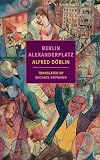
There's not much to like about Franz Biberkopf: former transport worker, housebreaker, pimp, manslaughterer. However, rather than evil personified our protagonist is a kind of Everyman after the Fall.
Berlin in 1928 was not an easy place for such as he. Fresh out of prison when first we meet him, Franz was faced with making his way in a city where no one cared about him or for him. Berlin itself is such an overpowering force in the novel that it becomes a character in its own right: seedy, show more pushy, never sleeping, always on edge. That's not far from what Franz must become to make his way in such an environment. Initially full of resolve to go straight, bit by bit he slipped further into the quagmire. He knew this was the fate of people like him, just not how that fate would be dealt:
We can predict what a pig will do when it reaches the sty. Only, a pig is better off than a human being, because it's put together from meat and lard and not much more can happen to it as long as it gets enough to eat: at most it might throw another litter, and at the end of its life there's the knife, which isn't particularly bad or upsetting either: before it notices anything - and what does a pig notice anyway - it's already kaput. Whereas a man, he's got eyes, and there's a lot going on inside him, and all of it mixed together: he's capable of thinking God knows what and he will think (his head is terrible) about what will happen to him.
This is an unusual novel, jumping from place to place, thought to thought, much like life itself. In his Afterword, the translator Michael Hofmann calls it jazz, "... the real thing: weather reports, articles on nutrition, local news items, personal interest stories, letters from patients, all incorporated into the novel....The work-in-progress of the book matched the work- in- progress of the city... with its own duckboards and drillings and tunnellings and detours and demolitions and temporary closures and promised improvements.
Doblin was a psychiatrist with a working class caseload who knew Berliners well. His Berlin backdrop and its downtrodden citizens make it apparent that something must happen, that the city and by extension the country couldn't continue grinding its citizens up in the way his occasional abattoir reports reflected the fate of its four-legged animals. Franz and his friends may not have been able to articulate the political theories circulating at the time, but they knew each promised a better life. Where was it?
Berlin has another incarnation in this novel: the temptress, the great Whore of Babylon, deceiving people again and again. It would take much stronger characters than Franz's crew to resist and go straight. Yet in the end, Franz offers hope for redemption, something so many would be denied. Doblin himself knew better that to trust her, and left Berlin after the 1933 Reichstag fire.
_______________
A note on translation: Althought the back cover of this 2018 nyrb classics edition suggests this is the first translation into English ("In Michael Hofmann's extraordinary new translation, Alfred Doblin's masterpiece lives in English for the first time") there was in fact a 1931 translation by Eugene Jolas which Hofmann praises in his Afterword. show less
Berlin in 1928 was not an easy place for such as he. Fresh out of prison when first we meet him, Franz was faced with making his way in a city where no one cared about him or for him. Berlin itself is such an overpowering force in the novel that it becomes a character in its own right: seedy, show more pushy, never sleeping, always on edge. That's not far from what Franz must become to make his way in such an environment. Initially full of resolve to go straight, bit by bit he slipped further into the quagmire. He knew this was the fate of people like him, just not how that fate would be dealt:
We can predict what a pig will do when it reaches the sty. Only, a pig is better off than a human being, because it's put together from meat and lard and not much more can happen to it as long as it gets enough to eat: at most it might throw another litter, and at the end of its life there's the knife, which isn't particularly bad or upsetting either: before it notices anything - and what does a pig notice anyway - it's already kaput. Whereas a man, he's got eyes, and there's a lot going on inside him, and all of it mixed together: he's capable of thinking God knows what and he will think (his head is terrible) about what will happen to him.
This is an unusual novel, jumping from place to place, thought to thought, much like life itself. In his Afterword, the translator Michael Hofmann calls it jazz, "... the real thing: weather reports, articles on nutrition, local news items, personal interest stories, letters from patients, all incorporated into the novel....The work-in-progress of the book matched the work- in- progress of the city... with its own duckboards and drillings and tunnellings and detours and demolitions and temporary closures and promised improvements.
Doblin was a psychiatrist with a working class caseload who knew Berliners well. His Berlin backdrop and its downtrodden citizens make it apparent that something must happen, that the city and by extension the country couldn't continue grinding its citizens up in the way his occasional abattoir reports reflected the fate of its four-legged animals. Franz and his friends may not have been able to articulate the political theories circulating at the time, but they knew each promised a better life. Where was it?
Berlin has another incarnation in this novel: the temptress, the great Whore of Babylon, deceiving people again and again. It would take much stronger characters than Franz's crew to resist and go straight. Yet in the end, Franz offers hope for redemption, something so many would be denied. Doblin himself knew better that to trust her, and left Berlin after the 1933 Reichstag fire.
_______________
A note on translation: Althought the back cover of this 2018 nyrb classics edition suggests this is the first translation into English ("In Michael Hofmann's extraordinary new translation, Alfred Doblin's masterpiece lives in English for the first time") there was in fact a 1931 translation by Eugene Jolas which Hofmann praises in his Afterword. show less
I have to admit, it was actually the part where the main dude comes back from the dead and turns out to be a kind of grace-lobotomized angel or bodhisattva that made me fully embrace this gritty, hilarious (I love when Germans are funny because no one else's humour has that manic edge of malice) story of human damage in 1920s Berlin. Let me say again: the part that makes the book is where the protagonist turns out to be an angel. How fucking good a writer do you have to be to pull that off? show more Also, the gusto with which the dialogue is Englished and Twentiesed by Jolas is a major accomplishment on its own, good job Jolas. show less
Lists
My TBR (1)
. (1)
Favourite Books (1)
Five star books (1)
Awards


You May Also Like


Associated Authors
Statistics
- Works
- 128
- Also by
- 20
- Members
- 4,676
- Popularity
- #5,396
- Rating
- 3.8
- Reviews
- 59
- ISBNs
- 350
- Languages
- 22
- Favorited
- 17


