
Lloyd Biggle, Jr. (1923–2002)
Author of All the Colors of Darkness
About the Author
Series
Works by Lloyd Biggle, Jr.
The Quallsford Inheritance : A Memoir of Sherlock Holmes from the Papers of Edward Porter Jones, His Late Assistant (1986) 73 copies, 2 reviews
Tunesmith 12 copies
The Lloyd Biggle, Jr. MEGAPACK ™: The Best Science Fiction Stories of Lloyd Biggle, Jr. (2014) 5 copies
Trombetas da Revolução 3 copies
Drawn from Death 3 copies
Monument [short story] 3 copies
A Guerra dos Fantasmas 3 copies
Unterwegs in die Welt von morgen (148): Invasion der Supermenschen - Traeumende Erde (1995) 2 copies
Partida Sem Chegada 2 copies
The Case of the Unrepentant Ghost 2 copies
The Case of the Wolf with Two Tales 2 copies
They Live Forever [short story] 2 copies
The Double-Edged Rope (SS) 2 copies
The World Menders 1 1 copy
Complotto spaziale 1 copy
The World Menders 2 1 copy
Out of The Silent Sky 1 copy
Gli Olz di Branoff IV 1 copy
The World Menders 3 1 copy
Morgan's Lucky Planet 1 copy
Storie di fantamore 1 copy
The Unnullified World 1 copy
A Beachhead In Utopia 1 copy
and madly teach 1 copy
Judgement Day 1 copy
The Man Who Wasn't Home 1 copy
Associated Works
Isaac Asimov's Wonderful Worlds of Science Fiction, Volume 8: Monsters (1988) — Author — 77 copies, 2 reviews
The World's Finest Mystery and Crime Stories: First Annual Collection (2000) — Contributor — 68 copies, 1 review
The Best Science Fiction Stories and Novels: Ninth Series (2024) — Contributor — 41 copies, 1 review
Analog Science Fiction/Science Fact: Vol. LXXXVII, No. 1 (March 1971) (1971) — Contributor — 19 copies
Analog Science Fiction and Fact: Vol. CXXII, No. 7 & 8 (July/August 2002) (2002) — Contributor — 14 copies, 1 review
The far side of time, thirteen original stories;: A science fiction anthology (1974) — Contributor — 6 copies
Short Science Fiction Collection 072 — Contributor — 2 copies
Tagged
Common Knowledge
- Birthdate
- 1923-04-17
- Date of death
- 2002-09-12
- Gender
- male
- Education
- Wayne State University
University of Michigan (PhD) - Occupations
- sergeant (102nd Infantry Division)
professor
writer
musician
oral historian - Organizations
- Science Fiction and Fantasy Writers of America (SFWA)
Science Fiction Oral History Association (Founder)
University of Michigan
Eastern Michigan University
Veterans of Foreign Wars
Disabled American Veterans (show all 7)
U.S. Army - Awards and honors
- Purple Heart
- Nationality
- USA
- Birthplace
- Waterloo, Iowa, USA
- Places of residence
- Waterloo, Iowa, USA
Detroit, Michigan, USA
Ann Arbor, Michigan, USA - Place of death
- Ann Arbor, Michigan, USA
- Associated Place (for map)
- Michigan, USA
Members
Discussions
Handy in Good Show Sir! — bad science fiction and fantasy covers (March 2025)
Reviews

So, a sequel, but not really. I read the first book and I have a quick write-up on it on LT -- interesting plot that then meanders and then hard stop throw-up-you-hands ending. I didn't really like it overall.
I said in that review that I didn't know how they were going to do a sequel, and this really isn't. It's a whole separate story with separate characters and ideas, really only bringing over the central idea from the last book but then using it in a completely different way, although show more still a follow-on to the events of the last book.
This book is actually written by the author's friend -- Apparently and sadly, Sherred had a stroke and discontinued writing but his friend and fellow writer Biggle finished this book for him. And by finish, I'm guessing mostly write including most of the plot and characters. And man, what a difference. I like Biggle a lot and this book reads like a Biggle book from beginning to end.
This book would fit right in as a long form Star Trek story. Like most of Biggle's works, it is thoughtful, interesting, and fun to read. People solve problems through ideas not just action. I liked it a lot. show less
I said in that review that I didn't know how they were going to do a sequel, and this really isn't. It's a whole separate story with separate characters and ideas, really only bringing over the central idea from the last book but then using it in a completely different way, although show more still a follow-on to the events of the last book.
This book is actually written by the author's friend -- Apparently and sadly, Sherred had a stroke and discontinued writing but his friend and fellow writer Biggle finished this book for him. And by finish, I'm guessing mostly write including most of the plot and characters. And man, what a difference. I like Biggle a lot and this book reads like a Biggle book from beginning to end.
This book would fit right in as a long form Star Trek story. Like most of Biggle's works, it is thoughtful, interesting, and fun to read. People solve problems through ideas not just action. I liked it a lot. show less

The automated "Will you like it?" function said "LibraryThing thinks you will will love Watchers of the Dark". I thought I would too. It's got a detective doing private eye stuff and aliens. What's not to like? Well, how about the characters, the plot, the pacing... perhaps I'm being a bit harsh but it's been a while since I couldn't finish a book.
A meandering story with too many different tones. The fate of the galaxy is at stake, yet most of the time the tone is comical, if not downright show more silly. Other times it's suddenly a dark and serious book. The inconsistency is jarring. My biggest complaint however was that it went nowhere. The entire middle of the book (where I abandoned it) has the main character going undercover as an interstellar trader and learning the intricacies of selling various nuts and seeds. Not exactly the science fiction escapism I was looking for. show less
A meandering story with too many different tones. The fate of the galaxy is at stake, yet most of the time the tone is comical, if not downright show more silly. Other times it's suddenly a dark and serious book. The inconsistency is jarring. My biggest complaint however was that it went nowhere. The entire middle of the book (where I abandoned it) has the main character going undercover as an interstellar trader and learning the intricacies of selling various nuts and seeds. Not exactly the science fiction escapism I was looking for. show less
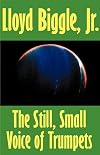
Lloyd Biggle Jr. is best known for bringing the arts to science fiction (just as Mack Reynolds brought sociology and economics to SF). He had a gentle, thoughtful style that made his books a pleasure to read; in that, his work resembles that of James White.
The Still, Small Voice of Trumpets is classic Biggle. The premise may perhaps seem a bit naive in these harsh days of realpolitik; a Galactic Federation which cannot expand unless a planet at its borders becomes a planetary democracy, show more without overt interference by Galactic agents. The natives of the planet, Gurnil, have a relatively low level of technology; they are not aware that aliens walk among them. If they discover that, the planet will be considered "blown", and the Galactic agents will have to withdraw in failure.
Those agents are also hampered by a web of regulations, rules, and maxims.
When Forzon, an officer of the Cultural Survey, is mysteriously reassigned to Gurnil he must not only find out why he was reassigned, but how to apply his speciality, the arts, to turning a brutal monarchy into a peaceful democracy. The natives have a magnificent appreciation of beauty and art, but seem to have virtually no political awareness. Forzon is allowed to introduce one technological innovation to the planet, but how can a single change literally revolutionize an entire world?
Biggle's answer is memorable and believable.
It must be noted that the book was first published in 1968, and that Biggle was not one of the "New Wave" authors who were in ascendence at that time. To some, his style may seem a little old-fashioned, though it's eminently readable. The romantic relationship between Forzon and Ann Curry, one of his agents, may also seem rather a bit dated - although accusations of sexism are not credible, since Forzon never treats Ann with less than respect, and her mistakes are not the stereotypical "stupid helpless female" behavior that was a staple of the poorer sort of science fiction a generation earlier.
The Still, Small Voice of Trumpets is a short, elegant, and thoughtful example of a type of science fiction which is still all too rare. It's well worth reading, and re-reading. Although it's quite a short book, Biggle wrote other memorable books on the same general theme, and most of them are back in print. show less
The Still, Small Voice of Trumpets is classic Biggle. The premise may perhaps seem a bit naive in these harsh days of realpolitik; a Galactic Federation which cannot expand unless a planet at its borders becomes a planetary democracy, show more without overt interference by Galactic agents. The natives of the planet, Gurnil, have a relatively low level of technology; they are not aware that aliens walk among them. If they discover that, the planet will be considered "blown", and the Galactic agents will have to withdraw in failure.
Those agents are also hampered by a web of regulations, rules, and maxims.
When Forzon, an officer of the Cultural Survey, is mysteriously reassigned to Gurnil he must not only find out why he was reassigned, but how to apply his speciality, the arts, to turning a brutal monarchy into a peaceful democracy. The natives have a magnificent appreciation of beauty and art, but seem to have virtually no political awareness. Forzon is allowed to introduce one technological innovation to the planet, but how can a single change literally revolutionize an entire world?
Biggle's answer is memorable and believable.
It must be noted that the book was first published in 1968, and that Biggle was not one of the "New Wave" authors who were in ascendence at that time. To some, his style may seem a little old-fashioned, though it's eminently readable. The romantic relationship between Forzon and Ann Curry, one of his agents, may also seem rather a bit dated - although accusations of sexism are not credible, since Forzon never treats Ann with less than respect, and her mistakes are not the stereotypical "stupid helpless female" behavior that was a staple of the poorer sort of science fiction a generation earlier.
The Still, Small Voice of Trumpets is a short, elegant, and thoughtful example of a type of science fiction which is still all too rare. It's well worth reading, and re-reading. Although it's quite a short book, Biggle wrote other memorable books on the same general theme, and most of them are back in print. show less
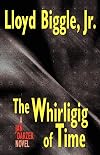
When a junior astrogator reported the presence of a new sun, he (species equivalent) little knew what he was going to let loose on the galaxy. Soon First of the Council of Supreme was investigating reports of a person who should have been dead but was apparently flitting about the galaxy at will, and a planet that had been threatened with destruction by being turned into a star. What do these things have in common? Jan Darzek, and his faithful sidekick Miss Schlupe, found himself running show more round Vezpro trying to find someone who could prove that the observed phenomena could have, indeed, happened. Along the way we have pops at established scientific theory and other vested interests, including a pointed comment on the treatment of 'the other' in contemporary society along with Biggle's customary dry humour. show less
Lists
Awards

You May Also Like


Associated Authors
Statistics
- Works
- 76
- Also by
- 42
- Members
- 2,753
- Popularity
- #9,318
- Rating
- 3.7
- Reviews
- 54
- ISBNs
- 113
- Languages
- 6
- Favorited
- 4
