
Sidney Poitier (1927–2022)
Author of The Measure of a Man: A Spiritual Autobiography
About the Author
Born in Miami 1927 and raised in the Bahamas, Poitier began acting after the war, and soon made his debut in Hollywood with No Way Out. He became the first black actor to win an Academy Award for Best Actor. In 1968 he was knighted by H.M. Queen Elizabeth II and is the recipient of four honorary show more doctorate degrees, the last from New York University. He has starred in over forty films, directed nine, and written four. He has received three Golden Globe Awards; an American Film Institute Lifetime Achievement Award; the Kennedy Center Lifetime Achievement Award; and the Screen Actors Guild Lifetime Achievement Award, among many other awards and honors. In April 1997 Poitier was named the Ambassador to Japan from the Bahamas. Sir Poitier is currently president and CEO of Verdon Cedric Productions. He is married, has six daughters, four grandchildren, and one great-grandchild. Sidney Poitier was the first black actor to win the Academy Award for best actor for his performance in Lilies of the Field in 1963. His landmark films include The Defiant Ones, A Patch of Blue, Guess Who's Coming to Dinner, and To Sir, With Love. Poitier is the author of two autobiographies: This Life and the New York Times bestseller The Measure of a Man. (Bowker Author Biography) show less
Works by Sidney Poitier
Mark of the Hawk 3 copies
A Warm December [1973 film] — Director — 2 copies
Cry, The Beloved Country 1 copy
Little Nikita 1 copy
Little Nikita - BD [Blu-ray] 1 copy
Nationtime [Blu-ray] 1 copy
Deadly Pursuit 1 copy
Edge of the City 1 copy
Associated Works
The Sidney Poitier Collection: Edge of the City / Something of Value / A Patch of Blue / A Warm December (2009) — Actor — 6 copies
The Wilby Conspiracy [1975 film] — Actor — 4 copies
Paul Robeson: Tribute to an Artist [1979 film] — Narrator — 3 copies
To Sir, With Love [and] Guess Who's Coming to Dinner — Actor — 1 copy
Afro Promo: Black Cinema Trailers 1946-76 — Actor — 1 copy
Tagged
Common Knowledge
- Legal name
- Poitier, Sidney L.
- Birthdate
- 1927-02-20
- Date of death
- 2022-01-06
- Gender
- male
- Occupations
- actor
film director
day labourer
dishwasher
psychiatric aide
Bahamian Ambassador to Japan - Organizations
- U.S. Army
The Walt Disney Company - Awards and honors
- Academy Award (best actor|1963)
Honorary Knight Commander, Order of the British Empire (1974)
Kennedy Center Honors (1995)
Presidential Medal of Freedom (2009) - Nationality
- USA
Bahamas (birth) - Birthplace
- Miami, Florida, USA
- Places of residence
- Arthur's Town, Cat Island, Bahamas
Nassau, Bahamas
Florida, USA
New York, USA - Map Location
- Bahamas
Members
Reviews
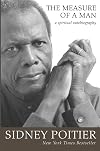
Part autobiography and part philosophical treatise, Sidney Poitier appears to use the writing of this book to take stock of his entire life — to understand who he truly is, to evaluate his success as an Academy Award winning actor, to examine his roles as father and human being, and to come to terms with some of the big mysteries of life. It’s eloquently written, intelligent, thoughtful, and subtly encourages the reader toward his or her own self-exploration.
Here were some of the most show more interesting aspects of the read for me:
* The reflection on Poitier’s origins on a small island in the Bahamas. Both sheltered and protected in a primitive and economically poor environment, he credits the values instilled by hard-working parents and a childhood full of free exploration and requisite risk-taking for establishing his core internal strength.
* Full of imagination and aware of the limitations of life on a small island, Poitier gets shipped off to the U.S. at the age of 15 with little education and virtually no money. How he gets himself from Florida to Georgia to New York City and finally, to earning a regular income is a story of determination anyone would be proud to share.
* Born in 1927, Poitier’s life spans most of the civil rights milestones that define the 20th century in America. And he doesn’t shy away from relaying the blatant and even life-threatening discrimination he experienced. There was also a lot I didn’t know about the myriad ways minority performers were marginalized throughout the entertainment industry.
* Poitier maintained more control over his selection of roles than many of his contemporaries, particularly for an actor of color. And I found it fascinating to learn how he came to the iconic roles he is now so famous for (Think Lilies of the Field, The Defiant Ones, To Sir With Love, In the Heat of the Night, Guess Who’s Coming to Dinner) and how he was able to influence these roles to keep then authentic to the African-American experience. Even against criticism from the minority community. In fact, many of his movies reflect the evolving story of racism in America during his lifetime.
* Poitier models a real commitment to introspection. Age 72 when he published this book, he is not simply content to sit back and enjoy his success and family. Instead he appears to have an fiery need to push toward deeper and deeper self-awareness — exposing his internal demons, trying to anchor himself in the cosmos, and struggling to understand the relationship between humanity and nature.
My thoughts are not ALL positive. Taken as a whole, the book doesn’t hang together all that well. Many times it felt much more like a series of discrete chapters in which Poitier shares some of his random thoughts. But, that wasn’t much of a distraction. And at the end of the book, I came away more impressed with Poitier than I began. (I have ALWAYS been a big fan of his performances.) I came away with admiration for him as a human being.
See more of my reviews at www.tobyasmith.com show less
Here were some of the most show more interesting aspects of the read for me:
* The reflection on Poitier’s origins on a small island in the Bahamas. Both sheltered and protected in a primitive and economically poor environment, he credits the values instilled by hard-working parents and a childhood full of free exploration and requisite risk-taking for establishing his core internal strength.
* Full of imagination and aware of the limitations of life on a small island, Poitier gets shipped off to the U.S. at the age of 15 with little education and virtually no money. How he gets himself from Florida to Georgia to New York City and finally, to earning a regular income is a story of determination anyone would be proud to share.
* Born in 1927, Poitier’s life spans most of the civil rights milestones that define the 20th century in America. And he doesn’t shy away from relaying the blatant and even life-threatening discrimination he experienced. There was also a lot I didn’t know about the myriad ways minority performers were marginalized throughout the entertainment industry.
* Poitier maintained more control over his selection of roles than many of his contemporaries, particularly for an actor of color. And I found it fascinating to learn how he came to the iconic roles he is now so famous for (Think Lilies of the Field, The Defiant Ones, To Sir With Love, In the Heat of the Night, Guess Who’s Coming to Dinner) and how he was able to influence these roles to keep then authentic to the African-American experience. Even against criticism from the minority community. In fact, many of his movies reflect the evolving story of racism in America during his lifetime.
* Poitier models a real commitment to introspection. Age 72 when he published this book, he is not simply content to sit back and enjoy his success and family. Instead he appears to have an fiery need to push toward deeper and deeper self-awareness — exposing his internal demons, trying to anchor himself in the cosmos, and struggling to understand the relationship between humanity and nature.
My thoughts are not ALL positive. Taken as a whole, the book doesn’t hang together all that well. Many times it felt much more like a series of discrete chapters in which Poitier shares some of his random thoughts. But, that wasn’t much of a distraction. And at the end of the book, I came away more impressed with Poitier than I began. (I have ALWAYS been a big fan of his performances.) I came away with admiration for him as a human being.
See more of my reviews at www.tobyasmith.com show less
I don’t listen to a lot of audiobooks and it’s very rare for me to think that a book is better listened to than read, but in this case, I’ll make an exception. The Measure of a Man is narrated by Sidney Poitier himself, and he has such a beautiful voice, that it really enhanced my experience of the book. It also worked really well as an audiobook because he is so conversational in tone – he peppers his narration with phrases like, “You follow?” or “You see?”
As for the content show more itself – wow! This is a wonderful autobiography and then some. While Poitier does tell the story of his life, it’s not necessarily a straightforward chronological account of events. At times it comes across more as a philosophical discussion, where he uses his own life as a starting point.
His description of his childhood on Cat Island in the Bahamas was wonderful. Although his family lived in poverty, he points out that living in poverty on Cat Island was very different to living in poverty in some concrete jungle. As a child, he lived in a place with a beautiful climate, cocoa plum trees, sea grapes and wild bananas.
However, the most interesting – and in many ways upsetting – part of the book was when Poitier described his life in America which started when he moved to Florida aged 15, and then moved on to New York, and eventually started acting. This was a a time of racial segregation, and he realised exactly what it meant to be classed as a second class citizen. As an example – he recalled one event when he was already quite well known in films, and he went to a restaurant for a bite to eat. The black Maitre d’ explained that he could have a table there, but they would have to put a screen around him, for the sensitivity of the white diners. When offered jobs on certain films, he was asked to sign papers disowning those of his black friends who were campaigning for equal rights (he always refused to do so).
Throughout it all, Poitier’s dignity and strong sense of right and wrong shines through. He speaks strongly of his love for his parents, and how they inspire him in his life – whatever work he does, he does for them as well as for himself and his own family. He describes how he has always tried to be the best that he can be, his search for answers, his hopes for not only himself, but the world at large. He’s honest about himself; those parts of himself that he is proud of, and the mistakes which he has made.
This is not a revealing, kiss-and-tell autobiography, and it is all the better for it. Poitier does not delve into the subject of murky or tawdry Hollywood tales, and is respectful of those people who he does mention by name. He does discuss some of his most famous films – which made me immediately want to go out and rewatch them – and reveals his motivation for playing certain roles, and refusing certain others.
Overall, I’d say that this is one of the best autobiographies I have ever read (or listened to). I would strongly recommend it, not only to anyone with an interest in Hollywood or film-making, but also to anyone with an interest in the civil rights movement. show less
As for the content show more itself – wow! This is a wonderful autobiography and then some. While Poitier does tell the story of his life, it’s not necessarily a straightforward chronological account of events. At times it comes across more as a philosophical discussion, where he uses his own life as a starting point.
His description of his childhood on Cat Island in the Bahamas was wonderful. Although his family lived in poverty, he points out that living in poverty on Cat Island was very different to living in poverty in some concrete jungle. As a child, he lived in a place with a beautiful climate, cocoa plum trees, sea grapes and wild bananas.
However, the most interesting – and in many ways upsetting – part of the book was when Poitier described his life in America which started when he moved to Florida aged 15, and then moved on to New York, and eventually started acting. This was a a time of racial segregation, and he realised exactly what it meant to be classed as a second class citizen. As an example – he recalled one event when he was already quite well known in films, and he went to a restaurant for a bite to eat. The black Maitre d’ explained that he could have a table there, but they would have to put a screen around him, for the sensitivity of the white diners. When offered jobs on certain films, he was asked to sign papers disowning those of his black friends who were campaigning for equal rights (he always refused to do so).
Throughout it all, Poitier’s dignity and strong sense of right and wrong shines through. He speaks strongly of his love for his parents, and how they inspire him in his life – whatever work he does, he does for them as well as for himself and his own family. He describes how he has always tried to be the best that he can be, his search for answers, his hopes for not only himself, but the world at large. He’s honest about himself; those parts of himself that he is proud of, and the mistakes which he has made.
This is not a revealing, kiss-and-tell autobiography, and it is all the better for it. Poitier does not delve into the subject of murky or tawdry Hollywood tales, and is respectful of those people who he does mention by name. He does discuss some of his most famous films – which made me immediately want to go out and rewatch them – and reveals his motivation for playing certain roles, and refusing certain others.
Overall, I’d say that this is one of the best autobiographies I have ever read (or listened to). I would strongly recommend it, not only to anyone with an interest in Hollywood or film-making, but also to anyone with an interest in the civil rights movement. show less
A man with Sidney Poitier's chops is entitled to take himself seriously. With the subtitle "A Spiritual Biography", the reader is advised to expect nothing less. For the most part, Mr. Poitier managed to balance his seriousness with enough self-deprecation and light-heartedness to keep this from being a "preachy" sort of book. Occasionally, though, in spite of his marvelous voice and diction (and those fleeting Island cadences!), I did find myself drifting away as one may do in church, show more losing the thread of his discourse on some too familiar sermon topics, such as the overindulgence of a generation of children which led to the sex-drugs-rocknroll culture, and so on. When talking about his experiences as a child growing up in the Bahamas, or as a young black man determined to make his way with honor in the world of theater and movie-making at a difficult time, Poitier is mesmerizing. Hearing him reminiscence about what it took to make films like "The Defiant Ones" and "A Patch of Blue" makes me very grateful for his moral presence in the world, as much as for his artistic contributions. His narration ranges from an easy conversational style to something more dramatic, almost Shakespearean at times. Recommended if you admire his work. show less
Part autobiography and part philosophical treatise, Sidney Poitier appears to use the writing of this book to take stock of his entire life — to understand who he truly is, to evaluate his success as an Academy Award winning actor, to examine his roles as father and human being, and to come to terms with some of the big mysteries of life. It’s eloquently written, intelligent, thoughtful, and subtly encourages the reader toward his or her own self-exploration.
Here were some of the most show more interesting aspects of the read for me:
* The reflection on Poitier’s origins on a small island in the Bahamas. Both sheltered and protected in a primitive and economically poor environment, he credits the values instilled by hard-working parents and a childhood full of free exploration and requisite risk-taking for establishing his core internal strength.
* Full of imagination and aware of the limitations of life on a small island, Poitier gets shipped off to the U.S. at the age of 15 with little education and virtually no money. How he gets himself from Florida to Georgia to New York City and finally, to earning a regular income is a story of determination anyone would be proud to share.
* Born in 1927, Poitier’s life spans most of the civil rights milestones that define the 20th century in America. And he doesn’t shy away from relaying the blatant and even life-threatening discrimination he experienced. There was also a lot I didn’t know about the myriad ways minority performers were marginalized throughout the entertainment industry.
* Poitier maintained more control over his selection of roles than many of his contemporaries, particularly for an actor of color. And I found it fascinating to learn how he came to the iconic roles he is now so famous for (Think Lilies of the Field, The Defiant Ones, To Sir With Love, In the Heat of the Night, Guess Who’s Coming to Dinner) and how he was able to influence these roles to keep then authentic to the African-American experience. Even against criticism from the minority community. In fact, many of his movies reflect the evolving story of racism in America during his lifetime.
* Poitier models a real commitment to introspection. Age 72 when he published this book, he is not simply content to sit back and enjoy his success and family. Instead he appears to have an fiery need to push toward deeper and deeper self-awareness — exposing his internal demons, trying to anchor himself in the cosmos, and struggling to understand the relationship between humanity and nature.
My thoughts are not ALL positive. Taken as a whole, the book doesn’t hang together all that well. Many times it felt much more like a series of discrete chapters in which Poitier shares some of his random thoughts. But, that wasn’t much of a distraction. And at the end of the book, I came away more impressed with Poitier than I began. (I have ALWAYS been a big fan of his performances.) I came away with admiration for him as a human being.
See more of my reviews at www.tobyasmith.com show less
Here were some of the most show more interesting aspects of the read for me:
* The reflection on Poitier’s origins on a small island in the Bahamas. Both sheltered and protected in a primitive and economically poor environment, he credits the values instilled by hard-working parents and a childhood full of free exploration and requisite risk-taking for establishing his core internal strength.
* Full of imagination and aware of the limitations of life on a small island, Poitier gets shipped off to the U.S. at the age of 15 with little education and virtually no money. How he gets himself from Florida to Georgia to New York City and finally, to earning a regular income is a story of determination anyone would be proud to share.
* Born in 1927, Poitier’s life spans most of the civil rights milestones that define the 20th century in America. And he doesn’t shy away from relaying the blatant and even life-threatening discrimination he experienced. There was also a lot I didn’t know about the myriad ways minority performers were marginalized throughout the entertainment industry.
* Poitier maintained more control over his selection of roles than many of his contemporaries, particularly for an actor of color. And I found it fascinating to learn how he came to the iconic roles he is now so famous for (Think Lilies of the Field, The Defiant Ones, To Sir With Love, In the Heat of the Night, Guess Who’s Coming to Dinner) and how he was able to influence these roles to keep then authentic to the African-American experience. Even against criticism from the minority community. In fact, many of his movies reflect the evolving story of racism in America during his lifetime.
* Poitier models a real commitment to introspection. Age 72 when he published this book, he is not simply content to sit back and enjoy his success and family. Instead he appears to have an fiery need to push toward deeper and deeper self-awareness — exposing his internal demons, trying to anchor himself in the cosmos, and struggling to understand the relationship between humanity and nature.
My thoughts are not ALL positive. Taken as a whole, the book doesn’t hang together all that well. Many times it felt much more like a series of discrete chapters in which Poitier shares some of his random thoughts. But, that wasn’t much of a distraction. And at the end of the book, I came away more impressed with Poitier than I began. (I have ALWAYS been a big fan of his performances.) I came away with admiration for him as a human being.
See more of my reviews at www.tobyasmith.com show less
Lists
Awards


You May Also Like


Associated Authors
Statistics
- Works
- 29
- Also by
- 49
- Members
- 2,584
- Popularity
- #9,937
- Rating
- 4.2
- Reviews
- 53
- ISBNs
- 76
- Favorited
- 1