
Nam Le
Author of The Boat
About the Author
Nam Le is a Vietnamese-born Australian writer, who won the Dylan Thomas Prize for his book The Boat which is a collection of short stories. His stories have been published in several places including Best Australian Stories 2007, Best New American Voices, Zoetrope: All-Story, A Public Space and One show more Story. He has won several awards including Pushcart Prize, Prime Minister's Literary award, Anisfield -Wolf Book Award and PEN/Malamud Award. He will be featured at the Ubud Writers and Readers Festival 2015 program. (Bowker Author Biography) show less
Works by Nam Le
This is Media 1 copy
Associated Works
Tagged
Common Knowledge
- Birthdate
- 1978
- Gender
- male
- Education
- University of Melbourne, Australia (BA, LLB)
Iowa Writers' Workshop (MFA) - Occupations
- short story writer
editor
attorney - Organizations
- Harvard Review
- Awards and honors
- National Book Foundation "5 Under 35" (2008)
- Agent
- Eric Simonoff, William Morris Endeavor
- Nationality
- Vietnam (birth)
Australia
Members
Reviews
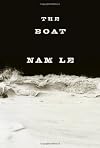
This collection of stories amazes with its variety, depth, cultural reach, elegant and spare, evocative prose, and reflective wisdom on the human condition. He covers a Columbian drug gang youth, an aged Russian artist estranged from his famed cellist daughter, the coming of age of an Australian boy whose mother is dying of MS, a Japanese girl sent out of the city during the WWII bombings, an American girl who befriended an Iranian radical who returned to Tehran, and a boatful of Vietnamese show more emigres, adrift at sea. The stories speak of emptiness, disconnectedness through war, estrangement, cultures, time, distance, in families and life, and the surprising acts of everyday events that can make us whole. Bookended by two stories of Vietnamese origin, the collection shows virtuosity in breadth and understanding. The language is electric, alive, sublime and surprising, rich in originality, imagery and metaphor.
Though not every story is perfect, there is much to admire. The fist story felt autobiographical and speaks to the conceits of being an "ethnic writer," as well as the process of being in a famed school to become a writer. But more, the distance of age, place, language, culture, war, expectation and indifference are explored with great sensitivity between a son and his father. Such phrases as "We forgive any sacrifice by our parents as long as it is not made in our name," and descriptions such as, "Your eyes a dark cold green hurt," show the talent Le has to turn language around in inventive, artistic and effective ways, creating in familiar words something entirely new, fresh, refreshing, and rewarding. show less
Though not every story is perfect, there is much to admire. The fist story felt autobiographical and speaks to the conceits of being an "ethnic writer," as well as the process of being in a famed school to become a writer. But more, the distance of age, place, language, culture, war, expectation and indifference are explored with great sensitivity between a son and his father. Such phrases as "We forgive any sacrifice by our parents as long as it is not made in our name," and descriptions such as, "Your eyes a dark cold green hurt," show the talent Le has to turn language around in inventive, artistic and effective ways, creating in familiar words something entirely new, fresh, refreshing, and rewarding. show less
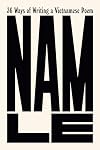
Nam Le's 36 Ways of Writing a Vietnamese Poem is a remarkable book. The poems it contains share a Vietnamese perspective, but as Le demonstrates, "Vietnamese perspective" is a broad category with room for multiple positionalities and styles.
I read this book slowly, a few poems each month, and I waited for each poem to sink in. I didn't want to read at a speed that would have the poems piling up against one another like cars in a train wreck. Or, to put it another way, I read it the way I show more would eat a box of high-end chocolates: in small bites and savoring each of them.
This is a title I will be recommending widely, not just to poetry-loving friends, but also to friends looking to see the world in all its breadth. show less
I read this book slowly, a few poems each month, and I waited for each poem to sink in. I didn't want to read at a speed that would have the poems piling up against one another like cars in a train wreck. Or, to put it another way, I read it the way I show more would eat a box of high-end chocolates: in small bites and savoring each of them.
This is a title I will be recommending widely, not just to poetry-loving friends, but also to friends looking to see the world in all its breadth. show less
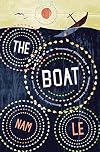
A collection of short stories, vividly told and compelling, that add up to make something that’s more than the sum of its parts – a commentary on the human condition, the many nuances of our relationships with one another, and the global, multi-cultural world in which we live.
The first story - Love and Honor and Pity and Pride and Compassion and Sacrifice - was a delightfully rich and understated picture of a family who fled to Australia from Vietnam as boat-people; about the sacrifices show more parents make for their children and the pain parents and children cause each other; and about the stories we tell, why we tell them, and how they are received.
This was followed by stories about a young South American assassin; a father hoping to meet his famous daughter, a cello prodigy, after 17 years; a young Australian lad with an ill mother; a Japanese girl in wartime Hiroshima; an American lawyer visiting a friend in Tehran; and a Vietnamese girl on a boat fleeing Vietnam.
I really enjoyed the vivid and distinct narrative voices, and the rich pictures and lingering sadness evoked by each of these stories. show less
The first story - Love and Honor and Pity and Pride and Compassion and Sacrifice - was a delightfully rich and understated picture of a family who fled to Australia from Vietnam as boat-people; about the sacrifices show more parents make for their children and the pain parents and children cause each other; and about the stories we tell, why we tell them, and how they are received.
This was followed by stories about a young South American assassin; a father hoping to meet his famous daughter, a cello prodigy, after 17 years; a young Australian lad with an ill mother; a Japanese girl in wartime Hiroshima; an American lawyer visiting a friend in Tehran; and a Vietnamese girl on a boat fleeing Vietnam.
I really enjoyed the vivid and distinct narrative voices, and the rich pictures and lingering sadness evoked by each of these stories. show less
The phrase "world literature" always bugged me. While it sounds broad enough, it's often used to mean "all that other literature that's not written in my country and/or the US/UK", often with the added implication (especially in connection with awards) that it's difficult, obscure, or at least exotic. For instance, when Le's The Boat came out and started piling up accolades, I remember reading an article that pointed to The Boat as an example of how all the good reviews in the world couldn't show more make a weird foreign book sell as much as Dan Brown.
Now, obviously very few authors regardless of nationality or critical acclaim sell as much as Dan Brown, so it's a pretty unfair comparison. But I still wonder if it would have occured to anyone to use this book, written in English by an Australian lawyer living in the US, as an example of weird foreign literature had the writer's name been Bill Johnson. Because honestly, if anything stays with me after reading it, it's how original it's not.
Which isn't to say that it's bad. It really is world literature in the literal sense, in that each of the seven stories in it is set in different parts of the world, and Le is obviously aware of the risk of being filed under "exotic foreigner" and deals with it right away in the first story, in which a Vietnamese-Australian writer named Nam Le is told by his friends to stop trying to write general fiction and just write about his Vietnamese father's horrible experiences during the war. Which, as it turns out, isn't a good idea at all. So from there he bounces us from the US to Colombia to Australia to Japan to Iran before finally returning to (or, to be exact, leaving) Vietnam, covering deceptively simple stories about people trying to take some small amount of control of their lives in a world where most things that happen to them are beyond their influence. And even if it's occasionally obvious that Le isn't quite fully developed as a writer yet (more than once, he seems to have started a story with a few overcooked phrases and then stretched the rest of the story to fit them in rather than killing his darlings) he has a great command of emotions and characters. At his best – say, the story about the American woman trying to understand the complexities of Iranian politics, or the Japanese girl in Hiroshima who unknowningly explains to us how indoctrination works – he's almost brilliant.
And yet, I'm left mostly shrugging. His stories have a tendency to fizzle out without really delivering all they could; he doesn't depend on twist endings, which is admirable, but instead he goes the other direction and too often fails to surprise us at all. Here's where I'm puzzled that anyone would think this is in any way difficult literature: it's all basically Babel or Crash, one of those "we're all the same underneath and everything's connected" movies Hollywood has been pumping out in recent years, with some hard questions that are ultimately simplified, dodged and answered only with emotional payoffs. As such, it gets the job done, even if it's mostly a job that's been done before. Does he deserve to be read more than Dan Brown? Well, who doesn't. Give him a few years and a proper plot to hang his writing on and he might deliver, because there's definitely stuff going on beneath the surface. As it is, though, The Boat neither rocks nor sinks. show less
Now, obviously very few authors regardless of nationality or critical acclaim sell as much as Dan Brown, so it's a pretty unfair comparison. But I still wonder if it would have occured to anyone to use this book, written in English by an Australian lawyer living in the US, as an example of weird foreign literature had the writer's name been Bill Johnson. Because honestly, if anything stays with me after reading it, it's how original it's not.
Which isn't to say that it's bad. It really is world literature in the literal sense, in that each of the seven stories in it is set in different parts of the world, and Le is obviously aware of the risk of being filed under "exotic foreigner" and deals with it right away in the first story, in which a Vietnamese-Australian writer named Nam Le is told by his friends to stop trying to write general fiction and just write about his Vietnamese father's horrible experiences during the war. Which, as it turns out, isn't a good idea at all. So from there he bounces us from the US to Colombia to Australia to Japan to Iran before finally returning to (or, to be exact, leaving) Vietnam, covering deceptively simple stories about people trying to take some small amount of control of their lives in a world where most things that happen to them are beyond their influence. And even if it's occasionally obvious that Le isn't quite fully developed as a writer yet (more than once, he seems to have started a story with a few overcooked phrases and then stretched the rest of the story to fit them in rather than killing his darlings) he has a great command of emotions and characters. At his best – say, the story about the American woman trying to understand the complexities of Iranian politics, or the Japanese girl in Hiroshima who unknowningly explains to us how indoctrination works – he's almost brilliant.
And yet, I'm left mostly shrugging. His stories have a tendency to fizzle out without really delivering all they could; he doesn't depend on twist endings, which is admirable, but instead he goes the other direction and too often fails to surprise us at all. Here's where I'm puzzled that anyone would think this is in any way difficult literature: it's all basically Babel or Crash, one of those "we're all the same underneath and everything's connected" movies Hollywood has been pumping out in recent years, with some hard questions that are ultimately simplified, dodged and answered only with emotional payoffs. As such, it gets the job done, even if it's mostly a job that's been done before. Does he deserve to be read more than Dan Brown? Well, who doesn't. Give him a few years and a proper plot to hang his writing on and he might deliver, because there's definitely stuff going on beneath the surface. As it is, though, The Boat neither rocks nor sinks. show less
Lists
Awards


You May Also Like


Associated Authors
Statistics
- Works
- 6
- Also by
- 6
- Members
- 1,185
- Popularity
- #21,689
- Rating
- 3.7
- Reviews
- 44
- ISBNs
- 46
- Languages
- 7
- Favorited
- 3

