
W. A. Swanberg (1907–1992)
Author of Citizen Hearst: A Biography of William Randolph Hearst
About the Author
Image credit: Katherine Young
Works by W. A. Swanberg
Whitney Father, Whitney Heiress: Two Generations of America's Richest Families (1980) 32 copies, 1 review
Fact Detective Mysteries 4 copies
Tagged
Common Knowledge
- Legal name
- Swanberg, William Andrew
- Birthdate
- 1907-11-23
- Date of death
- 1992-09-17
- Gender
- male
- Education
- University of Minnesota
- Occupations
- biographer
- Organizations
- Dell Publishing
- Nationality
- USA
- Birthplace
- St. Paul, Minnesota, USA
- Places of residence
- St. Paul, Minnesota, USA (birth)
- Place of death
- Southbury, New Haven, Connecticut
Members
Reviews
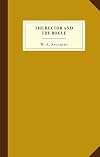
The latest installment of the Collins Library, a McSweeney's imprint edited by the inimitable Paul Collins, is The Rector and the Rogue by W.A. Swanberg, first published in 1968 and re-issued in 2011. Collins' instinct for underappreciated gems certainly hasn't failed him here: what a book!
Swanberg's book is the story of what must be one of the most elaborate practical jokes ever undertaken. The unsuspecting rector of New York's Trinity Church was the main victim; over a period of several show more weeks his home is inundated by a procession of tradesmen and visitors, summoned there by postcards signed by the rector, Morgan Dix. One morning it's more than 25 used-clothing dealers, come to buy Mrs. Dix's wardrobe; another it's fourteen of Dix's fellow clergymen, invited to lunch with a not-actually-visiting English bishop. Eventually Dix goes to the postal authorities and the police, and an investigation reveals that Dix is not the only victim. But the victims seem totally unconnected, and the investigators are absolutely flummoxed as to the prankster's motive (it's presumed to be extortion, but that angle proves nothing but a red herring).
A lucky break leads to the eventual discovery of the mastermind behind the scheme/performance, a curious character who seems at first glance an unlikely conspirator, but whose past record, when explored more carefully, proves anything but spotless. I'll leave it to Swanberg to explain the rest of the story, as he does it very well indeed. Suffice it to say, it wasn't the first time, or even the most serious crime.
The hoakster, E. Fairfax Williamson, had been inspired by a previous practical joker, Theodore Edward Hook, who had carried out a similar scheme against Mrs. Octavia Tottenham in 1809, sending hordes of people thronging to her Berners Street home in London on a single morning. Swanberg explores Hook's work as the precursor to Williamson's even more elaborate persecution of Dix, a most enjoyable tangent to the main story.
Swanberg's writing is lively and humorous, and Collins' afterword, which offers up a fantastic corollary to the Williamson hoax by suggesting that perhaps the joke still hasn't yielded up its last punchline, is brilliant. Highly, highly recommended.
http://philobiblos.blogspot.com/2012/01/book-review-rector-and-rogue.html show less
Swanberg's book is the story of what must be one of the most elaborate practical jokes ever undertaken. The unsuspecting rector of New York's Trinity Church was the main victim; over a period of several show more weeks his home is inundated by a procession of tradesmen and visitors, summoned there by postcards signed by the rector, Morgan Dix. One morning it's more than 25 used-clothing dealers, come to buy Mrs. Dix's wardrobe; another it's fourteen of Dix's fellow clergymen, invited to lunch with a not-actually-visiting English bishop. Eventually Dix goes to the postal authorities and the police, and an investigation reveals that Dix is not the only victim. But the victims seem totally unconnected, and the investigators are absolutely flummoxed as to the prankster's motive (it's presumed to be extortion, but that angle proves nothing but a red herring).
A lucky break leads to the eventual discovery of the mastermind behind the scheme/performance, a curious character who seems at first glance an unlikely conspirator, but whose past record, when explored more carefully, proves anything but spotless. I'll leave it to Swanberg to explain the rest of the story, as he does it very well indeed. Suffice it to say, it wasn't the first time, or even the most serious crime.
The hoakster, E. Fairfax Williamson, had been inspired by a previous practical joker, Theodore Edward Hook, who had carried out a similar scheme against Mrs. Octavia Tottenham in 1809, sending hordes of people thronging to her Berners Street home in London on a single morning. Swanberg explores Hook's work as the precursor to Williamson's even more elaborate persecution of Dix, a most enjoyable tangent to the main story.
Swanberg's writing is lively and humorous, and Collins' afterword, which offers up a fantastic corollary to the Williamson hoax by suggesting that perhaps the joke still hasn't yielded up its last punchline, is brilliant. Highly, highly recommended.
http://philobiblos.blogspot.com/2012/01/book-review-rector-and-rogue.html show less

Hit-or-miss biography of the co-founder of Time Magazine and Time, Inc. It is readily apparent that Swanberg doesn't much like his subject, and the author pounds heavily at Luce's (admitted) sanctimony and Time's (admitted) slant on the news. However, the net effect of the constant repetition of these themes eventually induces boredom. There's also an annoying habit of mimicking TimeStyle, with "Lucepress," "Timen" and the like being used ad nauseum. A few times would have been sufficient, show more but repeated over 400 pages starts to be an imposition. You do get a flavour for the influences on Luce, and particularly why China was such a central issue for the man, but the level of snark is off-putting. Irony, really: this is a Luce treatment of Luce himself. Maybe that was the original point, I don't know. Swanberg also did a biography of William Randolph Hearst, Sr., so he must have had something against publishing moguls -- at least the right-wing variety. show less

3918. Dreiser, by W. A. Swanberg (read 8 Aug 2004) I finished reading this book Aug 8, 2004. It is the 8th Swanberg book I have read. While Dreiser is a thoroughly despicable person--a hater of the Catholic Church, a person who revelled in adultery, an admirer of Hitler and Stalin, an anti-Semite--I enjoyed the book immensely, the author holding no brief for Dreiser's bad qualities. The book is well-researched, and its account of literary lives from 1900 [when Sister Carrie was published (it show more flopped!)] till Dec 28, 1945 [when Dreiser died mostly forgotten] is unfailingly interesting and well-written. This book confirmed for me anew why I like Swanberg--even when his subject is a man I have no regard for. show less

A biography of one of the most famous newsmen of the later nineteenth and early twentieth centuries. I had previously read Swanberg's biography of William Randolph Hearst and enjoyed his writing style, so while I have a more recent biography of Pulitzer, I chose to go with the Swanberg one.
It's a rather enjoyable book, although there are a number of references that would have been more familiar to a 1960's reader than to a modern one. Also the author chose to use at times the code names for show more people, places and things, these code names being part of the code used by The World, Pulitzer's paper, for covert communications purposes. There is a list of the codes and their actual meaning inside the front cover so it isn't too inconvenient.
Overall Swanberg has written an interesting look at Pulitzer, a remarkable man in a remarkable time for American newspapers. Pulitzer had an intense interest in politics and the book provides insight on the many elections and political policies and schemes from Grant through Wilson, along with more local politics. He was also a great intellectual and art collector as well as a great influence fighting corruption and unfair business practices. Highly recommended. show less
It's a rather enjoyable book, although there are a number of references that would have been more familiar to a 1960's reader than to a modern one. Also the author chose to use at times the code names for show more people, places and things, these code names being part of the code used by The World, Pulitzer's paper, for covert communications purposes. There is a list of the codes and their actual meaning inside the front cover so it isn't too inconvenient.
Overall Swanberg has written an interesting look at Pulitzer, a remarkable man in a remarkable time for American newspapers. Pulitzer had an intense interest in politics and the book provides insight on the many elections and political policies and schemes from Grant through Wilson, along with more local politics. He was also a great intellectual and art collector as well as a great influence fighting corruption and unfair business practices. Highly recommended. show less
Awards


You May Also Like


Associated Authors
Statistics
- Works
- 13
- Members
- 1,119
- Popularity
- #22,958
- Rating
- 3.9
- Reviews
- 22
- ISBNs
- 22
- Favorited
- 1