
Michaela Roessner
Author of Vanishing Point
About the Author
Image credit: Michaela Roessner
Series
Works by Michaela Roessner
Horse-Year Women 2 copies
It's A Wonderful Life 2 copies
Inside Outside 1 copy
Ah Sweet Mystery Of Life 1 copy
Crumbs 1 copy
Associated Works
Alien Sex: 19 Tales by the Masters of Science Fiction and Dark Fantasy (1990) — Contributor — 529 copies, 6 reviews
Nebula Awards 31: SFWA's Choices For The Best Science Fiction And Fantasy Of The Year (Nebula Awards Showcase) (1997) — Contributor — 97 copies
The Magazine of Fantasy and Science Fiction November/December 2010, Vol. 119, No. 5 & 6 (2010) — Author — 13 copies, 1 review
Asimov's Science Fiction: Vol. 24, No. 10 & 11 [October/November 2000] (2000) — Contributor — 10 copies, 1 review
Tagged
Common Knowledge
- Legal name
- Roessner-Hermann, Michaela-Marie
- Other names
- Roessner-Hermann, M. M.
- Birthdate
- 1950-01-27
- Gender
- female
- Education
- California College of Arts and Crafts
Lone Mountain College - Occupations
- science fiction writer
visual artist - Awards and honors
- John W. Campbell Award (1989)
- Nationality
- USA
- Birthplace
- San Francisco, California, USA
- Places of residence
- San Francisco, California, USA (birth)
- Associated Place (for map)
- San Francisco, California, USA
Members
Reviews

https://fromtheheartofeurope.eu/vanishing-point-by-michaela-roessner/
I thought Vanishing Point was rather good. It is set in California, thirty years after the mysterious vanishing of ninety per cent of the human race. A small community of researchers based in the Winchester House (or something very like it) is trying to work out what actually happened. A woman scientist from farther east joins them after a dangerous trek across country. They are beset by fanatics who think that the show more Vanishing was the Christian fundamentalist Rapture. Everyone is suffering post-traumatic disorientation and survivors’ guilt. It’s all very nicely and credibly put together. I see a couple of reviewers complaining that the science doesn’t make sense, but really, it’s all handwavium anyway, isn’t it? show less
I thought Vanishing Point was rather good. It is set in California, thirty years after the mysterious vanishing of ninety per cent of the human race. A small community of researchers based in the Winchester House (or something very like it) is trying to work out what actually happened. A woman scientist from farther east joins them after a dangerous trek across country. They are beset by fanatics who think that the show more Vanishing was the Christian fundamentalist Rapture. Everyone is suffering post-traumatic disorientation and survivors’ guilt. It’s all very nicely and credibly put together. I see a couple of reviewers complaining that the science doesn’t make sense, but really, it’s all handwavium anyway, isn’t it? show less
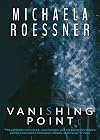
Vanishing Point was originally published in 1993. This new publication comes at a time when dystopian novels have become the rage.
It’s been 30 years since a huge percentage of the population just Vanished. No trace was left behind. The Vanished took nothing with them and there were no bodies. Those who were alive back then lost many loved ones and trying to rebuild their lives has not been easy. A lot of them live their lives in fear; not knowing if it will happen again, wondering if show more their loved ones will ever return to them.
The population has split into many cult-type communities. The Homers refuse to leave the home they lived in at the time of the Vanishing, thinking their loved ones may come back in The Return. The Watchers spend their time taking shifts to watch over each other in case another Vanishing takes place. The Hackers spend all of their time researching the source of the Vanishing, looking for anomalies that might reveal the early warning signs of another such happening. The Penitents are busy making amends so they aren’t left behind if it happens again. These are just some of the cult-like groups that have formed.
The main focus is on a group who has taken up residence in a house which was a well-known tourist mansion in San Jose, California. Those who live there call it The Home. Legend has it that the old woman who owned The Home was visited by spirits, who told her to keep building on to the house. It is thought that these spirits may have been preparing the way for those who live there now, giving them a safe haven in which to rebuild their future.
The Home now includes a couple of generations born after the Vanishing. The first generation, those approaching 30 years old, were all born with a metallic sheen to their hair. They can see an aurora in the skies that the older generation can’t see. They have been raised without modern conveniences and taught strong survival skills. Although their children were not born with metallic hair and better vision, they are somehow different too. These children speak in a strange slang, they seem more intuitive and they call the Homers “ghosts.”
As in any world, the peaceful societies are threatened by those who have a different agenda. In this case, the threat comes from those known as the ‘Bounders, or the Heaven Bound. The ‘Bounders believe that everyone who Vanished has ascended to Heaven, and that anyone who got left behind must have done or not done something, that excluded them. They also believe that no one person will be allowed to ascend to Heaven, until all have faith and live their lives accordingly. It’s everybody or nobody, and they disapprove of those planning for an earthly future.
When the ‘Bounders become more dangerous with threats of war upon those who stand in the way of their salvation, the other groups must band together to fight back and save what they have built.
Vanishing Point is not fresh material in the heyday of dystopian books, but it probably was at the time it was written, making it somewhat of a classic read. I liked the characters. The main character Renzie, is a tough, independent woman with a bit of hidden loneliness. Nesta is a middle-aged researcher who lived through the Vanishing, and works with the hackers to figure out what caused it. Of course, a lot of the research includes physics, but not too much and nothing that you can’t follow along with or learn from. Interesting premises abound, everything from theories you might have heard about on “Aliens Among Us”, to a time warp, the Left Behind theory…….
No, I won’t give away what it really was! I recommend that you read and find out for yourself:) This is a tightly woven story in which the author paints a broad picture and ties up all the loose ends, leaving us with no unanswered questions.
By the way, "the Home" is based on a real place in San Jose! Go to http://www.winchestermysteryhouse.com/ to read more.
I want to thank the publisher (Endeavor Press) for providing me with the ARC through Netgalley for an honest review. show less
It’s been 30 years since a huge percentage of the population just Vanished. No trace was left behind. The Vanished took nothing with them and there were no bodies. Those who were alive back then lost many loved ones and trying to rebuild their lives has not been easy. A lot of them live their lives in fear; not knowing if it will happen again, wondering if show more their loved ones will ever return to them.
The population has split into many cult-type communities. The Homers refuse to leave the home they lived in at the time of the Vanishing, thinking their loved ones may come back in The Return. The Watchers spend their time taking shifts to watch over each other in case another Vanishing takes place. The Hackers spend all of their time researching the source of the Vanishing, looking for anomalies that might reveal the early warning signs of another such happening. The Penitents are busy making amends so they aren’t left behind if it happens again. These are just some of the cult-like groups that have formed.
The main focus is on a group who has taken up residence in a house which was a well-known tourist mansion in San Jose, California. Those who live there call it The Home. Legend has it that the old woman who owned The Home was visited by spirits, who told her to keep building on to the house. It is thought that these spirits may have been preparing the way for those who live there now, giving them a safe haven in which to rebuild their future.
The Home now includes a couple of generations born after the Vanishing. The first generation, those approaching 30 years old, were all born with a metallic sheen to their hair. They can see an aurora in the skies that the older generation can’t see. They have been raised without modern conveniences and taught strong survival skills. Although their children were not born with metallic hair and better vision, they are somehow different too. These children speak in a strange slang, they seem more intuitive and they call the Homers “ghosts.”
As in any world, the peaceful societies are threatened by those who have a different agenda. In this case, the threat comes from those known as the ‘Bounders, or the Heaven Bound. The ‘Bounders believe that everyone who Vanished has ascended to Heaven, and that anyone who got left behind must have done or not done something, that excluded them. They also believe that no one person will be allowed to ascend to Heaven, until all have faith and live their lives accordingly. It’s everybody or nobody, and they disapprove of those planning for an earthly future.
When the ‘Bounders become more dangerous with threats of war upon those who stand in the way of their salvation, the other groups must band together to fight back and save what they have built.
Vanishing Point is not fresh material in the heyday of dystopian books, but it probably was at the time it was written, making it somewhat of a classic read. I liked the characters. The main character Renzie, is a tough, independent woman with a bit of hidden loneliness. Nesta is a middle-aged researcher who lived through the Vanishing, and works with the hackers to figure out what caused it. Of course, a lot of the research includes physics, but not too much and nothing that you can’t follow along with or learn from. Interesting premises abound, everything from theories you might have heard about on “Aliens Among Us”, to a time warp, the Left Behind theory…….
No, I won’t give away what it really was! I recommend that you read and find out for yourself:) This is a tightly woven story in which the author paints a broad picture and ties up all the loose ends, leaving us with no unanswered questions.
By the way, "the Home" is based on a real place in San Jose! Go to http://www.winchestermysteryhouse.com/ to read more.
I want to thank the publisher (Endeavor Press) for providing me with the ARC through Netgalley for an honest review. show less
First of all, that book cover is terrible. It screams, "1993!" The novel itself holds up pretty well more than 20 years after publication. Although references to saving everything on disks are dated, overall Roessner doesn't get into too much technology that dates her. (Although possibly if I was more tech-skilled, I would feel differently.)
The book opens 29 years after The Vanishing -- a morning when 10 percent of the global population woke up to find the other 90 percent had simply show more disappeared without a trace. In those nearly three decades, the survivors have mostly grouped up into communes, cults, and gangs, with a few older people still maintaining their homes and desperately waiting for their vanished loved ones to return.
The novel focuses on a commune of sorts living in the Wincester Mystery House, where they've continued to build in the same haphazard fashion. While they try to solve the mystery of how and why the Vanishing occured, the "Housers" also have to deal with a cult that believes those left behind lacked faith and if the non-faithful are eliminated, the newly faithful will join the vanished.
Sci-Fi isn't a genre that I read often, especially not written for an adult audience. Some of the sciency-stuff and battle-planning made my eyes blur a bit (which just reflects on me as a reader, not the book), but the prose and the characters, which it seems like often suffer in this genre, are excellent. While there's an understandably large cast, the main characters are all fleshed out and believable. The differences between those who survived the Vanishing, the first generation (now young adults), and the second generation (strikingly independent children), are fascinating. show less
The book opens 29 years after The Vanishing -- a morning when 10 percent of the global population woke up to find the other 90 percent had simply show more disappeared without a trace. In those nearly three decades, the survivors have mostly grouped up into communes, cults, and gangs, with a few older people still maintaining their homes and desperately waiting for their vanished loved ones to return.
The novel focuses on a commune of sorts living in the Wincester Mystery House, where they've continued to build in the same haphazard fashion. While they try to solve the mystery of how and why the Vanishing occured, the "Housers" also have to deal with a cult that believes those left behind lacked faith and if the non-faithful are eliminated, the newly faithful will join the vanished.
Sci-Fi isn't a genre that I read often, especially not written for an adult audience. Some of the sciency-stuff and battle-planning made my eyes blur a bit (which just reflects on me as a reader, not the book), but the prose and the characters, which it seems like often suffer in this genre, are excellent. While there's an understandably large cast, the main characters are all fleshed out and believable. The differences between those who survived the Vanishing, the first generation (now young adults), and the second generation (strikingly independent children), are fascinating. show less
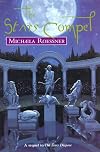
The word for this book is rich: rich in history, rich in magic and rich in food. This is the second volume of the Stars series, the first being The Stars Dispose. The Stars Compel continues the story of Tommaso Arista, personal chef to an adolescent Caterina de’ Medici. For those familiar with the first book, the location has moved from Florence, Italy to Rome, but the intrigue, art, occult and culinary vibrancy are still present.
Caterina, order to Rome by her guardian and cousin, Pope show more Clement settles in with a great-aunt on the de’ Medici side of her family. Almost immediately, she is wept into deep social and political machinations, both of her own and others making. She wrestles to return to Florence, remove her cousin Alessandro de’ Medici from leader of Florence, and succeed in marrying her other cousin Ippolito, who has been made a Cardinal by Pope Clement to prevent such an event. All of this is seen through the eyes of Tommaso, who is chef, spy, advisor and friend to Caterina. As part of his training, he has been apprenticed to several artists, including Michelangelo who is also his lover. Art and cooking mix in a wonderful blend, accented by the sharp politics of 16th century Italy.
Though out this work, the opulence of the Italian Renascence is widely portrayed. From his unique position, Tommaso sees both the life of the elite and the servant class. This balances the view and shows the contrasts and similarities between these groups. He is also drawn into the magic of the story more, experiencing first hand the occult. Caterina grows stronger in her magical abilities and discovers that Tommaso is unknowingly able to augment her power. A highlight of the book is the demon summoning by a Roman Priest-Necromancer who conducts the ceremony at night in the ruins of the Coliseum. The scene is as rich as the rest of the book.
One word of warning: do not read these books while dieting. The descriptions of cooking and food are sumptuous and will certainly raise anyone appetite. They also inspire meals and Ms. Roessner assists in this by including recipes in the back of the book. And as with any good recipe, the mix of ingredients of this work made it a delight to all the senses. As Tommaso and Caterina move to France in the future volume of this series, I am looking forward to more intrigue, more magic and more dishes.
Appeared on http://www.fast-forward.tv, Nov. 2000 show less
Caterina, order to Rome by her guardian and cousin, Pope show more Clement settles in with a great-aunt on the de’ Medici side of her family. Almost immediately, she is wept into deep social and political machinations, both of her own and others making. She wrestles to return to Florence, remove her cousin Alessandro de’ Medici from leader of Florence, and succeed in marrying her other cousin Ippolito, who has been made a Cardinal by Pope Clement to prevent such an event. All of this is seen through the eyes of Tommaso, who is chef, spy, advisor and friend to Caterina. As part of his training, he has been apprenticed to several artists, including Michelangelo who is also his lover. Art and cooking mix in a wonderful blend, accented by the sharp politics of 16th century Italy.
Though out this work, the opulence of the Italian Renascence is widely portrayed. From his unique position, Tommaso sees both the life of the elite and the servant class. This balances the view and shows the contrasts and similarities between these groups. He is also drawn into the magic of the story more, experiencing first hand the occult. Caterina grows stronger in her magical abilities and discovers that Tommaso is unknowingly able to augment her power. A highlight of the book is the demon summoning by a Roman Priest-Necromancer who conducts the ceremony at night in the ruins of the Coliseum. The scene is as rich as the rest of the book.
One word of warning: do not read these books while dieting. The descriptions of cooking and food are sumptuous and will certainly raise anyone appetite. They also inspire meals and Ms. Roessner assists in this by including recipes in the back of the book. And as with any good recipe, the mix of ingredients of this work made it a delight to all the senses. As Tommaso and Caterina move to France in the future volume of this series, I am looking forward to more intrigue, more magic and more dishes.
Appeared on http://www.fast-forward.tv, Nov. 2000 show less
Lists
Awards


You May Also Like


Associated Authors
Statistics
- Works
- 11
- Also by
- 13
- Members
- 758
- Popularity
- #33,555
- Rating
- 3.7
- Reviews
- 22
- ISBNs
- 9
- Languages
- 1
- Favorited
- 2